Medusa
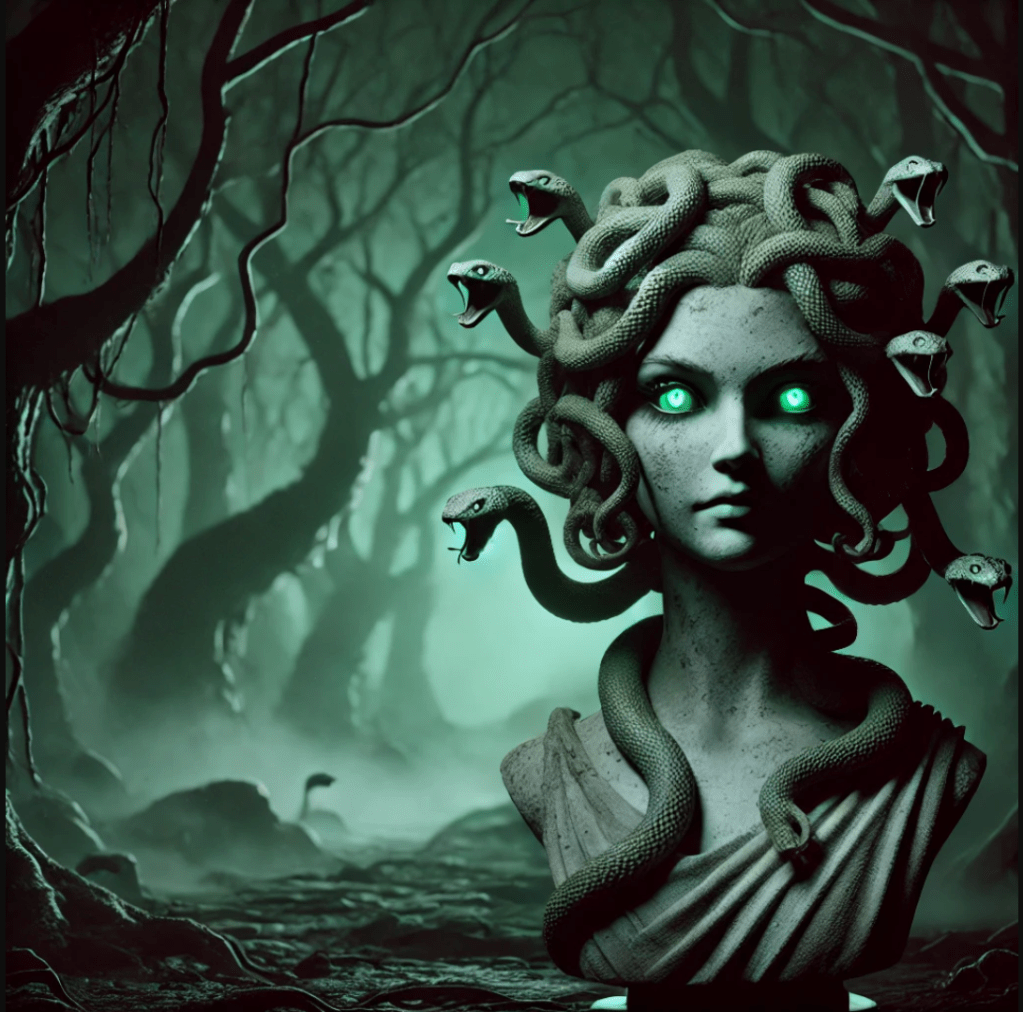
Medusa, one of the three Gorgon sisters in Greek mythology, was originally a beautiful maiden who was cursed by Athena. According to the most famous version, she was transformed into a monstrous creature with snakes for hair after desecrating Athena’s temple, either by her own actions or as a victim of Poseidon’s assault. From then on, anyone who gazed into her eyes turned to stone. She became a feared figure, dwelling in isolation until the hero Perseus, aided by Athena and Hermes, set out to slay her. Using a mirrored shield to avoid direct eye contact, he beheaded her while she slept, placing her head in a magical bag.
After Medusa’s death, her severed head retained its petrifying power and was later gifted to Athena, who placed it on her shield, the Aegis. From her blood sprang the winged horse Pegasus and the warrior Chrysaor, her children with Poseidon. Some myths portray Medusa more sympathetically, as a tragic figure punished unfairly. Others suggest her head symbolized protection, appearing on ancient armor and buildings to ward off evil. Over time, her legend evolved from a terrifying monster into a symbol of feminine rage, transformation, and resilience in modern interpretations.
Minotaur
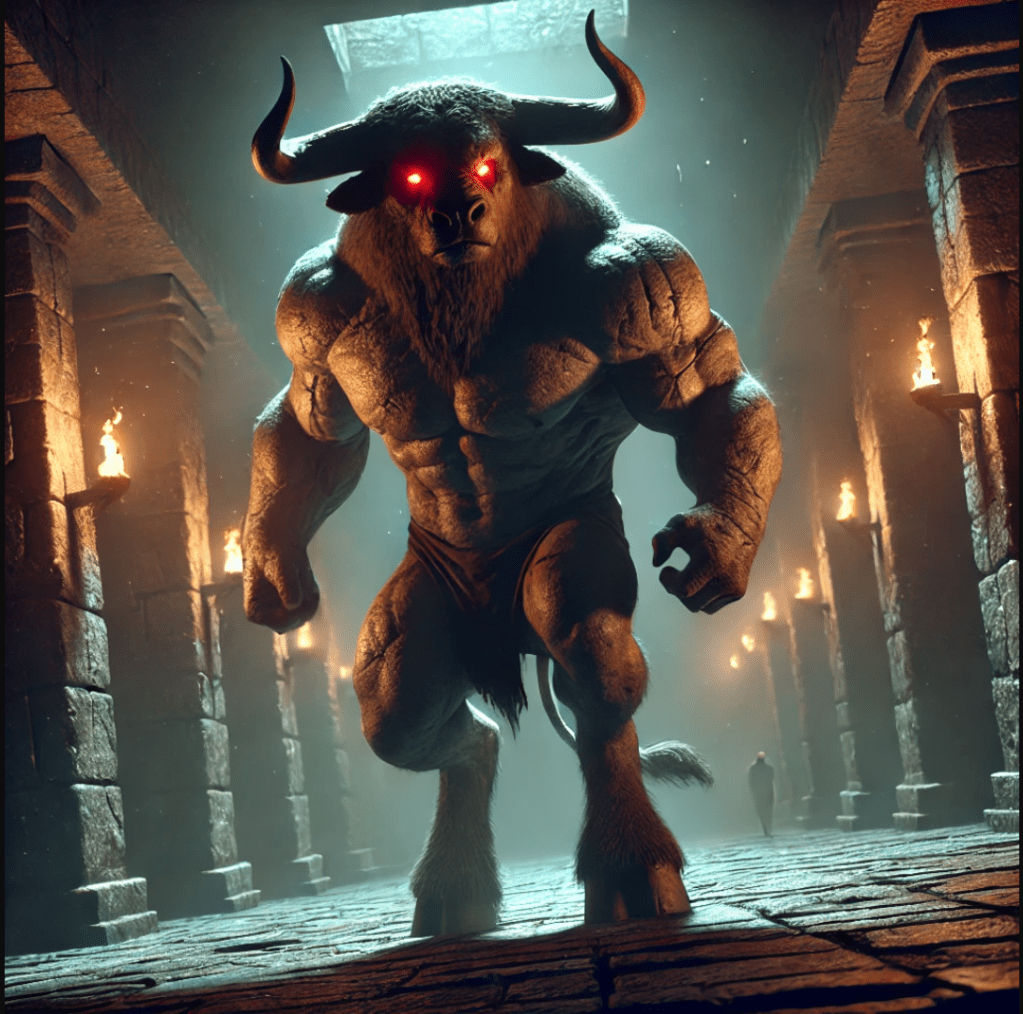
The Minotaur, a half-man, half-bull creature, was the result of a curse placed upon Queen Pasiphaë of Crete by Poseidon. King Minos had refused to sacrifice a divine bull to the god, so as punishment, Pasiphaë fell in love with the beast and bore the Minotaur. Born monstrous and uncontrollable, the Minotaur became a source of shame and fear for Minos. To contain it, the legendary architect Daedalus was commissioned to construct the Labyrinth, a massive, inescapable maze beneath the palace of Knossos. There, the Minotaur was imprisoned, growing more savage as time passed.
King Minos soon used the Minotaur as a tool of terror, demanding a tribute of fourteen Athenian youths—seven boys and seven girls—every nine years to be devoured by the beast. This was punishment for the death of Minos’ son Androgeos, who was killed in Athens under suspicious circumstances. The ritual sacrifice continued until Theseus, prince of Athens, volunteered to end the cycle of suffering. With the help of Minos’ daughter, Ariadne, who fell in love with him, Theseus entered the Labyrinth armed with a sword and a ball of thread. Using the thread to retrace his steps, he successfully navigated the maze, confronted the Minotaur, and slew it in battle.
Theseus’ triumph over the Minotaur symbolized the victory of civilization over chaos and beastly savagery. His return to Athens, however, was marred by tragedy, as he forgot to change his ship’s black sails to white, leading his father, King Aegeus, to believe he had perished. In despair, Aegeus threw himself into the sea, which was thereafter named the Aegean. Meanwhile, Ariadne, who had aided Theseus, was abandoned on the island of Naxos. The myth of the Minotaur remains a powerful allegory about fate, human sacrifice, and the hero’s journey, with the Labyrinth itself representing the trials and complexities of life.
 B. K. P. Carreon
Leave a comment