The Sphinx
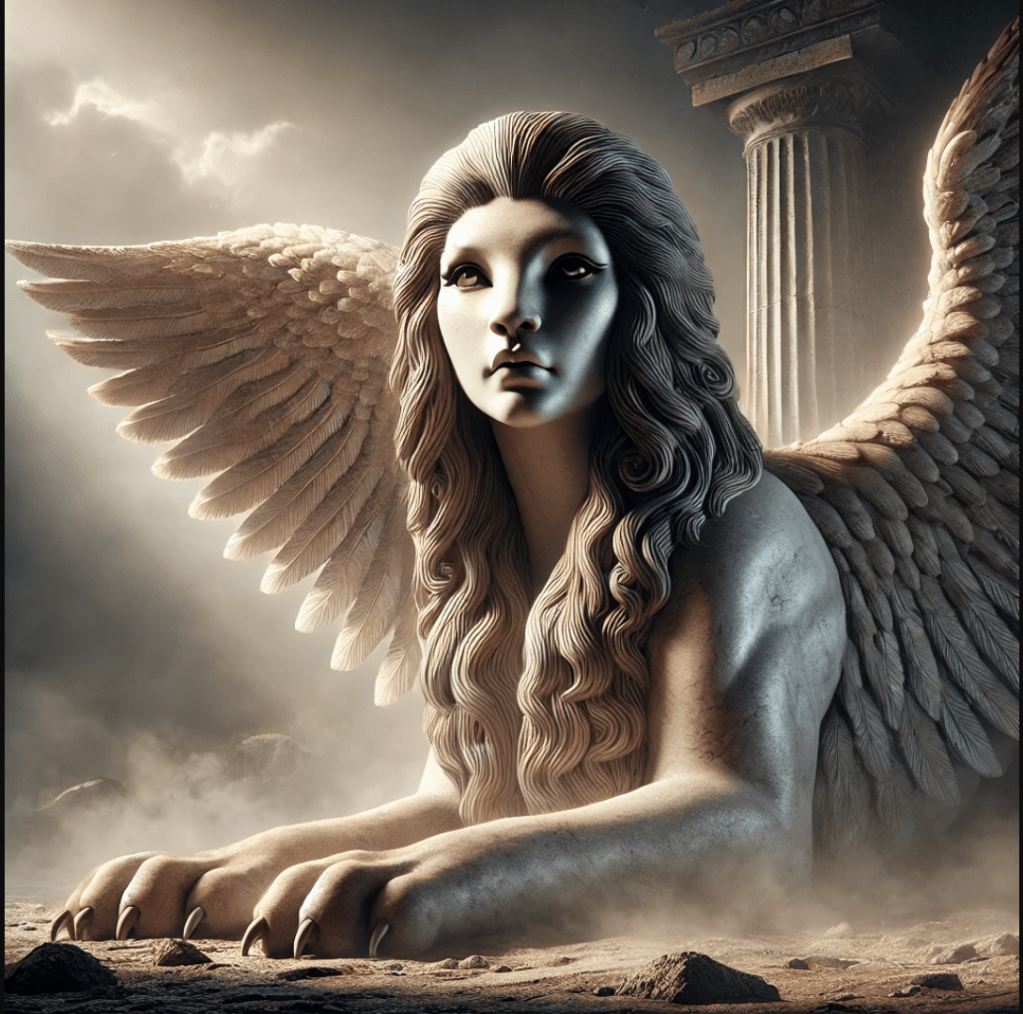
The Greek Sphinx was a monstrous creature with the body of a lion, the wings of an eagle, and the head of a woman, known for her cunning and deadly riddles. According to myth, she terrorized the city of Thebes by posing a riddle to travelers, killing those who failed to answer correctly. Her most famous riddle was: “What walks on four legs in the morning, two at noon, and three in the evening?” Many perished until Oedipus, a wandering prince, solved it, answering that it was a man, who crawls as a baby, walks upright as an adult, and uses a cane in old age. Defeated, the Sphinx either threw herself off a cliff or devoured herself in despair, freeing Thebes from her curse.
The myth of the Sphinx is closely tied to the tragic fate of Oedipus, who later unknowingly fulfilled a prophecy by killing his father and marrying his mother. The Sphinx is often seen as a symbol of mystery, fate, and the inescapable power of prophecy in Greek mythology. Her story represents the triumph of human intellect over monstrous threats, but also the dangerous pursuit of knowledge. Thebes, despite being freed from the Sphinx, soon fell into deeper misfortune due to Oedipus’ cursed lineage. Over time, the Sphinx became a powerful emblem in art and literature, embodying enigma, wisdom, and destruction.
Nemean Lion
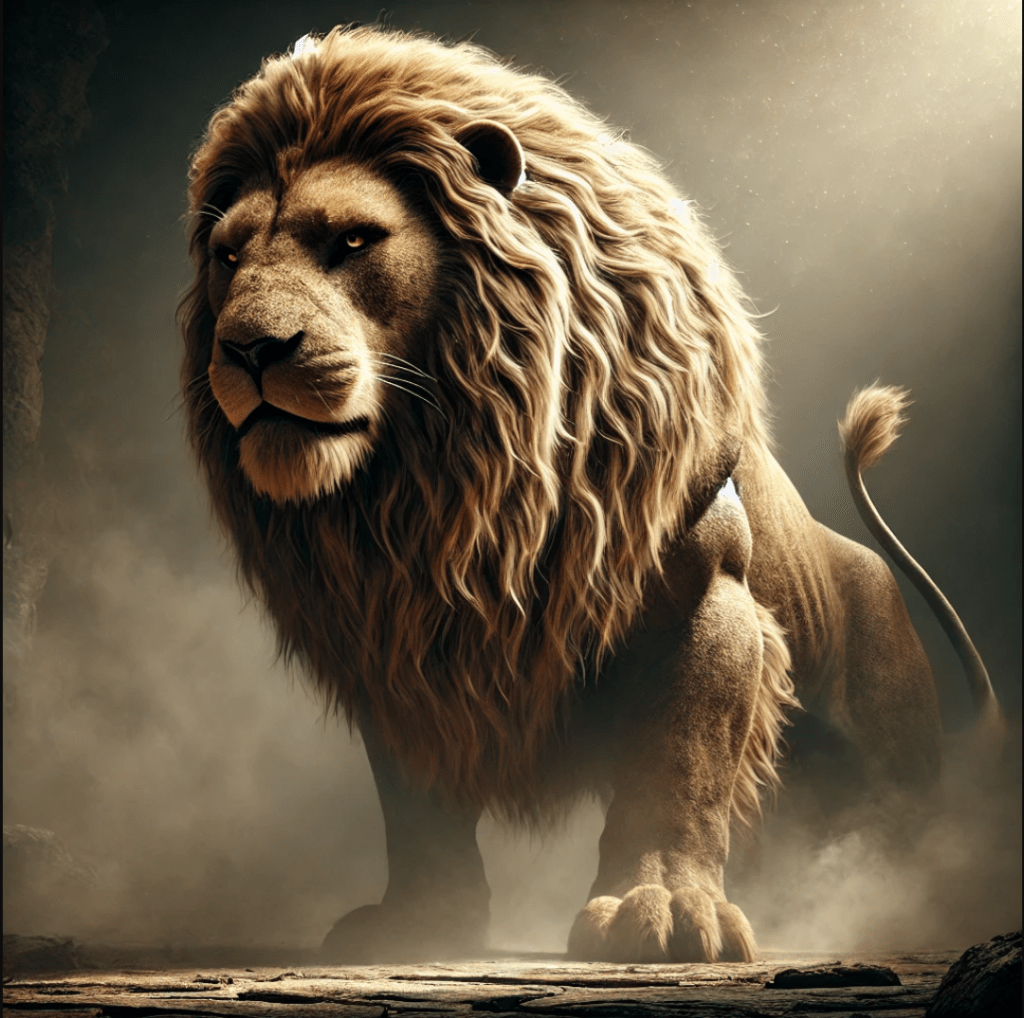
The Nemean Lion was a monstrous beast in Greek mythology, known for its impenetrable golden fur and immense strength. It terrorized the region of Nemea, preying on livestock and people, and no weapon could pierce its hide. King Eurystheus assigned Heracles (Hercules) the task of slaying the lion as the first of his Twelve Labors. When Heracles arrived in Nemea, he discovered that his arrows and sword were useless against the creature. Realizing he had to rely on brute force, he trapped the lion in a cave to engage it in close combat.
In a fierce battle, Heracles wrestled the beast and ultimately strangled it to death with his bare hands. Afterward, he attempted to skin the lion using his knife but found it ineffective, so he used the lion’s own claws to cut through its tough hide. He then wore the lion’s pelt as a cloak, which made him nearly invulnerable, and carried its head as a helmet. When he returned to King Eurystheus, the cowardly king was so terrified by Heracles’ strength that he refused to let him enter the city. Instead, he communicated with Heracles through a messenger and ordered him to complete the rest of his labors.
The Nemean Lion came to symbolize strength, resilience, and the hero’s triumph over seemingly impossible challenges. Its slaying marked the beginning of Heracles’ legendary journey, proving his unmatched power and wit. The lion itself was later placed among the stars by the gods, becoming the constellation Leo. The myth reflects themes of heroism, divine destiny, and the idea that true strength comes from both intelligence and sheer force. Heracles’ victory over the Nemean Lion remains one of the most iconic moments in Greek mythology, cementing his status as one of the greatest heroes of all time.
 B. K. P. Carreon
Leave a comment