Scylla
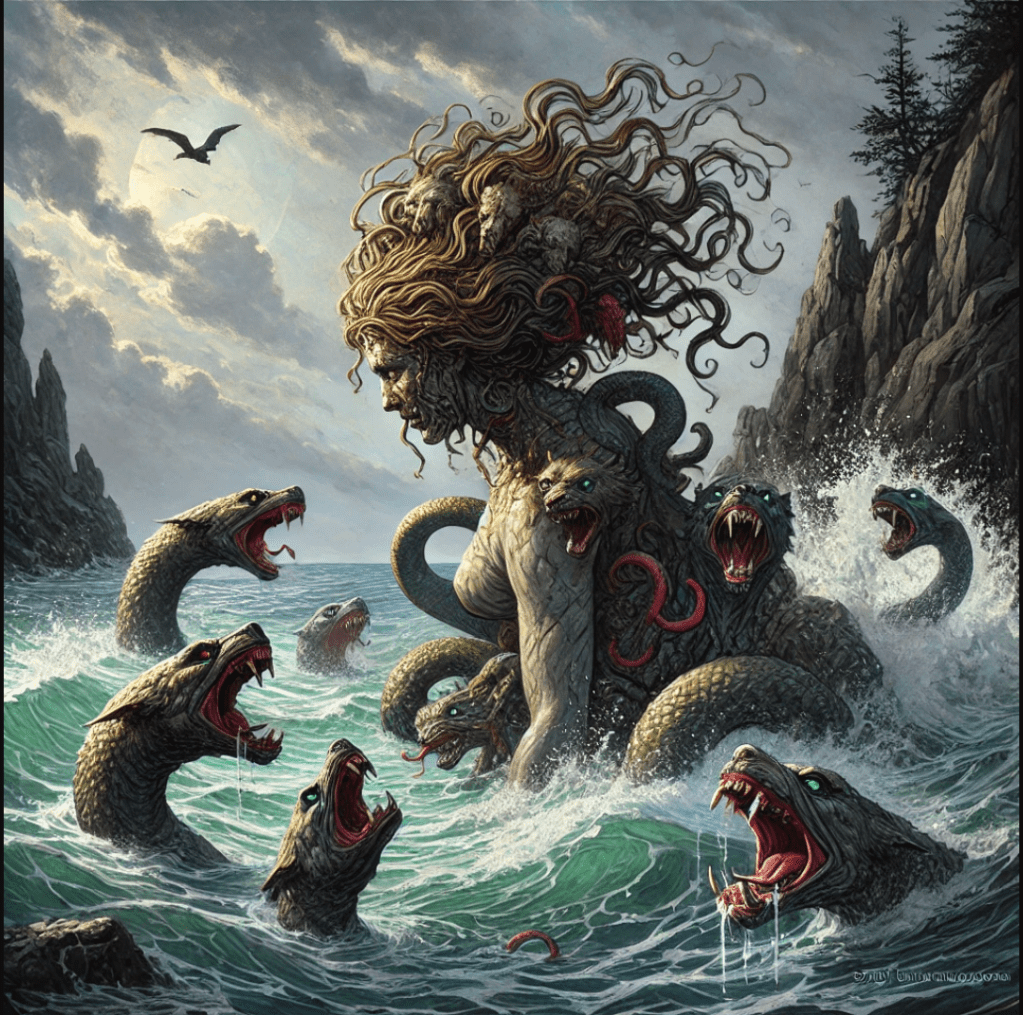
Scylla was once a beautiful sea nymph, admired by gods and mortals alike. In one version of the myth, she was transformed into a monstrous creature by the jealous sorceress Circe, who poisoned the waters where Scylla bathed. Another tale claims the sea god Glaucus loved Scylla, but Circe, in love with Glaucus herself, cursed Scylla out of spite. The transformation turned her lower half into a horrific mass of snarling dogs and serpents. Horrified by her new form, Scylla fled to a rocky cliffside, where she would dwell forevermore.
She became a deadly threat to sailors passing through the narrow strait opposite the whirlpool monster Charybdis. Ships that sailed too close were doomed to lose crew to her snapping heads. In Homer’s Odyssey, Odysseus must pass between Scylla and Charybdis, choosing the lesser of two evils. Though he loses six men to Scylla, he escapes total destruction. Over time, Scylla came to symbolize the danger of unavoidable loss and the perils lurking in narrow choices.
Charybdis
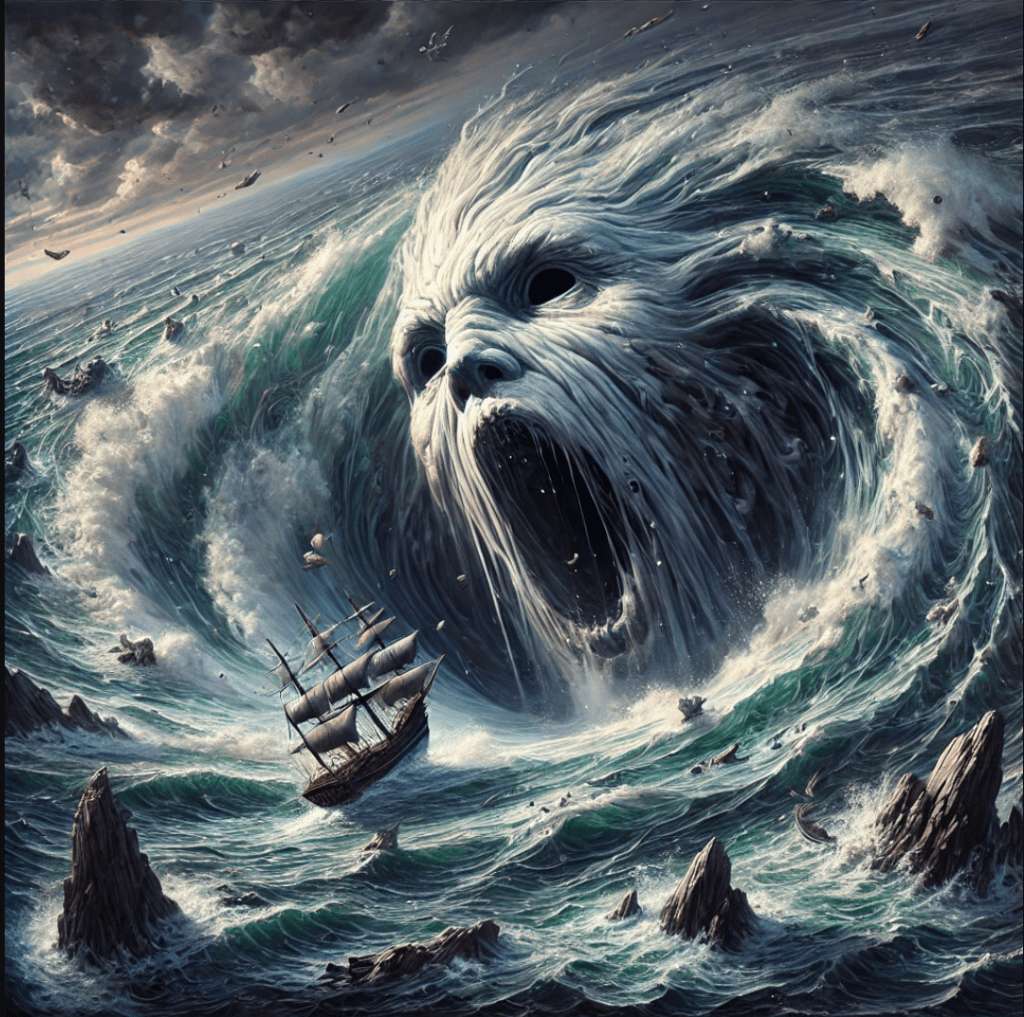
Charybdis was once a sea nymph, daughter of Poseidon and Gaia, who loyally aided her father in his battles. She flooded lands for him, swallowing vast swaths of coastline, which angered Zeus. As punishment for her destructive loyalty, Zeus struck her with a thunderbolt, casting her into the sea and transforming her into a monstrous whirlpool. Cursed to eternally consume the ocean’s waters, she became a fearsome force of nature. Three times a day, she would suck in and spit out massive volumes of water, creating deadly whirlpools.
Positioned on one side of a narrow sea strait, Charybdis served as a maritime hazard opposite the monster Scylla. The two created a near-impossible passage for sailors, a metaphorical rock and a hard place. In The Odyssey, Odysseus must navigate between the two, ultimately choosing to pass closer to Scylla. Though he loses men, he avoids total destruction from Charybdis’ devastating pull. The choice reflects ancient wisdom: sometimes survival means accepting smaller losses.
Charybdis came to symbolize overwhelming, inescapable forces—nature’s fury and the chaos of the sea. She was not evil, but mindless and relentless, embodying raw destruction rather than malice. Her myth served as a warning to seafarers and a poetic allegory for life’s turbulent dangers. In literature, she remains a powerful image of the void, the all-consuming unknown. Together with Scylla, she formed one of mythology’s most iconic dual threats.
Twin Terrors of the Sea Strait
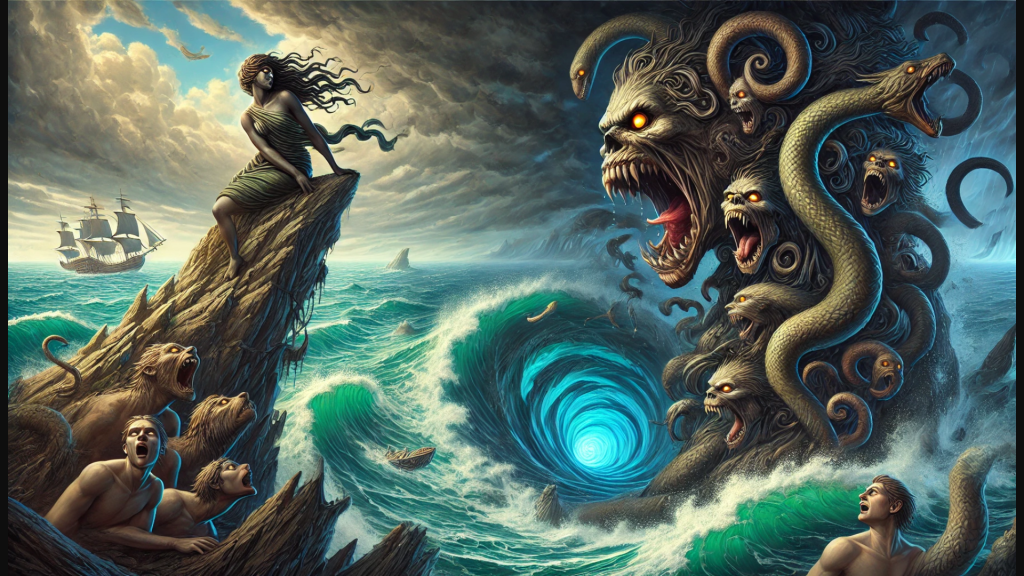
“On one side, Scylla sits, and on the other lurks divine Charybdis, swallowing the sea’s dark water. Three times a day she spews it forth, and three times she gulps it down, a dreadful sight. Better by far to lose six men and escape with your ship, than to perish all at once.”
— Homer, The Odyssey, Book 12 (translated by Robert Fagles)
 B. K. P. Carreon
Leave a comment