Overview:
| The Kennedys are a wealthy Filipino-American family based in Austin, Texas. Carlisle, their cultured and well-mannered butler, also serves as a chauffeur for the family’s son, Christopher “Topher,” driving him to school each day. Topher enjoys writing in his journal and has a keen interest in geography. He also serves as the captain of his school’s soccer team. His mother, Selena, is a CPA and lawyer who specializes in tax regulatory cases. |
Topher_goes_to_school.sav

So here’s the thing about crossing half the planet in a single narrative jump—it’s like when Star Trek does that swooshing transition from deep space to Earth’s surface, except instead of the USS Enterprise, we’re tracking the mundane morning routine of what looks like the most aesthetically pleasing butler this side of Sebastian Michaelis.
Austin City, Texas. Because of course it’s Texas. Everything’s bigger here, including the dramatic irony.
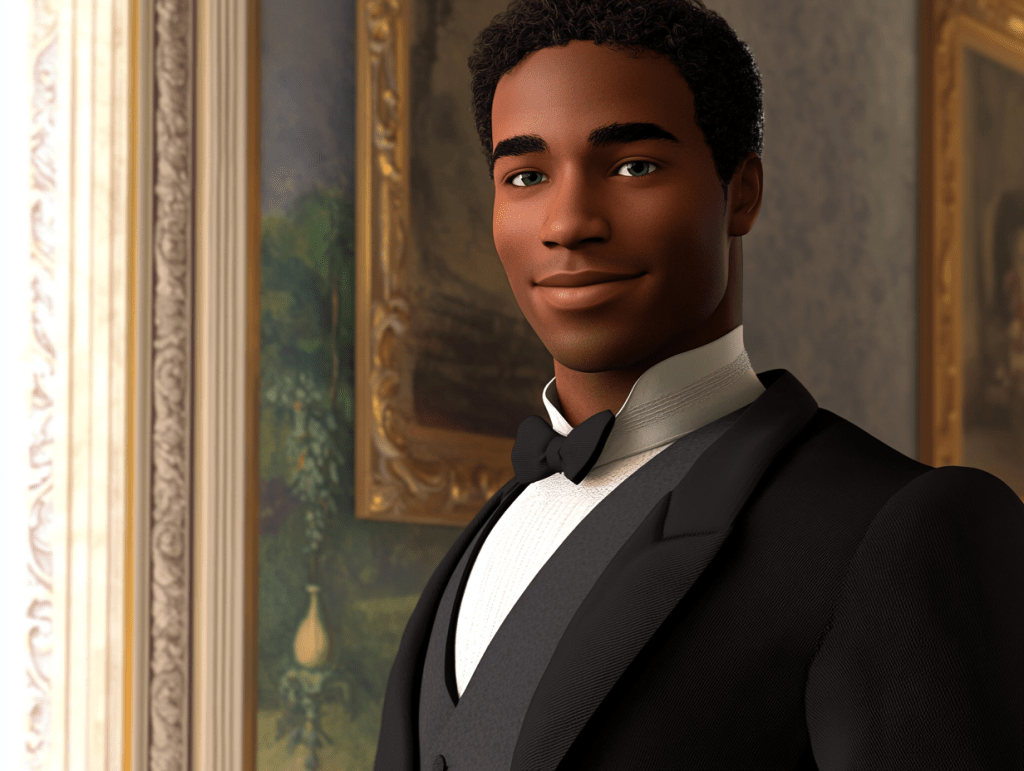
Carlisle Worthington stands at five-foot-and-eleven of perfectly pressed excellence, his biracial features catching the morning light filtering through the sedan’s tinted windows. Those striking green eyes—the kind that scream “mysterious backstory incoming”—scan the rearview mirror as he navigates the tree-lined streets. His short curly black hair is immaculate, not a strand out of place despite what must be a 5 AM start to his day. The guy’s built like he moonlights as a fitness influencer, all lean muscle beneath that crisp black tuxedo that probably costs more than most people’s monthly rent.
The white gloves grip the steering wheel with practiced ease. This isn’t some Driving Miss Daisy situation—this is precision, professionalism, and probably a healthy dose of repressed emotional complexity that’ll surface by act three.
“Almost there, Bud,” Carlisle says, his voice carrying that perfect balance of warmth and formality that screams ‘I care about you but also remember my place in the social hierarchy.’
In the backseat, Topher fixes his scarlet-and-gold tie—the kind of tucking that suggests either excited energy or the boy’s anticipation of going to school and looking like he stepped out of a Gossip Girl reboot. The kid’s uniform screams old money: burgundy cotton waistcoat layered over a cream sleeveless vest, the whole ensemble sitting over a crisp white long-sleeved polo. Khaki pants and brown leather shoes complete the look. It’s preppy perfection, the kind of outfit that costs more than some cars and makes you automatically 50% more likely to get into an Ivy League school.
The Renaissance Revival school looms ahead like something out of Dead Poets Society, all brick and ivy and architectural statements about the importance of tradition. Carlisle pulls the sedan up to the curb with the kind of smooth precision that suggests either extensive chauffeur training or a background in something significantly more dangerous.
He steps out first—always the professional—and circles around to open Topher’s door. The gesture flows like choreography, white-gloved hand on the handle, slight bow of the head. It’s theater, but theater performed with genuine care.
Topher emerges, adjusting his waistcoat with the confidence of someone who doesn’t know he looks like he belongs in a trust fund starter pack meme. The morning sun catches the gold threads in his tie, making him look every inch the privileged prep school protagonist.
“Goodbye, Carlisle. I’m off to school now,” Topher says, raising his hand in a wave that manages to be both casual and oddly formal. There’s affection there, the kind that transcends employer-employee dynamics and suggests something closer to family.
Carlisle’s smile transforms his entire face, green eyes crinkling at the corners as he snaps off a mock salute. “Take care, Bud. I’m on my way.” The gesture is playful, almost brotherly, and for a moment the butler facade drops to reveal something more genuine underneath.
Classic found family dynamics, I think, watching this play out like the opening scene of every heartwarming drama about unlikely bonds and social barriers.
The_butlers_morning.sav
The Kennedy estate—because of course it’s called the Kennedy estate—sprawls across what looks like half of Austin’s more exclusive real estate. Brick fences stretch in both directions, punctuated by two gates that scream “money talks and ours is fluent.” The north and south entrances are both staffed by guards who probably have more security clearance than some government facilities.
The mansion itself rises three stories of New Classical perfection, all white geometric patterns and mathematical precision. It’s the kind of architecture that whispers “we have arrived” while simultaneously shouting “we’ve been here longer than you.” Ten thousand square feet of carefully maintained superiority, every line and angle calculated for maximum aesthetic impact.
Carlisle moves through the space like he owns it, which he definitely doesn’t, but carries himself like someone who’s earned his place through competence rather than inheritance. On the third floor, his finger traces the surface of an antique drawer, checking for dust with the kind of attention to detail that would make Marie Kondo weep with joy. Behind him, a white maid in her twenties follows his inspection with nervous energy, clearly understanding that Carlisle’s standards are non-negotiable.
Head butler energy, I note. Guy’s definitely the type who runs a tight ship while somehow making everyone feel valued. Probably has a tragic backstory involving loyalty and sacrifice.
The second floor choreography continues—Carlisle effortlessly lifting a sofa that probably weighs more than a small car, allowing a White Hispanic maid in her thirties to sweep beneath it. His movements are fluid, economical, suggesting either military training or years of practice making every gesture count. The maid nods her thanks, and there’s mutual respect in the exchange that speaks to good management and better character.
On the ground floor, Mrs. Montes appears like a checkpoint boss in a video game—the Latina maid in her forties who clearly runs the domestic operations with the kind of maternal authority that brooks no nonsense. Her “Good day, Mr. Worthington” carries the weight of someone who’s seen enough to know quality when she meets it.
“Same to you as well, Mrs. Montes,” Carlisle replies, his nod carrying genuine respect. It’s the kind of interaction that suggests he understands that hierarchy doesn’t diminish humanity, a refreshingly non-toxic approach to power dynamics.
Okay, definitely the protagonist, I decide. Guy respects his coworkers, cares about his charge, and looks good in a tuxedo. Probably has a secret past as either military or organized crime, with redemption arc potential.
Outside, the grounds unfold like a carefully curated nature documentary. The elderly Japanese gardener moves among the lush greenery with the kind of meditative precision that suggests decades of practice and possibly a direct line to some gardening zen master. His East Asian traditions have transformed the landscape into something that belongs in a meditation app commercial, all careful balance and purposeful placement.
The Zen Garden room sits like a jewel in the estate’s crown, raked sand patterns catching the morning light in mathematical perfection. It’s the kind of space that makes you automatically lower your voice and contemplate the deeper meanings of existence, or at least pretend to for Instagram purposes.
Meanwhile, the groundsman—middle-aged, white, and clearly committed to the eternal battle against grass that dares to grow unevenly—pilots his mower across the vast lawn with the dedication of someone who takes pride in straight lines and perfect edges.
Every member of the domestic staff wears Victorian-inspired uniforms that manage to feel both traditional and somehow timeless, like costumes from a period drama with an unlimited budget. It’s all very Downton Abbey meets The Fresh Prince, a collision of old-world elegance and new-world energy.
And there’s our ensemble cast, I think, watching the carefully orchestrated domestic ballet. Everyone’s got their role, everyone knows their place, but there’s genuine respect flowing in all directions. Someone’s built something here that transcends typical employer-employee relationships.
The morning sun climbs higher, casting long shadows across the geometric perfection of the estate’s architecture, and somewhere in the careful choreography of professional excellence and personal connection, the real story is just beginning to unfold.
Classic setup, I note with satisfaction. Mysterious butler with hidden depths, privileged kid who probably needs more than money can buy, and a supporting cast that screams ‘found family dynamics incoming.’ Someone’s definitely about to disrupt this perfect little world.
The pieces are all in place, the characters established, and the stage set for whatever drama comes next. Because in stories like this, the calm before the storm is always the most deceptive part.
The_journal_entry.sav
Classic private school library aesthetic incoming—think Harry Potter meets Dead Poets Society with a budget that makes Hogwarts look like a community college. Mahogany shelves stretch toward vaulted ceilings, their surfaces gleaming under warm amber light that screams “generational wealth and academic excellence.” The scent of aged leather bindings and that particular old-money mustiness hangs in the air like expensive cologne.
Topher sits cross-legged in an oversized wingback chair that probably costs more than most people’s cars, the burgundy leather creaking softly as he shifts his weight. Sunlight streams through tall Gothic windows, casting geometric patterns across the Persian rug beneath his brown leather shoes—the same preppy uniform from this morning, though his scarlet-and-gold tie now hangs loose around his neck, top button undone. Kid’s finally allowed himself to breathe.
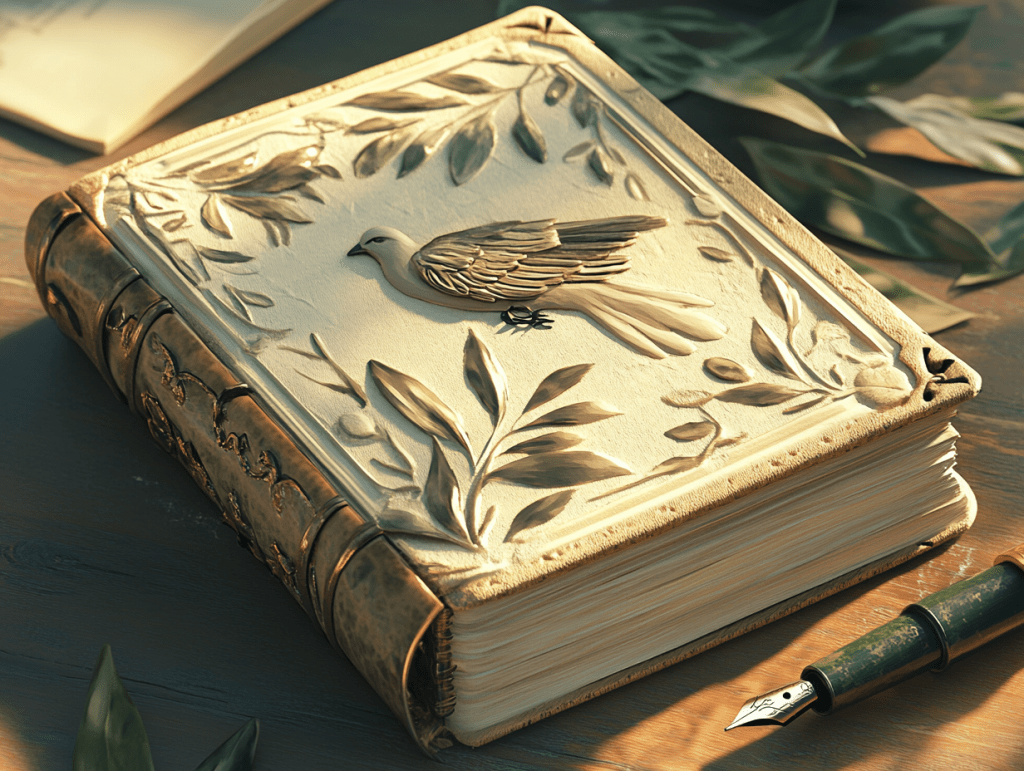
In his small hands rests what can only be described as the Platonic ideal of a nine-year-old’s secret diary. The hardbound journal catches the light with its ivory and cream surfaces, decorated with olive branches and a dove that scream “peace and wisdom” in the most on-the-nose symbolism possible. “My Journal” adorns the cover in elegant script, because apparently even his diary needs to look like it belongs in a museum gift shop.
Of course it has a lock, I note, watching the ritual unfold. Kid’s living in a world where privacy is a luxury item, complete with matching key accessory.
Christopher “Topher” Alexander William Kennedy III—because naturally his name requires Roman numerals—fumbles with the small brass key hanging from a delicate chain around his neck. The necklace disappears beneath his white polo collar, the metal warm against his chest from body heat. His fingers, still carrying that soft roundness of childhood, work the lock with practiced ease.
Third of his name, nine years old, and already mastering the art of keeping secrets, I observe. Someone’s definitely been raised in an environment where information is power.
The kid’s mixed heritage plays across his features like a genetic masterpiece—half white, half Filipino, though his appearance leans heavily Caucasian in that way that’ll probably cause identity crises later in life. His short, straight dark brown hair catches auburn highlights in the library’s golden glow, framing green-hazel eyes that shift color depending on the light. Sharp nose, thin peach lips currently pursed in concentration, plump rosy cheeks that still carry baby fat despite his lean frame. He’s tall for nine, all awkward limbs and growing-too-fast proportions.
The lock clicks open with a satisfying snick, and Topher’s face brightens with the kind of pure joy that comes from accessing your own private world. He flips through pages filled with his careful handwriting, past entries chronicling whatever earth-shattering developments constitute a fourth-grader’s daily drama.
Guy’s got the journal aesthetic down pat, I think. Probably writes in it every day like some Victorian gentleman scholar. This is either really wholesome or the setup for a psychological thriller.
Journal Entry #5: The Fifty States
Topher’s pen—a real fountain pen, not some disposable Bic, because of course—moves across the cream-colored paper in careful strokes. His handwriting flows with the kind of precision that suggests either excellent private tutoring or an obsessive personality, each letter formed with deliberate care.
It was late in the morning, and the class’s energy was still high.
The memory plays out in his mind like a replay of his greatest hits. Mr. Gibbs—middle-aged, perpetually rumpled, with the kind of enthusiasm for American history that suggests either genuine passion or mild insanity—had dominated the front of the classroom with theatrical gestures and animated storytelling.
Mr. Gibbs, our History and Social Sciences teacher, hung a large map of the United States on the blackboard.
Topher pauses in his writing, the pen hovering over the page as he recalls the scene. The classroom had buzzed with post-recess energy, twenty-something privileged kids still riding sugar highs from whatever artisanal snacks their nannies packed. The map unfurled like a banner, all fifty states rendered in different colors that made the whole country look like a particularly complex board game.
Our country looked like a jigsaw puzzle broken into fifty pieces in different colors. I knew those pieces represented the fifty states in the federation.
Federation, I note with approval. Kid’s already thinking in political science terms at nine. Someone’s been paying attention during current events discussions.
The memory crystallizes: Mr. Gibbs standing before the map like a game show host, his tie slightly askew, coffee stain on his shirt sleeve that he hasn’t noticed yet. His voice carries that particular teacher enthusiasm that either inspires or terrifies, depending on your relationship with academic performance pressure.
“Okay, class, here you can see the map of our country: the United States of America. Can someone volunteer to name all fifty states and locate them?”
Classic setup, I think. Teacher throws down the gauntlet, looks around the room for volunteers, and inevitably lands on the one kid who actually did the reading.
Topher’s hand had shot up faster than a Star Trek phaser blast, his green-hazel eyes practically glowing with competitive academic spirit. Around him, his classmates shifted in their designer uniforms, some avoiding eye contact, others rolling their eyes at the display of voluntary participation.
“I, teacher,” he’d said, his voice carrying that slight formal cadence that suggests English might be his second language at home, despite his appearance.
Geography is my favorite subject. This was going to be a fun activity, I thought.
The pen scratches against paper as Topher captures his internal monologue from that moment. Kid’s genuinely excited about academic challenges in a way that suggests either natural curiosity or the kind of high-achievement pressure that comes with being a Kennedy. Probably both.
I walked toward the board, took the marker from Mr. Gibbs, and started writing the names, one by one.
The scene unfolds in slow motion in Topher’s memory: twenty pairs of eyes tracking his movement to the front of the classroom, some impressed, others envious, a few calculating whether this display of knowledge makes him more or less cool in the elementary school social hierarchy.
The marker feels substantial in his small hands—not some dried-out classroom castoff, but quality supplies befitting a private institution that charges more per semester than most people’s annual salaries. He starts in the West, working systematically across the map with the kind of methodical approach that suggests either natural organization skills or mild OCD tendencies.
West…California…
The Golden State gets marked first, that familiar boot shape on the Pacific coast. Topher’s mental geography kicks into overdrive, years of studying maps and atlases paying off in real-time demonstration of knowledge retention.
Midwest…Wisconsin…
Each state name flows from his marker with practiced precision, the kind of confidence that comes from genuine understanding rather than rote memorization. Around him, his classmates watch with varying degrees of attention and envy.
Northeast…Massachusetts…
The historical weight of each state carries meaning beyond mere geography. Massachusetts—birthplace of revolution, home of Harvard, symbol of American intellectual tradition. For a Kennedy, even a junior one, there’s probably family history wrapped up in those borders.
South…Texas, the state where I live…
Home. The Lone Star State rendered in whatever color the cartographer chose, but representing everything familiar—Austin’s weird energy, the sprawling estate, Carlisle’s morning drives, the whole carefully constructed world of privilege and protection that defines his daily existence.
Mr. Gibbs’s approval radiates across the classroom like a teacher’s version of a boss fight victory screen. “Excellent, let’s give Mr. Kennedy III a round of applause.”
The applause ripples through the room—some genuine, some obligatory, all filtering through the complex social dynamics of elementary school politics. Topher’s face flushes with pride, green-hazel eyes bright with the kind of pure joy that comes from academic validation.
Sharing my knowledge is the greatest gift of learning, I thought as I smiled brightly.
And there it is—the line that reveals everything about Christopher Alexander William Kennedy III’s worldview at nine years old. Knowledge as gift, learning as privilege, sharing as responsibility. It’s either the most mature perspective ever recorded in a fourth-grader’s diary, or the kind of pressure-cooker philosophy that creates future overachievers with anxiety disorders.
Classic gifted kid energy, I observe, watching Topher cap his fountain pen with satisfied precision. Smart enough to excel, self-aware enough to document it, and probably lonely enough to need this journal as his primary confidant.
The library settles into comfortable silence around him, afternoon light shifting through those Gothic windows, and somewhere in the careful script of a nine-year-old’s handwriting lies the foundation of a person who’ll either change the world or get crushed by the weight of expectations.
Either way, I think, it’s going to be interesting to watch.
The_soccer_captain.sav

Classic sports montage incoming, I think, watching the afternoon drama unfold on what has to be the most pristinely maintained prep school soccer field this side of The Mighty Ducks. The grass looks like it’s been individually manicured by the same guy who does the estate’s zen garden—every blade perfectly trimmed, field lines chalk-white and razor-straight.
Topher crouches in forward position, his burgundy and gold kit already darkened with sweat patches despite the game barely starting. The kid’s transformed from morning prep school prince to afternoon sports protagonist, his green-hazel eyes laser-focused on the black and white checkered ball like it holds the secrets of the universe. Those expensive black cleats dig into the turf with practiced precision, each step calculated for maximum traction and acceleration.
Of course he’s team captain at nine, I note, observing the way Topher’s teammates naturally orbit around him. Kid’s got that main character energy even in elementary school athletics.
The ball rolls toward him like destiny on a schedule. Topher’s legs pump with surprising coordination for someone who’s probably still growing out of his baby fat phase—lean muscle definition starting to show through despite his young age. His dark brown hair catches the late afternoon sun, amber highlights gleaming as he leans forward, anticipating the pass.
First touch is clean—textbook stuff that would make FIFA players jealous. The ball seems magnetized to his feet as he starts his run, each touch keeping perfect pace with his stride. Two quick taps to the right, one to the left, building momentum like he’s channeling every sports anime protagonist who ever believed in the power of determination and good fundamentals.
Kid’s got skills, I admit grudgingly. This isn’t just rich kid participation trophy territory—someone actually knows what they’re doing.
An opposing player materializes from the chaos like a mini-boss encounter, jersey number blurred by speed, cleats churning up small divots of that perfect grass. Topher’s reaction time kicks into overdrive—no panic, no rushed decision-making, just pure tactical intelligence wrapped in a nine-year-old package.
The pass fires off his foot like a precision missile, finding his teammate with the kind of accuracy that suggests either natural talent or countless hours of private coaching. Player No. 11 receives it on the sideline, his jersey stretched tight across shoulders that hint at future athletic scholarships.
Teamwork makes the dream work, I observe as No. 11 sets up for the cross. Classic wing play development.
The cross arcs through the air in a perfect parabola that would make physics teachers weep with joy. Topher reads the trajectory like he’s running predictive algorithms in his head, positioning himself with mathematical precision. His small frame coils like a spring as the ball descends, green-hazel eyes tracking its rotation and spin.
Two defenders converge on him like a perfectly choreographed pincer movement, their faces set in that particular expression of athletic determination mixed with mild panic. These kids take their elementary school soccer seriously, moving with purpose that suggests either excellent coaching or the kind of competitive pressure that comes with private school expectations.
Player No. 7 appears like cavalry in a Western, creating space with a perfectly timed run that draws one defender away. Topher’s field vision operates on some next-level processing speed, instantly recognizing the opportunity and exploiting it with ruthless efficiency.
Beautiful play development, I notes approvingly. Kid’s thinking three moves ahead like he’s playing chess instead of soccer.
The defensive line crumbles like a poorly constructed Jenga tower. Topher surges through the gap, ball still glued to his feet despite the increased pace. His breathing comes in sharp, controlled bursts—not winded, just focused, every inhale calculated for maximum oxygen efficiency.
The goalkeeper squares up in the box, diving gloves already positioned, body language screaming “not today, captain.” Kid’s tall for his age group, probably selected specifically for his reach and reflexes. But Topher’s already processing angles and possibilities like a soccer-playing version of Sherlock Holmes.
Moment of truth time, I think, recognizing the classic sports narrative beat. This is where we find out if our protagonist has main character privileges or just thinks he does.
Topher’s right foot connects with surgical precision, the ball rocketing off his boot with a satisfying thwack that echoes across the field. The goalkeeper dives, fingertips brushing air as the ball finds the bottom corner of the net with mathematical certainty.
Goal. First blood to the home team.
“Nice one, captain! That’s a great opener,” No. 4 shouts, jogging over with the kind of genuine enthusiasm that suggests this team actually likes their leader. His face glows with vicarious pride, fist already raised for celebration.
The rest of the team swarms Topher like he just scored the World Cup winner instead of the first goal in what’s probably a meaningless prep school league match. But their excitement is infectious, pure joy unfiltered by adult cynicism or performance anxiety.
Topher grins—not his polite morning smile for Carlisle, but something wider and more genuine. His cheeks flush pink with exertion and pride, green-hazel eyes bright with the kind of satisfaction that comes from executing a plan perfectly.
“We’ve got this,” he calls out, his voice carrying across the field with surprising authority for someone who probably still needs a step stool to reach high shelves. It’s not arrogance—it’s confidence backed by demonstrated competence.
And there’s your natural leader, I conclude, watching the team respond to Topher’s rally cry with renewed energy. Nine years old and already mastering the art of inspirational sports speeches. Kid’s either destined for greatness or a spectacular burnout by high school.
Either way, should be interesting to watch.
The_courtroom_drama.sav

Classic legal thriller setup: pristine courtroom straight out of Law & Order, complete with mahogany paneling that screams “justice costs extra” and fluorescent lighting that makes everyone look like they’re facing their final boss battle. The air conditioning hums with that particular government building frequency—too cold, too sterile, designed to make people uncomfortable enough to confess to crimes they didn’t commit.
The judge presides from his elevated throne like a final arbitrator of digital justice, black robes flowing around his shoulders with theatrical authority. He’s a white man in his late fifties, salt-and-pepper beard trimmed to regulation perfection, steel-rimmed glasses perched on a nose that’s seen too many frivolous lawsuits and not enough coffee breaks. His gavel rests within easy reach—polished wood that’s probably ended more dreams than a college rejection letter.
Behold, the power of the state versus individual citizen, I observe, recognizing the David-and-Goliath dynamics playing out in real-time. Someone’s about to get schooled in bureaucratic warfare.
“Atty. Kennedy, the plaintiff is the Internal Revenue Service itself.” The judge’s voice carries that particular judicial gravitas that suggests he’s delivered this exact speech approximately ten thousand times. “According to the subpoena sent to your client, Mr. Mendez, the IRS has filed a complaint for non-compliance with tax payments, a clear violation of the Revenue Code.”
And there’s our inciting incident, I note. The IRS as the ultimate final boss—faceless, relentless, armed with the power to make your life disappear faster than a deleted save file.
Selena Kennedy—née Pangilinan, because hyphenated names always signal complexity—stands with the kind of poise that comes from years of facing down government bureaucrats and winning. Early forties, she carries herself like someone who’s earned it through pure competence and strategic brilliance. Her long, wavy black hair is pulled back in a professional chignon that’s simultaneously elegant and no-nonsense, a few strategic strands framing her face to soften the intensity.
Brown eyes flash as she processes the judge’s statement with practiced calm. Fair skin shows slight stress lines around her eyes—occupational hazard of a profession where other people’s problems become your midnight anxiety attacks. Her lean frame is wrapped in a tailored charcoal suit that fits like armor, every line and angle calculated for maximum authority projection.
Filipino-American attorney mom energy, I recognize approvingly. Someone who fought twice as hard for half the recognition and came out swinging harder than everyone else.
She rises from the defendant’s table with fluid grace, her movement carrying the kind of confidence that suggests she’s already three moves ahead in this legal chess match. The briefcase beside her chair bulges with what’s probably enough documentation to wallpaper a small apartment—the physical manifestation of thorough preparation meeting institutional incompetence.
“Your Honor, you’re right,” Selena begins, her voice carrying that perfect balance of respect and barely contained professional indignation. Smart opening, I think. Acknowledge the authority, then systematically dismantle their position.
“However, Mr. Mendez has already paid his tax, though he was late meeting the deadline.” Her words slice through the courtroom air with surgical precision, each syllable weighted with the kind of evidence that makes government attorneys wake up in cold sweats. “The IRS’s subpoena arrived after my client had complied.”
Classic bureaucratic timing failure, I note with satisfaction. Left hand doesn’t know what the right hand is doing, but both hands want to shake down the little guy.
Mr. Mendez sits beside her like a man watching his entire life get decided by people in expensive suits. Middle-aged, probably Hispanic based on the name, wearing what’s clearly his best suit—the kind you buy for weddings, funerals, and court appearances. His hands tremble slightly as he clutches a manila folder that probably contains his company’s entire financial history. Sweat beads on his forehead despite the aggressive air conditioning, and his eyes dart between his attorney and the judge like he’s watching a tennis match where his house is the ball.
Classic businessman versus the machine, I observe. Guy probably started his company with a dream and a prayer, now he’s one audit away from losing everything.
Selena’s voice takes on that particular tone that defense attorneys perfect—part mother bear protecting cubs, part prosecutor going for blood. “Please extend your understanding to him—his company was struggling and on the verge of bankruptcy.”
Emotional appeal with factual backing, I note approvingly. She’s painting the picture of systemic failure crushing individual effort. Classic underdog narrative with legal precedent.
The judge, someone who’s seen this exact scenario play out in variations for decades. His expression shifts from stern judicial authority to something resembling actual human concern—a rare glimpse of the person beneath the robes.
“I’m uncertain whether the IRS is still serious about this case,” he admits, his voice carrying a note of professional frustration that suggests he’s as tired of government inefficiency as everyone else. “Not one representative has shown up, considering this is only the first hearing.”
Plot twist incoming, I recognize. The mighty IRS can’t even be bothered to show up for their own lawsuit. Someone’s about to learn that sometimes the house doesn’t win.
The observation hangs in the courtroom air like a victory flag nobody dared to plant yet. Selena’s expression doesn’t change—too professional to show triumph before the gavel falls—but there’s a subtle shift in her posture that suggests she smells blood in the water.
Government no-show equals automatic credibility damage, I think. You can’t claim someone’s a dangerous tax evader if you can’t be bothered to send a representative to your own hearing.
As they gather their papers and prepare to leave, Selena leans toward Mr. Mendez with the kind of reassuring confidence that makes people believe in the justice system again. Her voice drops to that attorney whisper that somehow carries more authority than shouting.
“If the IRS misses the next hearings, this case will be dismissed,” she says, her brown eyes bright with the kind of professional satisfaction that comes from watching David load his slingshot while Goliath argues with his GPS.
Classic legal victory through bureaucratic incompetence, I conclude as they exit the courtroom together. Sometimes the best defense is just letting your opponent defeat themselves.
Mr. Mendez walks a little straighter now, his death grip on that manila folder relaxing into something resembling hope. Behind them, the empty courtroom stands as testimony to the fact that sometimes justice comes not from grand gestures, but from the simple act of showing up when your opponent doesn’t.
And that’s how you beat the system, I think with approval. One missed hearing at a time.
 B. K. P. Carreon
Leave a comment