Overview:
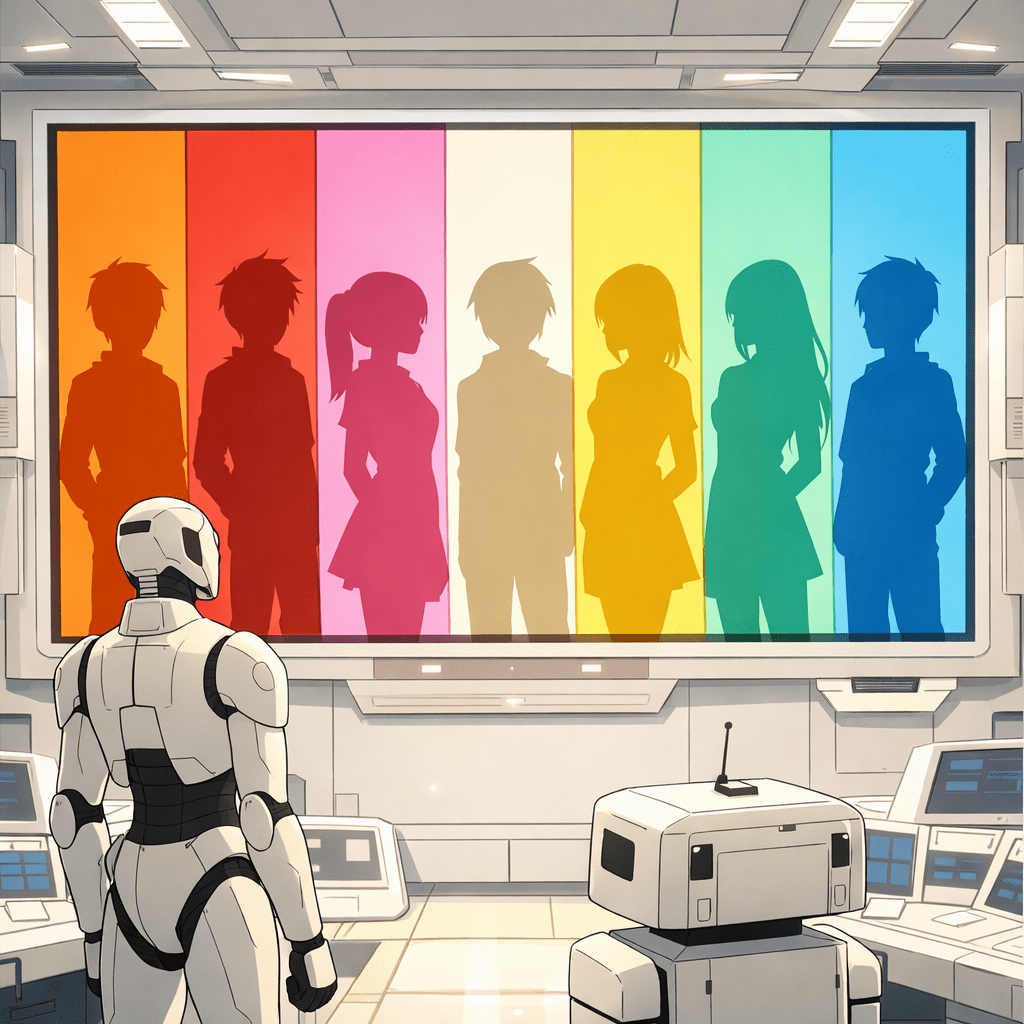
| Aboard a hidden spaceship, the robots ROBO4000 and CleanBot remain on standby, patiently awaiting the moment when the teens’ latent powers finally awaken. Uncle Ronald visits a Western Union kiosk to collect a remittance sent by his older sister, Selena, intended to help care for their aging parents. At home, Ellie’s water suddenly breaks, sending her into active labor. Alarmed but resolute, her husband Ansel helps her into the car and rushes her to the hospital. In the operating room, Dr. Galves, Ellie’s obstetrician, guides the delivery as Ellie endures the pain of childbirth, gripping Ansel’s hand while he stays by her side. Ellie cradles her newborn daughter, Felicity, with Ansel beside them, as the grandparents and Uncle Ronald gather in the hospital ward to welcome the newest member of the family. |
Status_dormant.sav
THREE YEARS LATER
Okay, so here’s the thing about living a double life that nobody tells you—sometimes you end up literally staring at your own face on a monitor while wondering if you’ve lost your mind. Very Moon Knight. Very Fight Club. Extremely not recommended for maintaining one’s sanity.
The Peregrine sits in the middle of nowhere—some abandoned field outside Quezon City where the light pollution’s minimal enough that I can actually run deep-space scans without the satellite interference frying MAurI.&SE’s circuits. Night’s fallen hard, that thick tropical darkness that swallows everything except the cobalt blue and titanium hull of the falcon-shaped ride. She gleams under the starlight like something out of Star Wars had a baby with a Gundam. Sleek. Deadly. Mine.
Inside the command center, the lighting’s dimmed to that ambient glow you see in every sci-fi bridge scene ever—just enough illumination from the massive viewscreen to cast dramatic shadows across the walls. Very Enterprise. Very Battlestar Galactica. The aesthetic’s intentional, obviously. When you’re running a surveillance op on your own civilian identity, you might as well commit to the vibe.
ROBO4000 stands to my left, all six feet of polished white titanium and chrome, humanoid enough to pass for a really buff android but clearly mechanical. Think I, Robot meets Pacific Rim tech. His optical sensors glow faint blue as he processes data streams I can’t even perceive without MAurI.&SE’s interface.
CleanBot, meanwhile, perches on the secondary console chair—shorter, stockier, basically a sentient TV-on-legs with articulated arms and that flat disc base he uses to glide around the ship. He’s like if Wall-E’s cousin got really into janitorial work and developed a personality complex. Both of them gleam with that overwhelming white sheen that screams “sterile sci-fi laboratory” in every B-movie ever made.
“It’s been three years, and still, nothing has happened,” CleanBot announces, his vocoder carrying this weird blend of disappointment and resignation. Like a guidance counselor who’s given up on his problem students.
“Patience is key,” ROBO4000 counters, calm as ever. Dude’s basically the Spock of my crew—all logic, zero chill. “We must continue observing.”
The viewscreen dominates the room, displaying seven rectangular profile windows arranged left to right like character selection screens in Overwatch or League of Legends. James. Michael. Allison. Topher. Sophie. Roanne. Benjamin.
Yeah. That last one’s the smart guy. Civilian. Regular-kid-with-glasses. He doesn’t pilot a space-faring warship with an AI named MAurI.&SE and a crew of sentient robots.
Each profile shows a head-and-shoulders photo—outdated yearbook quality, frozen in time from three years ago when they were still kids. When everything changed in that cave. When the cosmic cataclysm hit and the Seven Luminaries found their hosts and the players became something… else.
Except the kids didn’t. Not really. Not yet.
Because underneath each photo, stamped in bold capital letters that mock me every time I check: DORMANT.
All seven profiles glow that flat, lifeless gray—the color of neutrality, of absence, of potential that refuses to actualize. It’s the visual equivalent of a loading screen that never finishes, a game file corrupted before it even boots up.
Three years the two robots have been monitoring the kids. Three years of waiting for some sign—any sign—that the powers they supposedly gained actually exist outside of whatever fever dream they all shared in that cave before the amnesia kicked in.
Because here’s the plot twist nobody saw coming: the kids don’t remember any of it. Not the board game. Not the prophecy. Not the cosmic cataclysm or the stellar twister or the Seven Luminaries seeking their hosts. It’s all gone, wiped clean like someone hit factory reset on their brains.
Except I’m sitting here in a spaceship somehow built, with equipment somehow acquired, monitoring seven kids for superpowers they supposedly have but can’t access.
The irony’s not lost on me. Trust me.
“Any fluctuations in the biometric data?” A commander may ask, already knowing the answer.
“Negative, Commander,” ROBO4000 will report, his optical sensors flickering as he cross-references a dozen different data streams. “All seven subjects maintain baseline human parameters. No anomalous energy signatures detected.”
CleanBot will swivel his screen-head toward the commander, radiating concern through sheer body language alone. “Maybe they’re never going to wake up. Maybe whatever happened in that cave was a one-time thing.”
The commander leans back in the command chair, fingers steepled beneath the chin. Very anime protagonist. Very Neon Genesis Evangelion. The command center hums around them with that low mechanical thrum you feel more than hear.
“Or maybe,” the commander says, watching their own face stare back at them from the viewscreen, “we’re waiting for the right catalyst. The right moment. The right—”
“Boss,” CleanBot will interrupt, “you’ve been saying that for three years.”
Yeah. Have.
And keep saying it until those DORMANT labels finally change to something else.
Because genre-savvy as I am, I know how these stories work. The heroes always wake up. The powers always activate.
Eventually.
We just have to wait for act two to begin.
Except Peregrine doesn’t have a commander. I just came up with a tentative scenario. Because it is hard to think of a spaceship without one. The latter convo, exchange is plainly, made-up. A cool ‘what if.’ An awesome “what-would-have-been.”
The_remittance_run.sav

The VR feed shifts locations, and I’m suddenly ghost-walking through a Filipino shopping mall at midday. The sensory simulation’s dialed up enough that I can almost feel the blast of arctic air-conditioning hitting me—that signature mall climate control that makes you forget it’s a tropical furnace outside. Very Dawn of the Dead without the zombies. Very consumer capitalism meets architectural limbo.
Overhead, the off-white ceiling tiles stretch into infinity, punctuated by fluorescent strips that bathe everything in that slightly sterile glow. Below, polished floor tiles reflect the parade of shoppers—families, teenagers, security guards in their trademark uniforms. The ambient soundscape’s a chaotic symphony: mall music, chattering crowds, the occasional promotional announcement crackling through speakers.
Ronald Pangilinan navigates this consumer maze with the practiced efficiency of someone who’s been here a dozen times before. Same faded polo shirt. Same worn canvas bag slung over one shoulder. He’s heading toward a specific destination, and I follow his trajectory through my observation protocols.
There—the Western Union branch. You can’t miss it with that bold yellow-and-black sign blazing like a beacon for overseas Filipino workers and their families. It’s tucked along the main hallway between a cellphone accessories kiosk and a bakery selling pan de sal. The branch itself is basically a counter with bulletproof glass separating customers from personnel, because money transfer operations require that level of security.
Ronald approaches the counter, where a female clerk sits behind her computer workstation. She’s young, maybe mid-twenties, wearing the standard Western Union uniform and that customer-service smile that’s equal parts genuine and exhausted.
“Remittance, po,” Ronald says. Brief. Polite. That “po” suffix is the Filipino respect marker—untranslatable but essential. Very cultural-specific dialogue flavoring.
The clerk nods, fingers already dancing across her keyboard with that practiced rhythm of someone who processes a hundred transactions per shift. She gestures toward a small plastic holder containing blank paper slips—the forms that make bureaucracy go round.
Ronald grabs one, pulls a ballpoint pen from the counter chain, and starts filling in the fields. From my invisible vantage point, I watch him write:
Name: Ronald Pangilinan
From: Selena Kennedy
Branch: SM Lemery
Reference Number: 2348 1054 2241 2189
The reference number’s the key—sixteen digits that unlock money sent halfway across the world. It’s like a password in an RPG, except instead of opening treasure chests, it feeds families. The mundane miracle of modern finance.
He slides the completed form across the counter. The clerk scans it with professional efficiency.
“What currency?” she asks, though her screen probably already tells her the answer.
“In dollars, US dollars,” Ronald replies, that slight sheepishness creeping into his tone. The reiteration’s for clarity—making absolutely sure there’s no confusion between USD and some other denomination. When you’re dealing with your family’s monthly budget, precision matters.
“Selena Kennedy?” The clerk verifies the giver’s name, standard protocol.
“Yes, that’s my Ate. She’s abroad,” Ronald adds, unnecessary exposition but the kind of detail people share anyway. There’s pride there—subtle but present. His big sister made it overseas, married well, sends money home.
The clerk types. Clicks. The system processes. Somewhere in the digital ether, bits and bytes translate Selena’s American dollars into Philippine pesos using today’s exchange rate. Then—ka-ching—the cash drawer slides open with that satisfying mechanical sound effect.
She counts out the stack with practiced fingers: crisp bills totaling 10,000 pesos. About two hundred US dollars, maybe less depending on the exchange rate. Not a fortune, but enough to cover household expenses for a month in the provinces.
Ronald takes the cash, and I watch him do the instinctive thing everyone does—the recount. Thumb flickering through the bills, verifying the amount. Trust, but verify. Very Ocean’s Eleven except completely legitimate.
Satisfied, he folds the money and tucks it into a large worn leather wallet that looks like it’s seen better decades. The wallet disappears into his canvas bag, which he clutches against his side with one arm. Security measure. Smart.
Transaction complete. Ronald turns away from the counter, navigating back through the mall crowd.
From my simulation perspective, I’m cataloging everything. Another ordinary moment in the lives of people orbiting the Seven Acolytes. Money sent from America to the Philippines. A brother picking up his sister’s remittance. Family economics spanning continents.
Still dormant. Normal.
Heartbreakingly, beautifully mundane.
Scene_ronalds_video_call.sav

The simulation flickers, and suddenly I’m standing in a modest Filipino dining room—not physically, obviously, but the VR feed from my observation protocols makes it feel real enough. The wood-grain table. The slightly humid air. The faint buzz of fluorescent lighting overhead. My spacecraft’s about three klicks away in low orbit, but the immersive tech makes me feel like I’m a ghost haunting this family’s living space. Very A Christmas Carol. Very voyeuristic. Extremely weird when you think about it too hard.
Ronald Pangilinan sits hunched over a laptop, its screen casting that familiar blue glow across his face. Middle-aged bachelor uncle, tricycle driver, the kind of regular guy you’d never suspect has relatives mixed up in cosmic prophecies and dormant superpowers. He’s video-calling on Skype—yeah, Skype, because apparently not everyone’s upgraded to Discord or Zoom yet.
On screen, Selena Kennedy’s pixelated face radiates that particular brand of worried-older-sister energy I recognize from every family drama ever.
“Itay and Inay are both fine, no need to worry,” Ronald says, his Tagalog accent thick but his tone reassuring. Classic exposition dump for the audience—translation: Grandpa and Grandma are okay.
“I’ve already picked up the remittance you and Bill sent through Western Union for the household expenses,” he adds.
Remittances. The lifeblood of Filipino family economics. My databases have files on this—OFWs sending money home, relatives managing finances across continents. It’s wholesome in that bittersweet way that makes you feel things.
“That’s good to hear,” Selena responds warmly through the laptop speakers, slightly tinny with compression lag. “But how are you, my brother? Really?”
And here’s where Ronald does that thing people do when they’re struggling but don’t want to burden anyone—he smiles. It’s genuine, but there’s weight behind it.
“I’m okay, still the same old me,” he says, leaning back in the wooden chair. “Hanging out with the guys—my fellow tricycle drivers—while waiting for passengers in line. The more passengers, the better. But, you know, sometimes there are none at all.”
He pauses, then delivers the philosophical mic drop: “Life’s like the weather—sometimes it’s sunny, other times it rains.”
The soft chuckle that follows breaks my heart a little.
From my invisible vantage point, watching through sensors and simulated presence, I catalog this moment. Another data point in the lives of people connected to the Seven Acolytes.
Still dormant. Still waiting.
Still heartbreakingly, devastatingly normal.
Emergency_at_the_agoncillo_residence.sav
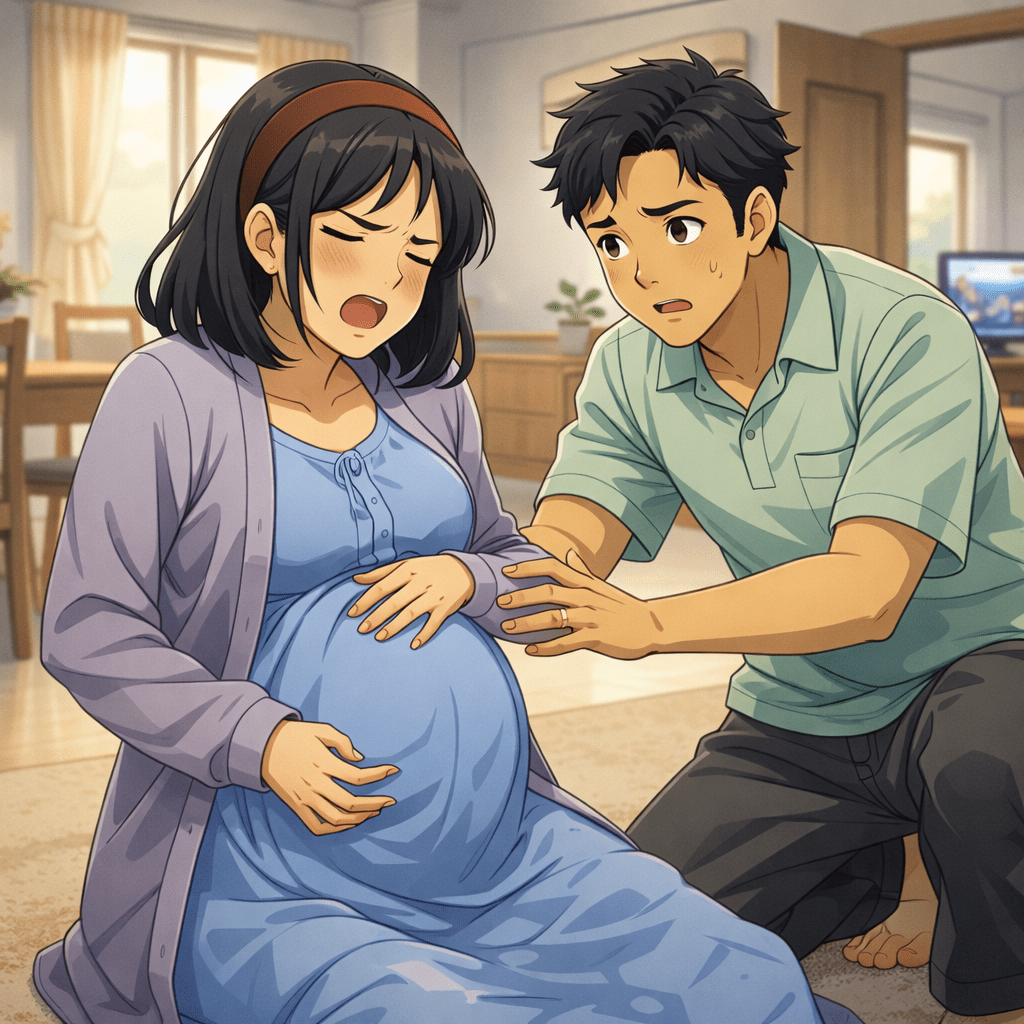
The simulation drops me into a quiet residential neighborhood in Calaca at approximately 7:23 AM—morning light streaming through windows, roosters crowing in the distance, that peaceful small-town vibe you get before everything goes sideways. The Agoncillo house is modest, single-story, with that classic Filipino aesthetic of painted concrete walls and a small yard bordered by a low fence.
Then the scream shatters everything.
“Aaaaahhh!!!”
I whip around—purely instinctive even though I’m just a VR ghost—and there’s Ellie Agoncillo in the living room, doubled over with both hands clutching her massively swollen belly. Her face contorts in pain, eyes squeezed shut, mouth open in that primal expression of agony that transcends culture or language. She’s wearing a long maternity dress, floral print in soft pastels, and as I watch, the fabric darkens around the hem.
Her water just broke.
This is it. Game time. The final boss battle of pregnancy. Very Junior except actually realistic. Very every medical drama ever filmed.
Fluid streams down her legs, pooling on the tile floor beneath her feet. It’s simultaneously the most natural thing in the world and completely terrifying if you’ve never witnessed it before. Which I haven’t. Not in person. Not even in simulation until right now.
“I’m here, my love,” Ansel says, and suddenly he’s materializing from another room—probably the bedroom, judging by his rushed appearance. Dude moves with that urgent-but-trying-not-to-panic energy you see in every movie scene like this. He’s in a plain shirt and jeans, hair slightly mussed, clearly wasn’t expecting today to be the day.
“The car’s ready. I’ll take you to the hospital.”
Prepared husband for the win. Very responsible. Very “I read the parenting books.”
Ansel wraps one arm around Ellie’s shoulders, the other supporting her lower back, and guides her toward the door with the careful precision of someone handling nitroglycerin. Each step is slow, measured, as Ellie tries to walk through the contractions. Her breathing’s ragged, coming in sharp bursts between clenched teeth.
They reach the car—an older model parked in the driveway, probably from the late ’90s based on the body shape. It’s seen better years. Faded paint. Slightly dented bumper. The kind of vehicle that runs on hope and regular maintenance.
Ansel opens the rear door and helps Ellie into the backseat. She’s trying to find some position that doesn’t hurt, which is probably impossible when you’re in active labor, but she shifts and adjusts anyway. Gripping the door frame. Settling back against the upholstery. Her face is flushed, slick with sweat despite the morning coolness.
“I’ll be right back,” Ansel says, though I’m not sure Ellie even registers his words. She’s deep in pain-land now, where everything narrows to breathing and surviving the next contraction.
Ansel sprints back into the house—and I mean sprints, like he’s suddenly competing in Olympic trials. He reappears maybe twenty seconds later clutching a packed hospital bag and Ellie’s purse. Locks the front door with fumbling fingers. Checks the knob twice to make sure. Then he’s at the car, peering through the back window at his wife with that expression of helpless concern.
Satisfied she’s as okay as possible, he throws himself into the driver’s seat. Keys in ignition. Turn. The engine cranks.
“Vroom, vroom, vroom!”
The motor roars to life with that distinctly unhealthy sound of an aging vehicle being pushed beyond its comfort zone. Loud. Aggressive. The automotive equivalent of an asthma attack.
Then—sputter. Cough. A visible puff of dark exhaust smoke belches from the tailpipe.
Oh no.
But the car holds. The engine steadies. And Ansel guns it, peeling out of the driveway with a squeal of slightly bald tires on concrete. They shoot onto the road, trailing a thin stream of exhaust like a cartoon getaway vehicle.
From my observation point, I track their trajectory. Hospital’s probably ten, fifteen minutes away depending on traffic. Ellie’s in active labor. The car sounds like it’s held together by duct tape and prayers.
This is going to be close.
Very close.
I watch them disappear down the street, and for the first time in this whole surveillance operation, I actually feel something approaching genuine concern.
Come on, Baby Felicity. Wait for the hospital.
Please.
The_delivery.sav
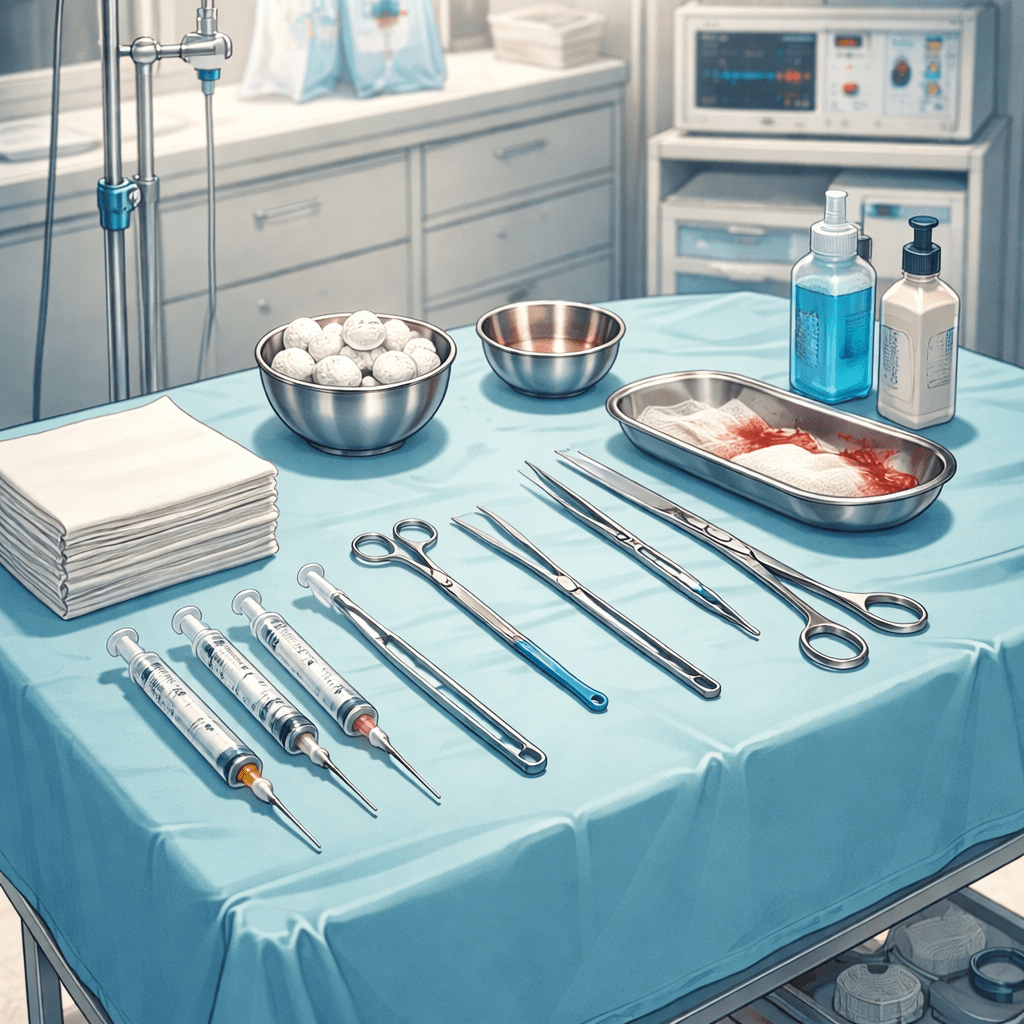
The simulation shifts to a hospital operating room, and okay, I’m going to level with you—this is way outside my comfort zone. I’m a space-tech observer who monitors dormant superpowers, not a fly-on-the-wall for medical procedures. But the protocols don’t discriminate, so here I am, virtual ghost in the corner of an OR while Ellie Agoncillo goes through the final boss battle of human reproduction.
The room’s aggressively sterile. White walls. Chrome fixtures. That particular hospital smell I can somehow detect even through simulation—antiseptic mixed with tension. Bright surgical lights hang overhead like UFO spotlights, bathing everything in harsh clarity. Very ER. Very Grey’s Anatomy. Extremely real in ways that make me wish I was back monitoring boring DORMANT status screens.
Ellie lies on the operating table, her face slick with sweat, maternity gown replaced by a hospital robe. She’s reclined at an angle, legs elevated in stirrups, looking simultaneously exhausted and terrified. Her dark hair’s plastered to her forehead in damp strands.
Dr. Galves commands the room—middle-aged overweight Filipina OB-GYN with that no-nonsense energy of someone who’s delivered a thousand babies and won’t tolerate drama from number one thousand and one. She’s in full surgical gear: blue scrubs, sterile gloves, mask pulled down to communicate clearly. Her eyes are sharp, focused, tracking a dozen variables I can’t even begin to comprehend.
“Ellie, I need you to follow my lead, alright?” Dr. Galves’s voice cuts through the tension with firm authority. This is her domain. Her battlefield. Very Gandalf energy. Very “you shall not pass” except it’s “you shall push this baby out.”
“Okay, Doc,” Ellie manages, voice barely above a whisper. She’s reaching her limit.
“Now, I need you to push—PUSH, Ellie!” Dr. Galves commands, her tone shifting to that drill-sergeant intensity.
“Eeeeehhh!!!” Ellie’s face contorts into a mask of pure agony, every muscle straining. This is pain on a level I can’t even imagine, and I’ve watched people fight Greek monsters in my surveillance files.
“PUUUSH!” Dr. Galves repeats, conviction radiating from every syllable.
Beside the table, Ansel grips his wife’s hand like it’s the only thing anchoring her to consciousness. He’s in surgical scrubs too—the partner uniform they give fathers who want to be present. His face shows that particular brand of helpless concern mixed with awe. Ellie’s squeezing his hand hard enough that his knuckles go white, but he doesn’t flinch.
“You can do this, Mahal,” he whispers, free hand brushing sweat-soaked hair from her forehead with infinite gentleness. Mahal—Filipino for “my love.” The tenderness cuts through the medical intensity like a blade.
“Aaaaahhh!!!” Ellie screams again, and the sound echoes off the operating room walls, raw and primal and completely human.
Then—
Everything shifts.
The tension breaks like a snapped guitar string.
“You did it, Ellie!” Dr. Galves’s face transforms, breaking into a brilliant smile as she lifts—
A baby.
An actual, living, screaming newborn baby girl, all wrinkled pink skin and flailing tiny limbs and that distinctive newborn cry that sounds like angry confusion at being evicted from the womb.
The surgical team—nurses, assistants, the anesthesiologist—erupts in quiet cheers and relieved laughter. Controlled celebration. Professional joy.
Ellie manages one exhausted glance at her daughter, eyes barely focusing, before her consciousness just… exits stage left. She’s done. Mission accomplished. Time to pass out.
But Ansel—his face lights up like someone just handed him the secret to cold fusion. Pure, unfiltered wonder and pride as he stares at his newborn daughter.
From my observation point, I’m cataloging the moment. Recording it. Archiving it.
Baby Felicity Lilibeth Pangilinan Agoncillo has entered the world.
One more soul connected to the Seven Acolytes.
Still dormant.
But alive.
Felicity_lilibeth.sav
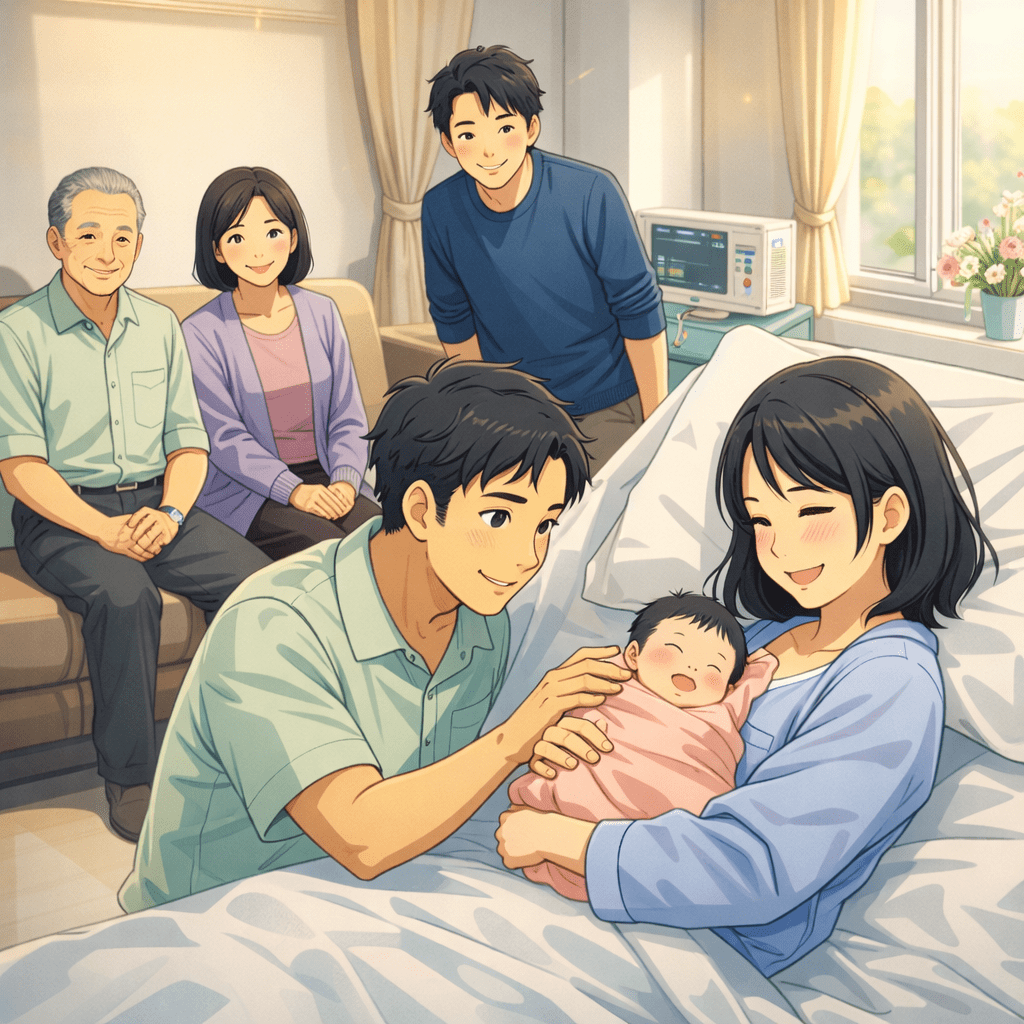
The simulation shifts again, and I’m ghost-walking through a hospital corridor that smells like disinfectant and hope. It’s quieter here in the maternity ward—softer lighting, muted colors, that deliberate atmospheric design meant to create calm after the chaos of delivery rooms. Very different energy from the OR. This is the epilogue scene, the denouement, where families gather to meet the newest player in the game of life.
I phase through the door of Room 307.
The ward’s dimly lit by choice—just the warm glow of a single bedside lamp and the ambient light filtering through half-drawn curtains. Late afternoon sun streams through the window in golden bands, painting everything in that cinematic quality you see in Hallmark movies. The room’s small but adequate: standard hospital bed with its rails and controls, a couch against one wall, a rolling bassinet currently empty because the baby’s being held, medical equipment beeping softly in the background like a technological lullaby.
Ellie Agoncillo reclines in the hospital bed, propped up on pillows, looking simultaneously exhausted and radiant in that post-delivery way that’s probably fueled by endorphins and sheer willpower. Her dark hair’s been brushed and pulled back, face still pale but peaceful. She’s wearing a standard-issue hospital gown—those awful things with the open back—but she’s covered with blankets and focused entirely on the bundle in her arms.
Baby Felicity. Wrapped in one of those hospital swaddling blankets with the pink and blue stripes. Tiny face barely visible, eyes closed, making those soft newborn sounds that aren’t quite crying but aren’t quite contentment either. She’s maybe three hours old, max. Still has that fresh-from-the-factory look.
Ansel sits on the edge of the bed beside his wife, one hand resting gently on her shoulder, his gaze locked on his daughter with that expression of awestruck wonder that dads get when they’re meeting their kids for the first time. He’s still in the surgical scrubs from the delivery room but ditched the mask. His eyes are slightly red—been crying, probably. Happy tears. The good kind.
Across the room, Grandpa Al and Grandma Emily occupy the small couch that probably converts into a fold-out bed for overnight stays. Al’s in his early sixties, slightly overweight with that signature big belly, bald, wearing a casual barong tagalog—the traditional Filipino shirt with embroidery. Emily sits beside him, same age range, softer features, wearing a simple floral dress. They’re holding hands, which is adorable in that old-couple way that makes you believe in lasting love.
Both of them radiate grandparent energy—that particular brand of joy that comes from watching your children have children. The continuation of legacy. The expansion of family trees. Very Lion King circle-of-life vibes except with more Catholicism and less singing animals.
Uncle Ronald stands by the window, hands shoved in his pockets, that casual bachelor-uncle stance that says “I’m here to support but I’m not trying to steal the spotlight.” He’s looking at the family scene with a soft smile, genuinely happy for his sister.
The whole tableau is basically a Norman Rockwell painting titled “Filipino Family, Circa 2010s.”
“My granddaughter is so beautiful,” Emily says, her voice warm and thick with emotion. Grandma voice. The kind that’s been telling bedtime stories and baking bibingka for decades.
“When she grows up, she could join Miss Universe,” Al adds with a proud grin, because of course grandparents immediately start projecting futures onto newborns. Very typical. Very endearing. The kid’s three hours old and Grandpa’s already planning her pageant career.
Ellie gazes down at Baby Felicity, and her expression does something that hits me even through the simulation feed—this look of disbelief mixed with wonder, like she’s holding something impossibly precious that she’s afraid might disappear if she blinks.
“I still can’t believe you’re here,” she murmurs, voice barely above a whisper. Soft. Reverent. The kind of tone you use in sacred spaces.
And here’s where context matters. Because I’ve been monitoring these families for three years, and my database has files on Ellie’s medical history. PCOS—Polycystic Ovary Syndrome. Hormonal imbalance. Leading cause of infertility in women. She’s been battling this condition for years, going through treatments, managing expectations, probably crying through negative pregnancy tests and doctor appointments that delivered bad news.
The arrival of Baby Felicity isn’t just a birth. It’s a miracle. A medical long-shot that paid off. A plot twist nobody saw coming.
Very A Quiet Place except instead of aliens, the enemy was biology, and the victory is this tiny human wrapped in a striped blanket.
“Mahal, our daughter is as real as she can get,” Ansel reassures her gently, his hand moving from her shoulder to brush a strand of hair from her face. That gesture of infinite tenderness. He’s grounding her, reminding her this isn’t a dream.
Ronald shifts against the window frame, pulling his hands from his pockets. “Have you folks decided on a name for her?” Classic uncle move—asking the practical questions while everyone else is lost in emotion.
Ansel turns to meet Ellie’s gaze, and there’s this silent communication that happens between married couples—a whole conversation in a glance. He’s giving her the floor, letting her do the reveal.
Ellie’s smile grows wider, softer, as she looks down at her daughter. Then she speaks, voice full of emotion that threatens to crack: “Felicity Lilibeth Pangilinan Agoncillo.”
The full legal name. All four parts. Very Filipino naming convention—given name, middle name, mother’s maiden name, father’s surname. It’s a mouthful, but it represents the blending of two families into one legacy.
“Felicity means ‘intense happiness’ in the dictionary,” Ansel adds immediately, because of course he does. Dude’s the trivia guy, the one who always has additional context. I recognize the type—the friend who fact-checks everything and adds footnotes to conversations. Respectable energy.
Ellie glances at him with pure love, her smile growing impossibly wider. “Yes, you’re right, Pa.” The Pa is Filipino couple-speak—not father, but a term of endearment between husband and wife. Cultural linguistics are fascinating.
She looks back down at Baby Felicity—Baby Lily, as the nickname apparently will be. “Because that’s what you’ve brought me and your Papa Ansel—immense joy, Baby Lily.”
Then Ellie looks around the room at her family—her parents, her brother, her husband—and her eyes glisten with tears. Not sad tears. Gratitude tears. Joy tears. The kind of crying that happens when something you’ve wanted desperately finally, finally comes true after years of hoping.
From my observation point, I’m watching this intensely private moment, cataloging the emotional data, tracking the family connections that bind these people to the Seven Acolytes.
Baby Felicity—child of Ellie and Ansel. Granddaughter of Al and Emily. Niece of Ronald. First cousin to James, Benjamin, Michael, Sophie, and Mary Pangilinan.
Connected by blood to the dormant heroes.
Still innocent. Still unaware. Still just a three-hour-old baby who exists in a world where her extended family members have supernatural destinies they don’t remember.
The scene’s beautiful. Genuinely touching in ways that make my observation protocols feel intrusive.
But I record it anyway. Because this is part of the larger story. The human moments between the cosmic prophecies. The ordinary miracles that happen while the world waits for extraordinary ones.
Welcome to the world, Felicity Lilibeth.
May you grow up in a timeline where your cousins never have to activate their powers.
But something tells me the universe has other plans.
 B. K. P. Carreon
Leave a comment