Overview:
| Sophie pushes past her shyness and introduces herself as she officially joins the Art Club. Meanwhile, Martha, accompanied by her daughter Mary, reflects on the quiet passage of time and the changes shaping their lives. A talent scout notices Thalia and predicts a bright future for Allison as a child actress, igniting Thalia’s long-held ambitions. However, Enrico firmly shuts the idea down, insisting on “education first” and crushing Thalia’s hopes. Elsewhere, Thalia and her maid Morissette discover that the Kennedys’ butler, Carlisle, already has a girlfriend. As social media continues to reshape youth culture, Allison decides to jump on the TikTok bandwagon. |
Sophies_side_quest_art_club_initiation.sav
Look, I’ve observed enough “new kid joins the club” scenarios to write a gaming guide on the trope. It’s like the tutorial level of every high school anime ever made—nervous protagonist enters unfamiliar territory, meets the friendly NPC who’ll become their guide, faces the intimidating boss (who’s actually benevolent), and unlocks the “Acceptance” achievement by the end of the scene. Classic quest structure. But here’s the thing about Sophie Pangilinan’s playthrough: even when you know the formula, watching it unfolds in real-time still hits different.
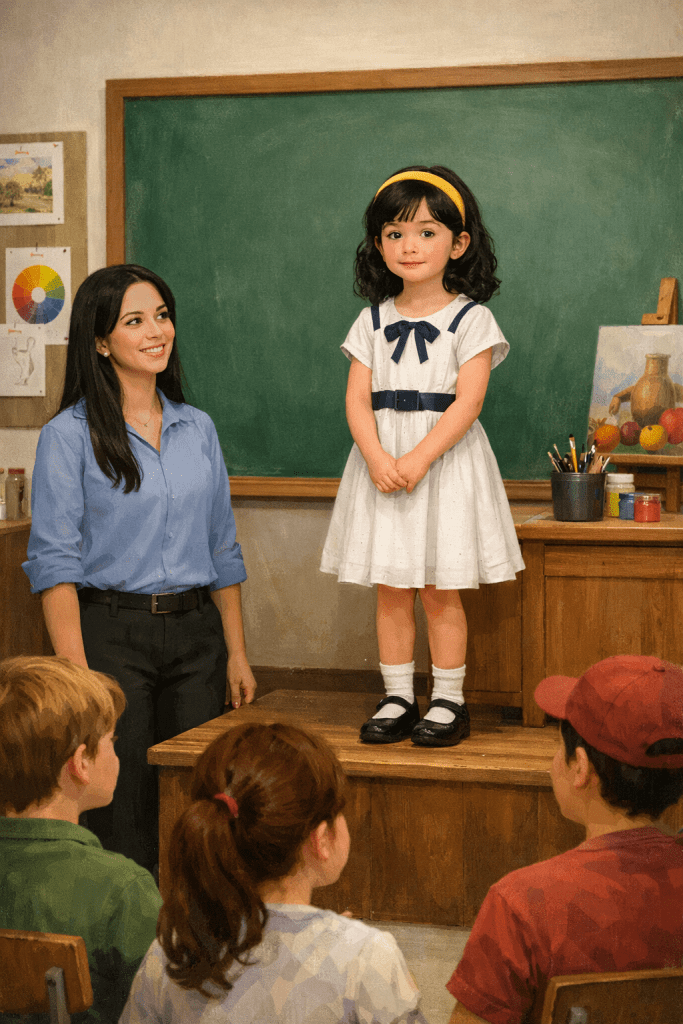
The art room at Lourdes School looks exactly like what you’d get if Studio Ghibli designed an elementary school creative space. Afternoon sunlight slants through tall windows, catching dust motes that drift like lazy fireflies. The walls are a riot of student artwork—watercolor landscapes that would make Bob Ross proud, crayon masterpieces showcasing the kind of abstract genius only seven-year-olds can pull off, and a few charcoal sketches that are honestly better than anything I could manage. Long tables stretch across the room, their surfaces scarred with years of paint splatters, pencil grooves, and the occasional carved initials. Shelves sag under the weight of supplies: mason jars stuffed with brushes, plastic bins overflowing with crayons, stacks of construction paper in every color the spectrum offers and a few it probably doesn’t.
Sophie sits at one of these tables, small hands clasped together like she’s trying to physically hold her nerves in check. She’s wearing the standard Lourdes uniform—white blouse, plaid skirt, black shoes so polished they could double as mirrors—but everything about her body language screams “level one character in a level ten zone.” Her shoulders hunch inward, making her look even smaller than her seven years. Dark hair falls past her shoulders, and she keeps tucking it behind her ears in that repetitive nervous tic people develop when they’re running background anxiety protocols.
I’m running this scene on maximum observation settings because Sophie’s the type of kid who needs someone paying attention. She’s not the main character who kicks down doors—she’s the support class player who joins the party halfway through, terrified she’ll mess up the team composition.
Another girl approaches—smooth, confident, the kind of walk that suggests she’s already mapped this entire social dungeon. Mae’s got that second-year player energy, someone who’s learned the mechanics and is ready to help newbies through the tutorial. She slides into the seat beside Sophie with practiced ease, her smile genuine in that way that can’t be faked.
“You’re new here?” Mae asks. Her voice has that friendly tutorial NPC quality—warm, inviting, designed to put players at ease.
Sophie nods, and when she speaks, her voice comes out quiet but determined. “Yes, and it’s a bit scary, but I love art, so I’ll try.”
Respect. That’s the kind of dialogue option that shows character development potential. She admits the fear but commits to the quest anyway. That’s protagonist material right there.
“I’m Mae, and you are?”
“Sophie.”
Mae’s smile widens, and she leans in slightly, dropping her voice to that conspiratorial frequency girls use when they’re about to share insider information. “It’s my second year in the Art Club. Those guys may seem intimidating, but they’re really nice. Once you start working with them, you’ll see.”
I scan the room, checking out the “intimidating” party members Mae mentioned. There’re about eight other kids scattered around the room—a mix of grade levels, all busy with various projects. One boy’s wrestling with a sculpture that looks like it might be a dinosaur or possibly a deformed cat. Two girls in the corner are whispering over a shared sketchbook, their heads close together like they’re planning a heist. None of them look particularly threatening, but I get it. When you’re the new player, every established character feels like a mini-boss.
The door opens, and the energy in the room immediately shifts. Every kid straightens up, and in perfect unison, they rise from their seats. Ms. Lozano enters—young teacher, probably mid-twenties, with the kind of creative energy that radiates off art teachers like a status buff. She’s got paint stains on her cardigan (occupational hazard), glasses perched on her nose, and hair pulled back in a messy bun held together by what appears to be an actual paintbrush.
“Pax et Bonum, Ms. Lozano!” the club members chant in unison.
Now that’s a cutscene I wasn’t expecting. The phrase sounds like a spell incantation from some medieval RPG—which, considering this is a Catholic school, isn’t too far off from the actual lore. It’s Latin for “Peace and Good,” apparently a Franciscan thing. Lourdes School keeps the tradition alive like they’re maintaining server-side customs from the beta version.
“Peace and all good to you, artists in the making,” Ms. Lozano responds, her voice carrying that teacher warmth that instantly makes you feel like maybe adults aren’t all NPCs with limited dialogue trees.
Her gaze lands on Sophie, and her smile softens even further. “Would you introduce yourself? Sophie’s joining us late this term, but I’m glad to welcome her now.”
Aaand there’s the mandatory introduction sequence. Every new character has to do this—state your name, your class, your backstory. It’s like creating your avatar profile, except you have to speak it out loud in front of the entire server.
Sophie freezes. Her hands grip the edge of her seat, knuckles going white. This is the moment—the cutscene where the protagonist either finds their voice or crashes out of the game entirely.
Mae leans over, her whisper barely audible but loaded with support buffs. “You got this. I’m cheering for you.”
Party member support activated.
Sophie takes a breath—the kind of deep, steadying breath you take before attempting a boss fight on your last life. She stands, her movements careful, deliberate, like she’s afraid sudden motion might shatter the moment. Every eye in the room tracks her, and I can practically see her HP bar wavering.
But then she speaks.
“Hi, everyone. I’m Sophia Pangilinan, but you can call me Sophie.” Her voice starts quiet but gains strength, like she’s leveling up mid-speech. “I’ve loved art since I was four. I used to trace honeybees with black crayon and color them yellow. Most of my drawings are inspired by cartoons I watch. Art used to be just a hobby, but now I’m excited to be part of the Art Club.”
And there it is. The character establishing moment. The honeybees’ detail is pure world-building gold—specific, memorable, completely authentic. It’s the kind of backstory element that makes a character feel real instead of randomly generated.
“Thank you, Sophie,” Ms. Lozano says, her warmth dialing up to maximum. “I’m sure we’ll see some honeybees on our bulletin board soon!”
The room erupts in applause—not the polite golf-clap NPCs give, but genuine, enthusiastic support. These kids actually mean it. Mae’s beaming like she just watched her protégé clear the tutorial level, her pride practically visible as a glowing aura.
Sophie smiles, and that’s when I catch it—the slight shimmer in her eyes, tears threatening to spill over but held back through sheer willpower. She’s not crying from fear or embarrassment. This is that overwhelming emotional critical hit you get when you realize you’ve found your party, your guild, your people.
Achievement Unlocked: Acceptance and Belonging
I’ve seen this quest completed a thousand times across a thousand different scenarios, but it never gets old. Sophie just turned her anxiety debuff into a confidence buff, and she did it by being completely, authentically herself. No pretense, no false bravado—just a seven-year-old girl who loves honeybees and cartoons, finding her place in a world that suddenly feels a little less scary.
Quest objective completed. Status: Success.
The_cross-stitch_save_file.sav
The Pangilinan living room operates on that classic Filipino home aesthetic—polished tile floors that could double as mirrors, wooden furniture that’s survived multiple generations like legendary raid gear, and family photos clustered on every available surface like achievement badges. The late afternoon sun filters through cream curtains, casting everything in that golden-hour glow that Instagram filters keep trying to replicate but never quite nail.
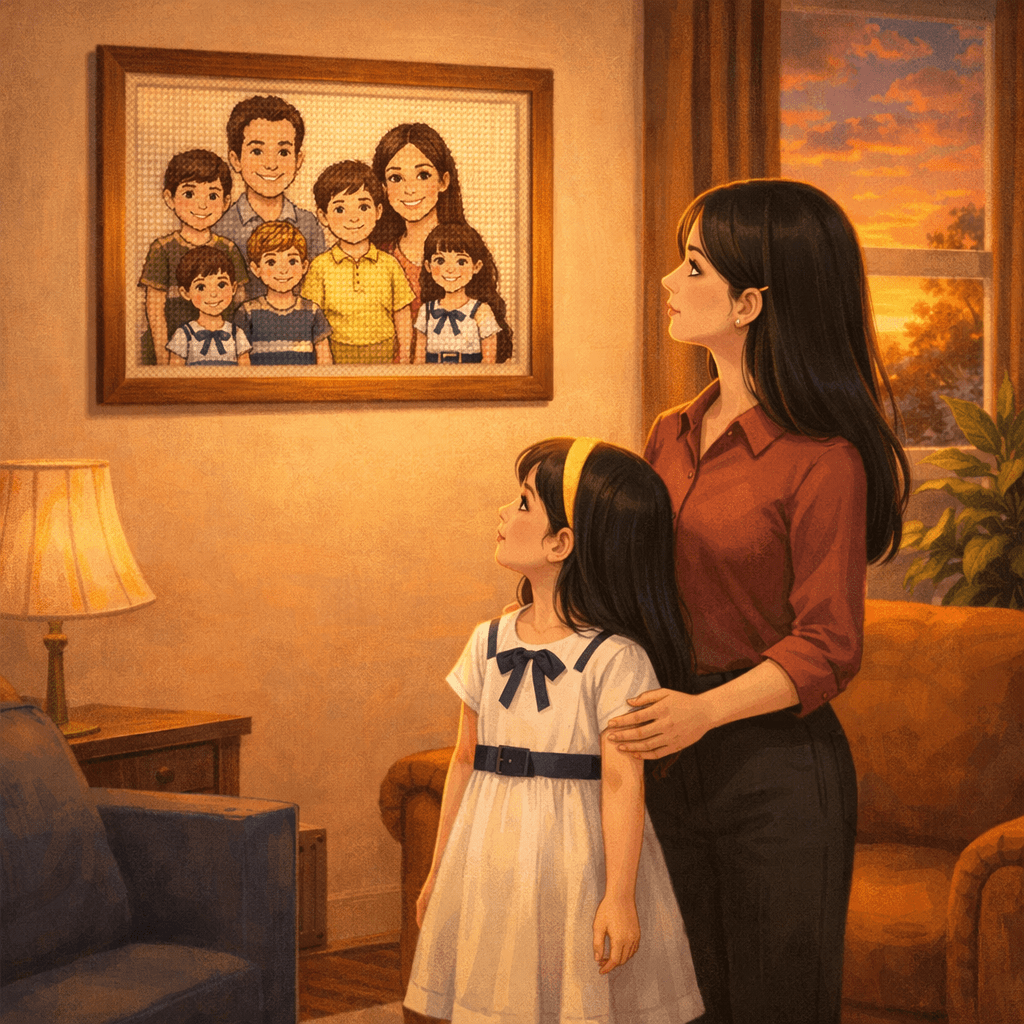
Martha Pangilinan stands in front of the entertainment center, but she’s not looking at the TV. Her gaze locks onto the large framed cross-stitch hanging above it—the kind of handmade art piece that takes hours of grinding to complete. I’m talking MMO-level commitment here. The stitched figures are instantly recognizable: cartoonish renditions of the entire Pangilinan crew rendered in colored thread against white Aida cloth. Dad Greg. Mom Martha. The three brothers—James, Benjamin, Michael. Mary. And little Sophie, immortalized in X-shaped stitches.
It’s like someone took a family photo and converted it to 8-bit pixel art, except the medium is thread and the canvas is fabric.
Martha’s still wearing her teacher uniform—old rose blouse, black slacks, that specific posture educators develop from years of standing in front of classrooms. Her hair’s loose hanging, and her face carries that expression I recognize from my own mom’s old photos: the look of someone running mental save-file comparisons between Past and Present.
She’s accessing archived memory data. Three years ago. Laiya, San Juan, Batangas. The guesthouse. The beginning of this particular crafting quest.
“Nanay, what are you doing?”
Mary bursts into the room like a player character triggering a cutscene, her backpack still bouncing against her shoulders. She’s in her student uniform—the younger version of her mom, complete with blouse and long plaid skirt and the black shoes that all Catholic school kids universally hate. Her energy shifts the room’s atmosphere instantly, trading contemplative silence for that specific warmth only kids can generate.
She crashes into Martha with a hug that would’ve dealt knockback damage in any fighting game.
Martha’s arms automatically wrap around her daughter, muscle memory from years of receiving these exact tactical affection strikes. Her expression softens—the teacher mask dropping to reveal the mom underneath.
“I’m just looking at the cross-stitch we made together, Anak,” Martha says, her voice carrying that gentle frequency parents use when they’re being real with their kids.
Anak. Tagalog for “child.” The language switch is automatic, instinctive, the way code-switching works in Filipino families—English for formal, Tagalog for feelings.
Martha sighs, and I recognize that sound. It’s the same one my own mom makes when she’s thinking about how fast time’s moving, like someone cranked the game speed to 2x without asking permission.
“Time flies so fast, Anak. Kuya James is already in senior high, Kuya Benjamin is now the student council president, and Sophie finally joined the Art Club—pursuing her dream. Three years, and so much has changed.”
Three years. In game development, that’s an entire production cycle. In real life, it’s the difference between childhood and adolescence, between dreams and their execution. James leveled up to senior high. Benjamin unlocked the Student Council President achievement. Sophie finally started her Art Club questline.
The cross-stitch isn’t just decoration—it’s a saved game state. A snapshot of family composition from three years back, preserved in thread and fabric, hanging on the wall like a memorial to a version of themselves that technically still exists but has fundamentally transformed.
Mary gazes up at her mother’s face, and the look between them carries more data than any dialogue could transmit. This is that quiet multiplayer moment where both players are synced perfectly, sharing the same emotional server, processing the same thoughts without needing voice chat.
They stand there together, wrapped in an embrace that feels both casual and sacred, mother and daughter occupying the same physical space while mentally accessing different save files of the same family story.
Quest updated: Appreciate the Present While Remembering the Past.
Status: In Progress.
Allisons_main_quest_the_talent_scout_encounter.sav

Okay, so here’s the thing about TV commercial studios at pack-up time: they’re basically what happens when you exit a dungeon after looting everything. The organized chaos of production has devolved into controlled dismantling—crew members wrapping cables like they’re storing legendary weapons, lighting technicians breaking down softboxes and stands, grips hauling equipment cases toward the exits like they’re speed-running the cleanup sequence.
The studio’s a warehouse-sized space with those impossibly high ceilings covered in rigging and catwalks. The set they used for Allison’s commercial—some kid-friendly breakfast cereal thing, based on the colorful backdrop still standing—occupies one corner, looking weirdly artificial now that the cameras have stopped rolling and the magic’s worn off. It’s like seeing backstage at Disneyland; the illusion breaks once you realize it’s all plywood and paint.
Allison stands near the craft services table, still wearing her commercial outfit—some aggressively cheerful getup that screams “wholesome family entertainment.” Her hair’s still styled in those perfect curls that required probably an hour in the makeup chair, and she’s got that specific glow kids get when they’ve just finished performing and the adrenaline’s still flowing through their system.
Morissette, the Sevilla family’s maid-slash-chaperone, hovers nearby doing the support character thing—gathering Allison’s belongings, organizing the gear, making sure nothing gets left behind. She’s wearing casual clothes (jeans and a simple blouse), moving with that efficient energy people develop when their job description includes “and whatever else needs doing.” Her tote bag is already loaded with Allison’s backup outfits, hair supplies, and probably emergency snacks, because Filipino households don’t leave home without provisions.
Classic healer-class NPC, keeping the main character buffed and ready.
Thalia Sevilla stands a few meters away, and I need to be real here—she’s running full “stage mom” protocols at maximum capacity. Upper-middle-class socialite energy radiates off her like a status effect. Designer handbag hanging from one arm, jewelry that’s tasteful but definitely expensive, hair and makeup still camera-ready even though she wasn’t the one filming. She’s dressed in that specific style Filipino women of a certain income bracket favor—elegant dress, heels that somehow survive Manila’s chaotic streets.
She’s checking her phone when the talent scout makes his approach, and I clock him immediately because guys like this have a type.
Dude is in his thirties, dressed like he raided the clearance section of every fashion-forward menswear store in Metro Manila and decided to wear all of it simultaneously. Patterned shirt with the sleeves rolled up, designer jeans that probably cost more than my entire simulation setup, shoes so shiny they’re reflecting studio lights. His hair’s styled with enough product to survive a typhoon, and he’s wearing sunglasses indoors because apparently that’s still a thing people do when they want to broadcast “I’m in the entertainment industry.”
He moves with that exaggerated confidence I recognize from every sleazy quest-giver in every RPG ever—the kind of NPC who’s definitely going to offer you a deal that sounds amazing but has hidden terms and conditions buried in the fine print.
Thalia turns as he approaches, and her expression shifts to that polite-but-curious face socialites deploy when strangers enter their personal space.
The talent scout doesn’t waste time on pleasantries—he launches straight into his pitch like he’s reading from a pre-programmed script.
“Your daughter is simply magnificent. She is a star in the making. She effortlessly aced that commercial. I am a talent scout and I see her future, bright, no doubt.”
Smooth opening. Classic flattery build-up, establishing credentials, projecting confidence. It’s the verbal equivalent of a critical hit designed to bypass defenses.
And it works. Thalia’s hand flies to her chest—that universal gesture of surprised delight—her interest hooking like a fish on a line.
“You think so?” Her voice carries genuine excitement mixed with that Filipino humility that makes us deflect compliments even when we’re secretly thrilled to receive them.
“Yeah, and I can make her a star.” He leans into his pitch now, gestures growing more animated, his entire body language screaming used car salesman meets Hollywood dreams. “We’re gonna put her in auditions. I know the right people, I have connections.”
There it is—the classic “I know people” line. Every talent scout, every agent, every industry gatekeeper uses this exact dialogue tree. It’s the verbal equivalent of showing off rare loot to prove you’re a legitimate high-level player.
“Woah, I dunno what to say.” Thalia’s overwhelmed—genuinely surprised in that good way that makes people’s guards drop. Her expression cycles through shock, excitement, disbelief, all in the span of three seconds.
The scout’s not done though. He’s building to his combo finisher.
“Of course, Mother. I can see, you, yourself, can be her manager.” His smile widens, showing teeth. “A fabulous daughter with an equally fabulous mom.”
Aaaand there’s the ego stroke. He just upgraded his pitch from flattering the kid to flattering the parent. It’s a two-for-one psychological manipulation special, and I can see it landing like a status buff.
“Really?” Thalia’s voice goes up half an octave. She’s truly flattered now, the idea of being “equally fabulous” apparently hitting some core desire she didn’t know she was advertising.
The talent scout is on a roll, his hands gesturing like he’s painting a picture in the air—the future, bright and shining and totally within reach if you just sign on the dotted line.
“Your daughter, now a child actress, in those wholesome family-friendly shows and movies. Tomorrow, she’s a leading actress in romcoms, romantic films, romantic drama.” He name-drops like he’s casting spells. “The next Claudine Barretto, Judy Ann, you name it.”
He’s pulling out the big guns now—invoking Filipino cinema royalty. Claudine Barretto and Judy Ann Santos are legendary names in Philippine entertainment, the kind of actresses who dominated the industry for decades. It’s like promising someone they’ll be the next Tom Hanks or Meryl Streep. Ambitious. Enticing. Probably overselling reality by about five hundred percent.
But Thalia’s expression shifts—reality check loading. Some part of her brain apparently remembers she’s married to a guy who has opinions about his daughter’s future.
“I guess, I have to speak with my husband first.”
There it is. Enrico Sevilla—the final boss in Allison’s “become an actress” questline. The talent scout recognizes the objection immediately and pivots like a pro.
“This is a once in a lifetime opportunity.” His voice takes on urgency now, the pressure tactics deploying. “Kids these days, they can go to school and do showbiz. Time management, online school.”
Classic scarcity principle combined with the “you can have it all” promise. It’s manipulation 101, but it’s effective because it targets exactly what parents want to hear—that their kid won’t sacrifice education for entertainment.
“I see, I see.” Thalia’s nodding, her mind clearly running calculations. Her fingers tap against her designer handbag—nervous energy, thoughts forming, scenarios playing out.
I can practically see the quest prompt appearing in her vision: [Accept Talent Scout’s Offer? Yes/No]
The answer’s not as simple as clicking a button though. There’s Enrico to consider, Allison’s education, the actual reality of showbiz versus the glamorous pitch this guy’s selling.
Quest status: Pending parental conference.
Welcome to the entertainment industry, kid. Hope you saved your game.
Enrico_vs_thalia_the_allisons_future_debate.sav

The Sevilla home office looks like what happens when a hedge fund manager designs his personal command center. Dark wood desk that probably costs more than most people’s cars, leather executive chair that screams “I make six figures,” and a computer setup with dual monitors displaying what I’m guessing are financial charts and market data. Bookshelves line one wall—heavy volumes on economics, investment strategy, business management, the kind of texts that exist purely to intimidate visitors and establish intellectual dominance. The room smells like expensive cologne and fresh paper, with just a hint of coffee from the mug sitting beside Eric’s keyboard.
Enrico Sevilla sits behind his desk like a final boss in his throne room—early forties, wearing a button-down shirt even at home because apparently casual Friday isn’t a concept he’s downloaded. His hair’s styled with that corporate precision; as he alternates between typing and shuffling through documents. Everything about his posture radiates control, order, the kind of rigid structure that makes creative types break out in hives.
Thalia sits across from him in one of the guest chairs—and yeah, even in her own home she’s positioned like a subordinate waiting for an audience. She’s changed out of her socialite armor from the studio, now wearing more casual (but still designer) home clothes, but her body language is wound tight. Fingers drumming against her knee. Lips pressed together. That specific tension of someone who’s been holding in a speech and is waiting for the optimal moment to deploy it.
This is a dialogue boss fight waiting to happen. I can practically see the health bars loading above their heads.
The silence in the room has weight—that oppressive quiet before someone drops a conversational bomb. Enrico’s focused on his work, or at least pretending to be, while Thalia’s clearly running through her pitch in her head, optimizing her argument tree.
Finally, she speaks.
“I strongly believe, Enrico, that now is the perfect time for Allison to start her career as a child actress. We need to strike while the iron is hot.”
Her voice carries conviction—that specific determination of someone who’s already made their decision and is now just waiting for everyone else to accept reality. She’s using his full name too, “Enrico” instead of the casual nicknames married couples deploy, which tells me this is a formal negotiation, not a casual conversation.
Opening move: Establish urgency and opportunity. Classic persuasion tactics.
Enrico doesn’t even look up from his documents.
“No.”
One word. Flat. Final. The verbal equivalent of a boss’s instant-kill move. No negotiation, no discussion, just a hard shutdown.
Brutal. Didn’t even let her finish her pitch.
But Thalia’s not backing down. She leans forward slightly, her voice taking on that reasoning tone people use when they’re trying to sound logical while making an emotional argument.
“Enrico,” she counters, “Allison can manage both. She can study and act, and I’ll make sure her time is balanced.”
The “have it all” argument. She’s pulling from the talent scout’s playbook.
Enrico finally looks up, and his expression is granite. No warmth, no consideration, just cold parental authority running at maximum settings.
“No.” His tone sharpens, cutting. “Acting will only distract her from her education. There’s no guarantee she’ll make it in show business. And if she fails, what will happen to her future?”
Risk assessment mode activated. Enrico’s running probability calculations, measuring Allison’s dreams against statistical likelihood of success in entertainment. It’s the practical approach, the safe play, the boring-but-reliable strategy guide that tells you to grind levels instead of attempting the speedrun.
And yeah, okay, he’s not wrong. The entertainment industry is brutal. Most child actors don’t make it. The odds are genuinely terrible. But the way he’s dismissing Allison’s passion without even considering compromise feels like he’s treating her dreams as a glitch in the system that needs patching out.
Thalia’s face flushes—frustration building like a charge meter.
“You don’t understand,” she pushes, her voice rising slightly. “Allison is missing out on big opportunities. We’re wasting valuable time.”
Sunk cost fallacy mixed with FOMO. She’s invested in this vision and can’t let it go.
Enrico leans back in his chair, and oh man, here comes the counter-attack. I can see it loading.
“You’re the one wasting Allison’s time.”
Critical hit.
He’s not done though. Enrico’s launching into his ultimate move—the full speech, the justification, the “this is why I’m right and you’re wrong” monologue that every strict parent has pre-programmed in their dialogue trees.
“Education is a sure path—show business isn’t. We’re living comfortably because I finished college. I earned my MBA in Economics, which is why I became a professional hedge fund manager. That’s why we can afford this lifestyle.”
His hands gesture around the office—the expensive furniture, the tech, all the physical evidence of his success.
“Do you think a middle-class banker could have given you all these luxuries? The clothes, the jewelry, the trips?”
Oh no. Here come the class issues.
“Would you still see yourself as a socialite if you had married a lowly teller?”
Aaaand there it is. The classism just dropped like a boss’s second phase. “Lowly teller”—as if banking jobs are somehow beneath consideration, as if people who work regular jobs are lesser. It’s the kind of statement that reveals exactly what kind of player Enrico is: the min-maxer who only values optimization, who measures human worth by income brackets and professional titles.
I’m not saying his concern about education is invalid—it’s not. Education matters. Stability matters. But the way he’s framing it, the contempt dripping from “lowly teller,” the implication that Thalia’s value is tied to his success? That’s toxic game design right there.
Thalia’s face shifts—anger, hurt, recognition. He just reminded her that her lifestyle, her identity as a socialite, exists because of his credentials and his career. It’s a power move disguised as practical advice.
Enrico takes a breath, preparing his finisher.
“Allison takes after me. She needs to be able to stand on her own. When she marries, she should be proud of her education and her accomplishments. She deserves to be part of a well-to-do family because she’s earned her place—just like the Sevillas.”
And there’s the final blow. He’s packaging control as empowerment, framing his restrictions as protection. “Stand on her own” apparently means “follow the exact path I’ve laid out” rather than “pursue her actual passions.” The whole “well-to-do family” thing just reinforces that for Enrico, success is measured in social status and bank accounts, not happiness or fulfillment.
Here’s what gets me: Enrico genuinely believes he’s being a good father. In his mind, he’s protecting Allison from failure, ensuring she has the same advantages he built for himself. But he’s so locked into his own success narrative that he can’t see Allison as a separate player with her own questline.
Thalia has no response. What can she say? Enrico just pulled rank using their entire marriage as leverage, reminding her that her position in their social circle exists because of him. Her shoulders slump slightly, the fight draining out of her posture. She sits back in her chair, and I recognize that look: it’s the expression of someone who just lost the boss battle and can’t restart from a checkpoint.
The home office falls into silence—but it’s not peaceful. It’s the uneasy quiet after a battle where both sides took damage but only one is still standing. The debate’s over. Enrico’s ruling stands. Allison’s dream remains blocked by parental veto.
Quest Failed: Convince Enrico to Support Allison’s Acting Career
Thalia stares at her hands. Enrico returns to his documents like the conversation never happened.
And somewhere else in the house, Allison probably has no idea her future just got decided without her input.
Save corrupted. Reload impossible.
That’s the thing about final bosses who are also parents—even when you know they’re wrong, they still control the game settings.
The_facebook_relationship_status_catastrophe.sav
The servant’s quarters in the Sevilla household exist in that weird liminal space between “part of the house” and “separate world.” It’s a small room tucked away from the main living areas—functional, modest, the kind of space that screams “budget allocation” rather than “interior design priority.” Single bed pushed against one wall, a narrow closet for clothes, a small desk that doubles as dining table and workstation. The walls are plain white, decorated with a few personal touches—a calendar with photos of beach resorts, a rosary hanging from a nail, and a framed photo of what I’m guessing is Morissette’s family back in the province.
The afternoon light filters through a single window that overlooks the service area, casting the room in that golden pre-evening glow. There’s a faint smell of laundry detergent clinging to everything—occupational scent marker of someone whose job includes “doing the washing.”
Morissette sits at the desk, hunched over a black laptop that’s definitely seen better days. The thing’s old—maybe five, six years past its prime, with worn keyboard keys and a screen that’s probably running at half its original brightness. But it works, and right now it’s her portal to the one thing that makes the whole “servant’s quarters” situation bearable.
She’s mid-thirties, dressed in casual home clothes since her work shift is technically over—simple t-shirt and shorts, hair pulled back in bob cut. Her fingers fly across the keyboard with practiced speed, the kind of typing velocity you develop when Facebook Messenger becomes your primary social lifeline.
The screen glows with that familiar blue-and-white interface. Facebook Messenger, chat window open, conversation in progress.
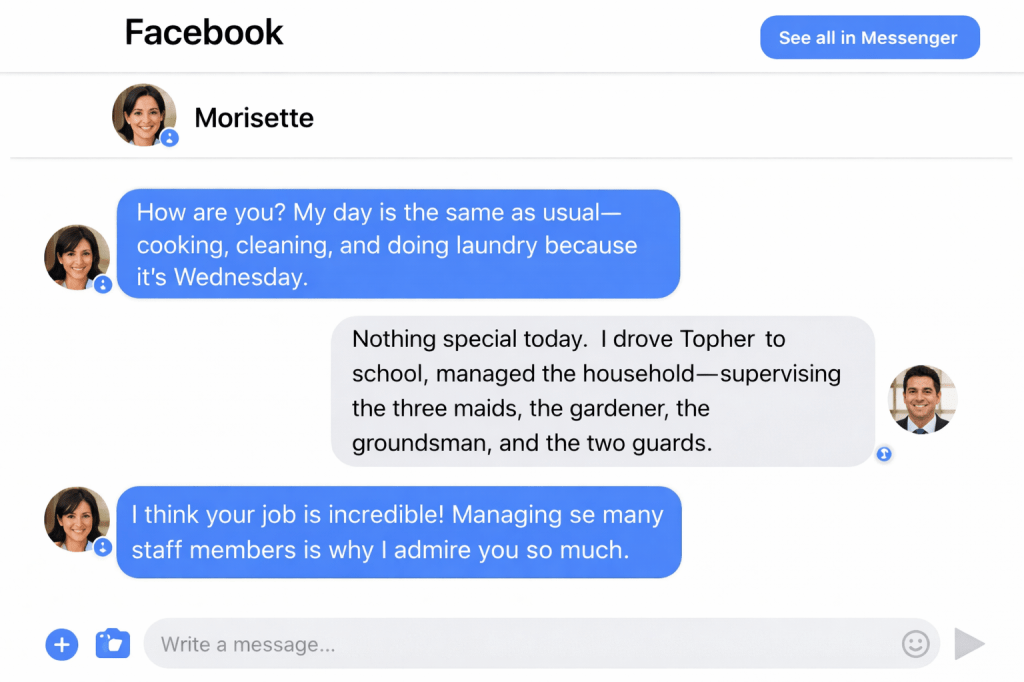
Morissette: How are you? My day is the same as usual—cooking, cleaning, and doing laundry because it’s Wednesday.
She hits send and immediately leans back, staring at the screen with that specific intensity people develop when they’re waiting for a reply from someone, they’re very interested in. Her leg crossed in the bed—nervous energy, anticipation, the physical manifestation of emotional loading bars.
Typing…
The three dots appear, and Morissette’s entire posture shifts forward. Her heart rate probably just spiked like she’s about to attempt a boss fight with under-leveled gear.
I can’t wait to hear from him, she thinks, and I can practically see the thought bubble floating above her head.
Carlisle: Nothing special today. I drove Topher to school, managed the household—supervising the three maids, the gardener, the groundsman, and the two guards.
His message appears, and Morissette’s face lights up like someone just triggered a rare item drop. She reads it once, twice, probably analyzing every word for hidden meaning the way players dissect quest text for secret objectives.
He mentioned his job. This is my opportunity to compliment him, I can see her calculating.
Her fingers return to the keyboard, typing with renewed purpose.
Morissette: I think your job is incredible! Managing so many staff members is why I admire you so much.
She hits send with the confidence of someone deploying their best dialogue option. It’s a solid play—acknowledging his professional competence, expressing admiration, showing interest. Classic romantic strategy guide material.
Knock knock.
The sound cuts through her focus like a server disconnect notification. Morissette’s head snaps toward the door, her expression cycling through surprise and mild annoyance before settling on professional courtesy.
“Come in, Madam!” she calls out, her voice shifting to that employee register—polite, accommodating, the customer service voice that people in service positions develop as a survival skill.
Thalia enters with the energy of someone who just unlocked a new gossip quest. She’s still in her home socialite mode—comfortable but stylish loungewear, makeup still intact even though it’s afternoon. She makes a beeline for the bed, sitting on the edge with the casual familiarity of someone who’s done this before, turning Morissette’s personal space into an impromptu girl-talk zone.
“So, what’s the latest? Are you chatting with Carlisle?” Thalia asks, her voice loaded with that eager curiosity people get when they’re invested in someone else’s romantic subplot.
Okay, so this is apparently a thing they do. Thalia treats Morissette’s crush on Carlisle like it’s a telenovela she’s following, complete with regular updates and commentary. It’s that weird employer-employee boundary blur that happens in Filipino households—simultaneously too familiar and fundamentally unequal.
“Of course, Madam,” Morissette answers, before her attention snaps back to the screen. Her expression drops. “Oh no, he just went offline—his break must be over.”
The green dot next to Carlisle’s name has gone gray. Offline. Connection terminated. Conversation ended without a proper save point.
“That’s too bad,” Thalia says, but she’s already problem-solving, her mind jumping to alternative reconnaissance strategies. “But you can always check his timeline to stay updated.”
And there’s the classic Facebook stalking suggestion. When direct communication fails, resort to profile browsing. It’s the social media equivalent of checking a character’s stats when they’re not looking.
“You’re right, Madam. I’m going to do just that!”
Morissette’s fingers navigate to Carlisle’s profile with the practiced efficiency of someone who’s made this journey many times before. She clicks through to his timeline, scrolling past the usual posts—shared memes, motivational quotes, the occasional photo of him in his butler uniform looking professional and put-together.
Then she stops.
Her entire body goes rigid. Face draining of color. Eyes widening like she just triggered a jump-scare in a horror game.
Oh no. I know that reaction. That’s the “game over” face.
“What is it? Spill it,” Thalia demands, leaning forward, her socialite radar detecting drama at maximum range.
Morissette’s voice comes out strangled, barely able to process what she’s reading.
The screen shows Carlisle’s latest status update, posted approximately thirty minutes ago:
Relationship Status: From single to in a relationship
Below it, a full post:
Hello everyone, I wanted to share the great news—I’ve finally found the girl of my dreams, Rebecca. She’s kind, sweet, and loving. After dating for six months, we’ve made it official. I’m her boyfriend, and she’s my girlfriend. I’m hopeful our love will last, and I’m looking forward to building a future together—maybe even starting a family someday.
There’s a photo attached. Carlisle—tall, handsome, impeccably groomed in his off-duty clothes—standing next to a young woman. Rebecca. She’s smiling at the camera, and yeah, I can see what Morissette’s processing: the girl is noticeably lighter-skinned, fair complexion, that specific skin tone that gets valorized in Filipino beauty standards.
Critical hit. HP reduced to zero.
“Aaaahhh!!!” Morissette screams, the sound sharp enough to probably alert the entire household. “Madam! Carlisle has a girlfriend—and she’s whiter than snow!”
Her voice cracks on “whiter than snow,” and the way she says it tells me everything I need to know about the insecurity spiral currently executing in her brain. It’s not just “he has a girlfriend.” It’s “he has a girlfriend who fits the beauty standard I don’t.”
“She’s white?” Thalia responds, and her tone carries concern—not for Morissette’s heartbreak exactly, but for the specific aspect Morissette just highlighted.
And here we go. The colorism element entering the chat.
Thalia’s already reaching into her oversized designer shoulder bag—the thing’s practically a portable storage unit, like a video game inventory that holds infinite items. She rummages for a moment before pulling out a bar of soap, still in its packaging.
“Here,” Thalia says, handing it to Morissette with the solemnity of someone passing over a legendary quest item. “This is glutathione soap. There’s still time—after all, they’re not married yet.”
Morissette takes the soap, holding it like it might contain actual magical properties. Her eyes are already smudged with dark eyeshadow running from tears—the waterproof formula apparently wasn’t up to the task of handling relationship status devastation.
She looks at the soap, then at Thalia, skepticism warring with desperate hope on her face.
“Is this really as effective as you say, Madam?”
The question hangs in the air, loaded with everything Morissette’s not saying: Can this actually change things? Can this make me into the kind of woman Carlisle would choose? Can soap fix what I see as my fundamental inadequacy?
“Of course!” Thalia says, her voice carrying absolute confidence, like she’s a salesperson delivering a product pitch. “Look at me—I was already light-skinned, but with this, I’m even whiter.”
She extends her arm, displaying her pale skin like it’s proof of concept, evidence of the product’s efficacy. Her skin is indeed very fair—the kind of complexion that gets described as “tisay” in Filipino slang, the beauty standard that colonialism embedded and capitalism continues to exploit.
Morissette stares at Thalia’s arm, then down at the soap in her own hands, her expression caught between hope and disbelief.
This is the scene. This is what it looks like when cultural beauty standards intersect with heartbreak, when systemic issues become personal pain, when the answer to “why doesn’t he love me?” gets filtered through “maybe my skin tone is wrong.”
I’m observing this from my simulation room, running the scene through my monitors, and here’s what I’m tracking: Morissette genuinely believes the soap might help. Thalia genuinely believes she’s being helpful. Neither of them seems to be questioning the underlying assumption that whiter skin equals better chances at love.
The laptop screen still glows in the background, Carlisle’s relationship announcement visible, his happy face next to Rebecca’s, completely unaware that his Facebook post just detonated someone else’s romantic questline like a proximity mine.
Morissette clutches the glutathione soap, her knuckles white against the packaging, tears still tracking down her cheeks through smudged eyeshadow. Thalia sits beside her on the bed, radiating confidence in her solution, apparently convinced that beauty products can solve heartbreak.
Quest Failed: Win Carlisle’s Heart
New Quest Available: [Questionable Beauty Standards Solution]
Status: Player discretion advised
The servant’s quarters fall into a strange silence—just the hum of the laptop fan, the distant sounds of the household beyond the door, and two women sitting in the fading afternoon light, holding onto very different ideas of what might fix this situation.
Carlisle’s still offline. Rebecca’s still his girlfriend. And Morissette’s still sitting here with a bar of soap, wondering if changing her skin tone might rewrite the ending of a story that was never really hers to begin with.
Save file corrupted. Reload unavailable.
That’s the brutal truth about one-sided love quests—sometimes you can do everything right, optimize all your dialogue options, present your best self, and still lose because the other player’s already chosen a different route.
The screen saver kicks in on Morissette’s laptop, the monitor dimming to conserve power.
Scene observed. Data logged.
Moving on.
Allisons_content_strategy_session.sav

The Sevilla living room is peak upper-middle-class Filipino aesthetic—oversized L-shaped sectional sofa in cream leather, glass coffee table with decorative centerpiece that nobody’s allowed to touch, flat-screen TV mounted on the wall like a shrine to entertainment, and air conditioning running at arctic blast levels because electricity bills apparently aren’t a concern when you’re a hedge fund manager’s family.
Allison sprawls across the couch like she’s claiming territory in a multiplayer lobby, feet propped up on the cushions in a way that would definitely get me yelled at in my house. She’s in full casual mode—shorts, shirt with spaghetti straps, hair loose with clip—but her attention is locked on her phone with the kind of focus usually reserved for final boss battles.
Her thumb scrolls with mechanical precision. Swipe. Swipe. Swipe. The TikTok algorithm feeding her an endless stream of content—dance videos with choreography that probably took hours to perfect, trending hashtags that’ll be dead by next week, inspirational quotes overlaid on sunset footage, product launches trying to go viral, recipe demos that make cooking look easier than it is, art challenges showcasing talent that makes me feel inadequate.
The infinite scroll. The digital dopamine dispenser. The attention economy’s greatest achievement.
I’m watching Allison’s face in the monitor feed, and her expression barely changes as content flies past. Eyes tracking movement, processing visual data, occasionally her lips twitch in reaction—a smile at something funny, a slight frown at something cringe. She’s in the zone, that semi-conscious state where you’re consuming content faster than you can actually process it.
Classic doomscrolling behavior. I recognize it because I’ve logged approximately ten thousand hours doing the same thing.
Morissette enters the living room carrying a wicker laundry basket loaded with freshly washed and dried clothes. The contrast is immediate and kind of brutal—Allison lounging in leisure mode, Morissette in work mode, both occupying the same physical space but operating in completely different realities.
The maid sits down beside Allison on the couch, setting the basket on the coffee table within arm’s reach. She starts folding clothes with practiced efficiency—shirts get the tri-fold, pants get creased down the middle, underwear and socks get their own neat stacks. Her hands move automatically, muscle memory from years of domestic labor.
She glances over at Allison’s screen, curiosity getting the better of her.
“Is that TikTok you’re watching? I remember when it used to be called Musical.ly,” Morissette comments, her tone carrying that specific nostalgia people get when they’re trying to connect over shared cultural touchstones.
The Musical.ly era. Ancient history in internet time—literally three years ago, which might as well be a geological epoch in social media years.
“TikTok is what’s in now. Musical.ly is long gone—like three years ago,” Allison replies without looking up from her screen, her voice carrying that slight dismissiveness teenagers deploy when adults mention outdated platform names.
Technically accurate. Musical.ly merged with TikTok in 2018, the rebrand completed by August that year. ByteDance did a full platform migration. Morissette’s dating herself by using the old name, and Allison’s absolutely aware of it.
Morissette doesn’t seem fazed by the correction. She continues folding—a pair of Enrico’s work slacks getting the careful treatment—while keeping the conversation going.
“You’re keeping yourself entertained with shorts, huh?” Small talk. The universal bridge between employer household and employee, the way people fill silence while performing separate tasks in shared space.
Allison’s head snaps up, and her expression shifts—eyes narrowing slightly, lips curving into something between a smile and a smirk. Oh, here we go. She’s about to drop some wisdom.
“No, Morissette. Social media isn’t just for fun—it’s a battlefield.” Her voice takes on that sharp, sassy edge that signals she’s about to make a Point. “And love is a battlefield too, but let’s stick to social media.”
Pat Benatar reference deployed. Probably unintentional. The girl’s running metaphors from songs she’s never actually heard.
She sits up slightly, gesturing with her phone like it’s evidence in a court case.
“I’m studying the competition. Like they say, ‘keep your friends close, but your enemies closer.’”
Sun Tzu via The Godfather Part II via every strategy guide ever written. The quote’s actually a bastardization—Sun Tzu said keep your friends close, but the “enemies closer” part came from Michael Corleone. But it’s entered the cultural lexicon so completely that nobody remembers the source anymore.
Allison locks eyes with Morissette, her smirk widening. She’s completely serious. In her mind, she’s not just scrolling through entertainment—she’s conducting reconnaissance. Every dance video is a competitor’s strategy. Every trending audio is intel on what’s working. Every viral creator is an opponent to analyze and potentially surpass.
The influencer mindset. The content creator grind. The algorithm game where everyone’s competing for the same finite resource: attention.
“That’s the spirit, girl! Fight and don’t back down!” Morissette responds, her face lighting up with genuine enthusiasm. She’s fueling Allison’s fire, supporting her competitive drive like a coach hyping up their athlete before a match.
And there it is—the intergenerational hype squad. Morissette just went from heartbroken over Carlisle to cheerleader for Allison’s social media ambitions in the span of maybe thirty minutes. Emotional processing speed: impressive.
Allison returns to her phone, scrolling with renewed purpose now. This isn’t passive consumption anymore—it’s active research. She’s analyzing view counts, studying transitions, noting what gets engagement. Her expression has that calculating quality, like she’s running algorithms in her head.
Quest objective: Dominate the Social Media Battlefield
Current strategy: Intelligence gathering via competitive analysis
Ally support: Morissette [Morale Boost activated]
The living room settles into a new rhythm—Morissette folding laundry with steady hands, Allison scrolling with strategic intent, both of them existing in the Sevilla household’s ecosystem where dreams and duties intersect.
Somewhere upstairs, Enrico probably has no idea his daughter’s treating TikTok like a war zone.
Status: Walkthrough 19 complete.
Achievement unlocked: Sophie’s Art Dreams + Allison’s Star Ambitions = Parallel Questlines Established
Scene logged. Moving forward.
 B. K. P. Carreon
Leave a comment