Cartoon
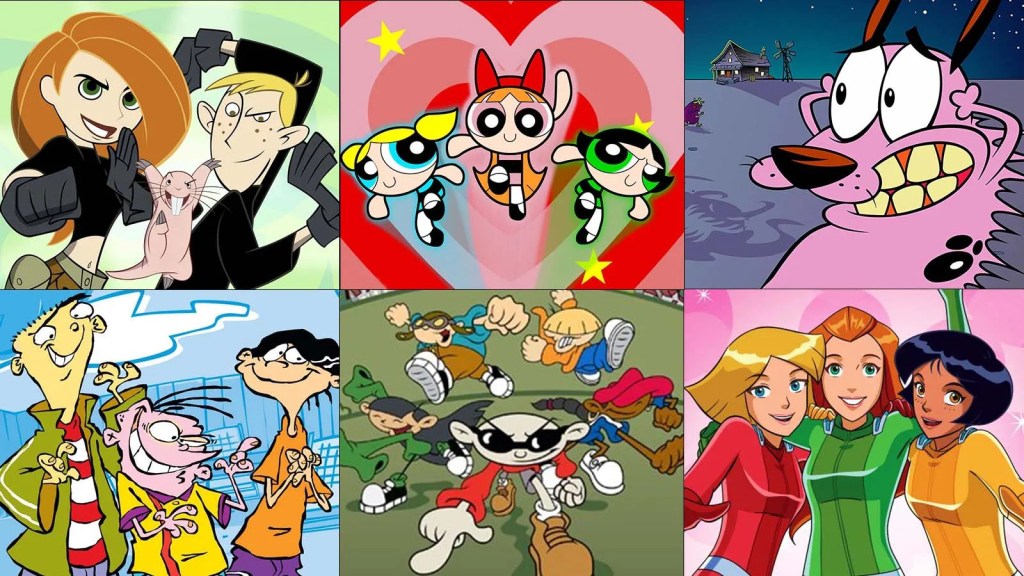
Cartoons have always been a part of my mornings. Cartoon Network and Nickelodeon were my go-to channels, lighting up the living room TV with color and motion. Thanks to Sky Cable, I wasn’t limited to just Saturday mornings—afternoons, too, became a time for cartoons. They brought a sense of routine, joy, and a spark of imagination that carried me through the day.
Among them, The Powerpuff Girls stands out vividly: Blossom, the pink-clad leader; Bubbles, the sweet and bubbly blue; and Buttercup, the feisty tomboy in green. Their trio was iconic, but it made me wonder—why no yellow? Pink and yellow often pair well, like the Pink and Yellow Rangers. Perhaps the show had its “yellow girl” after all: Princess Morbucks, with her yellow-and-black stripes and her spoiled, wealthy charm.
Princess Morbucks always reminded me of a honeybee—yellow, striped, buzzing with mischief. Yet, honey is sweet, and Morbucks was anything but. If anyone embodied that sweetness, it was Bubbles. Her childlike innocence, soft voice, and twin pigtails made her the perfect candidate for that honeybee image—bright, light, and undeniably cute.
Each Powerpuff Girl brought something unique. Buttercup had that tomboyish energy, sporty and fierce, with her dark hair giving a contrast to Bubbles’ blonde and Blossom’s red. There’s even a trope for that dynamic: “Blonde, Brunette, Redhead.” It’s one of those little storytelling patterns you stumble upon when browsing places like TV Tropes—tiny connections that explain why some character combinations just work.
Bubbles’ sweetness reminds me of another character—not from a cartoon this time, but from a game: Klee from Genshin Impact. She’s a spark of innocence, much like Beth March from Little Women—too pure for the world, yet shining within it. The honeybee archetype carries many traits: sweetness, energy, charm, and a touch of mischief. In a way, that could inspire a whole new cartoon superheroine.
Yellow as a color carries its own meaning in cartoons. It’s SpongeBob SquarePants. It’s Winnie the Pooh. It’s bright, happy, and just feminine enough to sit beside pink without clashing. Think of transformation sequences in Powerpuff Girls Z—flashy, lively, vibrant. Yellow carries that same spark: lighthearted yet full of power.
And then there’s the balance—masculine and feminine, coexisting within one character. Sporty yet soft. Strong yet tender. Like Sailor Jupiter, who bakes and gardens between battles. Or like the colors themselves—yellow lightning, green energy, cyan streaks in futuristic robots and spaceships. Even in something as simple as a cartoon, there’s a whole world of contrasts, harmony, and imagination waiting to be explored.
Magical Girl
Anime is, at its core, a variation of the word animation. But when people say “animation,” it usually sounds English or American—big-screen films like Finding Nemo, The Incredibles, or Big Hero 6. Anime, on the other hand, sounds distinctly Japanese. It refers to Japanese animation, closely tied to television series and manga—the Japanese comics from which most anime originate. Other countries have their own terms too: American comics, Chinese manhua, Korean manhwa. They’re all comics, really, but geography alone is enough to change what we call them.
Anime isn’t just one national variation of animation; it contains countless variations within itself. There’s shounen for boys, shoujo for girls, seinen for men, and josei for women. Shounen often centers on adventure, action, and flashy battles where the fate of the world is usually at stake—think Naruto, Bleach, Dragon Ball, the Big Three. Shoujo leans toward romance, sweetness, and emotional intimacy—cupcakes and strawberries, figuratively speaking—like Sailor Moon and Cardcaptor Sakura. Seinen and josei, which I’m less familiar with, tend to be darker, more mature, and more serious in tone.
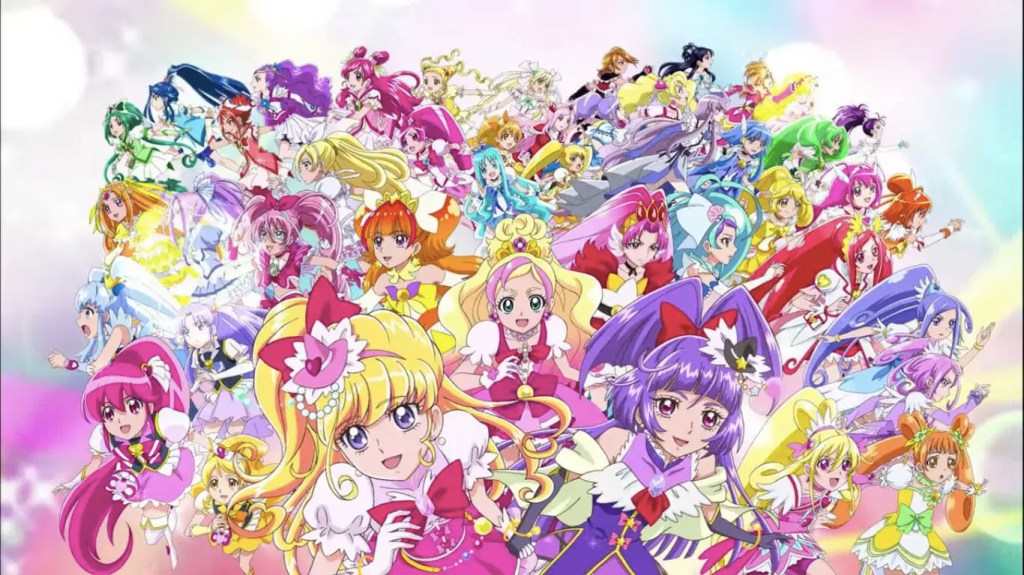
Shoujo stands as a bastion of love, friendship, and all things tender, but it also has a subgenre that blends sweetness with action: the magical girl genre. Sailor Moon, Cardcaptor Sakura, and Pretty Cure (PreCure) are its most recognizable faces. Sailor Moon shaped the genre as we know it today—even if it wasn’t technically the first, with earlier prototypes existing long before. Cardcaptor Sakura feels like its gentler, slightly more mature cousin. PreCure is the modern evolution: louder, bolder, and arguably the “cool” magical girl franchise for today’s generation, compared to the classics loved by girls of yesterday.
Every magical girl series seems to follow a set of unspoken rules. The main heroine is almost always pink—pink dress, heart-shaped wand, stars, wings, ribbons, the works. Blonde hair and blue eyes are common, too. The rest of the team gets assigned other bright, cheerful colors: yellow, light blue, apple green, orange. Personality-wise, the lead magical girl is sweet, kind, and innocent—but also feisty when it comes to protecting her friends. She draws power from friendship and love, especially her feelings for a boy. That’s already two superpowers, which is honestly a lot.
Of course, no magical girl is complete without transformation trinkets and long, flashy sequences. Compacts are the classic choice—tiny mirrors, face powder, and bonus points if they’re heart-shaped. Later series experimented with perfumes, music boxes, and other gadgets. Costume design evolved too: Sailor Moon’s outfits are relatively simple and action-ready, while PreCure cranks fashion up to eleven with ornate, extravagant dresses. And yes, those transformation scenes can be absurdly long—long enough for thieves to finish robbing a store. Maybe they happen in a pocket dimension where only a split second passes in real time. Or maybe that’s just anime logic. Either way, it makes you wonder: what if the main magical girl isn’t so nice? What if she’s a diva—dramatic, selfish, ambitious, and unapologetic—someone who knows exactly what she wants and intends to get it, no matter what.
 B. K. P. Carreon
Leave a comment