The Seven Days Prophecy
Seven days and monsters of old times
Shall roam your world in the new age.
On the first day, the Sirens of the Sea.
On the second day, the Beast of the Labyrinth of Crete.
Slithering snakes with a gaze that turns to stone,
Guardians of the Underworld baring their fangs.
On the third day, divine retribution
Spreads its wings and tears with its talons.
The Lion, the Goat, and the Serpent.
On the fourth day, The Riddler of Thebes.
On the fifth day, Hercules’ First Labor—
Echidna, She who bore Four.
She sees through them and commands thee.
On the sixth day, Twin Terrors of the Sea Strait.
On the seventh day, a Behemoth—
Serpents of the Sea shall rise
And destroy the land and life within it.
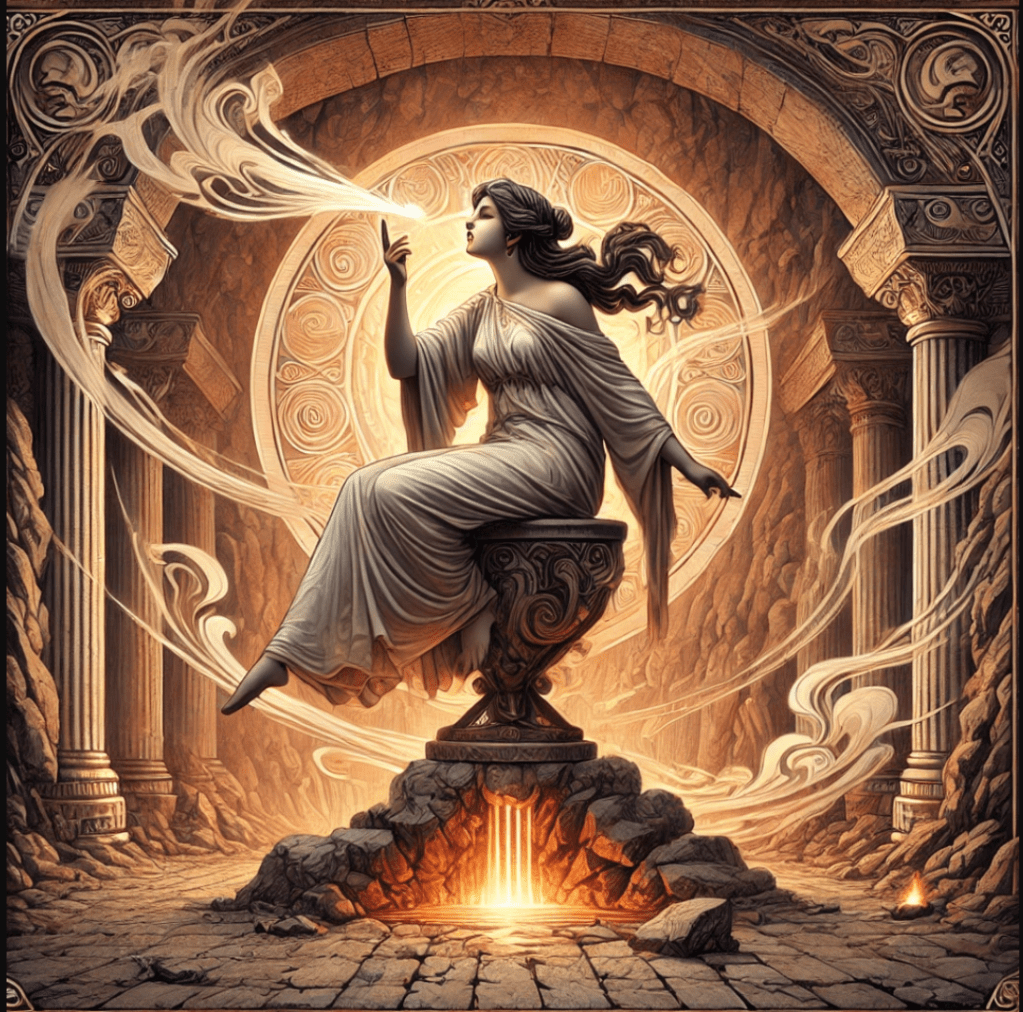
— The Oracle of Delphi
The First Day
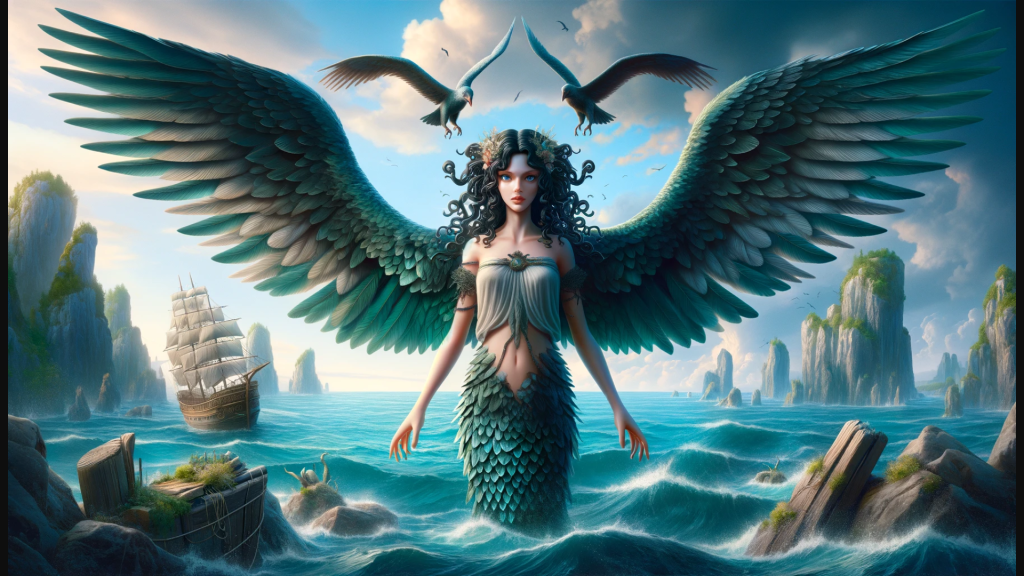
On the first day, the Sirens of the Sea.
Legends of the Sirens have echoed through history, painting them as both mesmerizing and deadly. These creatures, known from Greek mythology, were said to reside on an isolated island, often identified as Anthemoessa. With their hauntingly beautiful voices, they lured sailors to their doom, promising paradise but delivering destruction. Descriptions of the Sirens varied; some depicted them as part-bird, part-woman hybrids, while later myths transformed them into seductive mermaids. No matter their form, their allure was undeniable, and few who heard their song survived. READ MORE
The Second Day
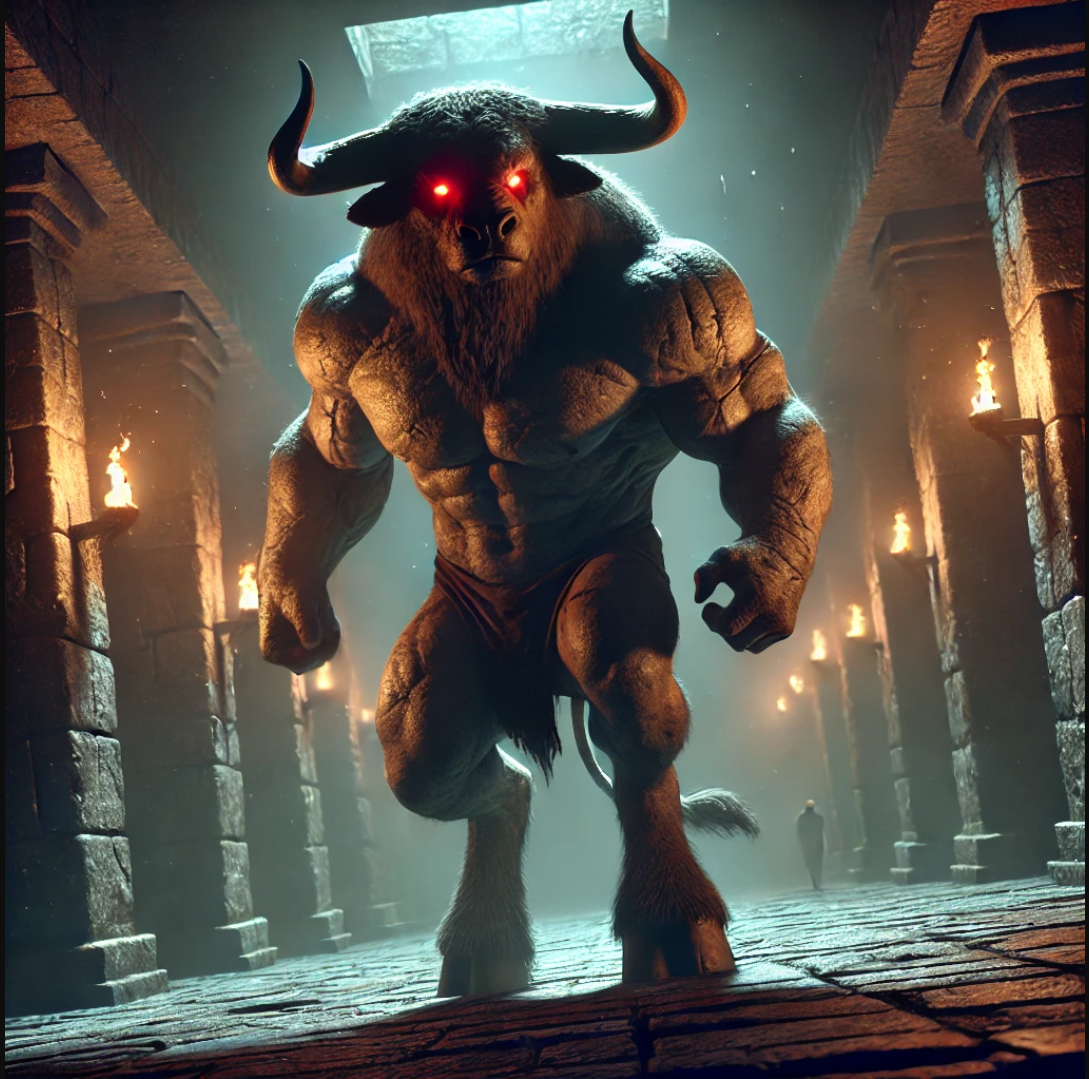
On the second day, the Beast of the Labyrinth of Crete.
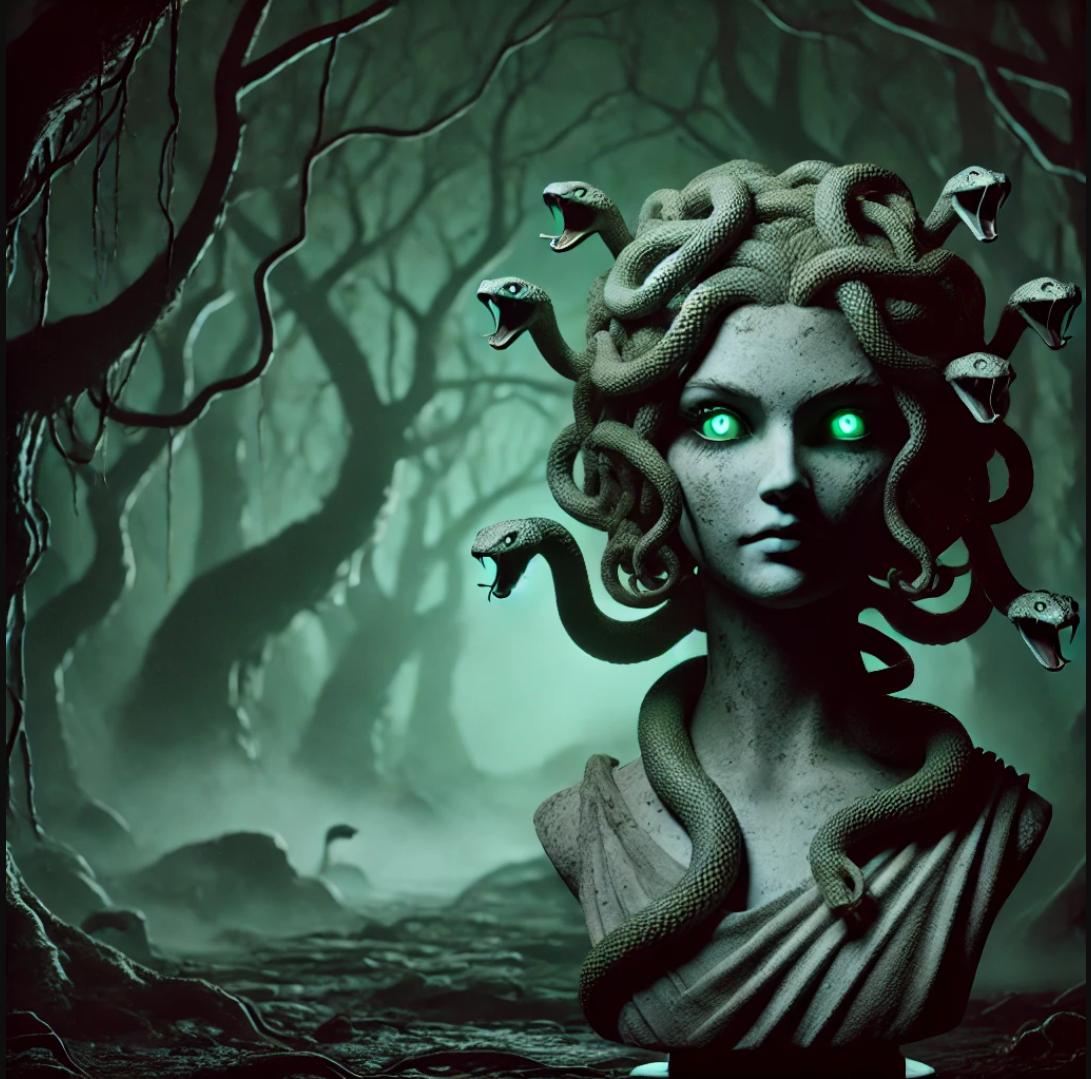
Slithering snakes with a gaze that turns to stone,
Guardians of the Underworld baring their fangs.
Medusa, one of the three Gorgon sisters in Greek mythology, was originally a beautiful maiden who was cursed by Athena. According to the most famous version, she was transformed into a monstrous creature with snakes for hair after desecrating Athena’s temple, either by her own actions or as a victim of Poseidon’s assault. READ MORE
The Minotaur, a half-man, half-bull creature, was the result of a curse placed upon Queen Pasiphaë of Crete by Poseidon. King Minos had refused to sacrifice a divine bull to the god, so as punishment, Pasiphaë fell in love with the beast and bore the Minotaur. READ MORE
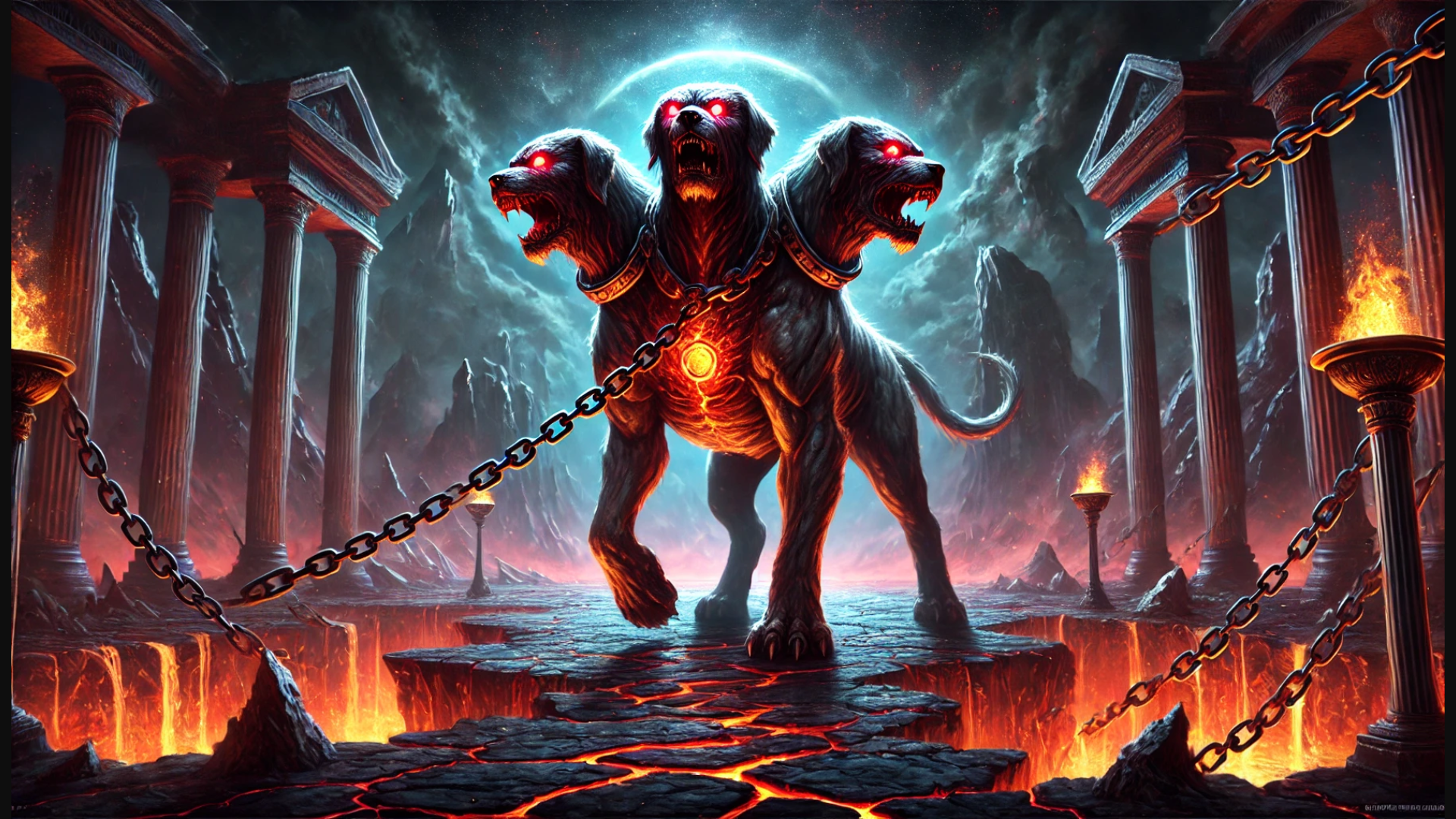
Cerberus, the three-headed hound of Hades, is one of the most fearsome creatures in Greek mythology. He guards the gates of the Underworld, preventing the dead from escaping and the living from entering. His monstrous form includes sharp fangs, a serpent for a tail, and occasionally additional serpentine features. Cerberus is a loyal servant of Hades, embodying the power and terror of the Underworld. His presence reinforces the idea that death is final and inescapable. READ MORE
The Third Day
On the third day, divine retribution
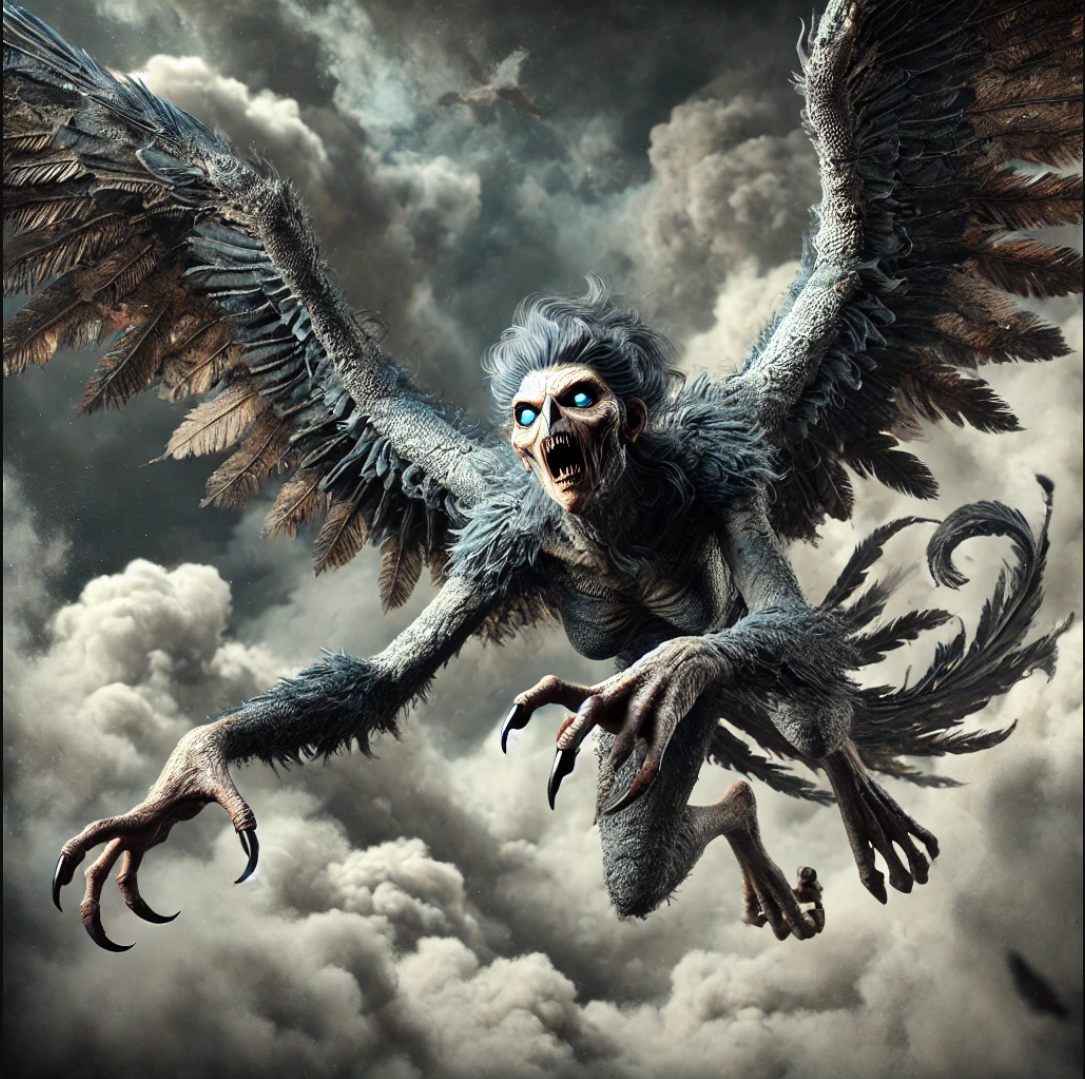
Spreads its wings and tears with its talons.
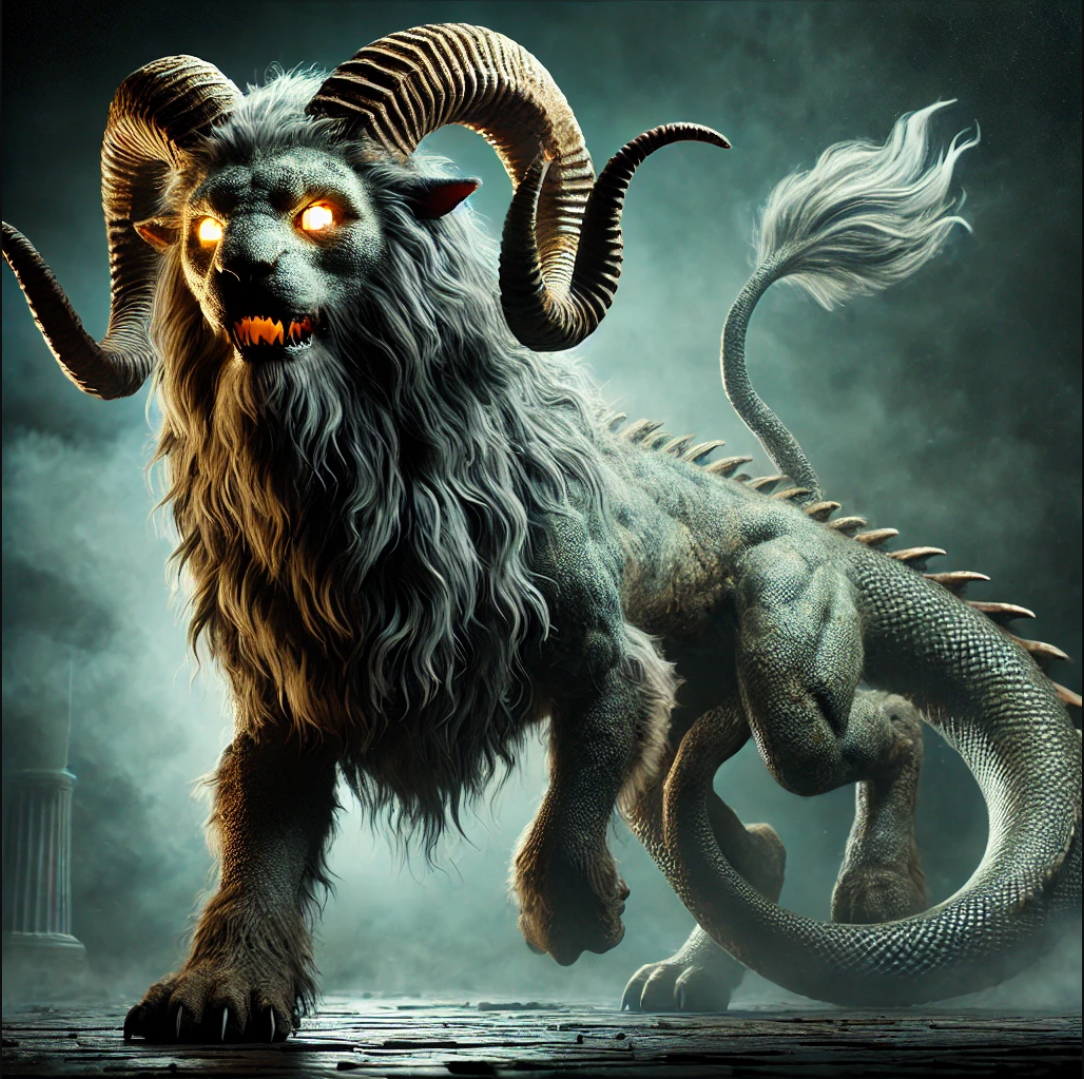
The Lion, the Goat, and the Serpent.
The Chimaera was a monstrous creature in Greek mythology, born from the union of Typhon and Echidna. It had the body of a lion, a goat’s head rising from its back, and a serpent for a tail, often depicted as breathing fire. READ MORE
The Harpies were fierce, winged spirits in Greek mythology, often depicted as half-woman, half-bird creatures with sharp talons. Their name means “snatchers,” as they were known for stealing food and carrying off souls to the underworld. READ MORE
The Fourth Day
On the fourth day, The Riddler of Thebes.
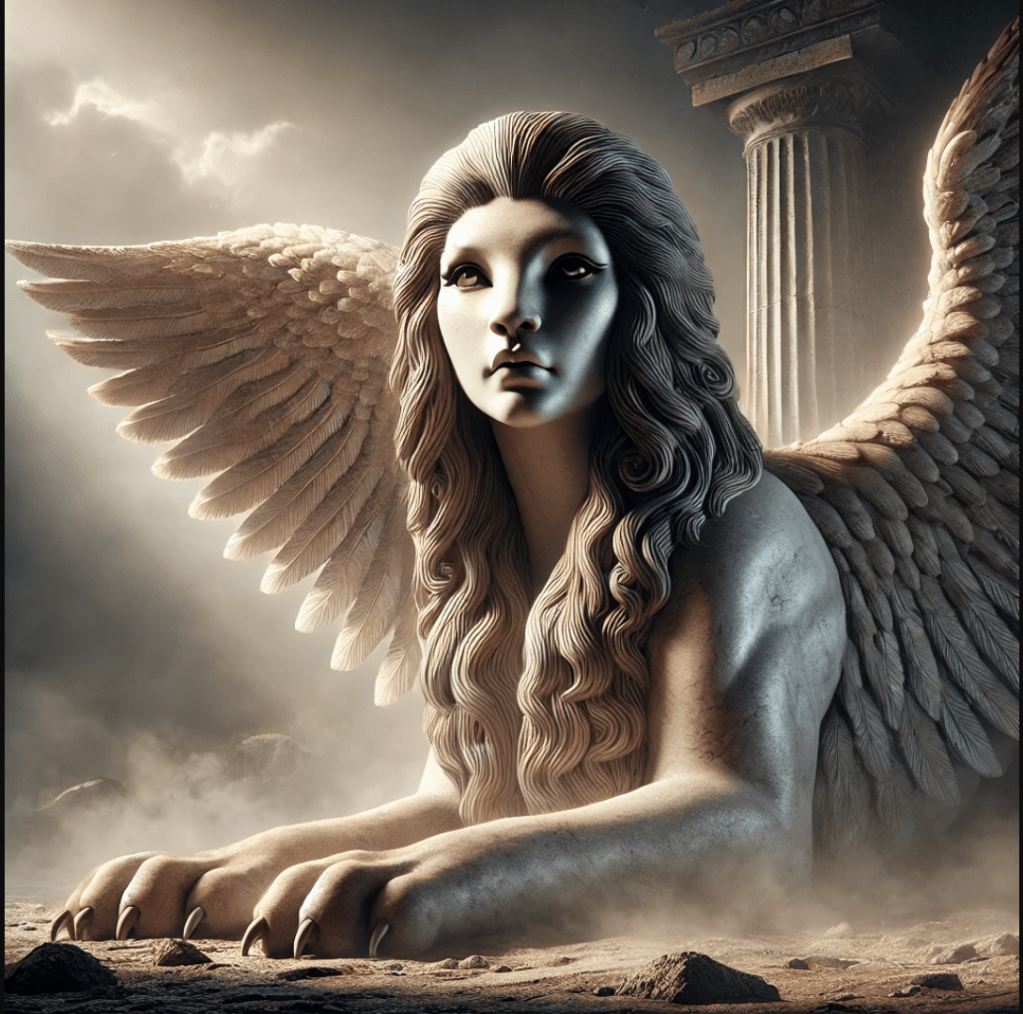
The Greek Sphinx was a monstrous creature with the body of a lion, the wings of an eagle, and the head of a woman, known for her cunning and deadly riddles. According to myth, she terrorized the city of Thebes by posing a riddle to travelers, killing those who failed to answer correctly. READ MORE
The Fifth Day
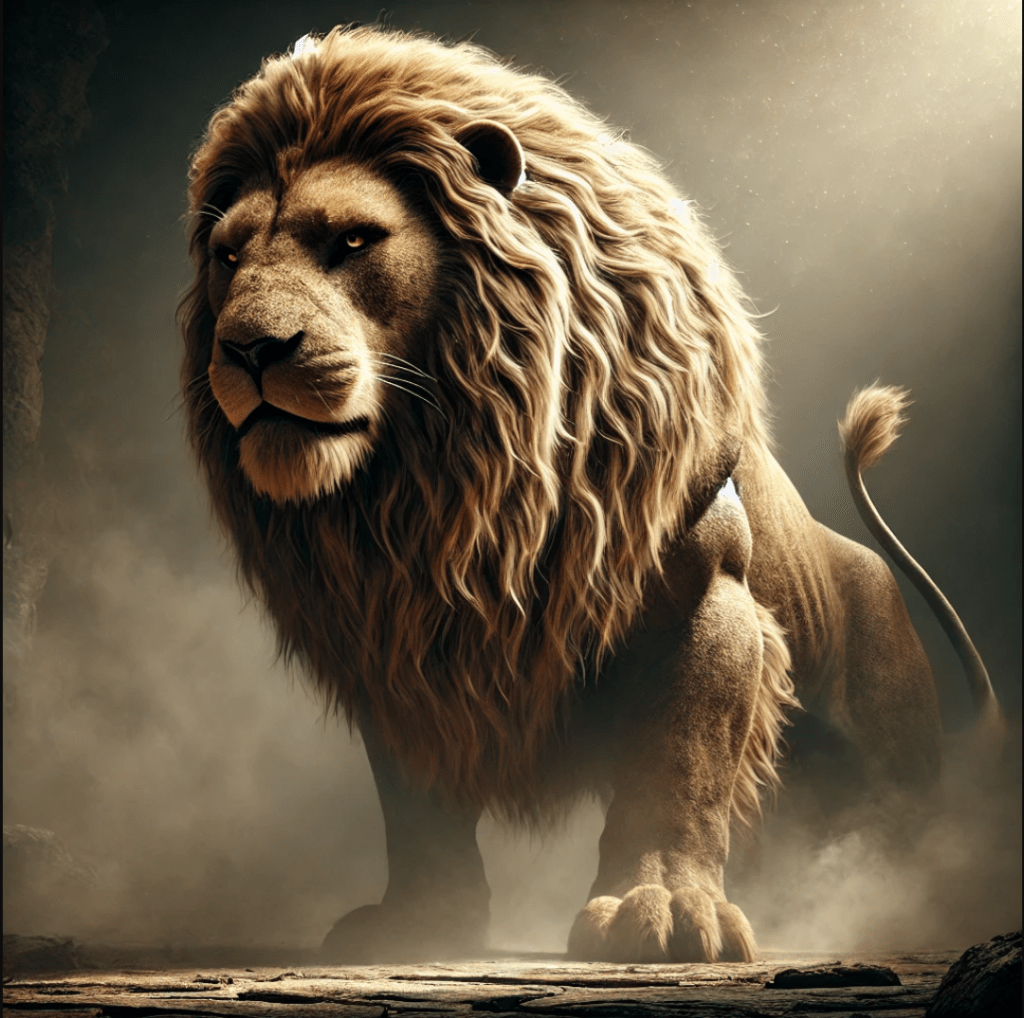
On the fifth day, Hercules’ First Labor—
The Nemean Lion was a monstrous beast in Greek mythology, known for its impenetrable golden fur and immense strength. It terrorized the region of Nemea, preying on livestock and people, and no weapon could pierce its hide. King Eurystheus assigned Heracles (Hercules) the task of slaying the lion as the first of his Twelve Labors. READ MORE
Echidna
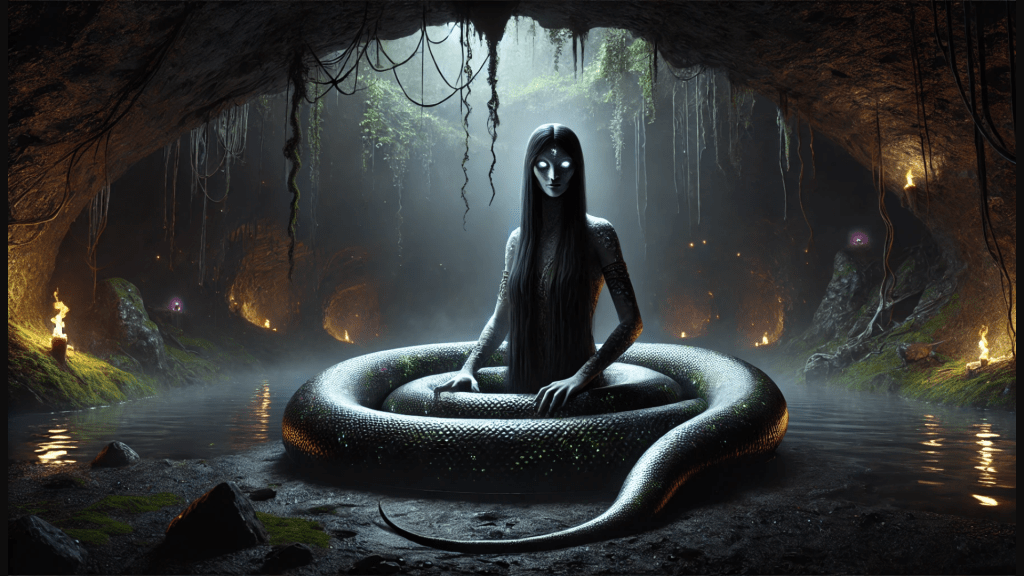
Echidna, She who bore Four.
She sees through them and commands thee.
Echidna, known as the “Mother of All Monsters” in Greek mythology, was a fearsome creature with the upper body of a woman and the lower half of a serpent. She was said to dwell in deep, hidden caves, far from the reach of gods and mortals alike. Her origins vary in different myths, but she is often considered the daughter of primordial deities such as Gaia and Tartarus. Some accounts also name Phorcys and Ceto, ancient sea monsters, as her parents. Echidna embodied both beauty and terror, luring unsuspecting travelers into her lair before revealing her monstrous nature.
She was the mate of the fearsome giant Typhon, the most powerful of all monsters, who challenged Zeus for supremacy. Together, they gave birth to some of the most infamous beasts in Greek mythology, including Cerberus, the three-headed guard dog of the Underworld, and the Lernaean Hydra, a multi-headed serpent slain by Heracles. Other monstrous offspring included the Chimera, the Sphinx, the Nemean Lion, and the dragon Ladon. Each of these creatures played a role in the trials of Greek heroes, making Echidna a foundational figure in many legendary battles. READ MORE
The Sixth Day
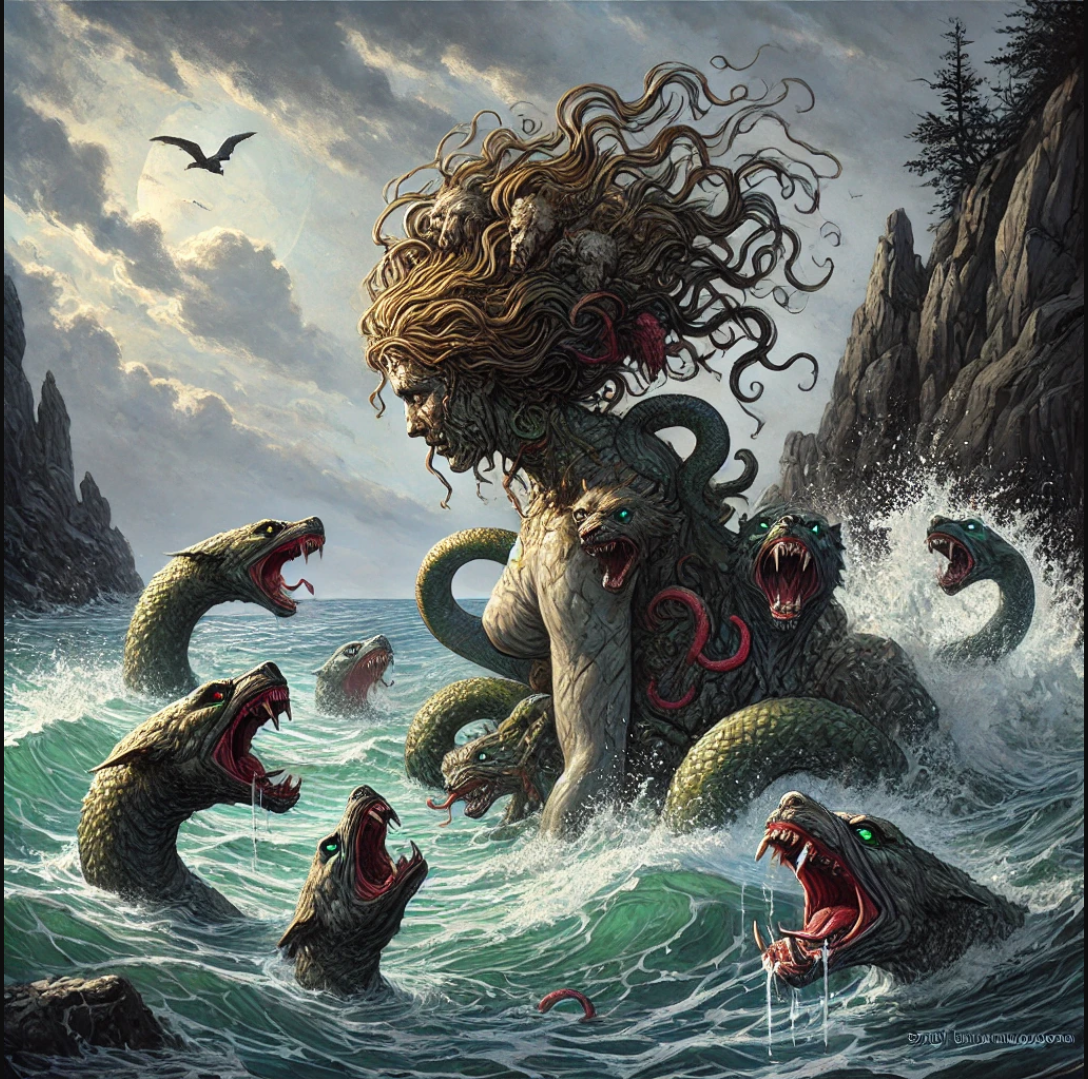
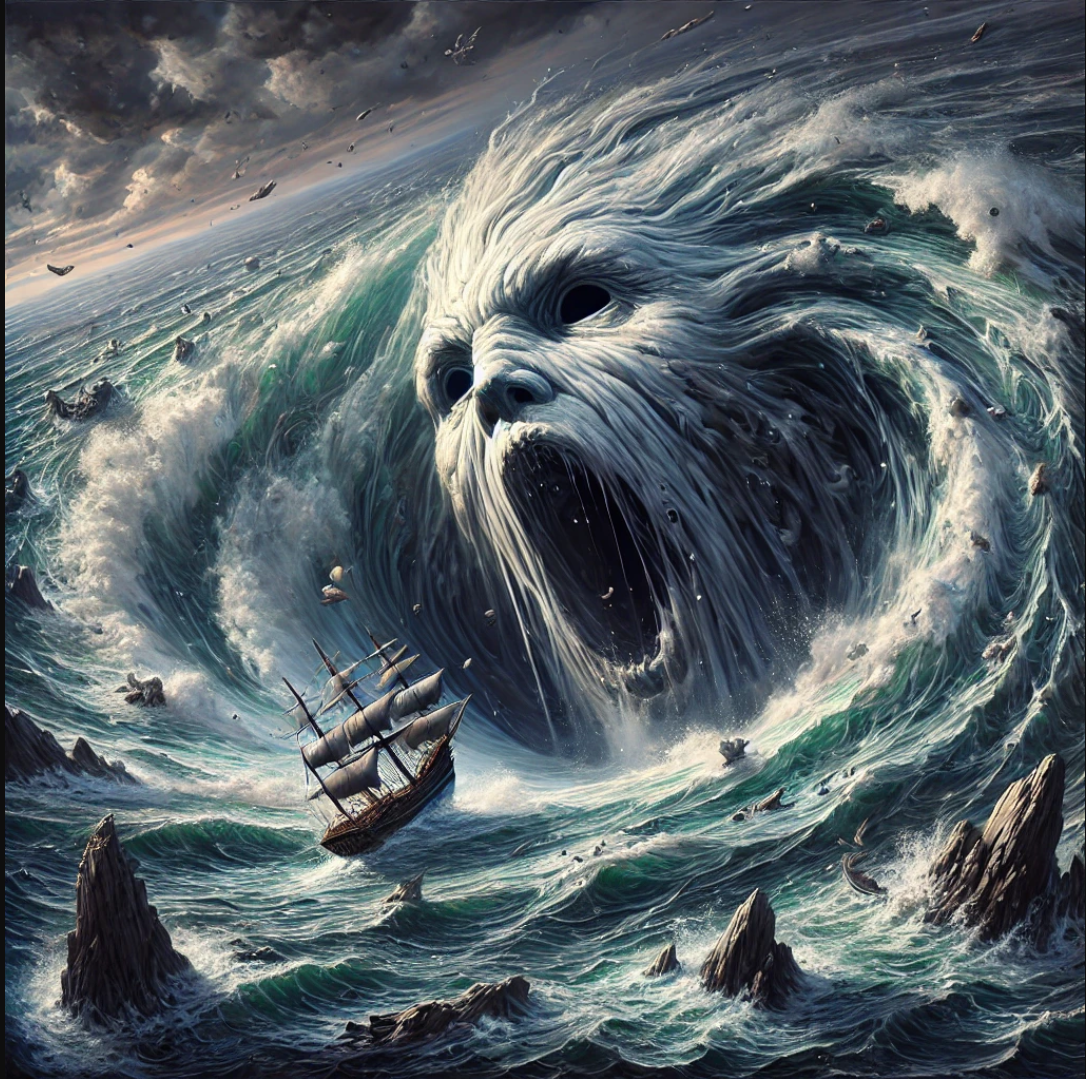
On the sixth day, Twin Terrors of the Sea Strait.
Scylla was once a beautiful sea nymph, admired by gods and mortals alike. In one version of the myth, she was transformed into a monstrous creature by the jealous sorceress Circe, who poisoned the waters where Scylla bathed. READ MORE
Charybdis was once a sea nymph, daughter of Poseidon and Gaia, who loyally aided her father in his battles. She flooded lands for him, swallowing vast swaths of coastline, which angered Zeus. READ MORE
The Seventh Day
On the seventh day, a Behemoth—
Serpents of the Sea shall rise
And destroy the land and life within it.
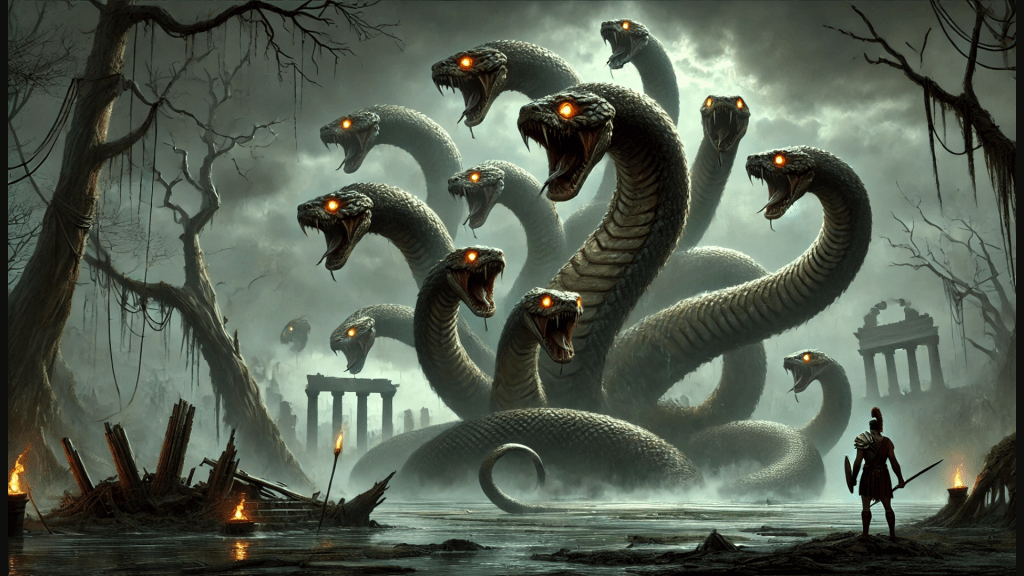
In the ancient Greek region of Lerna, a fearsome beast known as the Hydra terrorized the land. This monstrous serpent had multiple heads—most versions say nine—and for every head cut off, two more would grow in its place. Its blood and breath were poisonous, making it a deadly foe even from afar. The Hydra lived in a murky swamp, emerging only to attack livestock and villagers. None dared face it—until Heracles came. READ MORE
Typhon
Father of All Monsters and Chaos
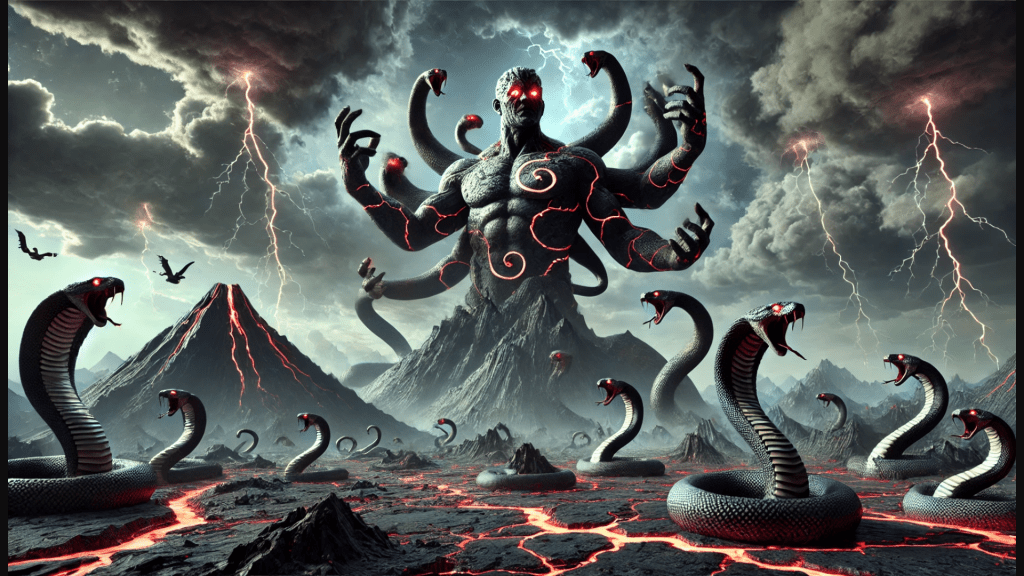
Typhon, in Greek mythology, was the last and most fearsome child of Gaia (Earth), born in revenge after the Titans were overthrown by the Olympians. Gaia, furious at Zeus for imprisoning her children, created Typhon with Tartarus as his father. Typhon was a monstrous giant, described as taller than mountains, with a hundred dragon heads, wings, and a lower body of writhing snakes. His voice could mimic animals and humans, and flames spewed from his eyes. He was the embodiment of chaos and destruction, feared by both mortals and gods alike.
Typhon rose against the Olympians in a cataclysmic battle for control of the cosmos. With his massive size and devastating powers, he struck fear into the gods of Olympus, who fled in terror. Most disguised themselves as animals to escape, while Zeus alone stood firm against the beast. The initial battle shook the heavens and the earth, as the two clashed with thunderbolts and storms. The skies burned as Zeus hurled lightning, but Typhon was not so easily subdued. READ MORE
Griffin
 B. K. P. Carreon