Overview:
| Emily prepares daing na bangus for breakfast as Ronald eats with his aging parents. Later, he resumes work as a tricycle driver, picking up a female passenger. Al visits his sugarcane field with his right-hand man to check on its condition. Meanwhile, Ellie and her husband Ansel drop by her parents’ home for a brief visit and a small home makeover. Ellie helps clean the house, while Ansel leads his foreman and construction crew at work. Eventually, Ellie is diagnosed with PCOS, a condition that makes it difficult for the couple to conceive. |
SIX MONTHS EARLIER.
Emilys_morning_kitchen_ritual.sav
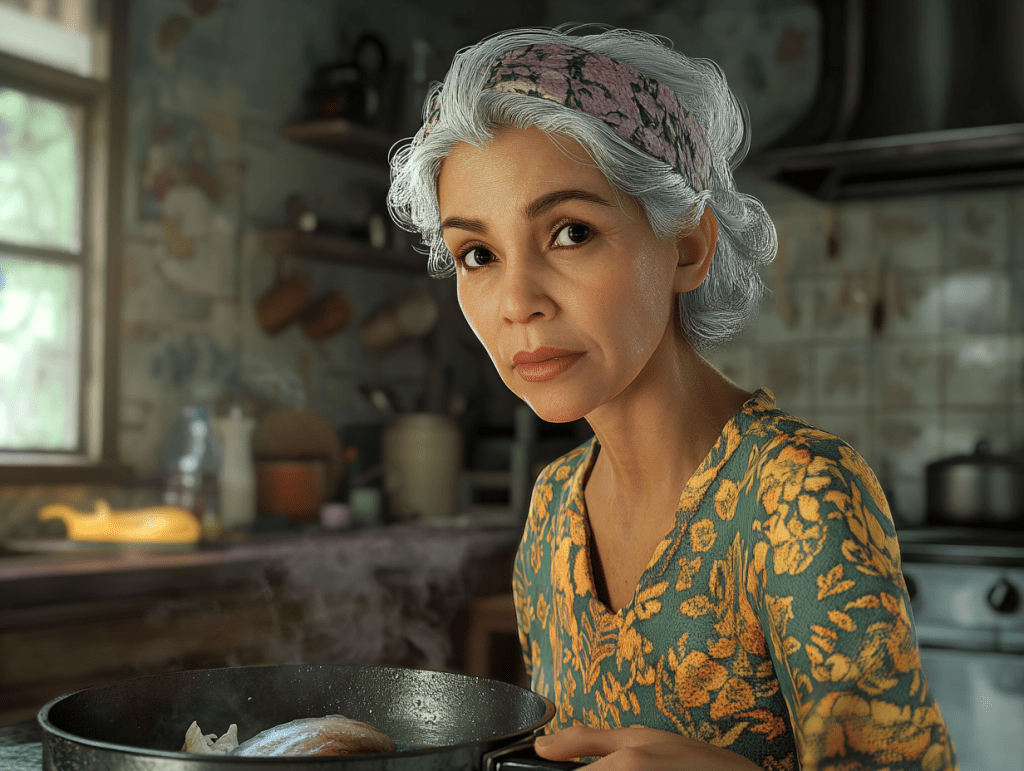
January morning, 2016. Lemery, Batangas. The kind of sleepy town that probably hasn’t changed much since the Spanish colonial era, except now everyone has smartphones and tricycles that sound like dying mechanical beasts.
The golden sunlight streams through the kitchen window like some budget indie film’s attempt at cinematography, casting long rectangles across the worn wooden floor. It’s the kind of lighting directors would kill for, but here it just exists, doing its daily dance across Emilia “Emily” Batumbakal Pangilinan’s modest domain.
Emily moves through her kitchen with the practiced efficiency of an NPC who’s perfected her daily routine after decades of grinding the same quest. She’s got that classic Filipino grandmother aesthetic down pat—fair skin weathered by seventy-something years of tropical living, shoulder-length white hair that catches the morning light like fiber optic cables. The plain headband keeping her waves in check screams practical over fashionable, which honestly? Respect. Her dark brown eyes hold that particular sharpness you see in people who’ve mastered the art of existing without making a fuss about it.
She’s small-framed, the kind of petite that makes you think of those deceptively powerful characters in JRPGs—unassuming until they start casting high-level spells or, in Emily’s case, wielding kitchen implements with surgical precision.
The daing na bangus sits in its plastic bag like some kind of preserved artifact from the sea. Traditional Filipino food prep is basically medieval alchemy—take fresh fish, cure it with salt, dry it until it looks like leather armor, then resurrect it with fire and oil. Emily lifts the silvery specimens from their packaging, letting the brine drip into the sink with soft plip-plop sounds that echo in the quiet morning air.
The kitchen itself tells the story of a thousand meals—scratched countertops that have seen decades of chopping, a gas range that’s probably older than most smartphones, walls that have absorbed the aromatic history of countless family dinners. It’s the opposite of those sterile, Instagram-ready kitchens you see in lifestyle blogs. This place has character.
Emily cranks the gas burner to life with a mechanical click-whoosh, the blue flames dancing underneath a well-seasoned pan. The oil goes in with a gentle pour—not the dramatic splash you’d see in cooking shows, just the measured precision of someone who’s done this roughly ten thousand times. As it heats, tiny bubbles form around the edges like a loading screen slowly filling up.
The first fish hits the oil with that satisfying sizzle that sounds like applause. Steam rises in wispy columns, carrying the rich, salty aroma that probably has the neighbors’ stomachs growling even though it’s barely past breakfast time. Emily doesn’t hover over it like an anxious speedrunner—she knows the timing by muscle memory. The milkfish skin crisps and browns, developing that golden texture that looks almost like chainmail armor.
Flip. One smooth motion with the spatula, revealing the perfectly crisped underside. The other side gets the same treatment, browning and bubbling in the hot oil. It’s oddly meditative, watching this simple process unfold. No dramatic music, no flashy presentation—just competent execution.
The finished fish lands on the serving plate with a soft thunk, its surface gleaming with oil and crispy perfection. Two more follow in succession, each one identical to the last. It’s like watching a craftsperson at work, someone who’s achieved that zen state where technique becomes second nature.
While the last fish finishes cooking, Emily preps the sawsawan—spicy vinegar dip that’s basically the cheat code for Filipino breakfast. The sharp tang of vinegar mixed with chilies creates this perfect acidic counterpoint to the rich, salty fish. It’s food chemistry at its most elegant: fat plus acid equals flavor perfection.
The morning light has shifted now, painting different patterns across the kitchen floor. Emily’s small frame moves through the space with quiet satisfaction, another successful completion of the daily breakfast ritual. In a world obsessed with innovation and disruption, there’s something deeply comforting about traditions that refuse to change, about people who perfect the art of the ordinary and make it extraordinary through sheer consistency and care.
The_pangilinan_family_breakfast.sav
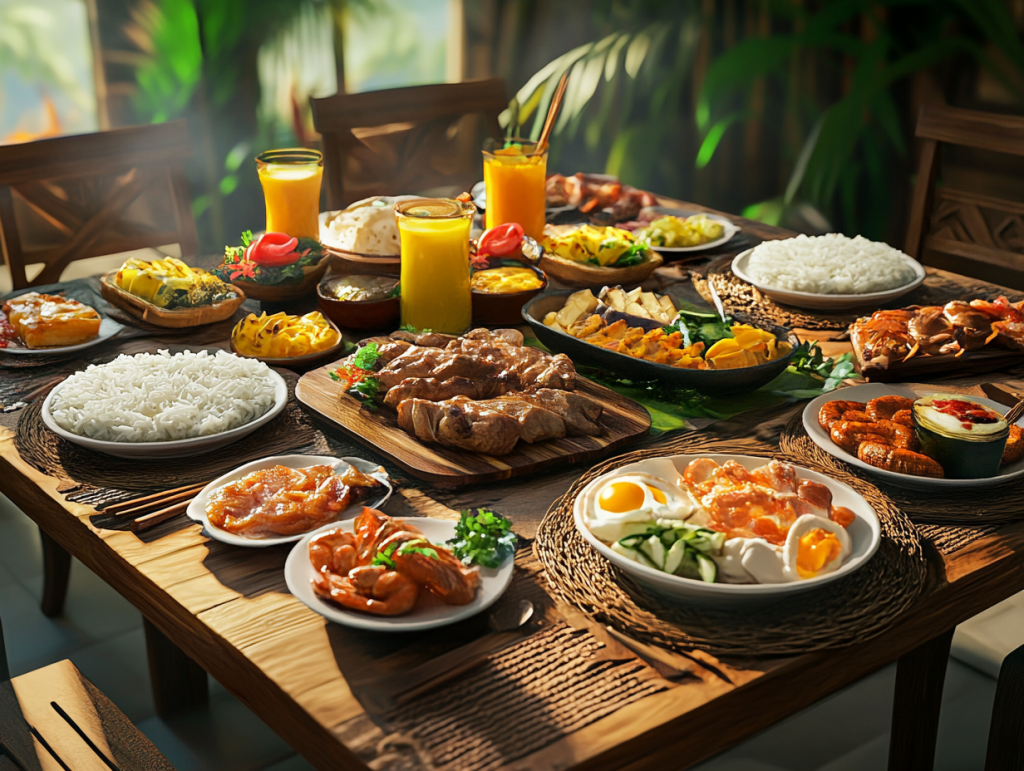
The dining room setup screams classic Filipino family dynamics—like a perfectly choreographed sitcom that’s been running for decades without getting cancelled.
Al Pangilinan claims his throne at the head of the rectangular wooden table, settling into the armchair like some benevolent patriarch from a ’90s family drama. His weathered hands rest on the armrests, fingers drumming a barely audible rhythm that speaks of decades spent in this exact spot. The morning light casts sheen on the bald surface of his head, and his eyes hold that particular contentment of a man who’s found his groove in life’s daily respawn cycle.
Emily slides into the chair to his left with the fluid grace of someone who’s performed this seating arrangement roughly twenty-five thousand times. Her white hair catches the light streaming through the window, and there’s something almost ceremonial about how she smooths her housedress before settling in. She’s got that quiet satisfaction radiating from her—the kind you get after successfully completing a complex crafting recipe.
Ronald takes his designated spot on Al’s right, completing their family trinity. He’s got that middle-aged son energy—old enough to be established but still young enough to act like he’s twelve when his parents get mushy. His dark hair is slightly disheveled, probably from whatever passed for sleep in a house where the roosters start their daily podcast at 4 AM.
The table spreads before them like a perfectly balanced RPG inventory: three pieces of daing na bangus arranged on a ceramic platter, their golden-brown surfaces gleaming with residual oil; sunny-side-up eggs with yolks that look like perfect orange suns waiting to be broken; and a mound of fried rice dotted with bits of garlic that probably woke up half the neighborhood when Emily was cooking it.
The coffee cups sit like faithful companions beside each plate—black coffee that’s strong enough to resurrect the dead, which is basically the Batangueño equivalent of a morning energy drink. No cream, no sugar, just pure caffeinated determination in ceramic form.
“Mahal, your cooking is as delicious as ever,” Al declares, his voice carrying that warm appreciation that comes from eating the same woman’s cooking for decades and still finding it remarkable. He picks up a piece of the crispy fish, examining it like it’s a rare artifact before taking a bite.
Emily’s cheeks flush slightly, a modest smile playing across her lips. “You’re flattering me too much, Al,” she replies, but there’s this pleased little gleam in her dark eyes that suggests she’s not entirely opposed to the compliment spam.
Ronald rolls his eyes with theatrical exaggeration, stabbing his egg with unnecessary force. “Ama, Inay, you’re both too old to be flirting like that,” he teases, but his grin betrays genuine affection for his parents’ ongoing romance subplot.
Some things never change—and honestly? In a world where everything’s constantly getting patched and updated, there’s something beautifully stable about family breakfast rituals that refuse to be nerfed by time.
Ronalds_tricycle_hustle.sav

Afternoon in provincial Philippines hits different—like being stuck in a slice-of-life anime where the pacing is deliberately slow and everyone’s just vibing with the natural rhythm of small-town existence.
The van pulls up to the designated passenger drop-off zone with the mechanical wheeze of an overworked diesel engine, its faded blue paint job telling stories of countless trips between towns. The sliding door opens with a metallic scrape, and passengers emerge like NPCs spawning at a respawn point—each one carrying plastic bags, backpacks, and that slightly dazed expression of people who’ve just survived another round of Philippine public transportation.
Ronald Batumbakal Pangilinan materializes at the front of the tricycle queue like he’s been camping this spawn point for hours. At thirty-something, he’s got that everyman protagonist energy—not the chosen one, just a regular dude grinding his daily quests. His short wavy black hair catches the afternoon sunlight, slightly tousled that comes with his profession. Dark brown eyes scan the emerging passengers with the practiced efficiency of someone who’s mastered the art of reading potential customers.
His brown skin bears that particular weathered quality you get from spending half your life under the tropical sun, and his average build speaks to a life of functional fitness—not gym-sculpted, just the natural muscle tone that comes from wrestling motorcycles through traffic daily. He’s wearing the standard tricycle driver uniform: a worn t-shirt that’s seen better decades and shorts that prioritize durability over fashion.
“Tricycle, tricycle, tricycle!” Ronald’s call cuts through the afternoon air like a vendor hawking rare loot in an MMO marketplace. His voice carries that practiced rhythm of someone who’s shouted the same phrase approximately fifty thousand times—confident but not desperate, professional but approachable.
A middle-aged woman detaches herself from the passenger cluster, her cautious steps and careful grip on her bag marking her as someone who’s done this dance before. She approaches Ronald with the deliberate movements of an experienced player navigating a familiar game mechanic.
“Where to, Ma’am?” Ronald asks, his tone shifting to that customer service voice that’s part politeness, part genuine concern. There’s something almost ceremonial about this exchange—the ritual greeting between service provider and client that’s probably unchanged since tricycles first started terrorizing Philippine roads.
“In Barangay Bagong Pook,” she replies, her voice carrying the slight accent that marks her as local but from a different municipality.
Ronald nods with the professional acknowledgment of someone accepting a quest. He gestures toward the sidecar—that ingenious Filipino invention that’s basically a motorcycle with a passenger pod welded to its side, defying several laws of physics and probably some safety regulations. He helps her settle into the vinyl-covered seat with the practiced courtesy of someone who understands that customer satisfaction equals repeat business.
The motorcycle roars to life with the distinctive puttering sound that’s become the unofficial soundtrack of provincial Philippines. Ronald swings his leg over the seat with fluid efficiency, kicks the bike into gear, and they’re off—navigating the lightly trafficked road with the wind pushing against his face like nature’s own air conditioning system.
Another successful transaction in the grand RPG of daily survival.
Al’s_sugarcane_kingdom.sav
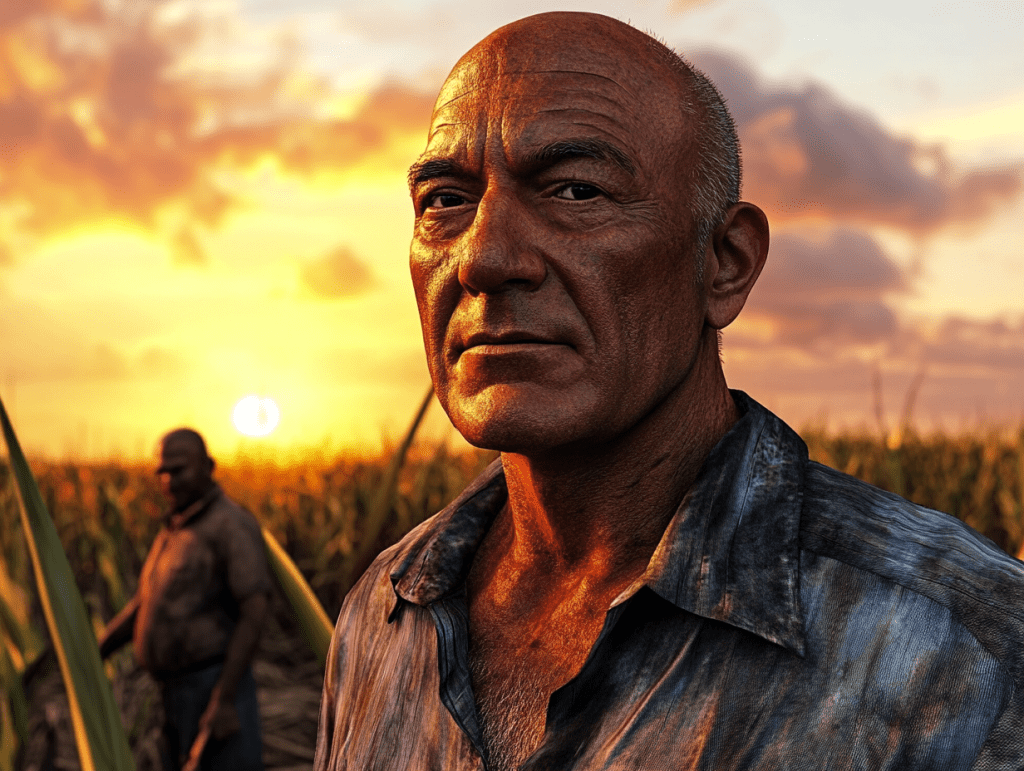
Two days later. The afternoon sun hangs over Batangas like a lazy boss who’s about to clock out, casting everything in that golden-hour filter that Instagram influencers would kill for.
Federico Alejandro “Al” Monleon Pangilinan stands amid his medium-sized agricultural empire, surveying rows of sugarcane that stretch toward the horizon like green soldiers in formation. At sixty-something, Al embodies that classic Filipino landowner archetype—the guy who started from humble beginnings and built his little kingdom one stalk at a time. His bald head catches the late afternoon light like a polished bronze dome, beads of perspiration tracing lazy paths down to where his dark brown eyes squint against the sun’s glare.
The man’s got that particular build you see in successful middle-aged Filipino farmers—slightly short but solid, with a belly that speaks of decades of good eating and prosperity. It’s not just weight; it’s a statement. In a place where being too thin often means not having enough, Al’s rounded midsection is basically a walking advertisement for his success. His brown skin bears the weathered patina of someone who’s spent half his life under the tropical sun, negotiating with crops and weather patterns like they’re temperamental NPCs in some elaborate farming simulator.
The sugarcane towers around them like nature’s own skyscrapers, each stalk thick as a man’s thumb and reaching toward the sky with that confident upward thrust that screams “successful harvest incoming.” The leaves rustle with the kind of whispered conversations that only plants seem to have, creating a natural soundtrack that’s way better than any lo-fi study playlist. Between the rows, the rich dark soil looks like it’s been optimized for maximum crop yield—probably the result of years of careful fertilization and crop rotation strategies that would make any Stardew Valley player weep with envy.
Al’s right-hand man—let’s call him the loyal NPC sidekick—approaches with the comfortable familiarity of someone who’s been running this same dialogue tree for years. The guy’s got that weathered farm-worker look: practical clothes designed for function over fashion, hands that tell stories of honest labor, and the kind of sun-beaten face that comes from spending your career outdoors.
“The sugarcane is growing well. No need to worry,” the man assures Al, his voice carrying that confident tone of someone who actually knows what he’s talking about. It’s the verbal equivalent of a green checkmark on a completed quest objective.
“You’ve got good workers. What you’re paying them is worth it,” he adds, and there’s genuine respect in his voice. It’s not just empty flattery—it’s the acknowledgment that Al’s managed to create one of those rare work environments where people actually give a damn about the outcome.
Al nods with the satisfaction of a guild leader whose team just successfully completed a challenging raid. “Well then, I’ll head home. Emily is waiting for me, and the sun’s already setting,” he says, glancing toward the western horizon where the sky is starting to shift from blue to that warm orange that signals the day’s final act.
The sunset paints everything in cinematic gold—the kind of lighting that makes even the most mundane moments look like they belong in a Terrence Malick film. The orange sky bleeds into the green horizon of his sugarcane fields, creating this perfect color gradient that nature throws together without even trying. It’s the kind of natural beauty that makes you understand why people choose rural life over city chaos.
Al begins his walk toward home, his silhouette gradually merging with the golden backdrop like the final shot of a feel-good indie film. Each step carries the weight of a man who’s built something meaningful and sustainable—not just crops, but a way of life.
“I’ll be back next Friday as always,” he calls over his shoulder, his voice carrying across the field with the casual authority of someone whose word is his bond.
Consistency is the ultimate cheat code in life—showing up, doing the work, maintaining the routine. Al’s figured out the meta.
The_great_home_makeover_project.sav
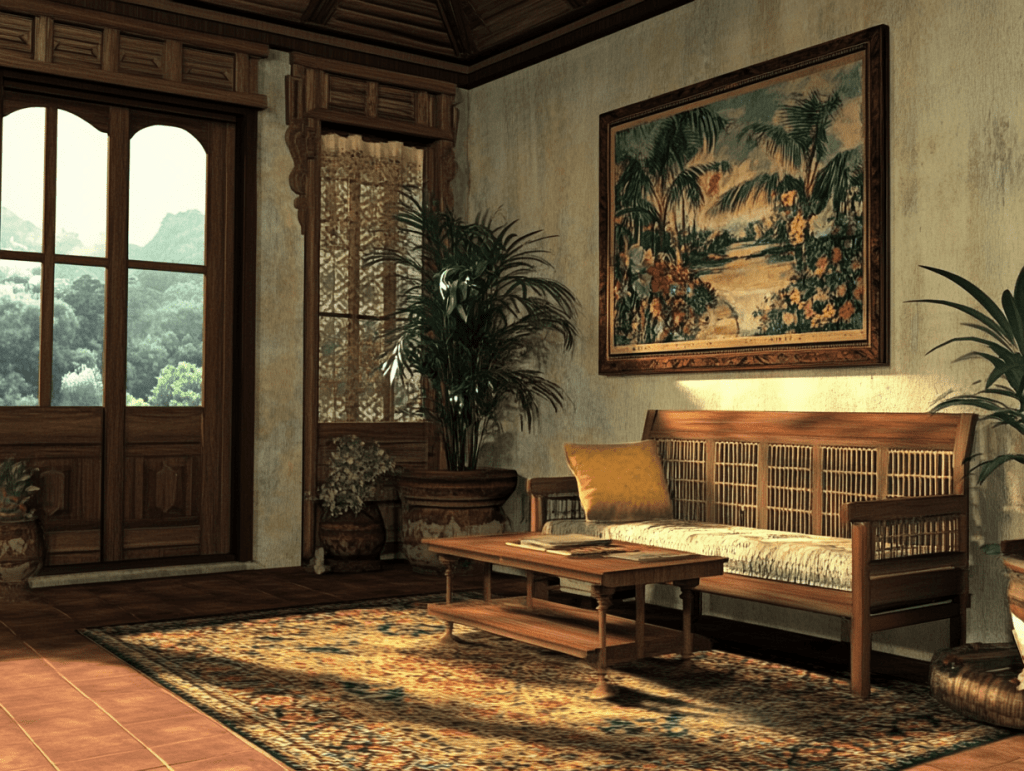
Two weeks later. The Pangilinan household has become ground zero for what can only be described as a real-life version of those home renovation shows, except nobody asked for Ty Pennington and there’s definitely no dramatic reveal music.
CHING, CHING, CHING!
The metallic percussion echoes through the modest living room like some kind of DIY construction soundtrack, each hammer blow reverberating off the walls and probably annoying every neighbor within a three-house radius. It’s the kind of sound that makes you think either someone’s building furniture or dismantling a robot—in this case, it’s Ronald going full Bob the Builder on an innocent nail.
Ronald stands precariously on what looks like a borrowed plastic chair that’s seen better decades, his tricycle-driver muscles straining as he drives a nail into the living room wall with the focused intensity of someone defusing a bomb. Sweat beads on his forehead despite the afternoon breeze filtering through the open windows, and his tongue sticks out slightly in that universal expression of concentration that every DIY warrior knows by heart. The hammer in his calloused hands moves with practiced efficiency—this clearly isn’t his first rodeo with home improvement projects.
“All done. You can hang the painting now,” Ronald announces, stepping down from his makeshift platform with the satisfied grunt of a man who’s successfully completed a side quest without dying.
Enter Ansel, the son-in-law who apparently drew the short straw in the “who’s handling the delicate art installation” lottery. He’s got that careful, methodical energy of someone who knows that dropping this vintage-looking art piece would result in domestic consequences that make boss battles look like casual gaming. His hands, softer than Ronald’s work-weathered ones, cradle the painting like it’s a rare collectible still in its original packaging.
The artwork itself looks like something you’d find in a Filipino heritage museum’s gift shop—the kind of piece that screams “traditional aesthetic” while probably being mass-produced in some factory. It’s got that sepia-toned, nostalgic vibe that interior design magazines insist makes spaces feel “authentic” and “culturally grounded.”
Ansel positions the painting with the surgical precision of someone installing critical hardware, making micro-adjustments until the frame sits perfectly level against the wall. “Ma, here it is,” he says, turning toward his wife with the proud expression of someone who’s just successfully mounted art without creating any new holes in the drywall.
Ellie stands nearby, hands clasped in that classic “supervising the menfolk” pose that women have perfected across cultures and generations. She’s got that particular gleam in her eyes that suggests this home improvement project is just one battle in a larger war to transform her parents’ house into something Pinterest-worthy. Her smile radiates the satisfaction of someone whose interior design vision is finally coming to life.
“Perfect, Pa,” Ellie commends her husband, using that affectionate term that instantly marks their relationship dynamic as the kind of couple who actually likes each other—a rarity in the realm of family renovation projects.
But every home makeover story needs its skeptical NPC, and Emily fills that role with the dramatic flair of someone who’s witnessed decades of “improvements” that turned out to be expensive mistakes.
“What unnecessary decorations are you hanging all over the house?” Emily grumbles from her position near the doorway, arms crossed in the universal pose of disapproval. Her dark eyes survey the wall-mounted artwork like she’s examining evidence of some elaborate conspiracy against her perfectly functional, decoration-free living space.
Classic generational clash: the younger generation’s Pinterest aesthetic versus the older generation’s “if it ain’t broke, don’t fix it” philosophy.
“Inay, these are important. They’ll make your home look even better. I picked these paintings to match the traditional vibe of your house,” Ellie explains with the patient tone of someone who’s clearly rehearsed this defense multiple times. She gestures toward the artwork like she’s presenting evidence in court, her voice carrying that mixture of enthusiasm and slight exasperation that comes from trying to sell your artistic vision to someone who thinks decorative anything is a waste of money.
Al emerges as the unexpected ally, stepping into the domestic negotiations with the diplomatic skills of someone who’s learned to pick his battles carefully over decades of marriage.
“Let her do her thing. She knows what she’s doing. Be thankful Ellie cares for us,” Al says, his voice carrying the weight of paternal wisdom and the practical understanding that supporting his daughter now means fewer family drama explosions later.
“See, Inay? Even Tatay appreciates what I’m doing,” Ellie chimes in with the triumphant tone of someone who’s just gained a crucial ally in her home improvement campaign.
The art of family diplomacy: sometimes you win by knowing when to let someone else fight your battles for you.
Ellie’s_domestic_side_quest.sav

Meanwhile, in the nearby town of Calaca—because apparently this family drama needs multiple locations like some kind of provincial soap opera.
Eleanora “Ellie” Pangilinan Agoncillo has transformed into full domestic goddess mode while her husband grinds his daily construction job across town. She’s got that whole “adorkable homemaker” aesthetic locked down—the kind of look that would make Studio Ghibli animators weep with inspiration.
At mid-twenties, Ellie’s got that perfect height advantage that makes reaching high shelves look effortless rather than Olympic-worthy. Her shoulder-length black hair falls in those perfectly straight lines that suggest either good genetics or religious devotion to hair straightening products. The bandana wrapped around her head isn’t just functional—it’s giving off serious “competent heroine ready to tackle any household boss battle” vibes.
Her dark brown eyes hold that particular focus you see in speedrunners attempting a perfect completion rate. The tan skin speaks to someone who’s spent enough time outdoors to avoid that pale gamer complexion, but not so much that she looks like she lives on a beach.
The cleaning outfit is pure functionality over fashion: apron tied with the precision of someone who takes domestic warfare seriously, rubber gloves that have seen their share of battles against soap scum and mystery stains. She’s wielded that vacuum cleaner like it’s her personal lightsaber, navigating around furniture with the fluid movements of someone who’s mapped every square inch of this living room’s layout.
The vacuum hums its mechanical song as Ellie maneuvers it under the couch with surgical precision, chasing dust bunnies that probably thought they’d found the perfect hiding spot. She lifts the center table with one hand—casual display of functional strength that would make certain anime protagonists jealous—while guiding the vacuum underneath with practiced efficiency.
There’s something oddly meditative about watching someone who’s genuinely good at their craft, even when that craft happens to be domestic maintenance. It’s like watching a master craftsperson at work, except instead of forging swords, she’s achieving that perfect carpet pile direction that makes interior design magazines cream themselves.
The living room itself bears the marks of someone who actually cares about their environment—not just surface-level clean, but that deep-clean satisfaction that comes from knowing every corner has been properly addressed. Sunlight streams through windows that are probably streak-free, casting geometric patterns across furniture that’s been arranged with the kind of spatial awareness that speaks to genuine aesthetic sensibility.
While Ansel’s out there wrestling with concrete and construction materials, Ellie’s conducting her own battle against entropy and household chaos. Different theaters of operation, same level of dedication to getting the job done right.
The division of labor might be traditional, but there’s nothing ordinary about the competence level on display here.
Ansels_construction_command_center.sav

The construction site looks like someone took SimCity and decided to render it in real-time with maximum chaos settings enabled.
Ansel stands amid the organized bedlam, his white protective helmet catching the harsh midday sun like some kind of modern-day medieval knight’s headgear. The safety equipment transforms him from mild-mannered family man into Construction Site Protagonist—the guy who actually knows what he’s doing while everyone else is just trying not to get crushed by heavy machinery.
Anselmo “Ansel” Salcedo Agoncillo embodies that rare breed of early-thirties professional who’s managed to adult successfully without completely losing his soul to corporate machinery. His short, straight black hair peeks out from under the helmet’s edge, neatly maintained despite spending his days in environments that would make a barber weep. Dark brown eyes scan the architectural chaos with the focused intensity of someone reading a particularly complex game manual, processing structural details that would give most people instant headaches.
The light skin suggests office work in his past—or at least work that didn’t involve eight hours of direct sun exposure—while his lean build speaks to someone who stays active without obsessing over gym culture. He’s got that practical fitness that comes from actual functional movement rather than Instagram-worthy poses.
The blueprints in his hands unfurl like ancient scrolls containing the secrets of structural engineering. Blue lines cross white paper in geometric patterns that probably make sense to people who understand load-bearing calculations and foundation requirements. To everyone else, they might as well be written in Klingon—but Ansel reads them like they’re his native language.
He rolls up the plans with the practiced efficiency of someone who’s done this dance countless times, the paper crackling softly as it forms a neat cylinder. The movement is fluid, automatic—muscle memory developed through years of juggling architectural documents and construction reality.
The descent down whatever temporary staircase or scaffolding structure leads him through the construction site’s active battlefield. Workers move around him like NPCs following their programmed routines: some hauling materials, others operating equipment, all of them wearing that particular expression of people who know their jobs well enough to do them without constant supervision.
Hollow blocks stack in neat pyramids like oversized Lego pieces waiting for assembly, their gray concrete surfaces marked with manufacturing stamps and the occasional worker’s initials. Bags of cement lean against each other in tired formations, their paper exteriors dusted with the fine powder that seems to coat everything within a fifty-meter radius of any construction project.
“We’ll need to raise the ceiling a bit higher and make this area a little wider,” Ansel instructs the foreman, his voice carrying that calm authority of someone who knows exactly what needs to happen and isn’t interested in dramatic explanations.
The foreman—middle-aged, weathered, sporting the kind of tan that comes from decades of outdoor labor—nods with the confidence of someone who’s translated architectural wishes into concrete reality more times than he can count. His hard hat bears the scars of countless projects, and his eyes hold that particular wisdom that comes from seeing every possible construction disaster and living to tell about it.
“Boss, don’t worry, my men will make the necessary adjustments,” the foreman assures him, and there’s genuine respect in his voice. It’s not just empty compliance—it’s the acknowledgment between professionals who understand each other’s expertise.
“That’s good to hear,” Ansel replies, and the gratitude in his voice is real. Smart managers know that good workers are worth their weight in properly mixed concrete.
Behind them, a large tractor rumbles past like some mechanical dinosaur, its engine adding bass notes to the construction site’s ongoing industrial symphony.
Watching competent people work is oddly satisfying—like speedrunning, but in real life and with actual consequences.
The_diagnosis_scene.sav

Two weeks later. Medical facilities in the Philippines always hit with that specific aesthetic—sterile white surfaces that scream “serious business” mixed with the kind of fluorescent lighting that makes everyone look like they’re cosplaying as hospital extras.
The clinic’s predominantly white interior feels like stepping into some kind of medical spaceship, all clean lines and sanitized surfaces that smell faintly of disinfectant and institutional anxiety. It’s the kind of environment where whispered conversations echo louder than they should, and every footstep sounds amplified against polished floors that probably get mopped more often than most people shower.
The large poster of the female reproductive system dominates one wall like an educational boss fight diagram—anatomically correct, color-coded, and displaying information that most people probably wish they’d paid more attention to in high school biology. It’s positioned at exactly the right height to make patients contemplate the complexity of human physiology while they wait for news that could change their entire life trajectory.
Dr. Galves, the OB/GYN, sits behind her desk with the practiced composure of someone who’s delivered both good news and devastating updates countless times. Her white coat bears the subtle wrinkles of a long day, and her hands rest on what’s probably Ellie’s medical file—a manila folder that contains test results and clinical observations that are about to reshape two people’s understanding of their future.
“Your condition is called Polycystic Ovary Syndrome, more commonly known as PCOS,” the doctor explains, her voice carrying that particular tone medical professionals use when they’re about to drop significant information—clinical but not cold, informative but not dismissive.
Ellie sits in the standard-issue medical chair that every clinic seems to order from the same catalog, her posture rigid with the kind of tension that comes from knowing you’re about to receive news that can’t be un-heard. Her hands grip the armrests with white-knuckled intensity, and her dark brown eyes remain fixed on the doctor’s face like she’s trying to decode every micro-expression for hidden meanings.
Ansel occupies the secondary chair—the one designated for support personnel in medical dramas—positioned close enough to provide comfort but far enough away to not interfere with the doctor-patient dynamic. His lean frame leans slightly forward, displaying the body language of someone who’s mentally preparing to become his wife’s primary emotional support system.
“What is it, Doc?” Ellie asks, and there’s a tremor in her voice that she’s trying to suppress. It’s the kind of question where you simultaneously want and dread the answer—like clicking on a dialogue option that you know is going to trigger a cutscene you can’t skip.
“It’s a hormonal imbalance. This explains the irregularities in your menstrual cycles. You have cysts on your ovaries, and your eggs aren’t maturing or releasing as they should,” the OB/GYN explains with the methodical precision of someone breaking down complex game mechanics to a confused player.
The medical explanation hangs in the air like a quest objective that nobody wanted to receive. Cysts, hormonal imbalances, irregular cycles—terminology that sounds abstract until it’s describing your specific biological reality.
“Will it affect my chances of having a baby?” Ellie asks, and this is the real boss fight question—the one that cuts through all the medical jargon and gets to the heart of why they’re sitting in this sterile room having this conversation. Her voice cracks slightly on the word “baby,” revealing the vulnerability beneath her attempt at composed inquiry.
This is the moment where life decides to switch difficulty settings without asking permission.
“Frankly, yes. PCOS is the leading cause of infertility in women,” the doctor replies with the kind of candor that’s both appreciated and devastating. No sugar-coating, no false hope—just medical reality delivered with professional honesty.
The words hit like a critical strike to the emotional health bar. Ellie’s composure finally breaks, her shoulders sagging as the full implications of the diagnosis settle in. This isn’t just about irregular periods or hormonal inconveniences—this is about the family they’ve been planning, the future they’ve been building toward, the children they’ve probably already started imagining.
Ansel’s response is immediate and instinctive. He moves from his chair to her side, arms wrapping around her trembling frame with the protective instinct of someone whose primary mission has just shifted to damage control. His embrace isn’t just comfort—it’s a promise that they’re facing this boss battle together.
“It will be a long treatment process, but we can work through it,” the OB/GYN continues, offering what amounts to a difficult questline with uncertain rewards. The phrase “long treatment process” carries implications of medical appointments, medications, lifestyle changes, and the kind of patience that most people don’t realize they possess until they’re forced to develop it.
“We’re ready, Doc,” Ansel says, and his voice carries that particular kind of determination that emerges when people realize they don’t have the luxury of not being ready. It’s the tone of someone accepting a challenging quest not because they want to, but because the alternative is unacceptable.
Sometimes the most heroic thing you can do is simply refuse to give up when the game decides to get brutally difficult.


Leave a Reply