Overview:
| The Pangilinan family, based in Quezon City, heads out for school and work. Greg opens the automobile accessories shop, where he works as manager. Martha settles into the faculty room for the day. Benjamin impresses his classmates by acing a science recitation, then spends his lunch break reading Dune (1965) at the library. On weekends, James can be found casually jamming to an Ed Sheeran song on the patio in front of their home. |
The_urban_algorithm.sav
The concrete jungle stretches endlessly like some cyberpunk fever dream, except instead of neon-lit corporate towers, these skyscrapers wear the dull gray uniform of bureaucratic monotony. Light rail transits snake between buildings like metallic serpents, their carriages packed with human cargo—commuters pressed together in that uniquely Filipino brand of resigned solidarity. Below, the streets pulse with the chaotic rhythm of jeepneys, tricycles, and cars locked in eternal gridlock, a real-time strategy game where everyone’s losing but nobody quits.
Quezon City sprawls before me like an open-world map that never finished loading properly—malls sprouting like mushrooms after rain, theaters showing the same recycled Hollywood formulas, restaurants serving comfort food to comfort the uncomfortable, bars promising escape to people who’ll wake up tomorrow in the same traffic jam. Pedestrians navigate crosswalks with the calculated precision of speedrunners, dodging vehicles with hitboxes that seem to expand randomly. Welcome to the most populated spawn point in the Philippines, where the NPCs outnumber the main characters by astronomical margins.
The domestic cutscene begins with textbook suburban choreography. Martha emerges from the house trailing her daughters like a mother duck leading ducklings—Mary and Sophie moving with that practiced efficiency of kids who’ve memorized the morning ritual down to the microsecond. Martha’s fingers work the door lock with muscle memory, the metallic click echoing like a save point confirmation. Her face carries that expression every working parent wears—equal parts determination and exhaustion, the look of someone running a marathon disguised as a sprint.
Mary, the elder daughter, walks with the measured steps of a designated responsible sibling, her school uniform pressed and proper, backpack slung over one shoulder with casual precision. Sophie—dubbed “Ining” in that Filipino tradition of nicknames that make perfect sense to family and zero sense to outsiders—bounces slightly with each step, her smaller frame radiating that kinetic energy only little kids possess before the world teaches them to sit still.
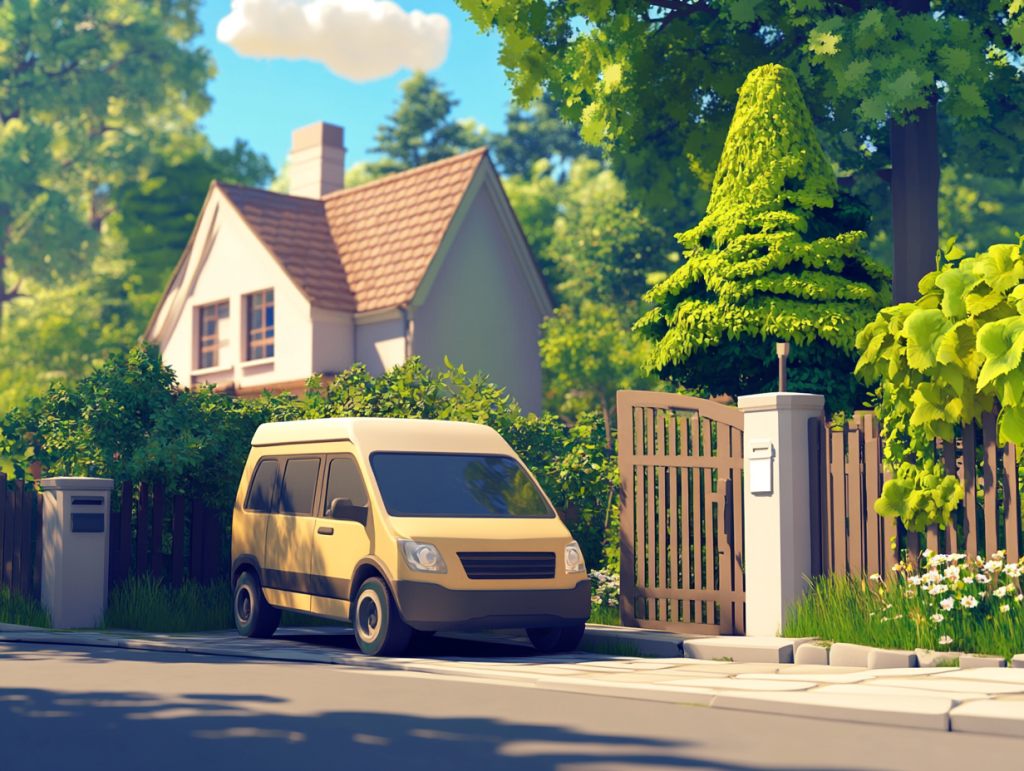
Meanwhile, the male contingent executes their own subroutine. James, Benjamin, and Michael advance toward the gate like a tactical squad, each knowing their role without verbal communication. It’s like watching a well-rehearsed dance—Michael’s hand finds the gate latch with automatic precision, his movements economical and practiced. The metal gate swings open with a rusty protest, revealing Greg already backing the family van out of the garage with the methodical care of someone who’s parallel-parked in tight spots for decades.
Greg sits behind the wheel looking like every Filipino father who’s mastered the art of balancing family logistics with traffic-induced stress. His hands grip the steering wheel with that comfortable familiarity of someone who’s driven this exact route approximately a thousand times. The van—probably a Toyota or Honda, because reliability trumps style when you’re transporting precious cargo daily—purrs with the contented sound of well-maintained machinery.
The loading sequence initiates as Martha and the kids pile into the vehicle with practiced efficiency. It’s like watching speedrunners optimize their movement patterns—no wasted motion, everyone knowing exactly where they belong in the seating hierarchy. Benjamin performs the gate-closing ritual with the solemnity of someone completing a sacred duty, then jogs to catch up with his family, sliding into the van just as Greg adjusts the rearview mirror.
Martha settles into the passenger seat beside her husband, her posture relaxing slightly now that the morning’s first checkpoint is complete. She’s wearing that expression of controlled alertness that mothers perfect—simultaneously monitoring five different variables while appearing completely calm.
Greg’s eyes find the rearview mirror, scanning for his youngest daughter with the systematic thoroughness of a parent conducting a headcount. “Where’s Ining? Is Sophie in the back with you?” His voice carries that gentle authority of fathers everywhere, the tone that says I’m checking because I care, not because I don’t trust you.
“Yes, Tatay, she’s sitting beside me,” Mary responds, her voice clear and reassuring. She’s mastered that older sister dialect—equal parts responsibility and gentle protectiveness. The honorific “Tatay” rolls off her tongue with the natural ease of someone who grew up bilingual, switching between English and Filipino like changing channels.
The seating arrangement unfolds like a carefully planned formation: Mary and Sophie claim the second row like territory secured, Benjamin positioned on the right side with the tactical awareness of a middle child who’s learned to claim his space efficiently. James and Michael sprawl across the back row, their longer limbs folding into the available space with teenage adaptability.
“Vroom, vroom, vroom,” Greg announces, and I swear he’s channeling every cartoon dad who ever made engine noises for his kids’ entertainment. The van responds with its own mechanical purr, engine turning over with that satisfying sound of internal combustion doing its thing. They pull away from the curb like a family-sized spaceship launching into the urban void.
As they merge into Quezon City’s perpetual traffic ballet, Greg reaches for the radio with the reflexive motion of someone who knows that music is the only thing standing between sanity and road rage. The speakers crackle to life—probably some AM station playing a mix of OPM classics and contemporary hits, the soundtrack to Filipino family life. Meanwhile, Martha performs her own ritual, checking the windshield with the focused attention of someone reading weather patterns like ancient augury.
Weather in the Philippines, I think, is less forecast and more surprise mechanics. One minute you’re driving under clear skies, the next you’re hydroplaning through a flash flood that appeared from literally nowhere. Martha’s checking for rain clouds with the vigilance of someone who’s been caught unprepared before.
The traffic around them flows with that uniquely Manila rhythm—organized chaos where somehow everyone gets where they’re going despite apparent impossibility. Other vehicles weave between lanes like they’re playing some massive multiplayer game where the rules change randomly but muscle memory keeps everyone alive.
Their destination materializes ahead: Our Lady of Lourdes School, probably a mix of concrete functionality and Catholic aesthetics, the kind of institution that’s educated Filipino families for generations. Greg navigates the drop-off zone with the practiced ease of someone who’s done this dance countless times, pulling up to the curb as Martha and the kids prepare for the disembarkation sequence.
The scene plays out with that bittersweet familiarity of routine—another morning checkpoint completed, another small victory in the endless campaign of raising kids in the big city. Greg waves goodbye as his family disappears into the school crowd, then merges back into traffic to continue his own daily quest.
Just another day in the urban simulation, where the graphics are realistic but the respawn points are limited, and every parent is playing on expert difficulty whether they signed up for it or not.
Level_load_small_business_simulator.sav
The family van settles into its designated parking slot with the mechanical sigh of another successful mission completed. Greg kills the engine and performs that universal dad pause—half a second of mental gear-shifting from Family Transport Mode to Manager Mode. Keys jingle in his palm like achievement unlocks as he steps onto the sidewalk, ready to start another day in the grand MMORPG of Filipino management.
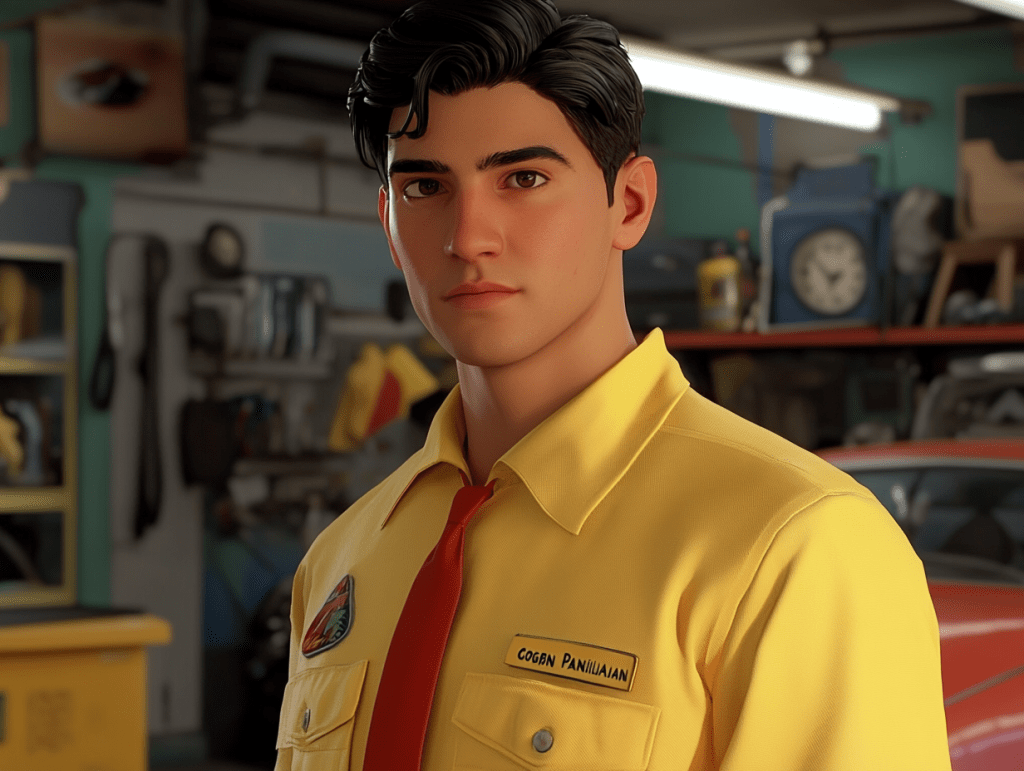
Meet Gregorio “Greg” Batumbakal Pangilinan, late thirties and sporting that classic Filipino middle-aged dad aesthetic. His short, wavy black hair sits perfectly styled in that “hasn’t changed since college because it works” formation. Tan skin catches the morning light with warm undertones. Lean build suggests a guy who’s traded youthful muscle for practical strength—the kind earned from lifting car batteries and wrestling stubborn alternators into submission.
Average height by local standards, which means he’s perfectly calibrated for navigating spaces designed by Filipinos for Filipinos. His face carries that distinctive Pangilinan genetic code—basically the upgraded version of his younger brother Ronald, but with lighter brown eyes that catch sunlight like Easter eggs hidden in character design. Those eyes hold stories, the kind that flicker between responsibility and dreams deferred.
His work uniform tells the whole small business manager story in fabric form. Light yellow short-sleeved polo—probably looked crisp when first purchased, now carries that comfortable fade of something that’s survived the wash cycle of real life. The plain red necktie adds just enough formality to say “I’m serious about this” without going full corporate drone. Above his left chest pocket, the sewn-on nameplate reads “Manager” in block letters—seven characters that represent years of proving himself worthy of trust and responsibility. Not pinned, but sewn, because this isn’t temporary employment, this is identity.
Khaki pants complete the ensemble with practical neutrality, the color of someone who knows automotive grease happens and plans accordingly. Black leather shoes ground the whole look—sturdy enough for concrete floors but polished enough to suggest pride in presentation. It’s the uniform of competence, of someone who’s found his niche and owns it completely.
Greg approaches his automotive kingdom with purposeful strides, keys transforming from simple metal to symbols of managerial position, responsibility, trust. The lock surrenders with that satisfying click—the audio cue for “another business day initiated.” The door swings open like a portal to gearhead paradise.
Inside, shelves line the walls in organized perfection—car accessories arranged like power-ups waiting for players to discover them. Chrome trim pieces promise vehicular enhancement, seat covers offer protection plus style points, floor mats stand guard against the inevitable chaos of daily driving. Tools hang in formation like weapons in an RPG armory: wrenches, screwdrivers, sockets—each serving specific purposes in humanity’s eternal war against mechanical failure.
Spare parts occupy designated territories with inventory management precision—alternators, starters, brake pads, filters. All the vital organs that keep four-wheeled bodies alive and functional. Equipment sits on display with quiet dignity: hydraulic jacks that have lifted countless vehicles, diagnostic computers fluent in automotive binary, battery chargers serving as mechanical defibrillators for dead cars.
Greg navigates this ecosystem with the confident familiarity of someone who knows exactly where everything belongs. He’s not just inventory management—he’s curator of automotive solutions, problem-solver who’s encountered every possible vehicular breakdown and knows precisely which shelf holds salvation.
The cash register awaits at his command station, and Greg positions himself behind it with practiced ease. Small business reality check: when you’re the boss, you’re also cashier, customer service rep, inventory manager, and occasional janitor. The register isn’t just transaction processing—it’s mission control for a one-man operation.
From this vantage point, Greg surveys his domain with quiet satisfaction. Through front windows, he spots his crew approaching—the supporting cast who help keep this automotive adventure running. They walk with Monday morning energy, probably coffee-fueled and ready for whatever mechanical mysteries await.
Another day, another chance to be someone’s automotive hero, Greg likely thinks, settling into routine with comfortable confidence. In the grand RPG of small business management, he’s chosen Support Class—not flashy, but absolutely essential for keeping everyone else’s quests functional.
Game on.
The_educators_daily_quest.sav
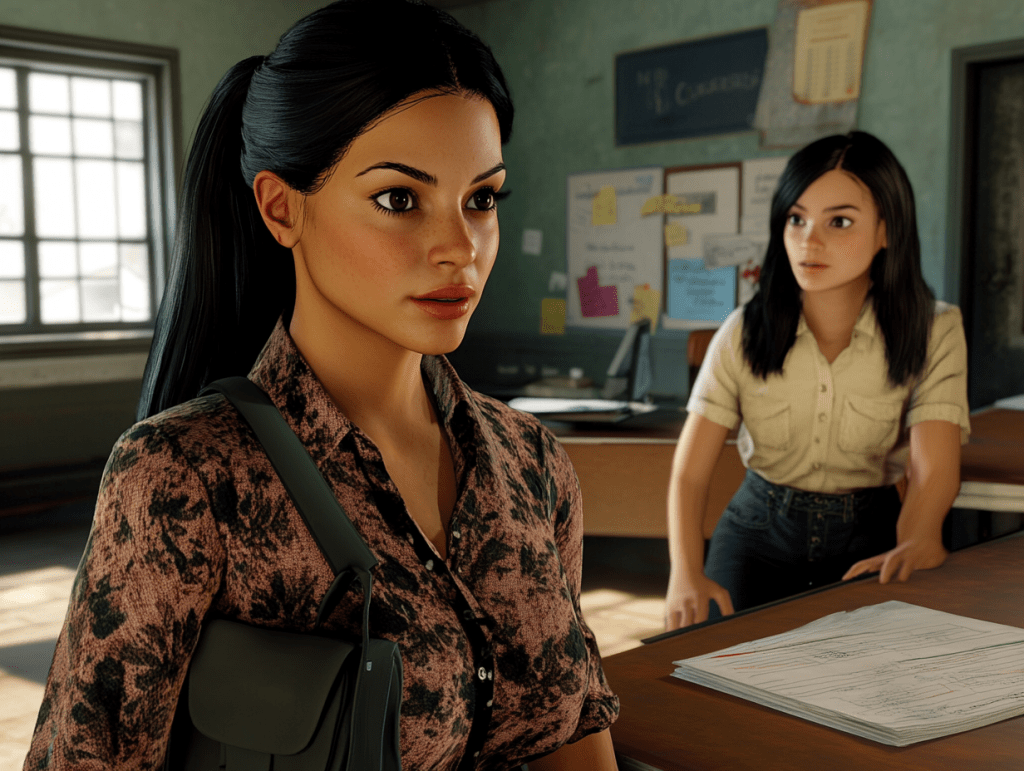
Enter Mathilda “Martha” Macatangay Pangilinan, stage left, looking like she stepped out of the “Dedicated Teacher” character template but with enough unique stats to make her memorable. Early forties means she’s hit that sweet spot where experience points have maxed out but the character model still runs smoothly. Her long, straight black hair cascades past her shoulders like obsidian silk—the kind of hair that probably takes twenty minutes to style but looks effortless, a classic Filipino beauty standard that she wears with quiet confidence.
Those dark brown eyes scan the school hallway with the practiced awareness of someone who’s learned to read teenage body language like code. Fair skin, lean build and average height—she’s designed for efficiency rather than intimidation, the kind of teacher who commands respect through competence rather than physical presence.
Her uniform game is textbook professional educator. The old-rose blouse—that specific shade of dusty pink that somehow manages to be both feminine and authoritative—buttons up the front with military precision. Short sleeves keep things practical for tropical classroom conditions where air conditioning is more aspiration than reality. Black slacks complete the ensemble with the kind of no-nonsense elegance that says “I’m here to teach, not to impress,” paired with sensible lady’s shoes that have logged thousands of miles across school corridors.
The shoulder bag slung across her body carries the weight of educational responsibility—probably stuffed with red pens, grade sheets, and the accumulated detritus of someone who’s chosen teaching as a calling rather than just a job. In her free hand, she clutches her lesson plan like a strategic guide, pages filled with carefully organized objectives and activities designed to penetrate teenage attention spans armed with smartphones and social media distractions.
As Martha navigates the hallway, students materialize from doorways and corners like respectful NPCs programmed for proper Filipino courtesy. “Good morning, Ma’am,” they chorus with varying degrees of enthusiasm—some genuinely cheerful, others operating on autopilot, all following the cultural script that demands acknowledgment of teacher authority.
“A pleasant morning to you,” Martha responds, and there’s something beautifully old-school about her phrasing. Not just “good morning” but “pleasant morning”—the kind of elevated language that suggests someone who still believes in the power of words chosen carefully. Her voice carries that teacher tone, warm but professional, familiar but maintaining appropriate boundaries.
The faculty room appears ahead like a safe zone in a school-based survival game. Martha enters her domain with the comfortable familiarity of someone who’s claimed this space through years of dedication. Her desk waits like a command center—probably decorated with student photos, inspirational quotes, and the organized chaos that comes from managing forty different personalities per class period.
She settles into her chair with the satisfied sigh of someone reaching base camp, setting down her shoulder bag with practiced efficiency. The lesson plan finds its designated spot on the desk surface, ready for final review before the day’s educational battles commence.
Behind her, a young teacher moves with the frantic energy of someone still learning the game mechanics. Papers rustle with urgent desperation, the sound of someone who probably stayed up too late last night perfecting activities that might not survive first contact with actual students. Martha’s been there—every veteran educator remembers those early days when lesson planning felt like defusing bombs under deadline pressure.
The faculty room hums with that pre-class energy, teachers transforming from regular humans into educational superheroes, preparing to inspire young minds while simultaneously managing behavior, assessing learning, and maintaining sanity. Just another day in the teaching simulation, where the respawn points are coffee breaks and the final boss is standardized testing.
I can do this, Martha thinks, probably without realizing she’s channeling gamer determination. Time to level up some minds.
The_classroom_meta.sav
The fluorescent lights in the classroom buzz with that distinctive institutional hum—the soundtrack of forced learning environments everywhere. Mrs. Marquez stands at the front like a mid-level boss about to initiate a knowledge check, her teacher aura radiating that particular blend of authority and caffeine-fueled determination that keeps the Philippine education system running on fumes and Filipino resilience.
“Can someone define chemistry?” she asks, her voice cutting through the ambient noise of forty-something teenagers pretending to be awake. It’s the classic opening move of every science teacher since the dawn of formal education—start with basics, separate the wheat from the chaff, identify your class’s power levels before diving into actual content.
The classroom itself tells the story of Our Lady of Lourdes School’s commitment to brand identity through uniform modifications. These aren’t your standard-issue Filipino school threads—someone in administration clearly decided that aesthetic differentiation equals academic excellence. The boys rock navy slacks instead of the traditional khaki, a subtle but significant upgrade that says “we’re not like other schools, we’re cool schools.” Meanwhile, the girls sport white dresses that would look at home in some Catholic boarding school anime, complete with navy ribbons positioned precisely above the breast—because apparently uniform regulations require military precision—and navy belts cinching their waists like they’re about to enter battle against ignorance itself.
The whole setup screams “private Catholic institution with aspirations,” the kind of place where parents pay extra for the illusion that stricter uniform codes somehow translate to higher standardized test scores. The navy and white color scheme gives off serious Ravenclaw vibes, which is probably intentional—nothing says “academic excellence” like borrowing aesthetic cues from fictional wizarding schools.
But here’s where the classroom dynamics get interesting, because this isn’t just any random collection of students. This is supposedly the “cream section”—the academic elite, the chosen ones, the kids who are supposed to be crushing these basic science questions like they’re tutorial-level challenges in some educational RPG.
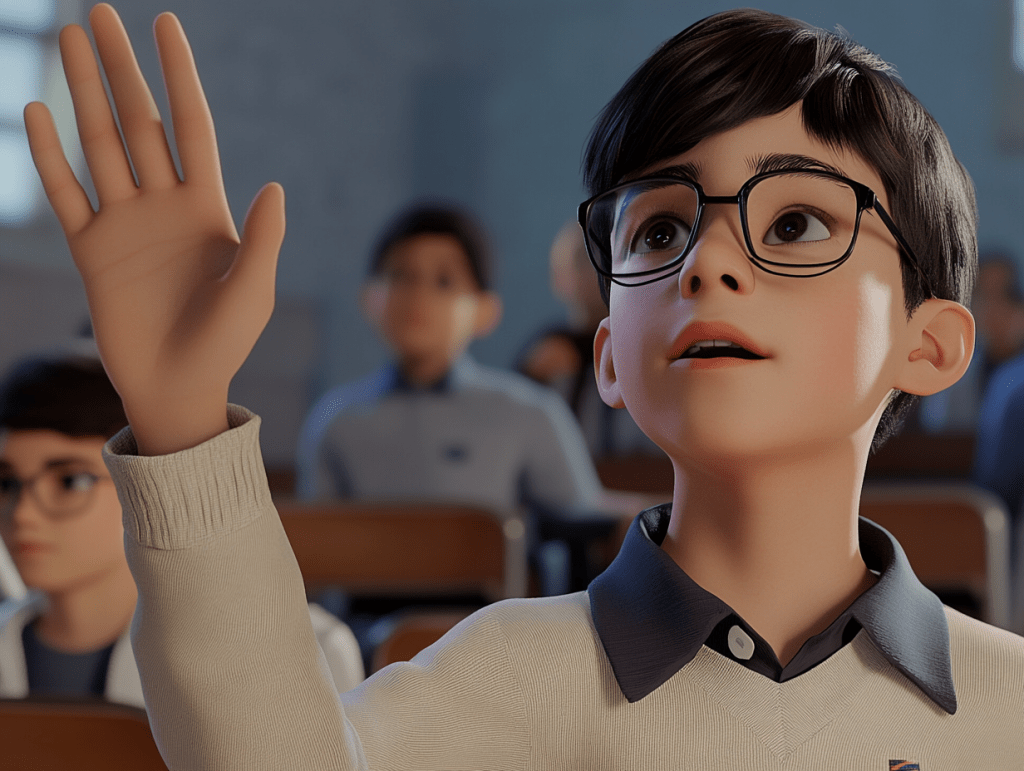
Enter Benjamin Matthew Macatangay Pangilinan, stage right, with his hand shooting up faster than a speedrunner hitting frame-perfect inputs. This kid’s got that classic thirteen-year-old nerd aesthetic down to a science—short, straight black hair that probably gets cut by his mom every month with mathematical precision, dark brown eyes that hold the focused intensity of someone who actually reads textbooks for fun, and fair skin that suggests he spends more time indoors with books than outdoors getting sun.
His lanky frame folds into the classroom chair with that awkward grace of adolescence—all elbows and knees, like his body’s still figuring out how to operate its own limbs. The eyeglasses perched on his nose aren’t just vision correction; they’re basically his superhero costume, the Clark Kent specs that transform him from regular kid to academic powerhouse. And that dual-display water-resistant wristwatch on his wrist? Pure nerd flex. We’re talking about a timepiece that probably shows atomic time, has a calculator function, and can probably survive a nuclear apocalypse—the kind of accessory that screams “I am prepared for any educational emergency.”
“Chemistry is the study of the properties, composition, and structure of substances, which could be elements or compounds, as well as the transformations these substances undergo and the energy released or absorbed during these processes,” Benjamin delivers with the mechanical precision of someone who’s memorized the textbook definition word-for-word. No hesitation, no stumbling, just pure academic regurgitation delivered with the confidence of someone who knows he’s absolutely correct.
The kid’s basically a walking chemistry textbook, and you can practically see his classmates’ collective eye-roll from orbit. Here’s the thing about being the smart kid—it’s a double-edged sword wrapped in social awkwardness. Yeah, you get the teacher’s approval, but you also get labeled as the teacher’s pet, which in junior high social dynamics is basically wearing a “kick me” sign made of academic achievement.
“Very good, Mr. Pangilinan,” Mrs. Marquez responds with that particular teacher tone that suggests both genuine approval and relief that at least someone in this classroom is actually absorbing information. You can hear the subtext: Thank God, at least one of these kids is paying attention.
But she’s not done testing the waters. “Now, class, can someone give me the first ten elements in the periodic table?” The question hangs in the air like a challenge issued to a room full of NPCs who’ve apparently skipped the tutorial levels.
And here’s where the classroom dynamics reveal their true nature—Benjamin’s hand shoots up again, alone in a sea of deliberately averted gazes. His classmates have collectively decided that academic participation is somehow uncool, that knowing stuff is less important than maintaining whatever social currency they think they’re protecting by staying silent.
Mrs. Marquez surveys the room with the disappointed expression of a raid leader watching her team wipe on the easiest boss in the dungeon. “This is telling, class. You’re supposed to be the cream section,” she says, and there’s genuine frustration in her voice. Here she is, supposedly teaching the academic elite, and only one kid is willing to engage with basic material that should be elementary for this level.
The “cream section” label suddenly feels like false advertising—like when a game promises “legendary” equipment but delivers basic gear with slightly shinier graphics. These kids were supposedly selected for academic excellence, but they’re performing like they’ve never seen a periodic table before.
“Yes, Mr. Pangilinan?” Mrs. Marquez concedes, because at this point Benjamin is literally the only player willing to participate in the educational game.
“The first ten elements in the periodic table are hydrogen, helium, lithium, beryllium, boron, carbon, nitrogen, oxygen, fluorine, and neon,” Benjamin recites without missing a beat, his voice steady and confident. No dramatic pauses, no uncertainty—just pure scientific knowledge delivered with the efficiency of someone who’s genuinely passionate about understanding how the universe works at the atomic level.
“Excellent, Mr. Pangilinan,” Mrs. Marquez praises, and you can practically feel the mixture of gratitude and concern in her response. Gratitude because Benjamin is single-handedly keeping this lesson from becoming a complete disaster, concern because the rest of her supposedly elite students are content to coast on their reputations while one kid does all the intellectual heavy lifting.
Meanwhile, Benjamin sits there absorbing both the praise and the invisible social punishment that comes with academic excellence in a classroom full of peers who’ve somehow decided that intelligence is embarrassing. He’s living the classic nerd protagonist experience—academically gifted but socially isolated, getting recognition from authority figures while earning side-eye from classmates who think his enthusiasm for learning makes him some kind of educational show-off.
The cruel irony is that Benjamin is exactly what every educational system claims to want—a student who’s genuinely engaged, genuinely curious, genuinely committed to learning. But in the social ecosystem of junior high, those qualities make him a target rather than a hero. He’s the main character in an academic success story that nobody else wants to be part of.
The_library_sanctuary.sav
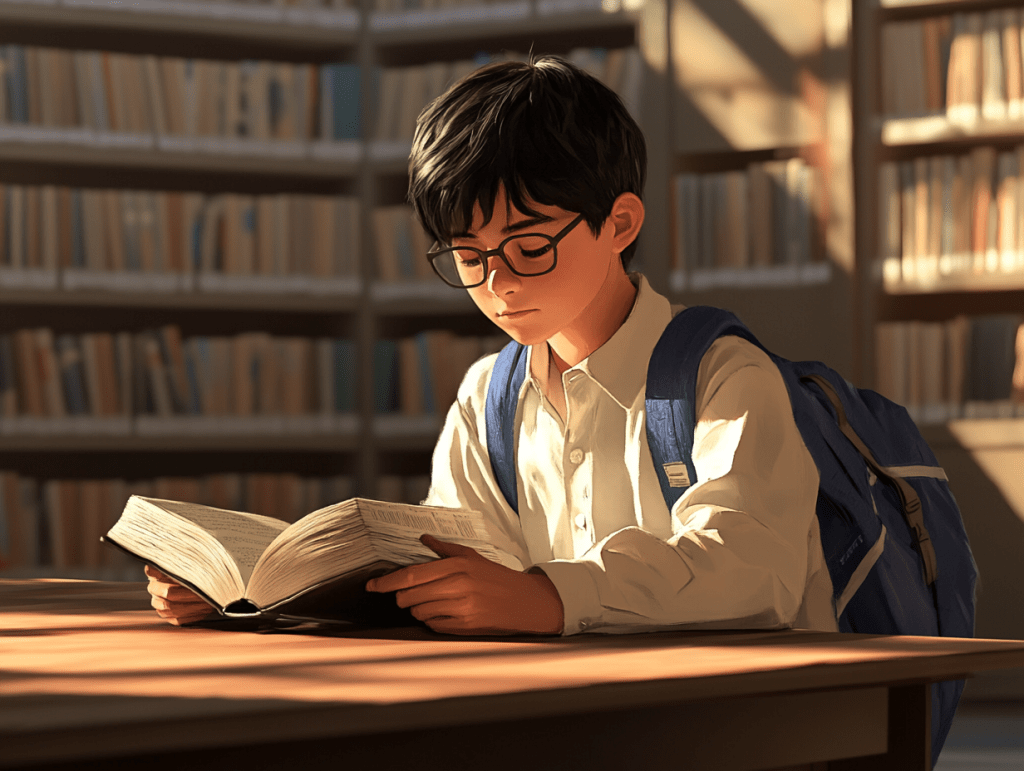
The library at lunch hour operates like a perfectly balanced MMO hub—different player types coexisting in their designated spaces without griefing each other’s experience. Fluorescent lights cast that institutional glow over rows of books that stand like silent NPCs holding infinite questlines, while the ambient sounds of page-turning and whispered conversations create the perfect white noise for intellectual pursuits.
Students scatter throughout the space following predictable behavioral patterns. The serious readers claim territory near the fiction section, bodies hunched over books with the focused intensity of speedrunners grinding for completion achievements. Social butterflies congregate in small clusters, using the library’s “quiet zone” status as cover for conversations that would get them busted in actual classrooms—the kind of strategic positioning that would make tactical gamers proud.
At the circulation desk, one of the two librarians works the photocopier with the methodical precision of someone running daily maintenance routines. The machine hums and flashes, spitting out handouts that some student probably needs for next period—that last-minute scramble for academic survival that every high schooler knows by heart. The librarian moves with practiced efficiency, simultaneously managing the copy queue while monitoring the room for potential rule violations with the multi-tasking skills of a raid leader.
But here’s where the real story unfolds: Benjamin has claimed a corner table like he’s establishing a base camp for serious intellectual expedition. Twenty minutes remaining in the lunch period, and while his classmates are either scarfing down cafeteria food or gossiping about weekend plans, this kid is deep-diving into Dune—Frank Herbert’s 1965 science fiction masterpiece that basically invented half the tropes modern sci-fi still rips off today.
We’re talking about a thirteen-year-old voluntarily reading Herbert during lunch break. Not assigned reading, not something forced on him by curriculum requirements—pure choice. Benjamin’s sitting there absorbing prose that most adults find challenging, his dark brown eyes tracking across pages with the focused intensity of someone decoding ancient texts. Those wire-rimmed glasses catch the library lighting at just the right angle, creating tiny reflections that make him look like he’s interfacing with some digital display.
His lanky frame folds into the standard-issue library chair with that particular teenage geometry where knees and elbows seem to occupy more space than physics should allow. The navy school slacks and white uniform shirt mark him as distinctly Our Lady of Lourdes, but his body language screams “I’d rather be anywhere books are treated like sacred artifacts.”
The passage he’s reading hits different when you realize what it represents—Herbert’s sandworms aren’t just monsters, they’re ecosystem-defining apex predators that shape entire civilizations. Benjamin’s absorbing concepts about environmental dependence, religious manipulation, and political control disguised as adventure fiction. The kid’s basically getting a graduate-level education in political philosophy through giant space worms.
“The worm drew back onto the sand, lay there momentarily, its crystal teeth weaving moonflashes.”
Benjamin’s eyes move across this sentence with the careful attention of someone who actually understands that Herbert’s prose isn’t just describing monster behavior—it’s building an entire alien ecosystem where every detail matters. Those “crystal teeth weaving moonflashes” aren’t random fantasy nonsense; they’re part of Herbert’s meticulous world-building where even monster anatomy serves larger thematic purposes.
“Lump! Lump! Lump! Lump!”
“Another thumper, Paul thought.”
The rhythmic sound effects drop Benjamin right into Paul Atreides’ consciousness, and you can see his expression shift slightly as he processes the tactical implications. Thumpers aren’t just noise-makers—they’re survival tools in a desert where sound equals life or death. Benjamin probably gets the subtext about technology, adaptation, and resource management better than most college students.
“Again, it sounded off to their right.”
Herbert’s building tension through directional audio cues, and Benjamin’s clearly tracking the geography of this scene in his mental map. His fingers unconsciously grip the book’s edges tighter as the narrative ramps up the suspense.
“A shudder passed through the worm. It drew farther away into the sand. Only a mounded upper curve remained, half like a bell mouth, the curve of a tunnel rearing above the dunes.”
Benjamin processes this description with the visual imagination of someone who’s probably already constructed detailed mental models of Arrakis’s desert ecosystem. The worm isn’t just retreating—it’s demonstrating the kind of environmental integration that makes Herbert’s world-building legendary among sci-fi nerds.
He flips to the next page with careful precision, treating the paperback like it contains classified intelligence rather than decades-old fiction. Beside him, his trusty sling bag sits like a loyal companion—cobalt blue and gray construction that suggests durability over fashion, the kind of practical choice that prioritizes function over form. The bag probably contains backup books, emergency pens, and whatever other supplies a serious reader needs for academic survival.
Twenty minutes of lunch break, and Benjamin’s chosen to spend it traveling to alien planets where political intrigue meets ecological science fiction. While his classmates navigate cafeteria social dynamics, he’s exploring themes of power, religion, and environmental dependency through one of literature’s most complex fictional universes.
The library hums around him with institutional calm, providing the perfect safe zone for intellectual exploration. Just another day in the life of a kid who’d rather decode Herbert’s prose than decode teenage social hierarchies.
Acoustic_romance_mode.sav
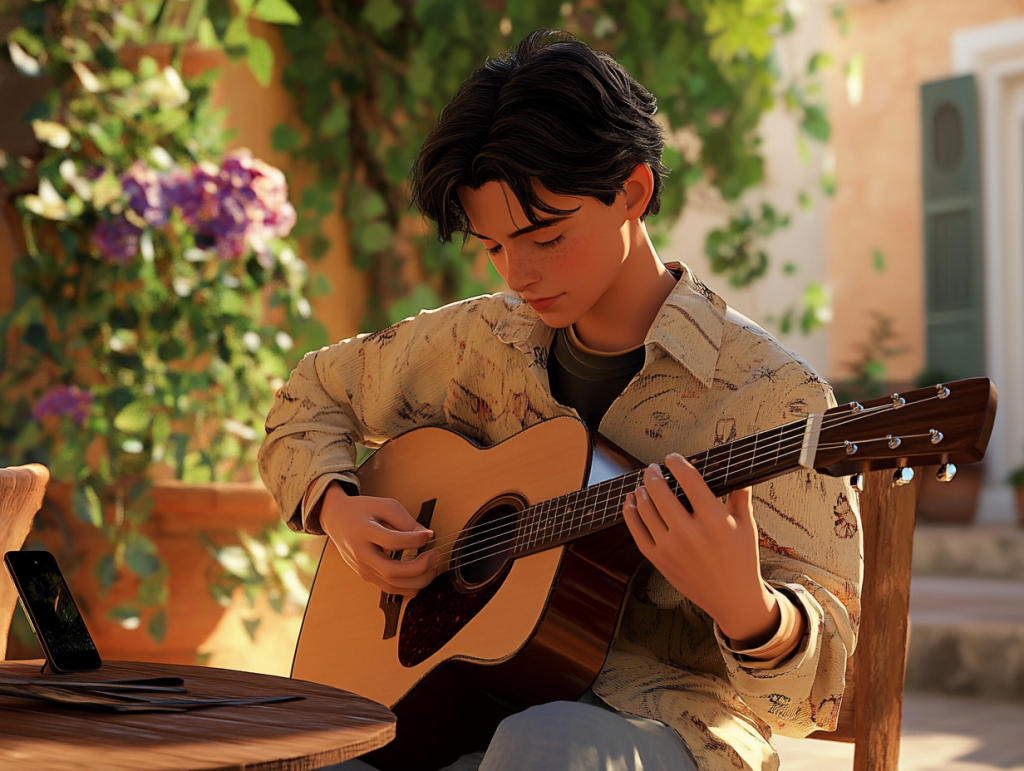
Saturday afternoon at the Pangilinan homestead, and the domestic simulation shifts into leisure time protocols. The patio transforms into an impromptu concert venue, complete with that golden hour lighting that makes everything look like it’s been Instagram-filtered by nature itself.
James claims the wooden bench like it’s his designated performance platform, acoustic guitar cradled in his arms with the familiar comfort of someone who’s put in serious practice hours. The instrument—probably a mid-range acoustic that sounds way better than its price tag suggests—catches sunlight along its curves, the wood grain telling stories of countless weekend jam sessions.
His fingers find the chord progression with muscle memory precision, and then it begins—that unmistakable opening to Ed Sheeran’s “Thinking Out Loud,” because apparently even Filipino teenagers aren’t immune to the universal appeal of ginger-haired British romanticism.
“When your legs don’t work like they used to before…”
James’s voice carries that earnest quality of someone who actually feels the lyrics instead of just performing them. No auto-tune, no studio magic—just raw teenage vocals attempting to capture Sheeran’s deceptively simple emotional complexity. His face settles into that concentrated expression musicians wear when they’re channeling something beyond mere technical execution.
The patio setting adds perfect acoustic reverb, concrete and wood creating natural sound enhancement that would make audio engineers jealous. Weekend vibes flow like background music in a life simulation game where NPCs actually have depth and hobbies beyond their primary functions.
It’s one of those moments that feels both ordinary and significant—a teenage Filipino kid on a urban patio, covering a British pop ballad that somehow speaks to universal experiences of love, aging, and commitment. James isn’t just playing music; he’s practicing the ancient art of emotional transmission through acoustic vibrations, turning weekend downtime into something that approaches art.
The guitar strings hum with that metallic sweetness that only comes from instruments played with genuine affection rather than mere obligation. Just another Saturday in the Pangilinan household, where family members pursue individual passions within the comfortable boundaries of home base.


Leave a Reply