Overview:
| The Pangilinans, Sevillas, and Agoncillos spend Holy Week together exploring Intramuros. Grandparents, Uncle Ronald, and Mr. and Mrs. Agoncillo tour the Rajah Soliman Theater, Spanish colonial barracks, the moat, and the Fort Santiago Gate. Meanwhile, the Sevillas’ daughter, Allison, poses for Instagram photos among LEGO models of historical landmarks. The Pangilinan family visits the Jose Rizal Museum, while the three brothers—James, Benjamin, and Michael—sneak off for a ghost-hunting adventure in the underground dungeons. By late afternoon, the families reunite to end the day with a shared meal at Las Casas. |
Holy_week_in_intramuros.sav
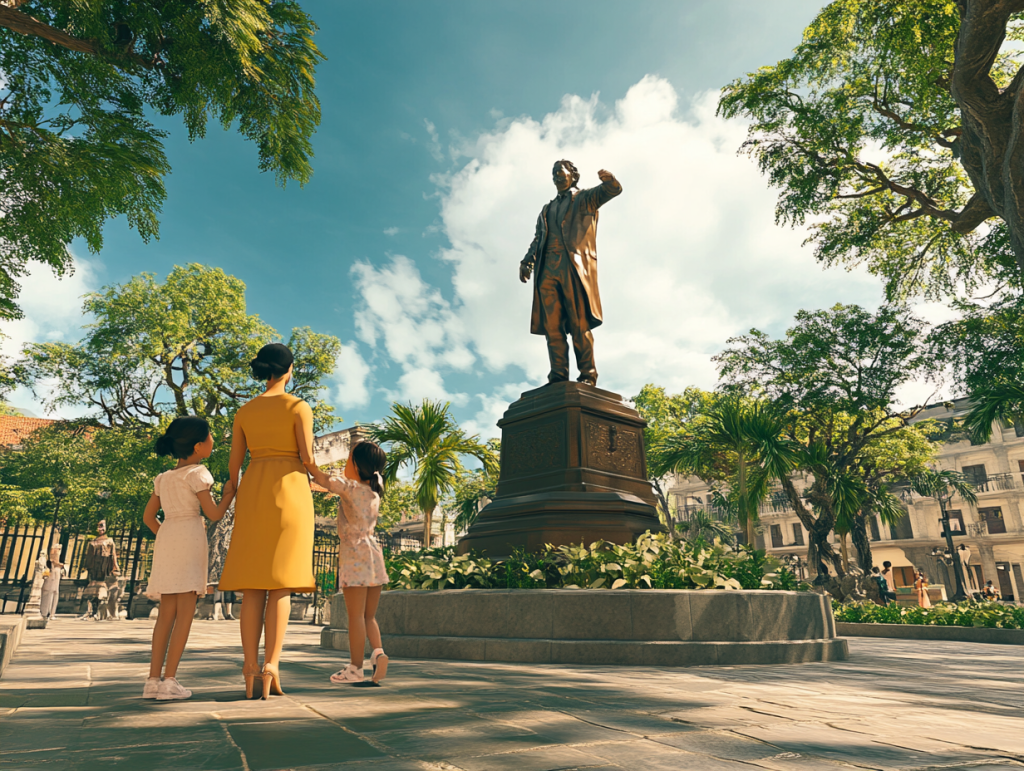
The Manila sun beats down like a final boss with infinite health—relentless and unyielding. Holy Week settles over Intramuros like that nostalgic filter Instagram slaps on vacation photos, except this place doesn’t need artificial vintage vibes. The Spanish colonial architecture does all the heavy lifting, crumbling stone walls standing defiant against time like the last survivors in a post-apocalyptic MMO.
Birds swarm the weathered pavement in classic NPC behavior—predictable patterns, zero AI sophistication. They scatter and regroup around the wide, open field bordered by ruins that scream “heritage site photo op.” Nearby restaurants sport names like Casa Manila and Ilustrado—because nothing says authentic historical experience like dining establishments with colonial branding that would make a marketing major weep tears of joy.
Dr. Jose Rizal’s bronze figure towers above the chaos on his pedestal, frozen mid-contemplation. The national hero gazes into the distance with that thousand-yard stare protagonists get in cutscenes before the final act. Dude probably never imagined he’d spend eternity watching tourists take selfies.
The Pangilinan-Agoncillo coalition clusters before the monument like a raid party assembling for a group screenshot. Lolo Al adjusts his faded gusot mayaman, the fabric clinging to his weathered frame. Sweat beads on his forehead despite the wide-brimmed hat casting shadows over his kind eyes. Lola Emily smooths her floral dress, her silver hair catching sunlight as she positions herself with the practiced grace of someone who’s mastered the art of family photo diplomacy.
Tito Ronald fidgets with his polo shirt collar, that universal uncle move when cameras appear. The Agoncillo couple—matching tourist outfits, probably took three vacation days for this—stand shoulder to shoulder with synchronized smiles. The Pangilinans occupy the left flank, their coordinated pastels screaming “we planned this outfit consultation via family group chat.”
A tourist—probably European, definitely lost but helpful—holds up someone’s smartphone with the reverent care reserved for sacred relics. Everyone arranges themselves in that awkward family photo formation that’s part geometry puzzle, part social hierarchy diagram.
“Say cheese!” The tourist’s accent carries that universal tourist-helping-tourist camaraderie.
The collective “CHEESE!” echoes across the field like a battle cry. Smiles stretch wide, genuine warmth radiating from faces that know this moment will live forever in cloud storage and printed photo albums.
Classic family bonding mechanics—the kind that makes you simultaneously cringe and feel weirdly sentimental.
Then the Sevillas make their grand entrance, fashionably late like protagonists arriving just as the opening credits roll. Enrico Sevilla strides through the field with that patriarch energy—pressed khakis, polo shirt that costs more than most people’s monthly grocery budget, and aviator sunglasses that probably have their own insurance policy. His jet black hair catches the light as he surveys the scene with executive-level assessment.
Thalia Sevilla glides beside him in blouse and jeans. Comfy sneakers step against stone with rhythmic precision. Her makeup remains flawless despite the tropical heat—clearly she’s mastered some advanced climate control cheat codes.
The lady guard at the entrance—mid-thirties, uniform pressed despite the humidity—nods with professional courtesy as the family passes.
But Thalia can’t resist her moment. She throws her arms wide, voice projecting across the field with theatrical flair that would make Shakespeare proud: “The most beautiful daughter has arrived!”
Every family has that one member who treats daily life like a performance art piece.
Allison Sevilla trails behind, a girl, her sundress contrasts her mother’s style but with the same sass and flair. She clutches her phone probably anticipating how long until she can pose to her social media spotlight stage. Her eyes dart between the assembled families and the ground, caught in the struggle between wanting to belong and wanting to be the star.
Morissette, the family’s maid, follows walking with her hips swinging both sideways. Her cardigan, skimpy jeans and ladies’ shoes suggest someone who prioritizes fashion over function, but her warm smile indicates she’s more family friend than hired help. She carries a canvas bag bulging with bottled water and snacks—the real MVP of any family outing.
The two family factions converge like opposing guilds forming an unlikely alliance. Handshakes, cheek kisses, and that rapid-fire Tagalog small talk that sounds like friendly fire but feels like home. The Sevillas missed the traditional church-hopping ritual—three churches, countless prayers, maximum Catholic achievement unlocked—but they’ve arrived for the historical segment of today’s cultural content update.
Sometimes the best moments happen when you’re running behind schedule. Life’s weird like that.
Family_visit_to_the_ruins.sav
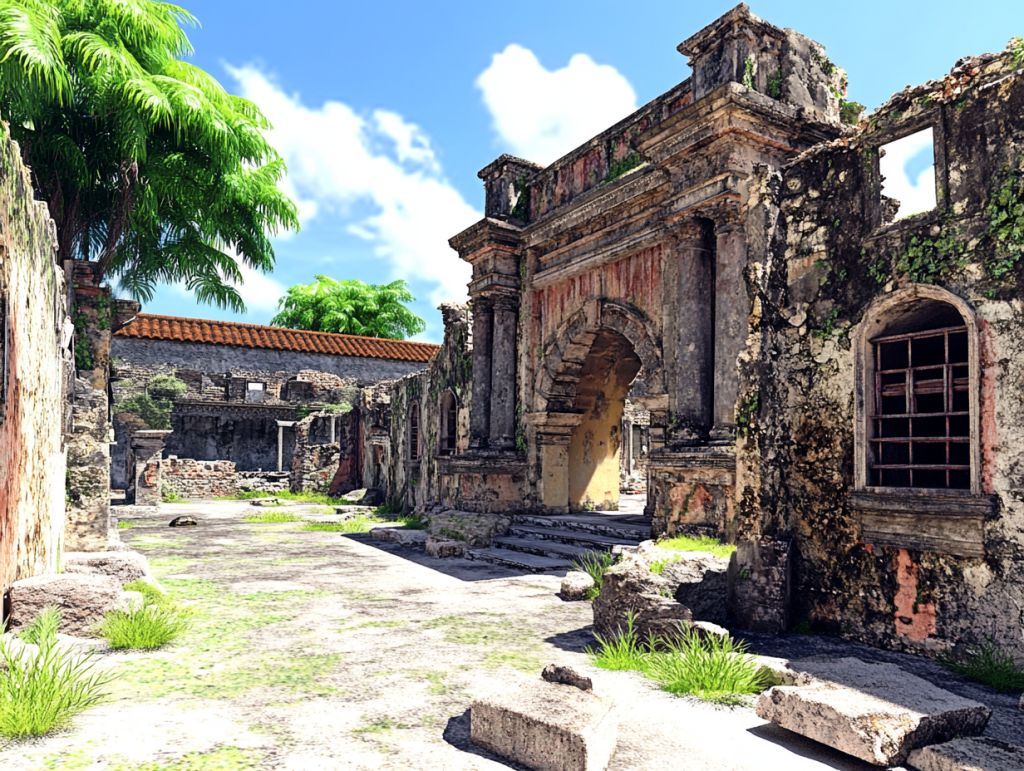
The Rajah Soliman Theater stands like a broken RPG asset—walls jutting from earth at weird angles, missing textures where time deleted entire sections. Classic dungeon ruins aesthetic, except this place actually housed real drama instead of pixelated treasure chests.
Al shuffles forward, his worn leather shoes crunching against scattered stone fragments. Sweat darkens his polo shirt despite the wide-brimmed hat casting shadows over his weathered face. His fingers trace crumbling brick edges with the reverence reserved for historical loot drops. Emily walks beside him, her floral dress catching morning light as she clutches his arm—forty years of marriage coded into that automatic gesture.
Ronald trails behind like the eternal NPC companion, middle-aged bachelor energy radiating from his untucked button-down and sensible sneakers. His phone stays holstered—dude’s from that pre-smartphone generation where memories lived in actual brain storage instead of cloud saves.
Then Ellie spots something across the field, her explorer instincts activating. She points toward another ruin with the enthusiasm of someone discovering a secret area. “What’s that? Let’s go there. That spot must be interesting.”
Every family has that one member who treats sightseeing like an open-world quest—gotta check every marker on the map.
She leads the party across uneven terrain toward what used to be Spanish colonial barracks. The structure squats low and weathered, stone walls thick enough to withstand centuries of tropical storms and tourist invasions. Gaps where windows once framed colonial soldiers now frame Instagram opportunities.
Ansel follows his wife’s lead, camera phone already prepped for action. Polo shirt pristine despite the heat, he’s mastered the art of husband photography—part documentarian, part director of family memory creation. His patient smile suggests years of practice navigating Ellie’s spontaneous photo sessions.
The barracks looms before them, carrying ghost data of Spanish boots on stone floors, musket maintenance, homesick soldiers staring at Manila Bay sunsets. These walls witnessed empire-building in real-time—the original colonial expansion pack.
“Pa, take a picture of us: Inay, Itay, and Kuya,” Ellie requests, using those Tagalog terms that sound like family password authentication.
The family clusters against weathered stone backdrop. Al straightens his shoulders, that automatic posture adjustment seniors execute when cameras appear. Emily smooths her dress, white hair catching light as she positions herself between her husband and son. Ronald shifts uncomfortably—classic bachelor uncle energy, perpetually awkward in family photo formations but too polite to escape.
Ansel raises the phone, framing his subjects against centuries-old masonry. “One…two…three…say cheese!”
The collective “CHEESE!” echoes off ancient walls like a battle cry across time zones. Smiles stretch wide, genuine warmth radiating from faces that understand this moment will outlive the ruins themselves—digital permanence conquering colonial stone.
Sometimes the best graphics are the ones rendered by actual sunlight and genuine human connection. No shader technology required.
The shutter clicks, freezing four generations against the backdrop of empire’s leftovers. Another memory archived, another family moment uploaded to the endless database of Filipino vacation documentation.
The_moat_and_fort_santiago_gate.sav
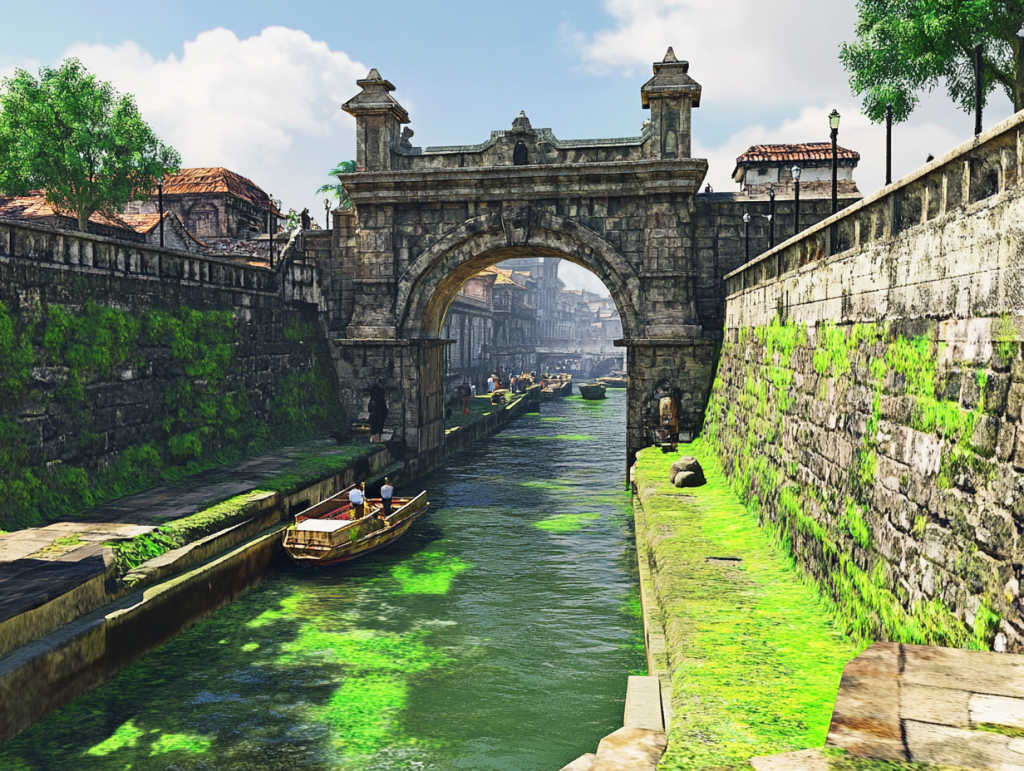
The Moat stretches before them like a medieval defense system glitched into tropical reality—canal waters connecting Pasig River to Manila Bay in what used to be prime strategic real estate. Classic fortress design: control the waterways, control the city. Someone definitely played their Civilization tech tree correctly.
Water laps against stone edges with that rhythmic soundtrack of empire maintenance. What sparkled crystal-clear in the sixteenth century now flows moss-green, like someone cranked up the algae bloom settings in the environmental damage simulation. Time’s weird like that—even conquest infrastructure gets patina.
Al shuffles along the canal’s edge, his leather shoes careful on uneven stones. Sweat darkens his polo shirt collar as he peers into waters that once carried Spanish galleons and Filipino resistance fighters. Emily clutches his arm, her floral dress catching afternoon light while she navigates crumbling walkways with the practiced balance of someone who’s survived decades of family tourist expeditions.
The Medio Baluarte de San Francisco rises ahead—named after St. Francis of Assisi, because apparently colonial architects enjoyed their Catholic branding as much as modern corporations love their logo placement. The rampart squats massive and weathered, stone blocks fitted together like Tetris pieces designed by paranoid military engineers.
This thing was built to fortify both riverside and landward approaches to Fort Santiago. Multi-directional defense protocol—smart design when your empire spans multiple continents and everyone wants a piece.
Ronald trudges behind the group, his untucked button-down and sensible sneakers marking him as the family member who treats historical sites like mandatory software updates—necessary but not particularly exciting. His expression carries that polite resignation of someone enduring educational content he didn’t request.
The Fort Santiago Gate materializes at the canal’s terminus, ornate wooden relief carvings covering its surface like achievement unlocks carved in timber. Ellie approaches with that explorer enthusiasm, her cardigan swishing as she examines decorative details most tourists photograph but never actually process.
“Pa, it’s decorated with wood relief carvings,” she observes, voice carrying genuine curiosity instead of tourist-trap obligation.
Ansel steps closer, his polo shirt pristine despite the humidity. His eyes track carved figures with the focused attention of someone who actually reads museum placards instead of just skipping to the gift shop. “Yeah, you’re right. That’s a carving of St. James, the ‘Moor-slayer.’”
Dude knows his colonial iconography. Respect.
Then Ansel shifts into full history-teacher mode, the kind of exposition dump that makes RPG dialogue trees jealous. “Well, actually, you know—the image of St. James, or ‘Santiago,’ symbolizes Spanish sovereignty. It decorates places once occupied by the Spaniards, like Chile and Mexico.”
His voice carries that particular satisfaction people get when they drop knowledge bombs in casual conversation. The carved saint stares down from weathered wood, frozen mid-conquest narrative, probably wondering how he became the poster boy for imperial expansion across three continents.
Meanwhile, Ronald’s internal monologue broadcasts pure confusion frequency. I don’t know what these two are talking about. Sure, they know a lot, his thoughts drift like background processing struggling with sudden data overflow.
Classic scenario: the eternal bachelor uncle caught between wanting to contribute to family conversation and having zero historical trivia equipped for deployment. Been there, dude.
His face maintains polite interest while his brain scrambles for relevant input—that universal expression of someone whose Wikipedia knowledge just hit a 404 error. The carved St. James seems to mock his ignorance from wooden immortality, another reminder that some people collect historical facts while others collect… well, whatever Ronald collects.
Family dynamics: where educational gaps become social boss battles you can’t skip.
Baluarte_de_santa_barbara_chamber.sav
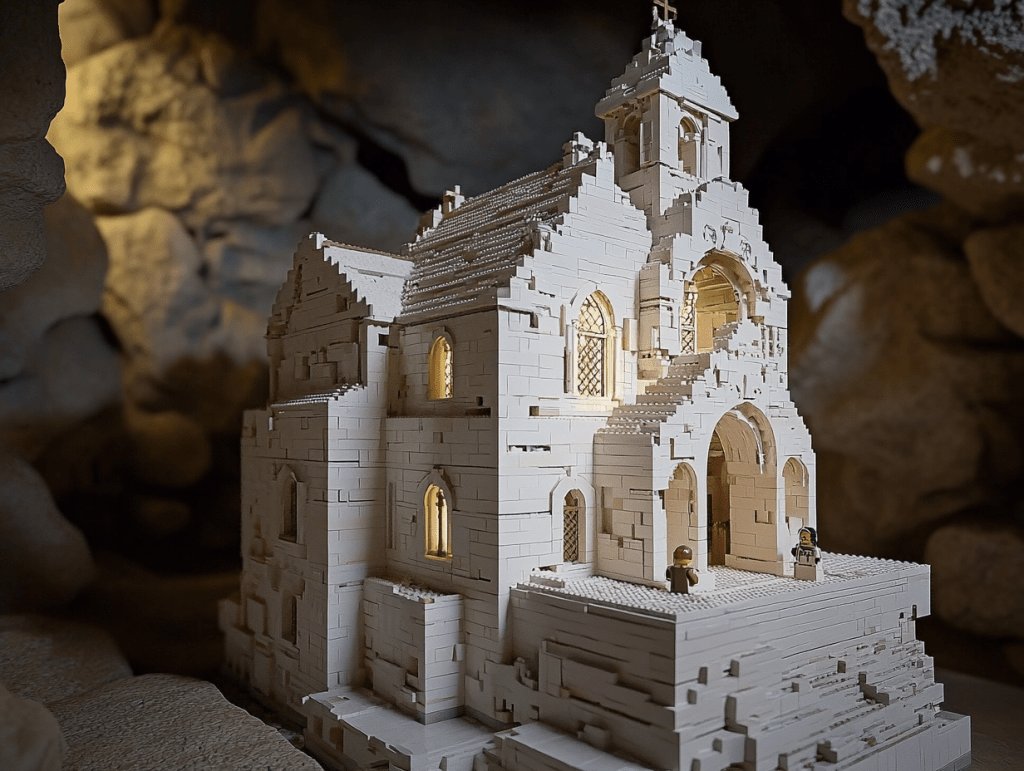
The Baluarte de Santa Barbara—Bulwark of St. Barbara, patron saint of artillerymen and pyrotechnics—houses what looks like the world’s most educational LEGO exhibit. White plastic models of lost Intramuros landmarks sprawl across display tables like a miniature city-builder game frozen mid-construction. Someone definitely maxed out their architectural recreation skills here.
Stone walls curve around the chamber with that fortress aesthetic—thick enough to withstand cannon fire, now protecting tourist-friendly displays instead of Spanish colonial interests. Fluorescent lighting casts sterile shadows across detailed miniatures of churches, government buildings, and notable Philippine landmarks that exist now only in historical documentation and polymer reproductions.
Thalia Sevilla orchestrates the scene with the precision of a social media campaign manager. Her blouse is fabulous as she positions herself beside a scale model of Ignacio Church, sneakers stepping against polished floors.
“Allison, here, beside the Ignacio Church,” she directs, voice carrying that particular maternal authority reserved for photo opportunities and life decisions.
Allison approaches with girl sass radiating from every step. She clutches her phone like a bestie, probably determining engagement rates and filter options for optimal aesthetic output.
“Sweet pose, Anak,” Thalia instructs with stage-mother precision, using the Tagalog endearment that sounds both affectionate and directorial. Her hands gesture choreographed movements—chin up, shoulders back, smile natural but not too enthusiastic.
Classic helicopter parent behavior: treating every moment like a portfolio-building opportunity.
Morissette steps forward with the family’s digital camera. Her warm smile indicates she’s genuinely invested in capturing this moment, not just fulfilling employment obligations. The camera raises with practiced steadiness—she’s clearly the designated family photographer, probably has thousands of hours logged in this particular skill tree.
The shutter clicks, freezing Allison against the backdrop of miniature colonial architecture. Another moment archived for social media immortality.
“My girl is so beautiful. Hashtag #iMakeHistory. Let’s post it on Instagram so you’ll get more than your 10k followers,” Morissette says, her voice carrying genuine pride mixed with millennial social media fluency.
Even the family help understands the influencer economy. That’s either really progressive or really depressing, depending on your perspective.
Allison’s internal monologue shifts into ambitious mode: Not just 10k—I’ll make it to twenty. You’ll see. Her expression maintains polite compliance while her brain calculates follower growth algorithms and engagement optimization strategies. The miniature Ignacio Church witnesses her digital dreams, probably wondering how architectural heritage became Instagram content.
Kid’s got hustle. Respect for the grind, even if the platform’s basically digital popularity contest with extra steps.
Meanwhile, Enrico Sevilla maintains his position near the chamber’s documentary screening area, arms crossed waiting, growing impatient, reserved for family photo sessions and mandatory cultural activities. His pressed khakis and polo shirt suggest someone who treats historical sites like business meetings—structured, time-sensitive, with specific objectives to accomplish.
His voice cuts through the photography session with executive authority: “The documentary is about to begin, take your seats.”
Translation: “Enough with the Instagram content creation, we have educational programming to consume.”
The chamber’s white LEGO models catch afternoon light streaming through fortress windows, creating shadows that dance across plastic reproductions of vanished glory. Somewhere between social media ambitions and historical documentation, the Sevilla family navigates the eternal tension between preserving the past and performing the present.
Classic modern family dynamics: everyone’s simultaneously experiencing history and documenting it for digital consumption. Multi-tasking across centuries.
Museo_ni_rizal.sav
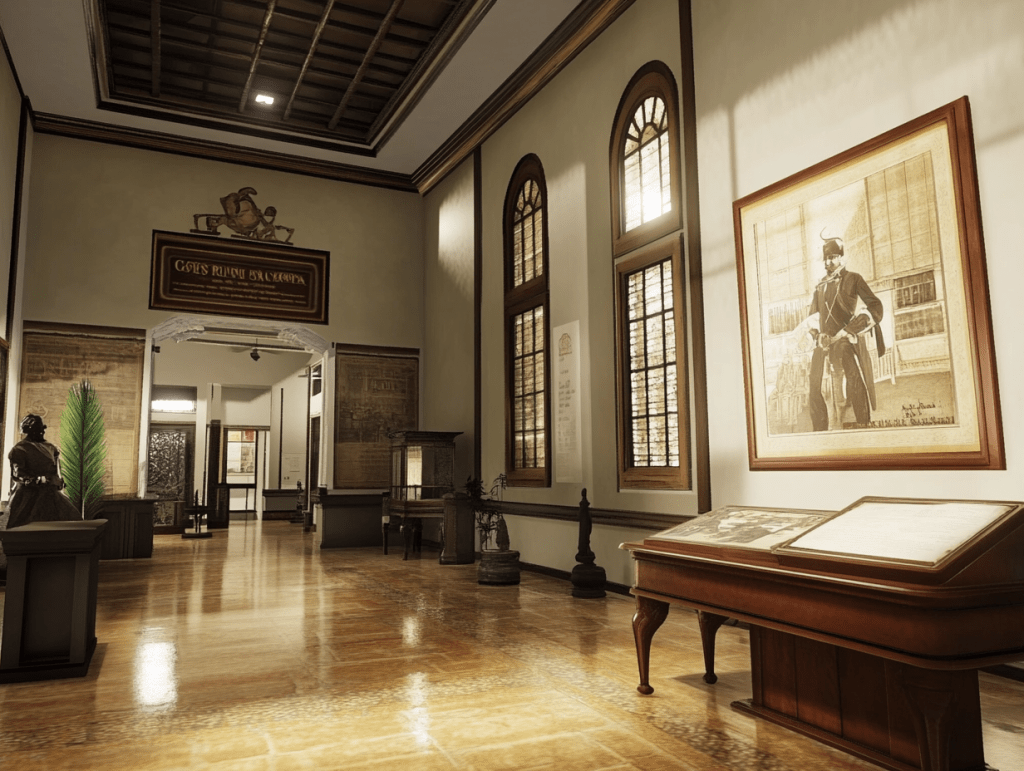
The Museo ni Rizal stands like a memorial dungeon dedicated to the Philippines’ ultimate protagonist—Dr. Jose Rizal, the national hero who basically speedran martyrdom and literary genius in thirty-five years. Dude wrote novels that toppled empires and still had time for ophthalmology. Talk about overachiever stats.
Martha approaches the entrance with that purposeful stride of someone who treats museums like interactive textbooks. Her teacher energy radiates from her professional blouse and comfortable flats—she’s clearly logged thousands of hours in educational content delivery. Greg follows with husband solidarity albeit more easy-going, polo shirt already showing sweat stains despite the morning hour. Their daughters, Mary and Sophie, trail behind with varying degrees of cultural obligation acceptance.
The security guard—middle-aged, uniform pressed despite tropical humidity, clipboard wielded like a quest item—processes their entry with bureaucratic efficiency. His nod carries the weight of someone who’s witnessed countless family education expeditions and knows exactly how this narrative arc unfolds.
Once inside, the family climbs wooden stairs that creak with historical significance. Each step echoes off museum walls like loading screen audio—that distinctive sound of transitioning between experience levels. The second floor beckons with promise of actual artifact encounters instead of gift shop preliminaries.
The corridor stretches before them like a timeline tutorial level. A massive bulletin board displays Rizal’s life progression in chronological order—birth, education, European travels, literary achievements, revolutionary activities, execution. Classic hero’s journey structure: humble beginnings, call to adventure, mentor figures, trials, ultimate sacrifice. Joseph Campbell would be so proud.
A lifelike portrait of Rizal dominates the wall space, his intelligent eyes tracking visitors with that painted-figure optical illusion that makes every angle feel personally observed. High cheekbones, thoughtful expression, period-appropriate formal wear—the artist captured that particular intensity reserved for people who know they’re destined for history textbook immortality.
Guy looks like he could debug colonial oppression algorithms in his sleep.
Then the real treasure room reveals itself: Rizal’s preserved cell, complete with writing desk tableau. A statue depicts him mid-composition, quill poised over paper with the focused concentration of someone crafting revolution through prose. The preserved space feels sacred—like discovering the developer’s original workspace where legendary code was written.
This is where Noli Me Tangere and El Filibusterismo got their final debugging. Ground zero for literary rebellion.
Display cases line the walls with Rizal’s personal effects from his European adventures—clothes that crossed continents, accessories that witnessed medical studies in Madrid and Paris salons. Each item carries metadata of a life lived at maximum intensity. His formal coat hangs with dignified presence, fabric bearing invisible traces of academic conferences and revolutionary meetings.
Carlos “Botong” Francisco’s mural The Martyrdom of Jose Rizal dominates an entire wall with National Artist gravitas. Colors blend and flow like cinematic sequences frozen in pigment—Spanish soldiers, Filipino witnesses, Rizal’s final moments rendered with artistic precision that makes historical trauma beautiful and terrible simultaneously.
Francisco understood visual storytelling better than most modern filmmakers. This mural hits harder than any documentary.
But the most sobering artifact occupies a small case with clinical precision: a fragment of Rizal’s vertebra, the exact location where Spanish bullets terminated his biological processes. The bone fragment sits preserved behind glass like the ultimate historical evidence—physical proof that ideas can be more dangerous than armies.
That’s hardcore preservation right there. They literally kept pieces of the impact damage.
Martha approaches the Noli Me Tangere display with professional reverence, her teacher instincts activating for educational content delivery. The book sits opened to reveal period typography and aged pages that once sparked colonial panic attacks.
“Here is the Noli Me Tangere—Touch Me Not. However, the original copy is kept at the National Library,” she informs Mary and Sophie, her voice carrying that particular maternal authority reserved for culturally significant lessons.
Smart archival management: keep the tourist-accessible copy here, preserve the original in climate-controlled academic storage. Classic backup protocol for irreplaceable data.
The girls peer at the displayed novel with dutiful attention. Meanwhile, the ghost of Rizal probably watches from whatever digital afterlife revolutionary writers access, wondering how his anti-colonial debugging became mandatory curriculum content.
From banned books to required reading in less than two centuries. That’s successful legacy management.
Fort_santiago_dungeons.sav
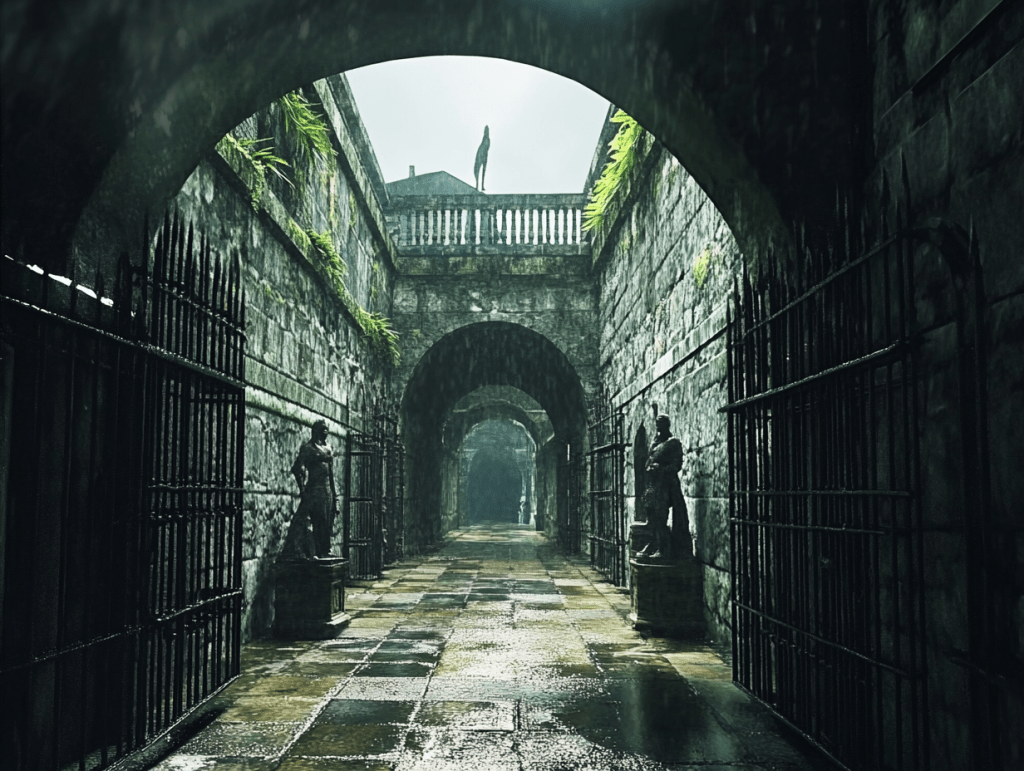
Michael bolts toward the dungeon entrance like he’s speedrunning a horror game tutorial, completely ignoring the warning sign that reads “WAIT FOR SECURITY TO GIVE PERMISSION BEFORE ENTERING THE DUNGEONS” in bold letters that scream obvious NPC warning dialogue. The kid’s practically vibrating with ghost-hunting enthusiasm, his sneakers slapping against stone steps as he descends into what used to be Spanish colonial America’s most efficient prisoner processing facility.
Classic younger sibling behavior: sees ominous warning sign, immediately treats it as quest objective marker.
The sign itself hangs crooked on metal chains, weathered plastic laminated with that particular bureaucratic aesthetic that suggests someone got tired of liability issues. Fluorescent lighting flickers overhead like atmospheric horror game ambiance, casting uneven shadows across limestone walls that have witnessed centuries of human suffering compressed into educational tourist experience.
James and Benjamin exchange that universal older-brother look—part exasperation, part protective instinct—before pursuing their runaway sibling into the historical danger zone. James moves with teenage confidence, his shorts and graphic tee suggesting someone who treats adventure like social media content waiting to happen. Benjamin follows with more cautious steps, his button-down shirt and khakis marking him as the family’s designated responsible party.
Someone’s gotta be the tank in this party configuration.
The dungeon air hits them like environmental storytelling made tangible—thick, humid, carrying traces of centuries-old despair mixed with modern tourist sanitization efforts. Stone walls sweat with tropical moisture that makes everything feel simultaneously ancient and uncomfortably alive.
“There must be ghosts here. They say prisoners died in these cells,” Michael announces with the gleeful anticipation of someone whose horror media consumption has completely desensitized him to actual historical trauma. His eyes scan the darkness like motion sensors searching for paranormal activity, clearly expecting jump scares instead of educational contemplation.
Kid’s been watching too much Ghost Adventures. Real history doesn’t come with convenient supernatural special effects.
Benjamin’s concern overrides his annoyance as he catches up to their reckless younger brother. “What were you thinking, Michael, running off like that? What if you got hurt?” His voice carries that particular older-sibling authority reserved for preventing family emergency room visits and parental disappointment.
Stress lines crease his forehead as he surveys the dungeon environment for potential hazards—uneven flooring, low-hanging obstacles, structural integrity issues that could transform educational outing into medical emergency. His protective instincts are running full background processes.
James slides into mediator mode with practiced diplomacy, hands raised in that universal gesture of family conflict de-escalation. “Chill, Benjamin, this can be fun. And Michael, be a little more careful.” His tone balances adventure enthusiasm with reasonable safety protocols—the middle child’s eternal burden of maintaining family group cohesion.
Dude’s mastered the art of diplomatic gaming. Respect for the social management skills.
Michael responds with pure little-brother contempt, his sneer carrying maximum disrespect coefficient. “You two are such scaredy-cats.” He practically radiates that invincible confidence reserved for people who haven’t yet discovered their mortality stats are actually quite limited.
Classic overconfidence debuff. Kid thinks he’s got plot armor in real life.
The trio navigates through preserved cells like they’re exploring a historical dungeon crawler. Statues populate the space with disturbing realism—Japanese soldiers in World War II uniforms, Filipino guerrillas frozen mid-resistance, civilians caught in the crossfire of occupation and liberation. Each figure carries detailed facial expressions that capture final moments of human experience compressed into educational diorama format.
Someone put serious effort into making these displays as emotionally devastating as possible. Mission accomplished.
The statues occupy cells with museum precision, positioned to maximize historical impact while maintaining tourist accessibility. Dim lighting creates shadows that make the figures appear almost animate—that uncanny valley effect where static displays seem ready to continue interrupted conversations about survival and sacrifice.
Benjamin pauses before one particular cell, his usual caution replaced by genuine reverence. His shoulders straighten, head bowing slightly in acknowledgment of lives lost within these walls. Rest well, heroes and innocent victims, his internal monologue broadcasts with surprising emotional depth for someone usually focused on practical concerns.
Sometimes the most important boss battles happen inside your own head.
The moment stretches with appropriate solemnity before the group continues their underground navigation. Stone corridors echo with footsteps that join centuries of similar sounds—prisoners, guards, liberators, tourists—all adding their audio data to the dungeon’s accumulated acoustic history.
They emerge on the opposite side like completing a historical level transition, afternoon sunlight hitting their faces with environmental contrast that makes the dungeon experience feel even more surreal. Modern Manila noise filters through fortress walls, reality reasserting itself after temporal displacement.
Michael surfaces with obvious disappointment radiating from his entire posture. “Bummer, I’m not even spooked down there.” His voice carries the deflated energy of someone whose supernatural expectations collided with historical documentation instead of paranormal entertainment.
Kid wanted Phasmophobia, got interactive history lesson instead. Reality rarely delivers the special effects we’re expecting.
Intramuros_visitors_center.sav

The Intramuros Visitors Center operates like a tourist hub with all DLC expansions installed—information desk, audiovisual theater, refreshment zones, and souvenir marketplace all housed within the chambers of Baluartillo de San Francisco Javier. Classic adaptive reuse architecture: take historic fortress, convert to customer service facility. If these walls could talk, they’d probably complain about the career transition.
Stone walls that once deflected cannonballs now deflect tourist complaints about overpriced merchandise and mediocre Wi-Fi connectivity. Fluorescent lighting battles centuries-old limestone architecture in an aesthetic standoff that nobody really wins.
Las Casas—The Houses—occupies one chamber like a restaurant mod installed in a medieval castle level. The dining space maintains that awkward balance between historical preservation and commercial functionality, wooden tables arranged among stone walls that have witnessed everything from Spanish colonial strategy meetings to family vacation dinner drama.
Al settles into his chair with that careful precision seniors deploy around unfamiliar furniture, his weathered hands adjusting his polo shirt collar. Emily positions herself beside him, white hair catching ambient lighting as she surveys the dining space with polite tourist curiosity. Ronald claims the chair across from them, his bachelor uncle energy radiating mild discomfort at family gathering protocols.
The Pangilinan-Agoncillo coalition occupies the long dining table like a raid party celebrating successful dungeon completion. Their laughter cascades through the restaurant with infectious warmth, conversations overlapping in that chaotic symphony of extended family dynamics. Plates clink, silverware scrapes against ceramic, and multiple conversations broadcast simultaneously across generational frequency bands.
These people definitely understand the assignment when it comes to family bonding activities.
Meanwhile, the Sevillas maintain their separate dining establishment outside the restaurant proper, claiming patio territory with the territorial confidence of people accustomed to premium seating arrangements. Enrico surveys the outdoor space with executive assessment, his pressed khakis and designer polo suggesting someone who treats restaurant experiences like quarterly performance reviews.
Thalia cuts into her meal with surgical precision, each bite evaluated against her internal culinary database. Her expression shifts from neutral to mildly disapproving, that particular look reserved for subpar service experiences that will definitely become dinner party conversation material.
“I cook better than this,” she declares with the confident authority of someone whose kitchen expertise probably includes subscriptions to multiple cooking magazines and premium appliance investments.
Translation: “This establishment has failed to meet my residential chef standards.”
Enrico nods with spousal solidarity, his business-casual wardrobe suggesting someone familiar with expense account dining protocols. “Tastes like something from an eatery. In my opinion, this is overpriced. Poor foreigners—they’re being cheated.”
His critique carries that particular male authority reserved for restaurant reviews and parking space negotiations. Around them, international tourists continue their meals blissfully unaware of the financial assessment occurring at adjacent tables.
Dude’s probably comparing this to whatever corporate dining experiences he’s accustomed to. Different reference frameworks.
Allison sits between adult conversations, her girl energy contained within acceptable family dinner parameters. Her sundress and careful posture suggest someone navigating the eternal balance between wanting independence and requiring parental approval for dessert requests.
Morissette approaches with maternal warmth. “Do you want sorbetes, Allison?”
Filipino ice cream vendor protocol activated. This is about to get authentic.
“Yes, please, Morissette,” Allison responds with that particular sweetness reserved for adults who actually listen to girl preferences instead of making unilateral decisions about appropriate dining choices.
Morissette navigates toward the sorbetes vendor with purposeful stride, her canvas bag suggesting someone prepared for various family outing contingencies. The vendor operates his mobile cart like a small business entrepreneur, colorful umbrellas and hand-painted signage advertising traditional Filipino frozen desserts to tourists seeking authentic cultural experiences.
“Kuya, one please,” Morissette requests, using the respectful Filipino address that acknowledges both familiarity and appropriate social courtesy.
The vendor responds with practiced efficiency, scooping frozen dessert made from carabao milk into a cone with the mechanical precision of someone who’s served thousands of similar orders. His weathered hands move with muscle memory developed through years of street-side customer service, each scoop calculated for optimal value-to-cost ratio.
Traditional Filipino ice cream made from water buffalo milk. That’s commitment to indigenous dairy sourcing right there.
The dessert exchanges hands like a cultural transaction—tourist curiosity meeting local entrepreneurship in the eternal dance of heritage cuisine commercialization. Steam rises from surrounding food stalls, creating atmospheric haze that makes the entire scene feel like environmental storytelling rendered in real-time sensory experience.
Sometimes the best parts of tourist destinations happen at the edges, where actual local culture intersects with visitor curiosity.


Leave a Reply