Overview:
| Topher, a young boy scout, catches a Hercules beetle with his buddy Leo on a hot summer day. His father, Dr. Bill—CEO of Archangel Raphael Medical Inc.—is in the operating room performing a high-stakes cardiothoracic surgery with his team. Topher is a gifted cellist and regularly performs at the opera house. He also serves as a sacristan, leading fellow acolytes during children’s mass. An avid RPG gamer, he joins his party in co-op mode to battle a powerful dungeon boss. The Kennedy family later boards a flight to the Philippines, his mom Selena’s home country. That midnight, while everyone is asleep, Topher gazes out the window and sees a magical blue-white shooting star streak across the sky. |
The_beetle_hunter_chronicles.sav
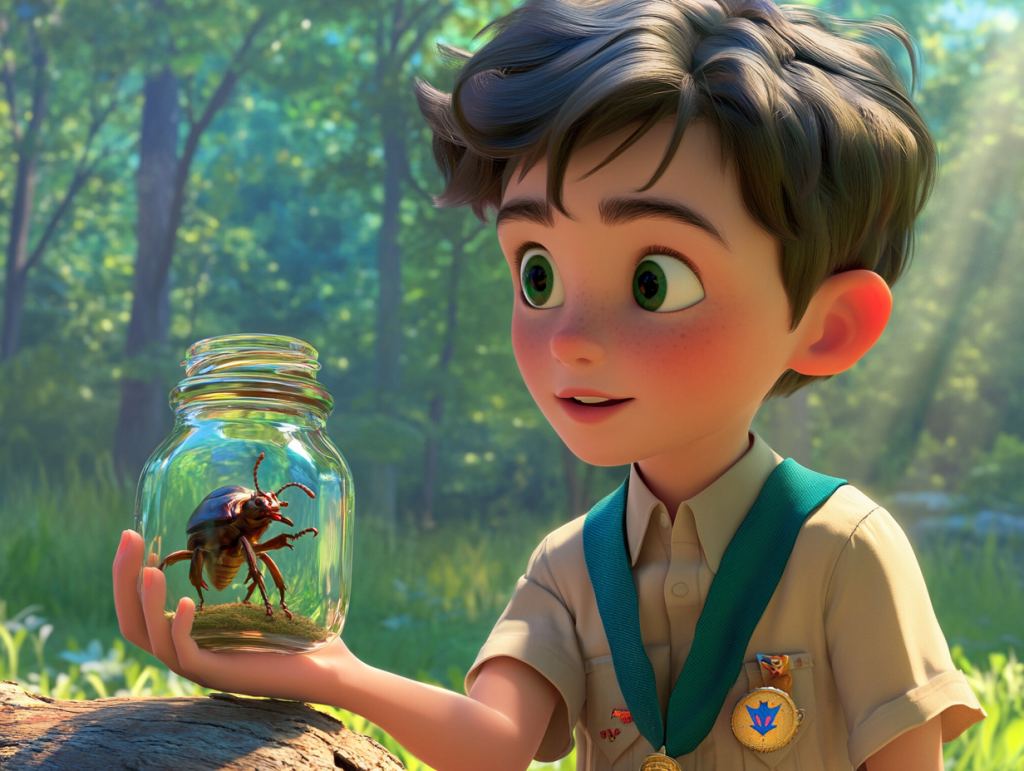
Second week of June hits different when you’re stuck in nature documentary territory. The sun’s blazing like it’s auditioning for a Michael Bay film, and these towering oak trees are doing their best impression of green umbrellas—providing those sweet, sweet patches of shade that every gamer knows are basically real-life respawn points.
The trail stretches ahead like something straight out of The Legend of Zelda: Breath of the Wild—all grass textures, pebble sprites, and stone assets scattered with that procedural generation randomness that screams “budget indie game.” A gentle breeze flows through the canopy above, carrying the ambient soundtrack of chirping birds and babbling streams. It’s almost peaceful enough to make you forget you’re essentially living in a survival simulator without the cool crafting mechanics.
Topher strides down the path like he’s the main character in some coming-of-age adventure anime. The kid’s got that classic Boy Scout aesthetic locked down: tan collared shirt that screams “I take merit badges seriously,” royal blue neckerchief positioned with military precision, and a diagonal sash that’s practically groaning under the weight of achievement patches. His leaf-green shorts complete the look—very Stand by Me meets Summer Camp Island.
Classic overachiever protagonist energy, I observe, watching him navigate the terrain with the confidence of someone who actually read the manual. Probably has his Ten Essentials memorized and color-coded in his backpack.
Trailing behind like the reluctant sidekick in every buddy comedy ever made is Leo. Poor kid looks like he got copy-pasted from the “awkward nerd” character template: wire-rimmed glasses perched on a nose that’s currently doing its best impression of a leaky faucet, and sporting that distinctive parted bowl haircut that screams “my mom still picks out my clothes.” His pale complexion practically glows in the dappled sunlight filtering through the leaves.
“I don’t know if my parents were right in sending me here,” Leo mutters, his voice carrying that unmistakable tone of someone who’d rather be grinding levels in an RPG than collecting real-world XP.
There it is—the classic reluctant hero’s journey opening line. Kid’s basically narrating his own origin story without realizing it.
Topher glances back with the kind of reassuring grin that belongs on a motivational poster. “Come on, exploring the forest will be fun, trust me.”
Famous last words from every horror movie ever. Though to be fair, this feels more Disney Channel Original Movie than Blair Witch Project.
Leo adjusts his glasses with the practiced motion of someone who’s done it a thousand times during anxiety-inducing conversations. “What are we even looking for?”
Before Topher can answer, his eyes lock onto something in the distance. The kid’s face lights up like he just spotted a legendary Pokémon. “There it is!”
He takes off running toward a fallen log nestled in the corner where the trail bends, his merit badge sash bouncing with each enthusiastic stride. The log itself looks like something out of a nature documentary—weathered bark peeling in places, hosting its own ecosystem of moss and lichen.
Leo’s expression shifts from confusion to pure horror as he catches sight of whatever has captured Topher’s attention. “What is that?” The words come out strangled, like he’s just encountered a boss-level spider in Grounded.
Classic squeamish sidekick reaction. Kid’s probably never seen anything bigger than a dust bunny in his gaming setup.
Topher kneels beside the log with the reverence of an archaeologist uncovering ancient treasure. His hands move with practiced precision as he carefully coaxes a massive beetle from its hiding spot. The thing is legitimately impressive—easily the size of a golf ball, with horn-like protrusions that would make any Monster Hunter fan jealous.
“This is a Hercules Beetle,” Topher explains, his voice practically vibrating with excitement as he gently guides the insect into a glass jar he produces from his backpack. The beetle’s dark carapace gleams in the filtered sunlight, and those iconic horns curve forward like nature’s version of medieval armor.
Okay, that’s actually pretty cool. Like finding a rare mount in an MMORPG, except this one’s real and probably doesn’t have a 0.1% drop rate.
Leo takes an involuntary step backward, his face cycling through several shades of green that would make the Hulk proud. “You’re going to keep that?”
There’s something almost endearing about Topher’s enthusiasm as he secures the jar’s lid with air holes he’s clearly prepared in advance. His grin is pure joy—the kind you see when someone discovers their passion, whether it’s speedrunning Dark Souls or, apparently, collecting insects that look like they crawled out of a kaiju movie.
“Yes, I’ll keep it for a little while,” he says, cradling the jar like it contains the last save file of a completed game.
And there’s the setup for whatever adventure comes next. Classic mentor-student dynamic brewing, with our reluctant sidekick about to get dragged into something way outside his comfort zone. The Hercules beetle’s probably going to be the MacGuffin that kicks off the real story.
The forest around them continues its ambient symphony, completely indifferent to this small moment of human discovery. But sometimes the best adventures start with the smallest things—even if one of the adventurers looks like he’d rather be literally anywhere else.
The_dual_class_hero.sav
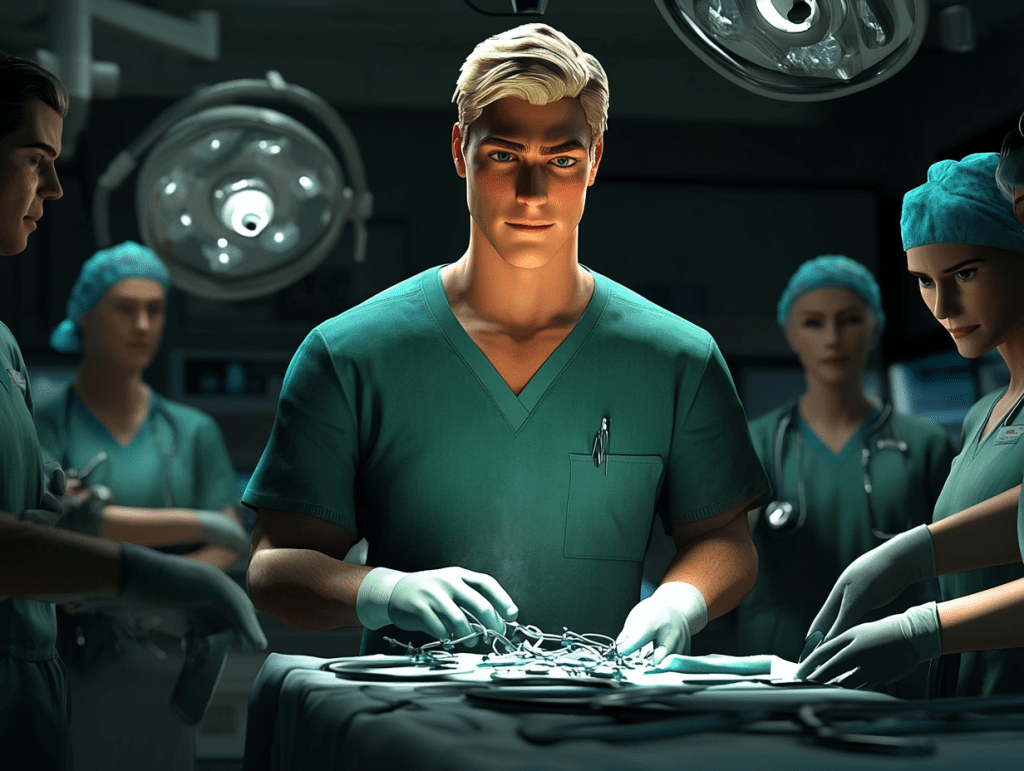
Christopher Alexander William “Bill” Kennedy Jr. stands like he stepped out of a character creation screen where someone maxed out all the physical stats. Mid-40s, but the kind of mid-40s that makes you think time dilation technology might actually exist. Short golden blonde hair catches the fluorescent boardroom lighting like he’s got some kind of protagonist aura effect running, and those olive green eyes scan the room with the calculating precision of someone running multiple background processes simultaneously.
Classic dual-class build—CEO/Surgeon multiclass is absolutely broken in the corporate RPG meta.
The guy’s basically built like a Space Marine from Warhammer 40K: 6’5″ of pure intimidation factor wrapped in what’s probably a custom-tailored suit that costs more than most people’s cars. Square jaw that could probably deflect small caliber rounds, fair-medium skin that suggests he actually gets sunlight despite spending his life in sterile environments, and a muscular build that screams “I deadlift between board meetings.”
This is what happens when you roll natural 20s for Charisma, Constitution, and Intelligence. Dude’s probably got some serious min-maxing going on behind the scenes.
The boardroom itself feels like something out of Succession—all polished mahogany and floor-to-ceiling windows that overlook a cityscape that might as well have “Late Stage Capitalism: The View” as its official name. The C-suite officers arranged around the conference table look like they’ve been copy-pasted from the “Corporate Executive Starter Pack”—expensive suits, expensive watches, and that particular brand of anxiety that comes from knowing your quarterly numbers determine whether you’re eating caviar or unemployment benefits.
Dr. Bill’s voice carries that authoritative resonance that probably makes shareholders feel warm and fuzzy inside. “With everything settled, this meeting is adjourned. I’ll meet you all next Friday as usual.”
Standard dismissal protocol. Efficient. No unnecessary exposition. Guy runs meetings like he’s speedrunning corporate governance.
The executives file out with the practiced efficiency of NPCs following their scripted pathways, leaving Dr. Bill alone with whatever internal monologue drives someone who’s apparently decided that running a Fortune 500 company isn’t challenging enough.
Plot twist incoming. Watch this man transition from Corporate Overlord to Actual Lifesaver in 3… 2… 1…
Cut to: Operating Room. Different costume, same character, completely different skill tree activated.
The transformation is honestly fascinating from a narrative perspective. Gone is the power suit, replaced by surgical scrubs that somehow still manage to emphasize his imposing frame. The surgical mask covers half his face, but those olive green eyes remain laser-focused, now framed by surgical loupes that make him look like some kind of high-tech cyborg surgeon from Ghost in the Shell.
This is the good stuff. Real-world class switching. From Board Meeting Boss Fight to Surgical Strike Mission.
His hands move through the pre-surgical washing ritual with the kind of methodical precision that suggests this routine is as hardwired into his muscle memory as keyboard shortcuts are for a programmer. Water cascades over fingers that have probably signed million-dollar deals and saved actual human lives in the same day.
Talk about having your priorities sorted. Most people struggle with work-life balance. This guy just made them the same thing.
The OR team assembles around him like a perfectly coordinated raid party: assistants functioning as his lieutenants, the scrub person managing inventory like a dedicated support class, the anesthesiologist handling the life-critical debuffs, and the circulating nurse maintaining battlefield awareness. Each team member moves with the kind of synchronized efficiency that would make any Overwatch squad jealous.
“Now that we’re on full heart-lung machine support, we can enter the chest without needing to ventilate the lungs,” Dr. Bill explains to the residents clustered around the operation like eager apprentices watching their guild master demonstrate advanced techniques.
Educational content delivery while performing literal life-or-death surgery. This guy’s basically live-streaming the most intense tutorial ever created.
His voice maintains that same commanding authority from the boardroom, but now it’s focused on something infinitely more important than quarterly projections. The residents hang on every word like they’re absorbing critical lore that’ll determine whether they level up or wash out of the program entirely.
“This is what we call the mini-thoracotomy approach, meaning the sternum, or breastbone, is not opened. That’s the main advantage—no bones need to heal after surgery.”
Optimization patch notes: Reduced recovery time, minimized structural damage, maintained full functionality. Beautiful design philosophy.
The surgical field spreads before them like the most complex puzzle ever designed—layers of tissue and organs that represent the difference between someone going home to their family or becoming another statistic. Dr. Bill’s hands move with the confidence of someone who’s memorized every possible interaction in this particular game mode.
“What we’re doing is pulling the edges of the pericardium toward us, which brings the valve and the heart along with it,” he continues, his voice steady as a mission briefing despite the fact that he’s literally holding someone’s heart in his hands.
The ultimate tank-and-healer hybrid. Protecting and preserving life while maintaining absolute strategic control.
The OR lights cast everything in that particular shade of surgical white that makes reality feel hyperreal, like someone cranked the contrast settings to maximum. Monitors beep with the rhythmic persistence of a health meter, displaying vital signs that represent the real-time status of the most important quest objective possible: keeping another human being alive.
“We now have all the exposure we need. The aorta is the major blood vessel we open to access the aortic valve,” Dr. Bill states, his explanation delivered with the matter-of-fact tone of someone describing a complex but completely manageable technical procedure.
Main quest objective: Replace malfunctioning heart valve. Failure condition: Permanent game over for the patient. No pressure whatsoever.
The team works with mechanical precision around the aortic valve, each movement calculated and deliberate. This isn’t just surgery—it’s performance art where the stakes are measured in heartbeats and the margin for error exists somewhere between “nonexistent” and “absolutely zero.”
This is what peak human performance looks like when someone decides that saving lives is just another day at the office.
Child_prodigy_boss_battle_edition.sav
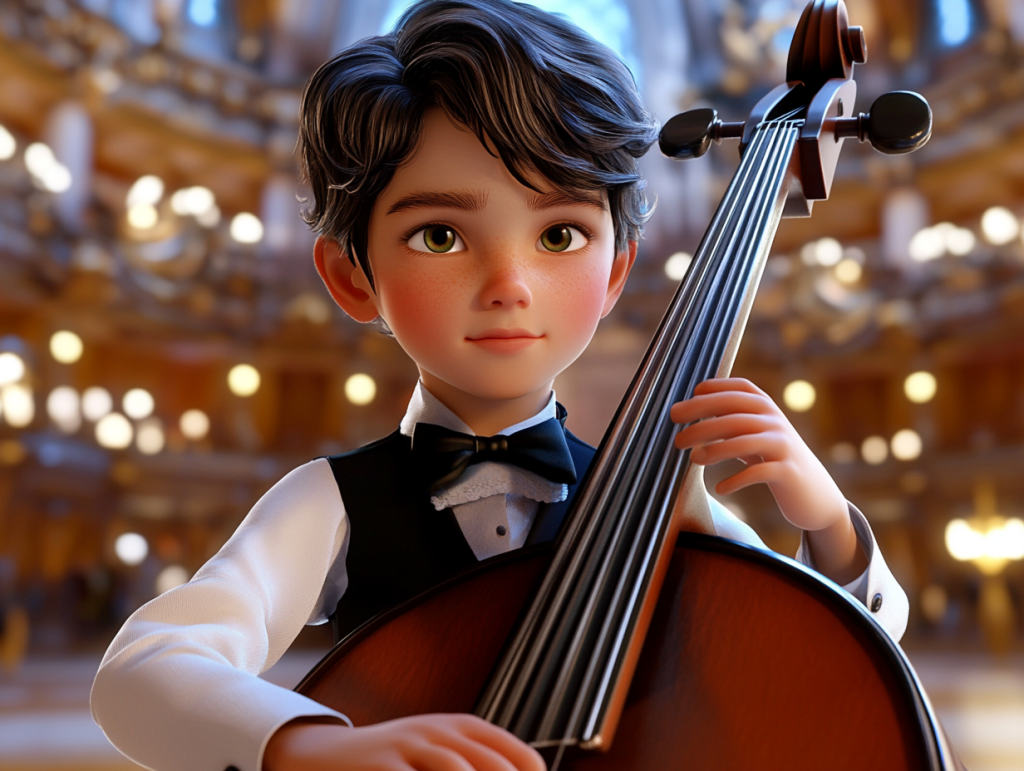
The announcer’s voice booms through the opera house speakers with that particular brand of theatrical gravitas that makes everything sound like the opening to a Star Wars film. “Ladies and gentlemen, I present to you Mr. Christopher Alexander William Kennedy III, a nine-year-old wonder. He will perform Mozart’s Symphony No. 40, 1788, on the cello.”
Nine years old. Playing Mozart. In front of what looks like the entire cast of Downton Abbey having a formal dinner party. This kid’s basically speedrunning childhood achievement unlocks.
The long red curtains part with mechanical precision, revealing a stage that screams “old money classical music venue”—polished hardwood floors that could probably reflect your soul, dramatic lighting that makes everything look like a Renaissance painting, and acoustics designed by people who understood that sound waves are basically audio magic.
Christopher Alexander William Kennedy III—because apparently regular names are for peasants—stands center stage like he’s about to face the final boss in Dark Souls, except his weapon of choice is a cello and his enemy is stage fright. The kid’s got that particular brand of composure that either comes from natural talent or complete dissociation from reality.
Plot twist: the real final boss is performing classical music in front of people who probably judge your worth based on your knowledge of wine vintages.
The audience stretches before him like a sea of formal wear and social expectations. Suits that cost more than gaming rigs, gowns that probably have their own insurance policies, all arranged on velvet-cushioned chairs that look like they were designed for people who measure comfort in thread count rather than lumbar support. These aren’t just spectators—they’re the kind of people who attend cultural events to be seen attending cultural events.
Classic high-society gathering. Everyone’s dressed like they’re attending a wedding between Victorian ghosts.
From backstage, Mr. Kutcher materializes like a supportive NPC delivering a crucial buff before the big fight. The music teacher’s face radiates the kind of encouraging energy that suggests he’s invested way more than just professional interest in this performance. “You’re going to nail this. Just believe in yourself.”
Standard mentor dialogue. But honestly, sometimes the classics work because they’re true.
Topher—because Christopher Alexander William Kennedy III is apparently too much even for formal introductions—turns his head toward his teacher with a smile that manages to be both nervous and confident simultaneously. It’s the expression of someone who’s done the prep work but knows that execution is where legends are made or dreams get crushed in real-time.
Kid’s got game face activated. Respect.
He pivots back toward the audience with the fluid motion of someone who’s been performing since before he could properly pronounce “fortissimo.” The cello stands waiting like Excalibur in musical instrument form—glossy wood that catches the stage lights, strings that represent the difference between triumph and public humiliation.
Settling into position, Topher places the cello between his legs with the practiced ease of someone who’s been doing this longer than most kids have been tying their shoes. The bow rests in his grip like an extension of his arm, and for a moment, the entire theater holds its collective breath.
Molto allegro

The first movement erupts from the cello like a sonic boom translated into classical music. Mozart’s Symphony No. 40 flows through the opera house with the kind of precision that makes you realize why this particular piece has survived centuries of musical evolution. Topher’s fingers dance across the strings with mechanical accuracy while his bow arm moves in smooth, controlled arcs.
This is what happens when natural talent meets obsessive practice. Kid’s playing like he downloaded Mozart’s skill tree directly into his brain.
In the audience, Selena Kennedy sits poised like she stepped out of a Great Gatsby adaptation. Her elegant green gown flows around her like liquid emerald, complemented by earrings and a necklace that probably cost more than most people’s cars. But her accessories pale in comparison to the expression on her face—pure maternal pride mixed with the satisfaction of someone watching their investment pay dividends.
My son has fulfilled my dream of becoming a musician, she thinks, her internal monologue radiating the kind of vicarious achievement that suggests this performance represents more than just a nine-year-old’s recital.
Classic stage parent moment. Though to be fair, when your kid can actually deliver at this level, maybe the pressure worked out.
Andante
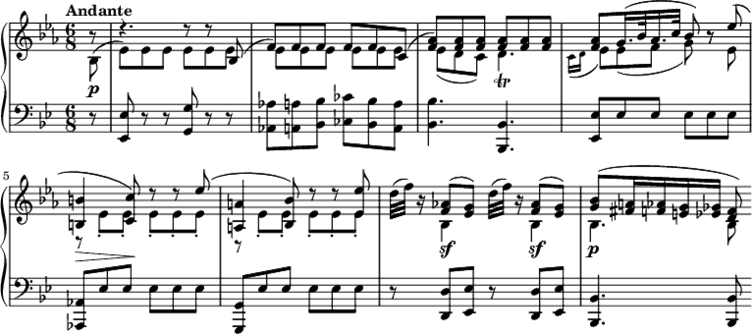
The second movement shifts into something more contemplative, and Topher adjusts his technique accordingly. His posture remains perfect—back straight, shoulders relaxed, breathing controlled like he’s running meditation software in the background while his hands execute increasingly complex musical algorithms.
Bill Kennedy grins from his seat with the kind of paternal satisfaction that suggests he’s already mentally writing the family newsletter update. His brown suit and yellow tie combination screams “successful businessman who takes culture seriously,” and his facial expression broadcasts pure paternal achievement to anyone within visual range.
Dad’s having the time of his life. Probably already planning the college application essay that starts with “At age nine, my son performed Mozart…”
Menuetto. Allegretto – Trio
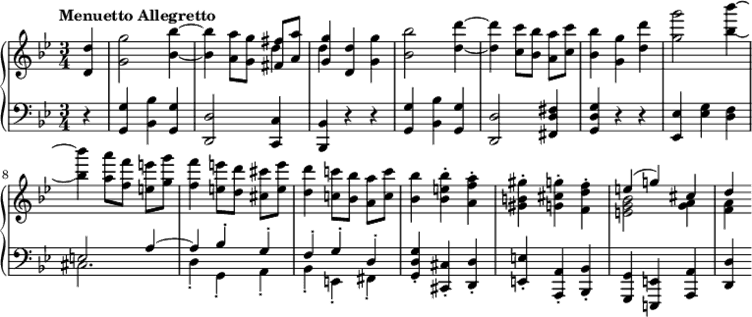
The third movement brings technical complexity that would challenge adult musicians, but Topher navigates the musical landscape like he’s got cheat codes enabled. His bow work becomes more intricate, fingers shifting positions with the fluid precision of someone who’s internalized muscle memory down to the cellular level.

From somewhere in the venue’s periphery, Carlisle—because of course they have a butler named Carlisle—documents the performance with a Canon DSLR that probably costs more than most people’s semester tuition. The camera’s shutter clicks blend into the ambient soundscape, preserving this moment for posterity and future bragging rights.
Even the help is equipped with professional-grade equipment. This family doesn’t do anything halfway.
Finale. Allegro assai

The final movement builds toward its climactic conclusion with the narrative momentum of a season finale. Topher’s performance reaches its peak complexity—rapid-fire finger work, dynamic bow changes, and emotional expression that suggests he’s not just playing the notes but channeling Mozart’s creative energy directly through time and space.
Kid’s in the zone. Full flow state activated. This is what peak performance looks like when you’re nine and apparently have no concept of stage fright.

As the last note resonates through the opera house, the silence that follows feels pregnant with anticipation. Then the applause erupts—warm, sustained, and genuine. It’s not just polite classical music audience appreciation; it’s the kind of ovation reserved for performances that remind everyone why live music exists in the first place.
Mission accomplished. Kid just cleared the final boss of classical music performance and made it look easy.
High_fantasy_meets_high_church.sav
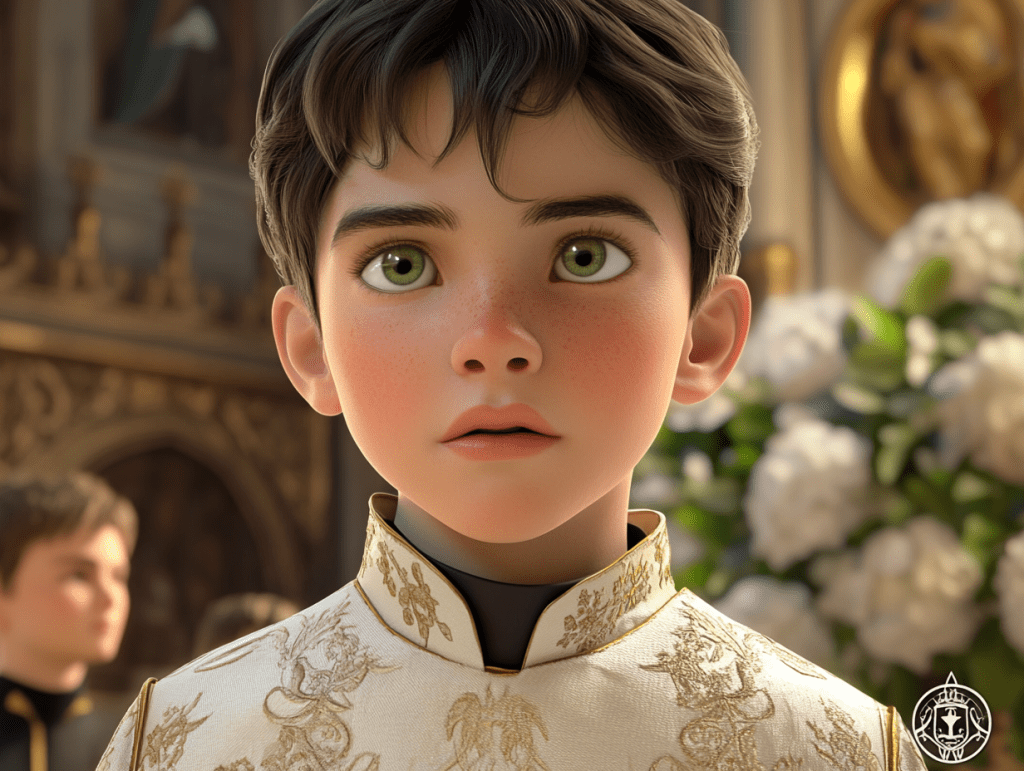
The Baroque Catholic church rises around them like something straight out of a high-budget fantasy RPG—except instead of fighting dragons, everyone’s here to contemplate eternal salvation. The ceilings stretch upward with the kind of architectural ambition that makes you think the builders were either divinely inspired or seriously compensating for something. We’re talking Lord of the Rings cathedral proportions here, where every surface screams “spare no expense in glorifying the Almighty.”
This is what happens when you give medieval architects unlimited creative freedom and zero budget constraints.
Twisting columns spiral toward heaven like DNA helixes made of marble, each one carved with the obsessive detail that suggests the sculptors were either saints or had serious deadline anxiety. The walls transform into canvas space for murals that depict biblical scenes with the kind of dramatic flair that would make Marvel jealous—angels wielding swords, saints achieving maximum holy glow effects, and enough religious iconography to stock a seminary gift shop.
Visual storytelling before Netflix was even a concept. These people understood how to create immersive world-building.
Sculptures and carvings frame every architectural element like ornate boss room decorations, turning geometric marble surfaces into something that looks like it was designed by someone who took “go big or go home” as a personal mantra. The craftsmanship radiates the kind of artistic dedication that modern society has mostly outsourced to industrial printers and mass production.
At the altar—the ultimate endgame location—the crucifixion dominates center stage with the Virgin Mary and an assembly of saints providing spiritual backup. It’s like the ultimate raid party, except instead of defeating ancient evils, they’re offering intercession and moral guidance. Angels carved from stone hold basins of holy water with expressions that suggest they take their custodial duties very seriously.
Classic power hierarchy visualization. Everyone knows who’s the main character in this narrative.
The Stations of the Cross line the walls between rows of wooden pews like sequential cutscenes from the most important story ever told. Each station depicts a moment from the Passion with artistic intensity that makes you realize why people used to get their news exclusively from church art—this stuff hits harder than any documentary series.
Immersive storytelling before anyone invented the term. These medieval content creators knew their audience.
“Arise, brothers and sisters, the Mass is about to begin,” announces the young lector from somewhere near the altar, his voice carrying across the vast space with the kind of acoustic projection that suggests this building was designed by people who understood sound engineering before it was even a field of study.
Standard session initiation protocol. Everyone knows the drill.
The congregation responds with the synchronized efficiency of a well-coordinated guild, rising from pews with the practiced ease of people who’ve been running this particular group activity for decades. Hundreds of bodies move in unison—a mass multiplayer experience where everyone knows their role and the objective is collective worship rather than individual achievement.
DING-DONG, DING-DONG, DING-DONG, DING-DONG.
The bells ring out with the kind of resonant authority that probably carries for miles, announcing to the entire surrounding area that something significant is about to happen. It’s like a server-wide notification that the main event is starting, except instead of logging into a game, people are logging into their spiritual practice.
Sound design that would impress modern game developers. No background music needed when you’ve got actual bells.
The choir of boys and girls launches into their opening number with voices that blend together like they’ve been practicing this particular harmony since birth:
Glory and praise to our God Who alone gives light to our days…
Their voices rise toward those impossibly high ceilings, creating acoustic layers that transform the entire space into something between a concert hall and a direct hotline to divine frequencies. The melody weaves through the architecture, bouncing off marble surfaces and carved surfaces to create natural reverb that no audio engineer could replicate.
Live performance in a venue specifically designed for optimal spiritual audio experience. These people were way ahead of their time.
Down in the aisle—the main thoroughfare of this sacred theater—the priest stands front and center like the party leader about to initiate the most important quest sequence of the week. His vestments catch the filtered light streaming through stained glass windows, transforming him into something between a religious authority figure and a character from a high-fantasy film.
To his left, a deacon cradles an ornate incense burner like he’s handling magical artifacts that could affect everyone’s spiritual status effects. Smoke begins to curl upward in wispy trails that carry the kind of aromatic complexity that makes you understand why ancient civilizations thought certain scents could literally carry prayers to higher dimensions.
Support class doing crowd buff management. Incense as area-of-effect blessing delivery system.
To the priest’s right, another deacon holds the ciborium—basically the holy grail’s more practical cousin—with the kind of reverence reserved for items that contain what Catholics believe to be the actual body of Christ. No pressure whatsoever.
Ultimate rare item handling. Maximum care protocols engaged.
Third row spotlight: Topher, dressed in his liturgical uniform like he’s cosplaying a medieval altar server, raises the processional crucifix mounted on a staff that’s probably taller than he is. The surplice flows over his cassock in crisp white linen that makes him look like he stepped out of a period drama about religious life. His expression carries the focused concentration of someone who knows that dropping the cross during Mass would be both spiritually and socially catastrophic.
Kid’s got main character energy. Carrying the most important symbol in Christianity while managing to look like he’s actually qualified for the responsibility.
Behind him, four acolytes march in formation, each carrying vigil candles on equally impressive poles like they’re members of some kind of sacred honor guard. The flames flicker but hold steady, casting dancing shadows that add cinematic drama to the entire procession. Their synchronized steps create a rhythm that complements the choir’s ongoing soundtrack.
Perfect formation maintenance. These kids have been drilling this choreography until it’s muscle memory.
The entire procession moves with ceremonial precision that would impress military drill instructors—every step calculated, every gesture intentional, every participant aware that they’re part of something larger than individual performance. It’s collective theater where the audience is also the congregation, and the script has been refined over centuries of practice.
This is what peak coordination looks like when everyone actually knows their role and takes it seriously.
Knight_commander_when_church_boy_goes_digital.sav
Night settles over the Kennedy household like a blanket of possibility, and Topher trades his liturgical vestments for his real uniform: gaming gear that costs more than most people’s monthly rent. The transition from altar server to digital knight commander happens in the span of hours, but honestly, the skill sets translate better than you’d expect.
Character development arc: from carrying crosses in church to wielding swords in virtual realms. Both require dedication, precision, and the ability to perform under pressure.
His setup screams “serious gamer with serious financial backing”—the kind of rig that makes lesser mortals weep with envy. Over-ear headset positioned with the practiced precision of someone who’s spent countless hours fine-tuning audio positioning for competitive advantage. The headset itself looks like something borrowed from a NASA mission control center, all brushed aluminum and acoustic engineering that probably cost more than most people’s entire gaming budget.
Premium hardware for premium performance. When your family fortune can fund your hobby, you don’t mess around with budget peripherals.
The MMO mouse rests atop an animal spirit pad that’s practically a work of art—some kind of mystical wolf design that suggests Topher takes his gaming aesthetics as seriously as his gear performance. The mouse itself bristles with more buttons than a NASA control panel, each one mapped to specific abilities that can mean the difference between epic victory and embarrassing respawn timer.
Ergonomic precision meets artistic flair. Function and form operating in perfect harmony.
His fingers dance across the 7-color RGB backlit keyboard like he’s performing a concert for an audience of one. The rainbow lighting cycles through hues that transform his desk setup into something between a gaming command center and a cyberpunk light show. Each keystroke produces a satisfying mechanical click that speaks to build quality and the kind of tactile feedback that separates serious equipment from toy-store peripherals.
ASMR for the gaming soul. When your keyboard costs more than most people’s entire setups, every keystroke becomes a declaration of intent.
The high-powered CPU hums beside him with the quiet confidence of machinery that could probably run NASA simulations during its downtime. It’s the kind of processing power that makes frame rate drops a theoretical concept rather than a lived reality—liquid cooling, probably overclocked to specifications that would make hardware enthusiasts write poetry.
When you’ve got unlimited budget, thermal throttling becomes someone else’s problem.
On screen, digital magic unfolds in 4K resolution that makes reality look slightly underpowered. A royal blue and white knight sits astride a magnificent white destrier, both rider and mount rendered with the kind of detail that suggests the game developers either employed actual medieval historians or spent serious time studying Lord of the Rings extended editions.
Classic paladin aesthetic. White knight on white horse equals maximum heroic protagonist energy. Subtle as a brick through a stained glass window, but sometimes the classics work.
The knight surveys a vast landscape that stretches beyond the monitor’s boundaries—rolling hills, distant mountains, scattered settlements that hint at quests waiting to be discovered. It’s the kind of open-world design that makes you understand why people abandon real-world responsibilities for digital adventures.
Geographic scale that puts most AAA titles to shame. When your virtual world has better exploration potential than your actual backyard.
With a single keystroke, the perspective shifts to reveal a continental map that would make Tolkien jealous. Political boundaries, major trade routes, dungeon locations, and world events spread across multiple kingdoms like a master class in fantasy cartography. The level of detail suggests game developers who understand that immersion requires more than just pretty graphics.
World-building that actually respects player intelligence. Refreshing change from games that treat geography like an afterthought.
Topher’s eyes remain locked on the screen with the focused intensity of someone optimizing character builds during a lunar eclipse—this is serious business disguised as entertainment. His gaze flicks to the character stats panel with the efficiency of someone who’s memorized every optimal build configuration: strength, defense, luck, intelligence, speed, and wisdom displayed in neat numerical values that represent months of grinding and strategic planning.
Statistics as poetry. When numbers become the language of digital achievement.
The inventory screen opens like a treasure vault, displaying an arsenal of weapons and armor pieces that represent countless hours of dungeon crawling, boss farming, and probably some strategic auction house manipulation. Topher’s cursor hovers over upgrade options with the deliberation of someone who understands that equipment choices can make or break raid encounters.
Gear optimization as high art. When your virtual wardrobe costs more in time investment than most people’s actual clothing budgets.
Better weapons slide into equipment slots with satisfying graphical effects, upgraded armor pieces replacing previous gear with the kind of incremental improvement that makes grinding feel like genuine progression. The knight’s combat rating increases with each swap, transforming from formidable to genuinely intimidating.
Character progression that actually means something. When stat increases translate to tangible performance improvements rather than cosmetic nonsense.
Chat interface opens with the familiar comfort of communication tools that have connected gamers across continents for decades. Topher’s fingers fly across keys as he types: “Are you free to fight a boss? If so, come join me in my world.”
Classic raid formation protocol. When you need to assemble a team for content that requires actual coordination.
The message fires off to his friends list with the efficiency of someone who’s done this dance countless times before. Topher repeats the process, sending personal invitations to twelve different players whose usernames probably hide identities ranging from fellow teenagers to adults who’ve found digital adventure more reliable than real-world excitement.
Social gaming at its finest. When your virtual friends provide more consistent entertainment than your actual social circle.
Response messages start flooding in with the enthusiasm of people who’ve been waiting for exactly this kind of invitation. Six players confirm their availability and begin logging into his world instance: wizard, rogue, hunter, priest, bard, and artificer. Each class represents distinct tactical advantages and specific roles that will determine whether the upcoming encounter becomes legendary victory or spectacular failure.
Classic party composition. Tank, DPS, healing, and support roles distributed with the kind of strategic thinking that would impress military tacticians.
The party assembles in-game with avatars that represent countless hours of character customization and aesthetic choices. Each player’s gear tells a story of previous adventures, successful raids, and the kind of dedication that transforms casual gaming into serious hobby territory.
Visual storytelling through equipment loadouts. When your character’s appearance becomes a resume of digital achievements.
Dungeon entrance looms before them like a portal to nightmare fuel—stone archways carved with ominous symbols, ambient lighting that suggests interior decorating by people who equate “atmospheric” with “vaguely terrifying,” and the kind of foreboding architecture that screams “abandon hope, all ye who enter here.”
Environmental storytelling at maximum efficiency. When the level design makes exposition unnecessary.
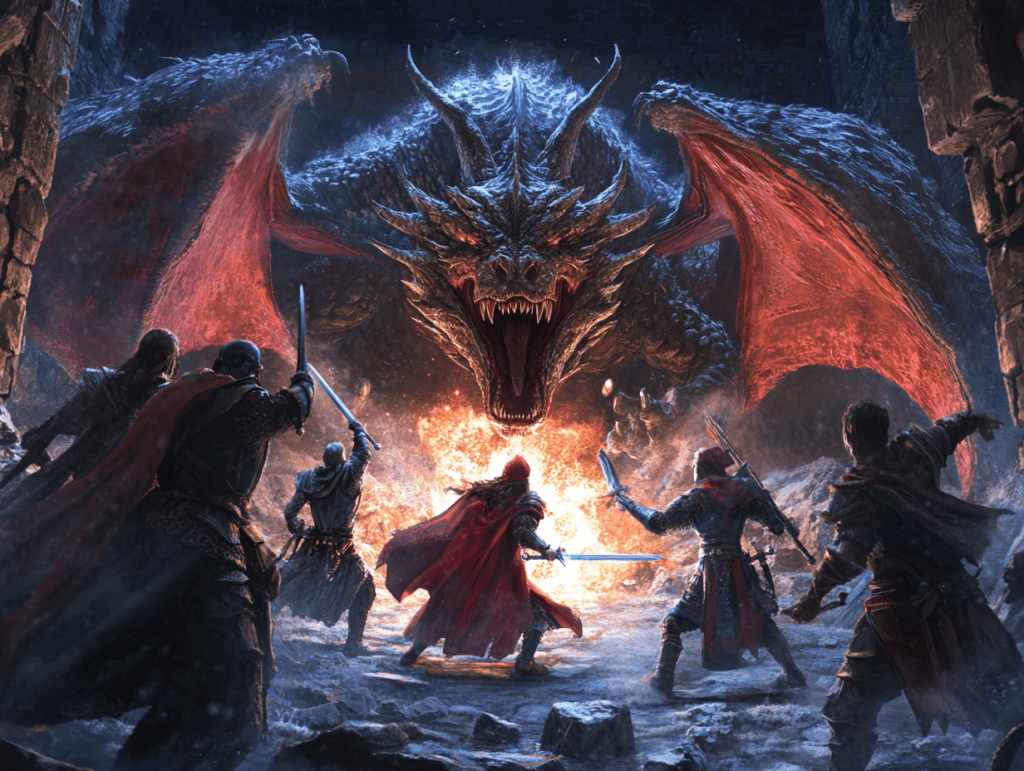
Inside, the seven-headed, fire-breathing dragon waits with the patient malevolence of a boss encounter designed to test every aspect of party coordination. Each head moves independently, breathing different elemental attacks, requiring split-second timing and communication that would challenge professional esports teams.
Multi-target engagement with complex mechanics. When boss fights become elaborate puzzles disguised as combat encounters.
Topher’s knight charges the frontlines with digital courage that translates actual tactical thinking into virtual heroism. Sword and shield work in coordinated strikes while positioning maintains aggro management and damage mitigation. Behind him, the wizard hurls ice shards with spellcasting animations that make Frozen look like amateur hour.
Classic tank-and-spank with elemental crowd control. When combat becomes collaborative art form.
The rogue executes combo chains that flow like digital poetry, each attack linking into the next with timing precision that requires muscle memory and anticipation. Arrows from the hunter streak across the battlefield with accuracy that suggests either exceptional skill or some seriously optimized aim assistance.
DPS rotation as performance art. When button combinations become second nature.
Priest keeps health meters topped off with healing spells that prevent total party wipe scenarios, while the bard deploys musical magic that spawns illusory duplicates to confuse dragon targeting systems. The artificer waits for the perfect moment, arquebus loaded with whatever passes for ammunition in fantasy settings.
Support classes doing the real work while DPS gets the glory. Tale as old as gaming itself.
The finishing blow lands with graphical effects that justify every hour spent grinding for optimal gear configurations and every friendship forged through shared digital adventures.
Night_flight_protocol.sav

The airport terminal sprawls around them like a modern cathedral dedicated to the god of international commerce—all polished marble floors, towering glass windows, and that particular brand of sterile efficiency that makes every major airport feel like the set of a sci-fi film about corporate dystopia. The Kennedy family waits with the patient composure of people who’ve upgraded their entire existence to first-class status.
Standard departure protocol for families whose travel budget exceeds most people’s annual income.
Bill Kennedy stands with military posture, his olive green eyes tracking the flight information board with the focused intensity of someone monitoring mission-critical data streams. His square jaw remains set in determination while his 6’5″ frame radiates the kind of authority that makes TSA agents suddenly remember their customer service training. The expensive suit he’s wearing probably costs more than the average gate agent’s monthly salary.
Classic alpha traveler stance. This man approaches air travel like it’s a tactical operation requiring constant surveillance.
Selena maintains her elegant poise despite the chaos of international departure logistics, her designer outfit flowing around her like she’s posing for a travel magazine spread about “How the Other Half Flies.” Every accessory screams careful curation—jewelry that catches terminal lighting just right, clothing that somehow remains wrinkle-free after hours of airport navigation.
Effortless sophistication in an environment designed to strip dignity from mere mortals.
Carlisle hovers nearby like the world’s most overqualified luggage management system, his butler training evident in the way he maintains perfect awareness of everyone’s needs while remaining practically invisible. The man’s probably organized more complex logistics than most military operations, except his campaigns involve coordinating private jets and five-star accommodations.
Professional invisibility with maximum efficiency. When your job description includes “anticipate needs before they’re expressed.”
Topher sits with the restless energy of someone whose body clock operates on a completely different schedule than adult travel planning. His fingers drum against his knee with the unconscious rhythm of someone who’s probably calculating optimal raid times while his parents handle real-world navigation.
Kid’s mental processes are definitely running background applications while his body goes through departure motions.
The flight information board updates with digital precision that would impress even the most demanding system administrators:
Time: 20:01
Destination: Manila
Flight: CX6471
Gate: 25
Remarks: Boarding
Data visualization that actually conveys useful information. Revolutionary concept in user interface design.
Bill’s attention snaps to the display like he’s monitoring server status during a critical system update. His expression shifts from watchful waiting to active engagement—the kind of micro-expression change that suggests years of business travel have trained him to respond immediately to boarding announcements.
“That’s us,” he states with the efficiency of someone who’s mastered the art of family coordination during complex logistics operations.
The Kennedy traveling party mobilizes with synchronized precision. Carlisle transforms into human logistics software, smoothly taking control of Selena and Topher’s luggage with movements that suggest he’s calculated optimal weight distribution and mobility patterns. Rolling wheels glide across polished marble like the family’s entire departure sequence has been choreographed by professionals.
Group movement coordination that would impress military drill instructors. When money buys you operational efficiency.
Gate 25 materializes ahead of them like a portal to international adventure—boarding desk staffed by uniformed personnel who’ve probably been briefed on first-class passenger management protocols, priority lanes that separate economic classes as effectively as social stratification.
First-class cabin welcomes them like entering a different universe where airplane travel doesn’t automatically equal suffering. Seats that convert into actual beds, spacing that acknowledges human beings require more than sardine-can accommodation, and service staff who’ve been trained to treat passengers like valued customers rather than necessary inconveniences.
This is what air travel looks like when you pay enough to avoid the dystopian nightmare economy passengers endure.
“Just chamomile tea. No sugar, please,” Selena requests from the flight attendant with the polite authority of someone accustomed to having preferences accommodated rather than endured.
Beverage customization as a basic human right. What a concept.
“Right away, ma’am,” the attendant responds with genuine service enthusiasm that suggests first-class training programs actually work when airlines invest in staff development.
Professional hospitality without the underlying resentment that haunts budget airline interactions.
Hours later, the cabin transforms into something resembling a luxury hotel that happens to be traveling at 500 mph through international airspace. Lights dim to simulate natural sleep cycles, passengers settle into reclined positions that wouldn’t shame actual bedroom furniture, and the ambient noise settles into that particular airplane white noise that either induces sleep or mild anxiety depending on your relationship with confined spaces.
Midnight arrives with the quiet authority of natural circadian rhythms asserting themselves despite artificial cabin lighting. Most passengers surrender to sleep like they’re participating in some kind of collective unconsciousness experiment, but Topher’s internal clock apparently operates on different firmware.
Kid’s sleep schedule programmed by gaming sessions rather than adult scheduling requirements.
His eyes open with the alert awareness of someone whose brain has decided that now is an excellent time for consciousness. The cabin around him holds dozens of sleeping passengers—adults who’ve mastered the art of airplane sleep, families sprawled across first-class seating configurations, business travelers who’ve probably perfected rest optimization during international flights.
Solitary awakening in shared space. Classic protagonist moment when everyone else becomes background NPCs.
Topher’s gaze drifts toward the window where night sky stretches beyond the aircraft like infinite digital space. No stars penetrate the darkness—just blank cosmic void punctuated by scattered cloud formations that drift past like environmental assets in some impossibly vast open-world game.
Visual emptiness that makes you appreciate how much work universe requires to look interesting.
Then it happens: a shooting star streaks across his field of vision like someone activated a rare visual effect in the cosmic display engine. The light traces a brief arc through darkness before disappearing, leaving behind the kind of moment that makes you question whether reality occasionally glitches into something magical.
Random event trigger activated. When the universe decides to remind you that spectacular things happen without advance notice.
Time seems to pause—not in any supernatural sense, but in that particular way moments expand when your brain recognizes something significant is happening. The shooting star’s afterimage burns against his retinas like a screenshot he’ll carry in his visual memory permanently.
What was that? That came out of nowhere, Topher thinks, his internal monologue processing the unexpected celestial encounter with the kind of wonder that suggests his capacity for awe hasn’t been completely eroded by digital entertainment saturation.
Confusion replaced by genuine joy. When reality provides content that beats anything streaming services can offer.
He glances around the darkened cabin, half-expecting to discover other witnesses to this cosmic performance, but everyone remains locked in sleep. The moment belongs entirely to him—a private showing of astronomical theater that no one else will remember or share.
Solo experience in multiplayer environment. Sometimes the best content happens when you’re the only one paying attention.


Leave a Reply