Overview:
| During a raging storm, seven children take shelter inside a cave and begin playing an otherworldly board game. Topher becomes the last player to reach the crystal ball at the center of the board, finally completing the game. But just as they expect the game to end, a stellar twister erupts from the board, triggering a violent earthquake. The children scatter in panic, fleeing for their lives. Amid the chaos, Topher and Benjamin become trapped in the cave-in—only to find themselves face to face with two colossal celestial entities. |
The_storm_cave_gaming_session.sav
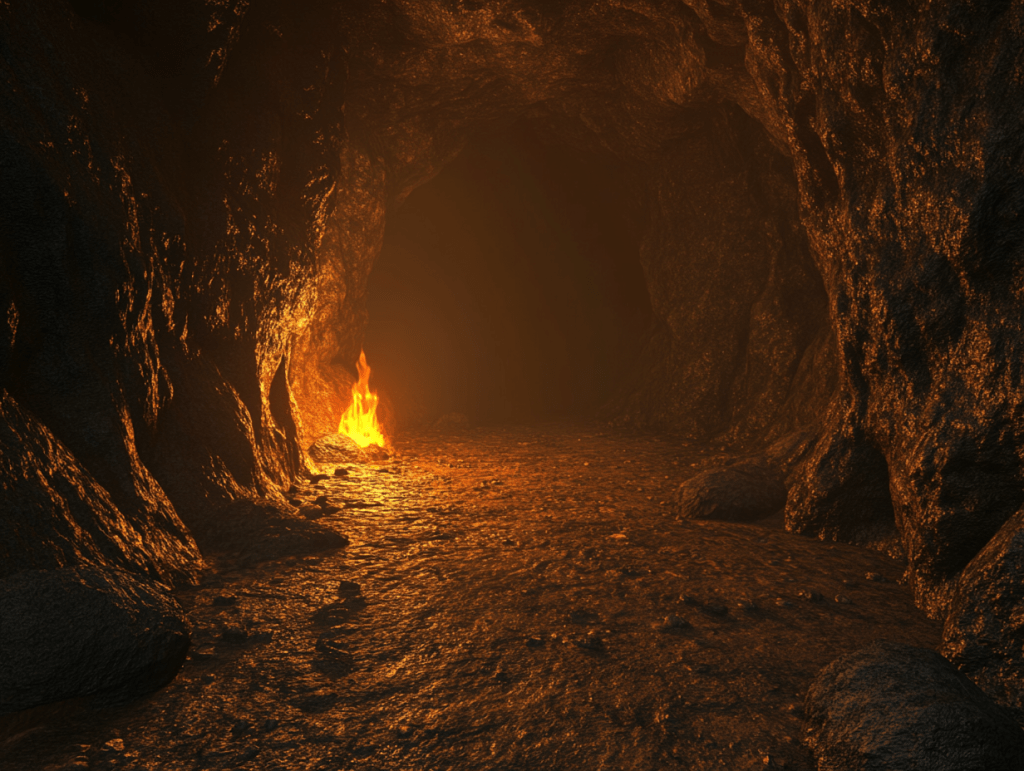
Mother Nature’s throwing one hell of a tantrum outside—howling winds that sound like banshees on Red Bull, thunder roaring like Godzilla having an existential crisis, and rain pelting down with the fury of a thousand angry keyboard warriors. The waves crash against the shore like they’re auditioning for the next Perfect Storm sequel, rising mountain-high in their dramatic display. But here in this cave? We’re golden. The rocky walls shield us from nature’s apocalyptic mood swing like some medieval fortress made of actual, you know, medieval fortress materials.
Seven of us huddle in a circle around this board game that’s probably older than a dad’s collection of vintage Star Trek VHS tapes. The bonfire crackles in the center, casting dancing shadows that make them look like characters from some low-budget fantasy flick—four boys, three girls, all transformed into flickering silhouettes against the cavern walls. The flames throw this warm, amber glow throughout the chamber, like they’re sitting inside a giant jack-o’-lantern, except less Halloween and more Lord of the Flies meets Stranger Things.
“Go, Topher, you’re almost there!” James’s voice bounces off the stone walls with the enthusiasm of a sports commentator on espresso. His black hair catches the firelight as he leans forward, practically vibrating with excitement for his younger cousin.
Classic big brother energy—or in this case, big cousin energy. James always gets like this during game night, channeling his inner cheerleader like he’s about to break into a full pom-pom routine. The kid’s got the enthusiasm of a golden retriever who just discovered tennis balls exist.
Topher’s small right hand trembles slightly as he cups the two dice, his face scrunched in concentration. The little guy’s maybe nine, still in that phase where board games feel like life-or-death scenarios. Everyone’s holding their breath like we’re watching the final moments of a Marvel movie—you know, that part where the hero’s about to either save the universe or accidentally destroy it with one wrong move.
The dice tumble from his palm, clattering against the wooden board with the dramatic timing of a perfectly scripted climax. They roll, bounce, and settle with the finality of destiny itself.
Double sixes.
“Hooray! You got twelve! The game is over!” James erupts like a volcano of pure joy, his voice cracking slightly in that way voices do when excitement overrides vocal cord coordination.
Topher’s face lights up brighter than the bonfire, his grin stretching from ear to ear. He grabs his gray clay paladin token—a lovingly crafted figure that looks like it was sculpted by someone who learned anatomy well—and counts out twelve spaces with the precision of a mathematician and the reverence of a pilgrim approaching a shrine.
The finish line beckons: a navy crystal ball sitting dead center of the board like some mystical MacGuffin straight out of a fantasy RPG. It’s the kind of artifact that screams “important plot device” in every genre known to geekdom.
Topher’s paladin joins the rest of our mismatched fellowship on their pedestals around the crystal ball. What a crew they’ve assembled—like someone threw every pop culture franchise into a blender and hit the “random” button. There’s Benjamin’s space captain, obviously channeling his sci-fi obsession, complete with a tiny blaster that probably came from a cereal box. James’ K-pop idol strikes a pose that would make BTS proud, his spiky hair sculpted with the dedication of a true stan. Michael’s superhero stands in sleeveless spandex, because apparently even clay figures understand the importance of functionality.
Then there’s Allison’s magical girl, complete with a wand that’s probably more powerful than Thor’s hammer if anime logic applies. Sophie’s cartoon character looks like it escaped from a Saturday morning special, all gray and impossible anatomy. Roanne’s mermaid princess perches on her pedestal with the grace of someone who definitely doesn’t need legs to kick ass.
And now Topher’s paladin completes the set—seven tiny champions from seven different universes, united by the universal language of “let’s save the world, but make it fun.”
Talk about the most eclectic Avengers lineup ever assembled.
The K-pop idol’s the real outlier here, representing not just music but the entire cultural phenomenon that is modern pop culture. It’s like having a piece that represents the internet itself—chaotic, colorful, and inexplicably powerful in ways that previous generations will never quite understand.
“So the crystal ball’s supposed to be a hologram, right?” Benjamin asks, her dark eyes reflecting the firelight as he studies the navy sphere. His question hangs in the air with the weight of someone trying to solve the universe’s greatest mysteries using board game logic.
Ah yes, the classic “this magical item is actually advanced technology” trope. Clarke’s Third Law in action: any sufficiently advanced magic is indistinguishable from technology. Or wait, was it the other way around?
The crystal ball does have that ethereal quality that screams “holographic projection,” sitting there like it’s about to display Princess Leia asking for help from Obi-Wan Kenobi. The kids have decided it represents the missing eighth luminary in their improvised Aristotelian universe—because apparently we’re getting philosophical with our board games now.
The whole setup’s actually pretty clever, in that accidentally brilliant way kids stumble into when they’re not trying to be smart. They’ve created this geocentric model where Earth—represented by a blue-white sparkling shooting star at the center—takes the sun’s traditional spot. It’s like Ptolemy meets Guardians of the Galaxy, with a dash of Sailor Moon transformation sequence aesthetics.
Instead of the traditional seven luminaries—Mercury, Venus, Mars, Jupiter, Saturn, plus the Sun and Moon—we’ve got these seven mystery celestial bodies rendered in cyan, scarlet, orange, pink, yellow, seafoam green, and ivory. Each color pops against the board’s surface like RGB lighting on a gaming setup, creating this rainbow coalition of cosmic significance.
It’s giving me serious Steven Universe vibes, honestly. All we need is some fusion dancing and we’d have the complete package.
The storm outside continues its epic tantrum, but in here, the kids have their own little universe where clay figurines can save the world and dice rolls determine the fate of heroes. The bonfire pops and hisses, sending sparks dancing toward the cave ceiling like tiny fireworks celebrating their victory.
Thunder rolls overhead, nature’s own soundtrack to the party’s underground adventure. But the cave holds firm, their shelter from the chaos, their fortress of friendship and imagination. Sometimes the best gaming sessions happen when the world outside goes completely insane, forcing you to create your own reality from cardboard, clay, and pure creative willpower.
When_board_games_go_full_anime.sav
My eyes catch the inscription etched into the board’s right edge, the words carved with the kind of dramatic flair that screams “prophecy incoming.” The text reads like something ripped straight from a fantasy novel’s prologue: “When all seven luminaries revolve around the Star of Vis, a cosmic cataclysm shall rise. Heroes be born, and tales breathed unto life and onto the world.”
Classic MacGuffin setup, I think, running my eyes along the weathered letters. Someone definitely watched too much anime before designing this thing.
Michael—an athletic kid with perpetually messy black hair and the attention span of a caffeinated squirrel—bounces on his knees beside the board. His green cargo shorts are covered in grass stains from earlier adventures, and his Avengers t-shirt bears the battle scars of today’s snack consumption. “Where’s the cosmic cataclysm?” he demands, his voice cracking with impatience. The kid’s practically vibrating with anticipation, like he’s expecting fireworks to shoot out of the crystal ball any second now.
I recognize that look—it’s the same expression Michael gets when he’s up against the big guy in the basketball court. The kid lives for the big thrilling moments, the kind of over-the-top spectacle that makes directors’ eyes turn into dollar signs.
Careful what you wish for, my dude.
As if the universe heard Michael’s impatient demand and decided to respond with its trademark sense of ironic timing, the board suddenly comes alive. The concentric planes representing the seven luminaries begin to shift and rotate, their colored surfaces catching the firelight like some kind of cosmic pinwheel. Cyan, scarlet, orange, pink, yellow, seafoam green, and ivory—they spin with increasing velocity, creating a kaleidoscope effect that would make Pink Floyd jealous.
The navy crystal ball at the center starts to glow, pulsing with an inner light that definitely wasn’t there five minutes ago. Okay, that’s new. And probably not covered by the warranty.
Then things go full Dragon Ball Z.
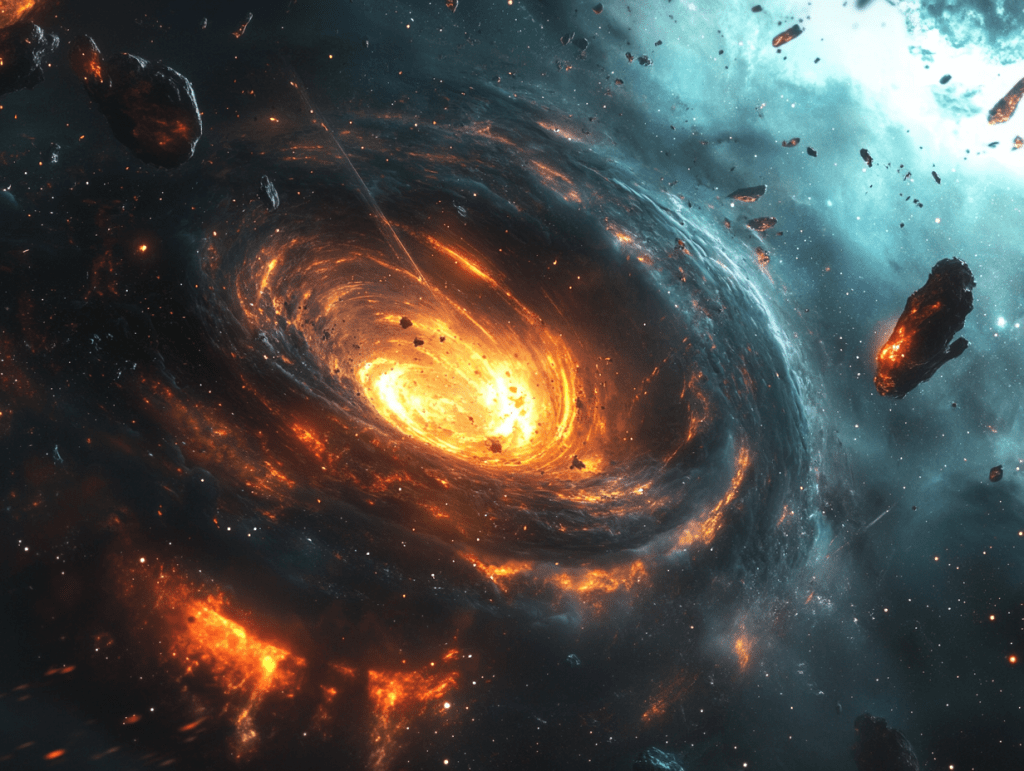
A quasar-like twister erupts from the crystal ball, spiraling upward toward the cavern ceiling in a display that puts every special effects budget to shame. Lights and colors burst forth like someone just activated the ultimate anime transformation sequence—all swirling energy and impossible physics that makes absolutely zero sense but looks incredible while doing it.
The ground beneath them convulses violently, sending everyone scrambling for balance. Rocks tumble from the ceiling, and the bonfire flickers wildly, casting chaotic shadows that dance across the walls like demented puppets.
Benjamin—tall, lanky, with wire-rimmed glasses that constantly slide down his nose and in a button down polo shirt—pushes himself to his feet, his face pale with realization. “Holograms don’t cause earthquakes!” he shouts over the growing roar of whatever cosmic event they’ve accidentally triggered. “We have to get out of here!”
And there’s our voice of reason, ladies and gentlemen. Trust the Whovian to point out the obvious plot holes.
Benjamin’s always been the practical one in their group, the guy who reads the instruction manual while everyone else tries to figure things out through trial and error. Right now, his survival instincts are firing on all cylinders, and I have to admit the kid has a point. Holograms are light projections—they don’t typically come with their own seismic activity.
Roanne—a tall girl with long black hair tied back in a braid and wearing a floral blouse—immediately springs into action. She grabs the hands of Allison and Sophie, her grip firm despite the trembling in her fingers. “Allison, Sophie, come with me!” she urges, her voice cutting through the chaos with the authority of someone who probably watched too many disaster movies.
Sophie, maybe four years old with yellow headband as she shakes, looks up with wide brown eyes filled with terror. Her dainty yellow dress is dirt-stained from their cave adventure, and she clutches a stuffed bunny against her chest like a lifeline. “I’m scared! Are we going to die?” she trembles, her voice barely audible over the cosmic light show.
Great. Now we’ve got a potential TPK situation on our hands. My mind immediately catalogs the escape routes, calculating distances and obstacles like I’m planning a speedrun through a particularly deadly level.
Allison—Sophie’s cousin by maybe three years, with the same black hair but more determination in her light brown eyes—digs her heels in and resists Roanne’s pull. Her bolero is stiff tight against the cave’s chill, and she wears the stubborn expression of someone who’s about to make a very bad tactical decision. “I need to stay with Topher!” she protests, pulling back toward where her cousin sits transfixed by the unfolding spectacle.
Loyalty points for the kid, but terrible timing.
Roanne doesn’t argue—she just adjusts her grip and starts pulling both girls toward the cavern’s exit with the determination of someone who probably played enough survival horror games to know when it’s time to run. James and Michael fall in behind them, stumbling over loose rocks as they navigate the increasingly unstable terrain.
But Topher—sweet, imaginative Topher with his grin and complete faith in the power of storytelling—remains planted beside the board like he’s rooted to the spot. His green-hazel eyes reflect the swirling colors above, and his voice drops to a whisper that somehow carries over the chaos: “Heroes be born…and tales breathed unto life and onto the world.”
The kid’s quoting the inscription verbatim, his young face set with the kind of conviction that usually precedes either great heroism or spectacular disaster. There’s something almost mystical about the way he says it, like he’s channeling some ancient wisdom that the rest of them are too panicked to recognize.
“This can’t be a force of evil,” Topher continues, his voice gaining strength. “I know it’s meant to do good, even if it looks violent.”
Oh no. He’s gone full Chosen One on us. I recognizes the signs—the kid’s having his protagonist moment, that point in every story where the hero realizes their destiny and decides to embrace it instead of running away like any sensible person would.
Benjamin, meanwhile, is having none of it. His glasses reflect the chaotic light show as he turns to face Topher, panic evident in every line of his body. “What are you saying?” he questions, his voice cracking with the strain of trying to be heard over the cosmic disturbance.
Topher’s explanation comes with the earnest enthusiasm of a kid who’s spent way too much time watching National Geographic documentaries. “Earth came into existence after cooling from a molten, red-hot planet. Afterward came life and civilizations. This could be the beginning of something amazing!”
His eyes are wide with possibility, completely ignoring the fact that they’re currently experiencing what appears to be a localized apocalypse. The quasar continues to spiral overhead, growing larger and more violent with each passing second, but Topher looks at it like he’s watching the birth of stars.
Kid’s got a point about planetary formation, but his timing is absolutely terrible.
Benjamin, however, isn’t buying into Topher’s optimistic interpretation of impending doom. The older boy pushes his glasses up his nose with a gesture that’s become reflexive under stress, as another tremor rocks the cave. “An unknown meteor wiped out the dinosaurs 66 million years ago,” he counters, his voice carrying the weight of someone who’s memorized way too many extinction event statistics. “More often than not, uncertainty leads to destruction. We need to get out of here.”
Extinction level event references during an active crisis. Classic Benjamin—the kid treats every situation like a final exam.
The two boys stare at each other across the chaos—Topher with his unwavering faith in the power of narrative destiny, Benjamin with his pragmatic understanding of historical precedent. It’s like watching Hope argue with Experience, with a cosmic light show providing the dramatic backdrop.
The ground shudders again, more violently this time, and several larger rocks crash down near the cave entrance. The message is clear: whatever’s happening, it’s escalating fast, and their window for escape is closing.
After what feels like an eternity but is probably only a few seconds, Topher’s shoulders sag slightly. The weight of Benjamin’s argument, combined with the very real danger surrounding them, finally penetrates his protagonist-moment bubble. “Okay, let’s go,” he agrees, though there’s obvious reluctance in his voice.
Smart kid. Sometimes the hero’s journey starts with knowing when to retreat.
The two boys turn and sprint toward the cave exit, joining the others in their desperate flight from whatever cosmic event they’ve accidentally unleashed. Behind them, the quasar continues to grow, its light painting their fleeing shadows against the cavern walls in shades of destiny and chaos.
And this, ladies and gentlemen, is why you always read the fine print on mysterious board games.
When_rpgs_become_reality.sav
Well, shi—.
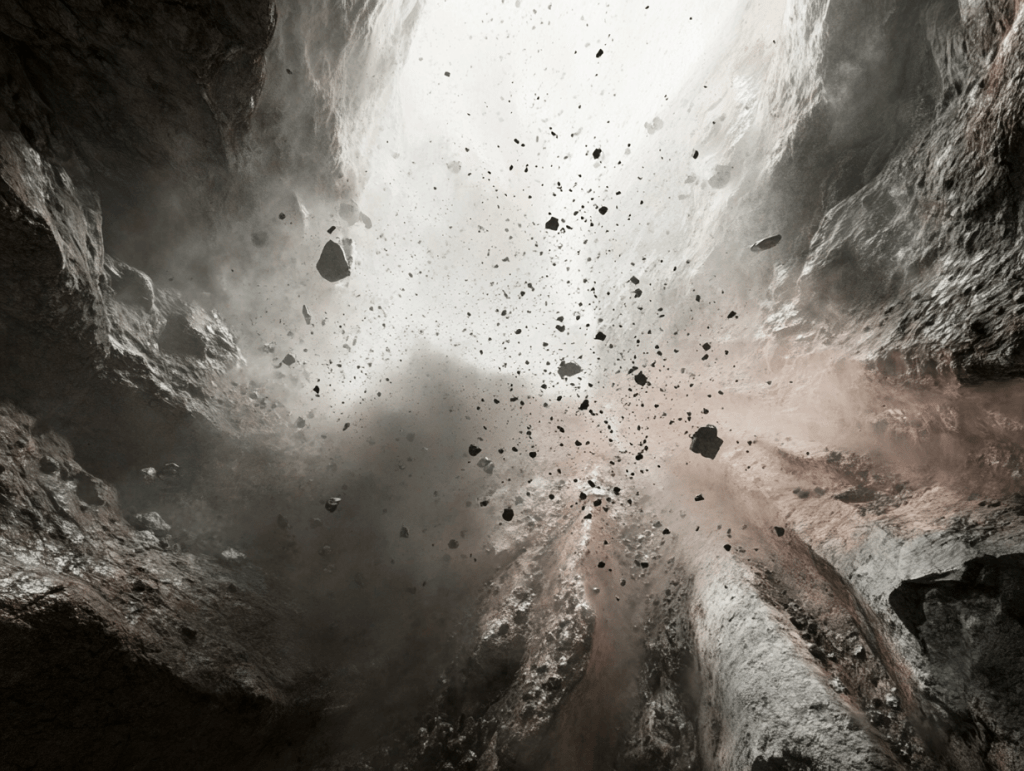
The cavern decides to throw its own farewell party—one involving massive structural failure and zero regard for building codes. Chunks of limestone rain down like God’s playing Tetris with the ceiling, each impact echoing through the chamber with the finality of a closing coffin lid. Every escape route vanishes behind walls of rubble, sealing them in tighter than a vacuum-packed action figure.
Classic dungeon collapse scenario. Except this isn’t a game, and there’s no respawn button.
From the stellar tornado—which has now reached full Inception levels of reality-bending absurdity—seven massive forms emerge. The luminaries that were once coin-sized game pieces now tower above them, each one pulsing with otherworldly radiance like living aurora displays. They move with purpose, scanning the trapped kids with the methodical precision of boss-level entities searching for their predetermined targets.
Oh great. We’ve gone from board game night to cosmic host selection. This is giving me serious Madoka Magica vibes, and that never ends well for anyone.
Topher stands frozen, his rosy cheeks bathed in shifting colors as the luminaries circle overhead. His small hands clench into fists at his sides, knuckles white with tension, but his green-hazel eyes hold that same unwavering faith from before. “We’ve been found,” he murmurs, voice barely audible over the grinding of settling stone and the electric hum of celestial energy.
The kid says it like he’s been expecting this moment his entire nine-year existence—part resignation, part acceptance, and maybe just a hint of that protagonist syndrome he’s been displaying all night.
Benjamin—tall, gangly Benjamin with his wire-rimmed glasses now cracked from falling debris—immediately shifts into protective mode. His lanky frame moves between Topher and the approaching entities, arms spread wide in a gesture that’s both futile and heroic. “I’ll protect you,” he declares, his voice cracking with the weight of making promises he probably can’t keep.
And there’s our designated tank, stepping up to the plate. Classic self-sacrifice play, even if the odds are somewhere between ‘impossible’ and ‘laughably hopeless.’
Benjamin pulls Topher close against his chest, the collar of his polo shirt now dusty but still minimalist white befitting nerdom. The younger boy doesn’t resist, instead pressing against Benjamin’s protective embrace while keeping his eyes fixed on the luminaries above.
The cyan and ivory entities—like living mood rings the size of small cars—begin their descent, circling the two boys with the predatory grace of digital sharks. Cyan pulses with the cold blue of deep ocean trenches and computer screens at 3 AM, while ivory radiates with the warm glow of old parchment and morning sunlight filtering through ancient windows.
Complementary colors. Of course. Someone’s been studying color theory along with their cosmic horror.
The chamber transforms into a living disco ball as the two luminaries alternate their bursts of illumination—cyan, ivory, cyan, ivory—each pulse more intense than the last. Benjamin squints against the strobing effect, his cracked glasses reflecting the chaotic light show, while Topher remains perfectly still, as if he’s listening to some cosmic frequency the rest of them can’t hear.
The clashing colors intensify, building toward what feels like an inevitable crescendo. Cyan and ivory spiral around each other, their opposing energies creating interference patterns that hurt to look at directly. The air itself seems to vibrate with potential, like standing too close to a massive speaker before the bass drops.
Then they merge.
The resulting radiance explodes outward in a blinding white supernova that turns the cavern into a photographer’s overexposed nightmare. I throw my arm across my eyes, but the light penetrates everything—eyelids, skin, probably my soul if such things exist.
And this, kids, is why you never touch the glowing artifacts. Basic adventuring 101.
When the spots finally clear from my vision, I know nothing will ever be the same.


Leave a Reply