Overview:
| Carding, the caretaker, arrives at the guesthouse to fix the sink. While there, Topher spots Roanne and convinces her to join him and his cousins. Uncle Ronald keeps an eye on Carding as he works on the plumbing. During an icebreaker game, Topher asks everyone—including Roanne—what kinds of characters they would choose to be from TV shows, movies, comics, or video games. Meanwhile, Mary and her parents binge-watch a telenovela in the living room. Late at night, breaking news announces a meteor shower expected to light up the sky, stirring excitement and anticipation among the public. |
Npc_service_call_maintenance_quest.sav
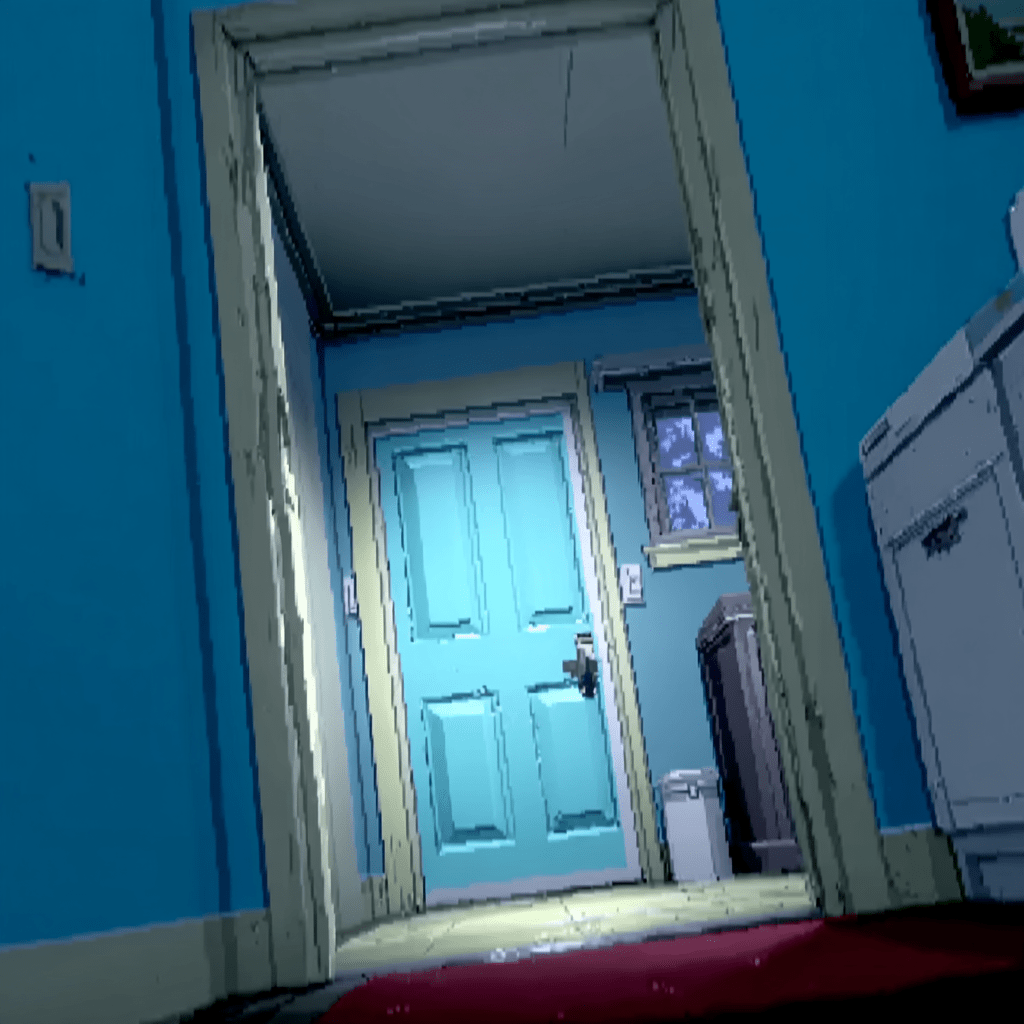
Knock, knock, knock.
The sound cuts through the guesthouse like someone’s activating an interaction prompt. I recognize this audio cue—it’s the classic “service professional has arrived” notification that happens when you’ve actually followed through on calling for help instead of trying to YouTube your way through a DIY disaster.
“Who is it?” Uncle Ronald calls out with the cautious tone of someone who’s learned that unexpected visitors during vacation can either solve problems or create entirely new ones.
“You called for plumbing,” comes the reply from behind the door. The voice carries that straightforward efficiency of someone who’s here to fix things rather than make small talk.
“Oh, yes! Come in.” Ronald’s relief is immediate—like finally getting confirmation that your tech support ticket has been escalated to someone who actually knows what they’re doing.
He opens the door to reveal Carding, who looks exactly like what central casting would order for “competent Filipino maintenance guy.” The man’s probably in his forties, wearing practical work clothes that have clearly seen enough plumbing battles to qualify as battle-tested gear. His tool belt suggests serious professional credibility rather than weekend warrior enthusiasm.
But the interesting part is his companion—a teenage girl who immediately triggers my mental recognition software. This is Roanne, the same friendly face from the restaurant shake station who charmed everyone with her customer service skills and genuine warmth.
“I’m Carding, the guesthouse caretaker, and this is my daughter, Roanne,” he introduces them with the practiced efficiency of someone who’s made this introduction countless times across various resort maintenance calls.
Roanne waves with that same bright smile that made her instantly memorable during the earlier beverage encounter. She’s wearing casual clothes now instead of her restaurant uniform, but her polite demeanor remains consistent. The family resemblance is obvious—same genuine warmth, same competent confidence.
“The P-trap needs replacing, right? The sink in the toilet near the kitchen?” Carding confirms while scanning the interior like he’s already mentally mapping the plumbing layout and calculating repair complexity.
His technical knowledge shows immediately. This isn’t some random handyman hoping to figure things out as he goes—this guy knows exactly what equipment failure patterns look like and how to address them efficiently.
“Yes, it’s in the kitchen. This way.” Ronald gestures toward the problem area with the relief of someone whose maintenance anxiety is about to be resolved by actual expertise.
The small group moves toward the kitchen like a quest party heading to complete an objective that’s been sitting in the task log for way too long. Sometimes the best vacation moments happen when competent people show up to handle the unglamorous problems that threaten to derail your fun.
Honestly? There’s something satisfying about watching real professionals handle practical problems with the kind of straightforward competence that makes everything seem manageable again.
Side_quest_activated_friend_recruitment_protocol.sav
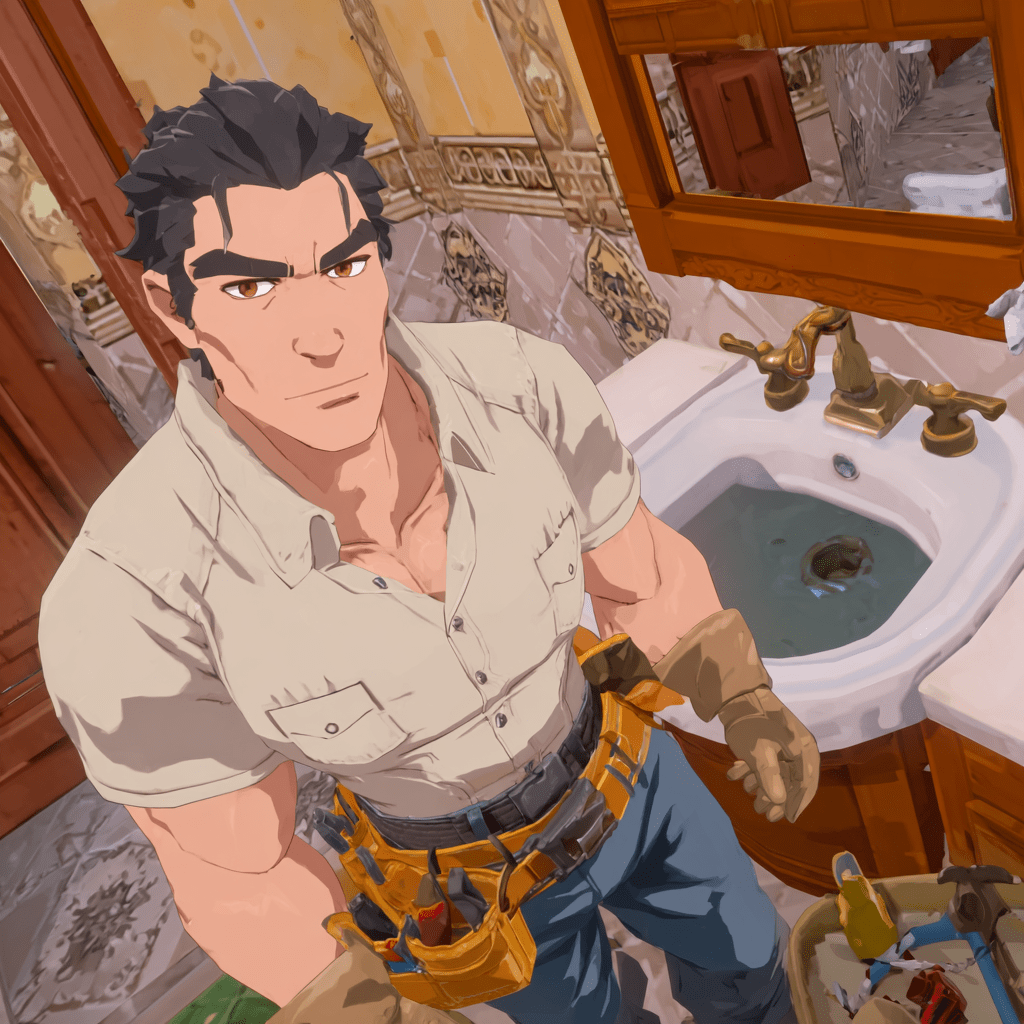
The bathroom transforms into a technical workspace as Carding enters with the focused determination of someone who’s about to demonstrate why professional expertise beats amateur troubleshooting every single time. I watch this plumbing operation unfold like I’m observing a master craftsman about to speedrun a repair quest that would take most people hours of trial and error.
Carding moves with the kind of systematic efficiency that comes from someone who’s probably fixed more P-traps than most people have seen in their entire lives. His work clothes—sturdy denim and a practical polo shirt—show the kind of wear that suggests actual competence rather than just costume authenticity. The tool belt around his waist carries equipment that looks genuinely used rather than display-only.
Ronald follows behind like a concerned NPC who wants to understand the repair process but also recognizes that his role involves staying out of the expert’s way while providing moral support and backup communication if needed. The guy’s clearly grateful that professional help has arrived to handle problems that were definitely beyond his vacation skill set.
Outside the bathroom door, Roanne positions herself like a dutiful support character monitoring the main quest while staying ready to assist if her father needs anything. She’s wearing long skirt and a blouse that makes her look like an old maid on vacation, her responsible behavior suggests she’s learned to balance fun activities with family obligations.
Carding gets to work immediately, twisting the valve on the P-trap counterclockwise with practiced precision. The mechanical action produces that satisfying click of properly maintained plumbing hardware responding exactly as designed. Water begins draining into the bucket he’s strategically positioned beneath the sink—because professionals always bring the right equipment and anticipate potential mess scenarios.
His technique demonstrates genuine understanding of plumbing physics rather than just following instruction manual steps. Each movement serves a specific purpose in the systematic disassembly process that will allow him to access and replace the faulty components.
But then the real entertainment begins.
“Ate Roanne! You’re here!” Topher’s voice cuts through the mechanical sounds like a notification alert announcing that a previous quest companion has become available for new adventures. The kid appears around the corner with the kind of explosive enthusiasm that happens when you unexpectedly encounter someone who made a positive impression during earlier gameplay.
His expression lights up like he’s just discovered that his favorite character from a previous level is available for recruitment in the current stage. The genuine excitement in his voice suggests this isn’t just polite recognition—he’s actually happy to see her again.
“Hi, Topher! I didn’t know you and your family were staying at the guesthouse,” Roanne responds with that same warm smile that made her memorable during their first encounter. Her surprise seems genuine, suggesting that coincidental meetings like this don’t happen often enough to feel routine.
The connection between them has that natural quality that happens when people genuinely click during brief interactions and then get unexpected opportunities to continue building their friendship. It’s like watching NPCs who were programmed with complementary personality algorithms discover they actually enjoy each other’s company.
“Why don’t you join me and my cousins? We’re playing an icebreaker game that James loves. They’d be happy to meet you!” Topher’s invitation comes with the kind of enthusiastic confidence that suggests he’s already mentally integrated Roanne into his current social group and calculated that the addition will improve everyone’s entertainment experience.
His body language shifts into full recruitment mode—shoulders squared, eyes bright with possibility, hands gesturing toward wherever his cousins are currently engaged in their gaming activities. This is classic extrovert behavior where meeting new people isn’t anxiety-inducing but genuinely exciting.
“I’d love to, but I need to stay and watch my dad while he works,” Roanne declines with gentle regret that suggests she’s actually interested but constrained by family responsibility protocols rather than lack of enthusiasm for the social opportunity.
Her tone carries that particular conflict between wanting to join fun activities and recognizing that she has existing obligations that take priority. It’s the kind of mature decision-making that demonstrates she’s learned to balance personal desires with family commitments.
From inside the bathroom, Carding’s voice emerges over the sound of slip nuts being unscrewed. “Go on, Roanne. This is a chance to make new friends. I’m fine—Ronald’s here to keep me company.”
His timing is perfect—parental permission granted just when it’s needed most. The sound of his wrench work continues steadily, suggesting he’s multitasking between plumbing repair and family conversation management with impressive efficiency.
“See, your dad already agreed. No more excuses, Ate Roanne!” Topher grins with the triumphant satisfaction of someone who’s just received backup support for their recruitment mission from the ultimate authority figure.
His expression suggests he’s genuinely pleased that the obstacles to friendship expansion have been systematically eliminated through proper negotiation and parental approval. This kid understands how to work within family systems to achieve social objectives.
“Alright, I’ll come with you.” Roanne’s acceptance comes with a smile that suggests she’s legitimately excited about this opportunity despite her initial hesitation about leaving her responsibilities.
“Itay, take care,” she says to Carding with the kind of affectionate concern that shows their family dynamic involves mutual care and respect rather than just hierarchy and obligation.
Honestly? Watching this friendship recruitment sequence unfold is like observing the perfect intersection of professional competence, family dynamics, and social opportunity. Sometimes the best connections happen when people are just being themselves while handling ordinary life situations with skill and kindness.
Character_creation_session_ultimate_team_edition.sav
The den feels like the perfect setting for this kind of deep character development session—ample lighting that would make Stranger Things proud, comfortable furniture arranged in a casual circle, and that particular atmosphere that happens when teenagers gather to reveal their inner thoughts through games that are way more psychologically revealing than anyone initially realizes.
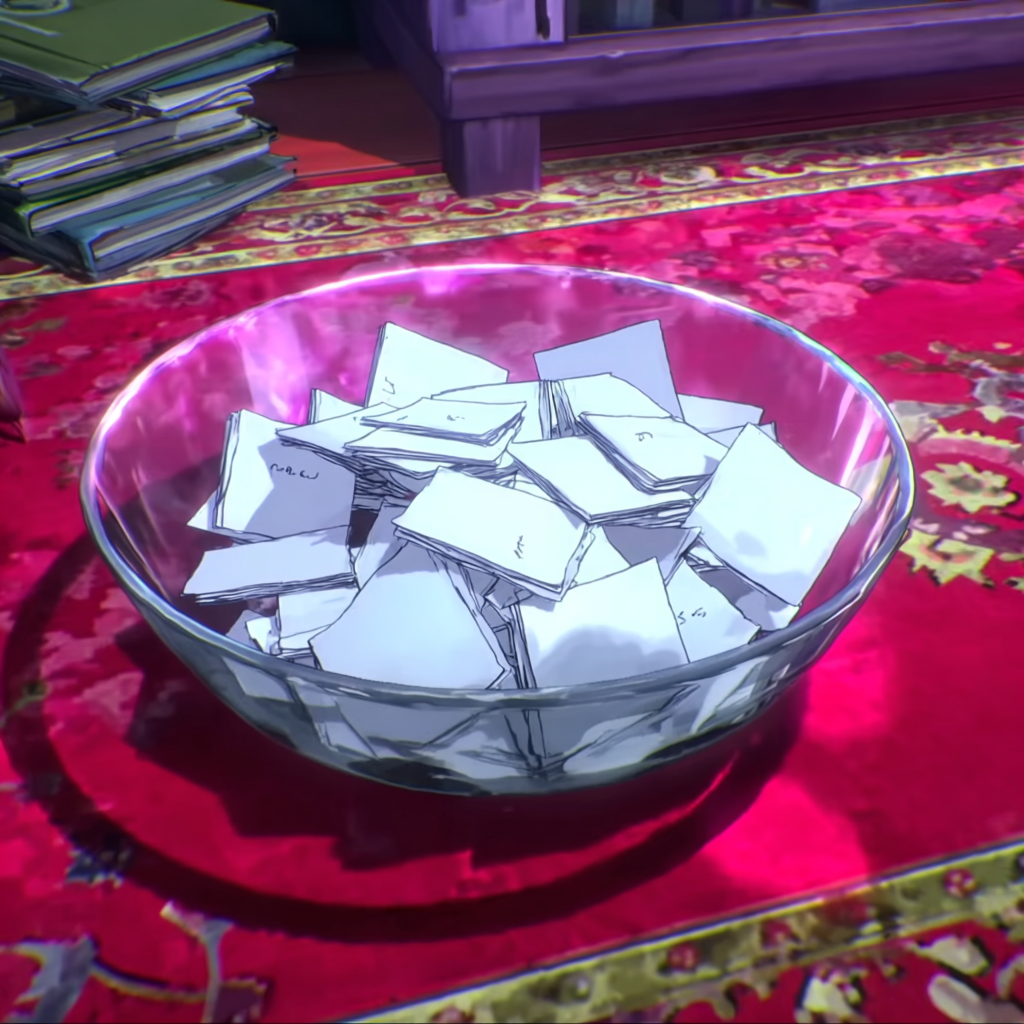
James sits at the center of this social formation like a dungeon master who’s about to facilitate some serious character creation discussions. He’s holding a plastic bowl filled with cards that probably contain enough conversation prompts to power a season of Big Brother confessionals. His dark hair falls slightly across his forehead as he leans forward, and his casual t-shirt and shorts give him that approachable facilitator energy that makes people feel comfortable sharing personal information.
“Sharing our embarrassing moments strengthened our bonds—not just as cousins, but as friends,” he declares with the kind of philosophical satisfaction that suggests this icebreaker session has already achieved some meaningful emotional progress.
But before anyone can process that statement, Allison launches into what appears to be an emotional damage report that would make reality TV producers salivate with excitement.
“To be honest, I’m only more traumatized.” Her voice carries that particular pitch that happens when people are simultaneously trying to be dramatic and genuinely process rejection trauma. “I confessed that I liked Edward, and then he outright rejected me for that ‘everyman’ girl, Nora. And you know me—Allison, the most popular girl in school, the one all the boys rave about!”
She’s positioned by the couch with perfect posture despite her emotional upheaval, her black hair catching the room’s lighting like she’s unconsciously maintaining her aesthetic standards even during personal crisis moments. Her pink outfit coordinates perfectly with her emotional color palette, and her expression cycles between genuine hurt and theatrical indignation.
This is peak teenage drama—the kind of rejection storyline that launches a thousand Wattpad revenge fantasies. Allison’s clearly experiencing that particular cognitive dissonance that happens when someone who’s used to being the main character suddenly discovers that other people have different casting preferences.
Into this emotional complexity, Topher appears with Roanne like he’s introducing a new party member who might help balance the group dynamics. His enthusiasm radiates that particular excitement that happens when introverted people successfully recruit someone they genuinely like into their social circle.
“Guys, this is Roanne—my new friend from Aling Corazon that I’ve been telling you about,” he announces with the pride of someone who’s completed a successful friendship acquisition quest and wants to share his achievement with the rest of his party.
Roanne stands slightly behind Topher with the cautious expression of someone who’s just entered an active social situation and is trying to quickly assess the group dynamics, personality types, and current emotional temperature. She’s wearing modest clothes—long skirt and a simple blouse—that suggest she’s dressed for wholesomeness rather than making impressions, but her natural beauty shines through regardless.
Her dark hair is pulled back in a practical ponytail, and her brown eyes scan the room with the kind of intelligent observation that suggests she’s processing multiple conversation threads while calculating how to integrate into an established social dynamic without disrupting whatever’s currently happening.
“Welcome, newcomer! Sit down and join us. We’re in the middle of an icebreaker game,” James says with the warm efficiency of someone who’s clearly mastered the art of incorporating new players into ongoing social activities.
His tone carries genuine welcome rather than polite obligation, suggesting he’s actually pleased to have additional perspectives joining their character development session. The way he gestures toward an empty spot in their circle indicates he’s already mentally adjusted the group configuration to accommodate another participant.
“Okay,” Roanne agrees with the hesitant politeness of someone who’s simultaneously interested in participating but also aware that jumping into established social groups can be risky territory where you might accidentally violate unspoken rules or misread the emotional atmosphere.
She settles into the indicated spot with careful grace, her posture suggesting she’s prepared to observe and adapt rather than immediately trying to establish her own presence in the group hierarchy.
“Topher, it’s your turn. Here’s the bowl—pick a card.” James hands over the game materials with the ceremonial importance of someone passing along sacred gaming equipment.
The plastic bowl makes a soft rattling sound as Topher accepts it, the cards inside shifting like they contain random event triggers that could spawn anything from hilarious revelations to deeply personal confessions. The anticipation in the room suggests everyone understands that card-based conversation games have the potential to create either bonding moments or social disasters depending on what questions get drawn.
“Alright, let’s see what I get.” Topher swirls his hand through the cards with the kind of dramatic flair that suggests he’s treating this selection process like he’s drawing from a deck of destiny cards that will determine the next phase of their social adventure.
His fingers dance through the options before finally selecting one with the confidence of someone who’s decided to trust random chance rather than trying to strategically manipulate the outcome.
“Ooh, this is a good one! I get to ask any question I want.” His grin suggests he’s just rolled a critical success on his conversation starter attempt as he holds up the card that reads: Ask any question.
The power dynamic in the room immediately shifts as everyone realizes that Topher has essentially been granted unlimited interrogation privileges, which could lead to either fascinating character development or deeply uncomfortable personal revelations depending on his question selection strategy.
“If you could be any character in real life, who would you be? And from what genre?” he asks, and honestly, this is probably the most revealing question possible because it essentially requires everyone to expose their deepest fantasy self-image while also demonstrating their cultural knowledge and personal values.
“Two questions—that’s against the rules,” Benjamin immediately points out with the kind of technical precision that suggests he’s either naturally detail-oriented or he’s trying to buy time before having to answer a question that might reveal more about his personality than he’s comfortable sharing.
His glasses catch the room’s lighting as he leans forward to deliver this rules clarification, and his button-down shirt suggests he’s someone who takes structured activities seriously enough to maintain proper protocols even during casual social games.
“It’s fine. There’s always some leeway with the rules. Besides, it’s a follow-up question—it’s related,” James responds with a diplomatic shrug that demonstrates his leadership skills in balancing rule enforcement with social flow management.
His tone suggests he’s learned that successful game facilitation requires knowing when to enforce structure and when to allow flexibility for the sake of maintaining positive group energy and encouraging participation rather than creating anxiety about technical violations.
Michael immediately launches into response mode like he’s been waiting his entire life for this exact question. “I’ll go first! I’d be a superhero. Who wouldn’t want super strength and cool powers? I’d kick butt!”
His enthusiasm radiates pure Marvel Comics energy as he sits forward with the kind of physical confidence that suggests he’s already mentally designing his costume and planning his first heroic rescue mission. His athletic build and competitive personality make perfect sense with his superhero choice—clearly someone who fantasizes about using physical capabilities to solve problems and help people.
The basketball shorts and team t-shirt he’s wearing reinforce his identity as someone who’s already comfortable with physical challenges and probably spends significant time imagining how enhanced abilities could amplify his existing strengths.
Allison immediately follows with the kind of detailed fantasy that suggests she’s spent considerable time developing this particular character concept. “I’d be a magical girl! I’d crown myself with a tiara of butterflies on my shiny blonde hair, wield a pretty heart-shaped wand, and take down bullies with love—literally! Heart-shaped attacks, just like my Pretty Cure heroines.”
Her animation level increases dramatically as she describes this fantasy, her hands gesturing to illustrate the visual elements while her expression shifts into the kind of dreamy enthusiasm that happens when people get to share their most cherished fictional self-image.
The Pretty Cure reference reveals serious anime knowledge that goes beyond casual viewing, suggesting she’s someone who’s found genuine inspiration in magical girl narratives about friendship, justice, and using feminine power to overcome adversity. Her choice also demonstrates interesting psychological processing of her recent rejection—imagining herself as someone who literally weaponizes love might be her way of reclaiming agency in romantic situations.
Sophie’s contribution comes with the shy creativity that suggests she’s been quietly developing this character concept while listening to everyone else’s more confident declarations. “Uh… I’d be a cartoon character, like a bee girl. I’d have antennas, insect wings, and a stinger. I’d be mostly yellow, like a sea sponge or Pooh, with black stripes. I’d fly around collecting nectar and making sweet honey.”
Her voice gets stronger as she continues describing her bee persona, suggesting that despite her initial hesitation, she’s actually quite pleased with this imaginative creation. The references to SpongeBob and Winnie-the-Pooh indicate she’s drawing inspiration from childhood comfort characters while adding her own unique insect transformation twist.
Her choice reveals someone who values productivity, community contribution, and the ability to fly—basically freedom combined with purpose. The fact that she’s imagining herself as a character who creates something sweet for others suggests a naturally generous personality that finds satisfaction in bringing joy to people around her.
James pauses dramatically like a Hamlet character preparing to deliver a crucial soliloquy. “I guess I should give a good answer, being the facilitator. Maybe a K-pop idol. People at school already call me ‘Oppa’ because of my band, Kaleidoscope.”
His admission reveals layers of real-life social dynamics that explain his confident facilitation skills—apparently he’s already operating in entertainment contexts where he’s learned to manage group attention and create engaging experiences for audiences. The K-pop reference suggests he’s tapped into current cultural trends while also demonstrating musical ambitions that extend beyond casual hobby level.
The mention of his band indicates he’s someone who’s successfully translated personal interests into collaborative creative projects, which probably explains his natural ability to organize and moderate group activities like this icebreaker session.
Michael immediately seizes the opportunity for playful roasting with the kind of sibling energy that makes family gatherings entertaining. “So I get to roast you with my superpowers, Allison bursts you with her heart attack, and Sophie stings you—and you’ll fight back by strumming your guitar?”
His question demonstrates the kind of tactical thinking that would make Dungeons & Dragons players proud as he analyzes the combat capabilities of everyone’s chosen fantasy personas and identifies what appears to be a significant power differential between offensive abilities and musical performance.
“Well, at least I’ll have music,” James replies with the cool confidence of someone who’s learned that the best response to gentle mockery involves acknowledging the critique while maintaining dignity rather than getting defensive or trying to argue for superior capabilities.
His response suggests he understands that music has different types of power that can’t be measured in terms of direct combat effectiveness, which is actually pretty wise for someone who’s probably dealing with the social complexities of being a teenage musician in environments that might not always appreciate artistic pursuits.
“Now, let’s hear from our newcomer, Roanne.” James’s gesture toward her carries the kind of gentle encouragement that suggests he’s genuinely interested in her perspective while also understanding that being the new person in a group can feel challenging when everyone else already knows each other’s personalities and social patterns.
Roanne takes a moment to gather her courage before responding, her expression cycling through consideration and determination as she processes the examples she’s just heard and calculates how to contribute something authentic without seeming too different or too similar to the existing responses.
“Er… I’d be a mermaid princess, like Ariel from The Little Mermaid. I love the sea, and I’m a pretty decent swimmer. It’d be nice to have a beautiful singing voice, and of course, a spring-green mermaid tail.”
Her choice reveals someone who’s drawn to aquatic environments and musical expression while also demonstrating Disney literacy and an appreciation for characters who bridge different worlds. The specific detail about wanting a spring-green tail suggests she’s thought about this fantasy enough to have developed aesthetic preferences rather than just grabbing the first mermaid reference that came to mind.
Her mention of being a decent swimmer indicates she’s someone who’s already comfortable in water environments, so her fantasy persona represents an enhancement of existing capabilities rather than a complete departure from her real-world identity.
Benjamin attempts to avoid participation with the classic introvert strategy of suggesting that other people’s contributions are sufficient entertainment without requiring additional personal revelation. “Do I have to answer? I think your elaborate answers will do.”
His deflection attempt demonstrates the kind of social anxiety that happens when people are genuinely interested in observing group dynamics but uncomfortable being the center of attention, especially when the activity requires sharing personal fantasies that might reveal more about internal thought processes than feels safe in a mixed social setting.
“Dad, come on—spill it!” Michael’s encouragement comes with the kind of family affection that suggests these brothers have enough established trust for gentle peer pressure to be interpreted as supportive rather than invasive.
The family dynamic between them becomes clear as Michael demonstrates his understanding that Benjamin’s reluctance probably stems from shyness rather than lack of interest, so persistent encouragement might help him overcome initial hesitation and actually enjoy participating.
“Okay, fine. A space captain. I read Dune, so I’m into sci-fi—space, galaxies, spaceships, space armor, futuristic weapons, advanced technology, and aliens.”
Benjamin’s eventual response reveals significant depth of interest in science fiction that goes beyond casual entertainment consumption into genuine literary engagement. The Dune reference suggests he’s someone who appreciates complex world-building and sophisticated narrative structures rather than just flashy space battle sequences.
His detailed list of sci-fi elements indicates he’s spent considerable time thinking about what aspects of futuristic scenarios appeal to him most—clearly someone who’s fascinated by technological advancement, exploration, and the leadership challenges that would come with commanding interstellar missions.
Finally, Topher delivers his response with the confidence of someone who’s clearly spent significant time developing expertise in character creation and fantasy role-playing concepts. “I’d be a paladin—winged helmet, holy sword, a cross on my shield, full plate armor, a glorious cape, and divine magic from the heavens. A paladin is an all-around fighter, tank, and healer.”
His choice demonstrates serious RPG knowledge that extends beyond casual gaming into understanding class mechanics, equipment optimization, and strategic party composition. The specific details about armor and weapons suggest he’s visualized this character design with the kind of thoroughness that comes from extensive fantasy gaming experience.
The paladin choice also reveals someone who’s drawn to heroic archetypes that combine combat effectiveness with moral authority and healing capabilities—essentially a character type that can protect others while maintaining ethical standards and providing support when teammates need assistance.
This went even better than I expected, Topher thinks to himself with satisfaction that radiates across his facial expression as he mentally reviews the results of his question selection. A team of a superhero, a magical girl, a cartoon character, a K-pop idol, a mermaid princess, a space captain, and a paladin. How crazy would that be?
His internal celebration suggests he’s genuinely pleased with how this social experiment turned out—not only did everyone participate despite initial hesitation from some members, but the variety of responses created an entertaining mix of fantasy archetypes that would make for incredible crossover fan fiction.
Honestly? Watching this group reveal their deepest character fantasies is like witnessing the most wholesome character creation session ever designed. Everyone gets to share their ideal self-image while learning about each other’s cultural interests, personal values, and creative imagination capabilities. Sometimes the best social bonding happens when people feel safe enough to reveal the fictional versions of themselves they’d choose if reality had character customization options.
Primetime_drama_reactor_stream.sav
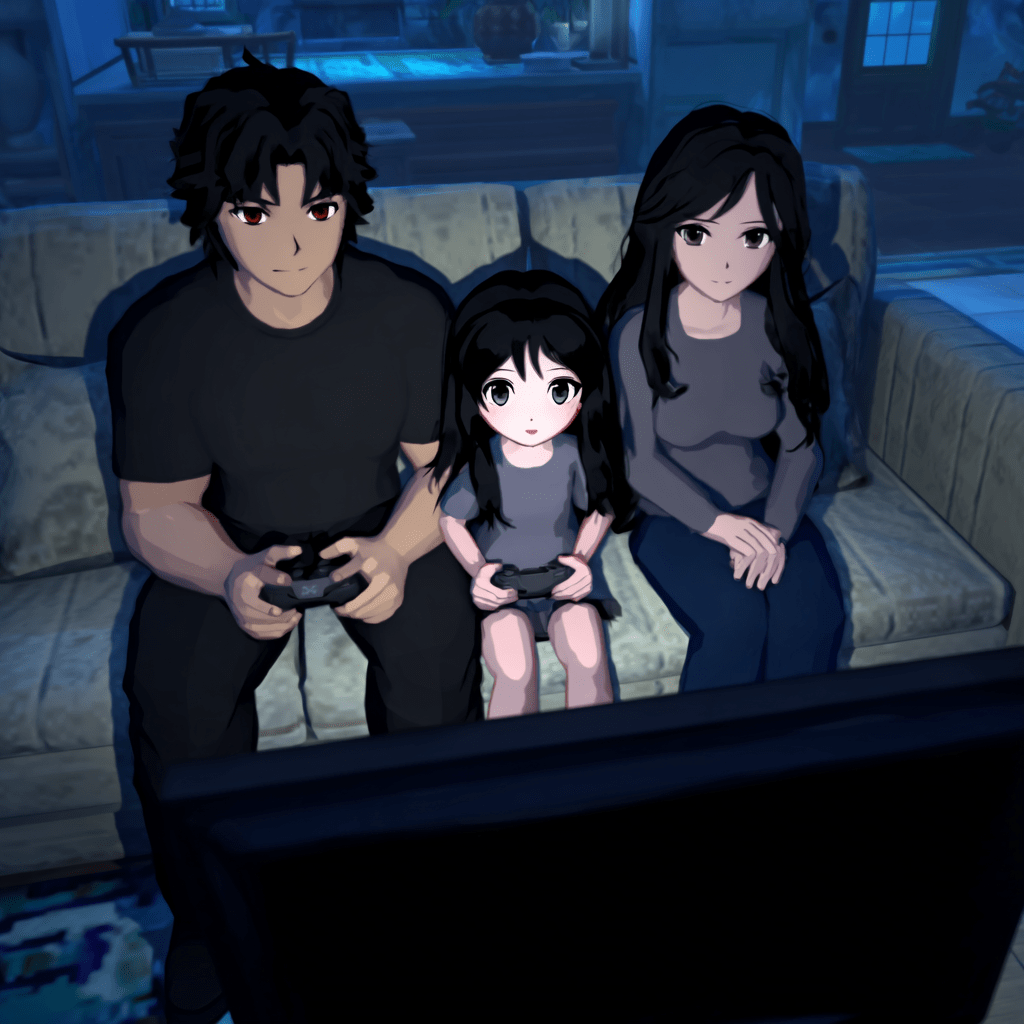
The Pangilinan living room transforms into something that would make Stranger Things proud—all dim lighting and blue-white TV glow creating that perfect atmospheric setup for family bonding through shared media consumption. I observe this domestic scene like I’m watching the most wholesome livestream ever, where the entertainment comes from people reacting to peak Filipino drama rather than playing horror games.
The television dominates the room with that classic early 2000s energy—probably a hefty CRT or maybe an early flatscreen that’s been serving this family through countless primetime seasons. Its glow bathes everything in that particular electronic light that makes every face look slightly ethereal, like they’re all characters in their own cinematic moment.
Martha sits at the center of this viewing formation with Mary cradled against her like they’re demonstrating the optimal mother-daughter TV watching configuration. Martha’s wearing comfortable house clothes—probably soft pajamas or a loose t-shirt and shorts that prioritize comfort over style because this is clearly serious viewing time that requires maximum relaxation protocols.
Mary looks perfectly content nested against her mom, her smaller frame fitting easily into the protective arrangement while her eyes stay glued to the screen with the kind of focused attention that suggests she’s genuinely invested in whatever family drama is currently unfolding. Her pajamas probably feature some kind of cartoon characters, and her hair is likely pulled back in a simple ponytail that won’t interfere with optimal viewing angles.
Greg completes their family viewing triangle, positioned close enough to share commentary but maintaining enough space to gesture at the TV when plot developments require physical emphasis. He’s wearing the standard dad uniform for evening television consumption—comfortable shorts and a t-shirt that’s probably seen better days but achieves perfect comfort ratings for extended couch sessions.
On screen, the current teleserye is delivering exactly the kind of melodramatic content that makes Filipino television legendary. Maria—who looks like she stepped out of a K-drama with her perfect hair and carefully applied tears—discovers a diary among her late grandmother’s belongings like she’s just triggered a major plot revelation that’s been building for multiple seasons.
The setup is pure telenovela gold: mysterious family secrets, hidden documents, and the kind of dramatic timing that would make Days of Our Lives writers take notes. Maria’s actress delivers that perfect combination of shock and dawning realization that suggests she’s been training for this exact emotional beat since episode one.
“That’s where she’ll learn she’s the real daughter of the rich family, and that she was switched at birth with Clarita, who’s a brat but came from poverty,” Martha predicts with the confidence of someone who’s logged enough teleserye hours to understand the standard plot progression algorithms.
Her tone carries that particular satisfaction that comes from pattern recognition—like a gamer who’s figured out the boss battle mechanics and can predict the next phase transitions. She’s clearly someone who appreciates the genre conventions while still enjoying the execution of familiar storylines.
“Let the scene play out, stop with the unnecessary comments,” Greg responds with the mild exasperation of someone who prefers immersive viewing experiences without real-time commentary tracks disrupting the emotional flow.
His complaint suggests he’s the type of viewer who wants to experience plot twists organically rather than having them spoiled by someone who’s become too good at predicting narrative developments. Classic conflict between analytical viewing and emotional engagement approaches.
Back on screen, Maria processes her diary revelation with the kind of devastating realization that would make Euphoria characters jealous of her emotional range. The actress cycles through shock, betrayal, and mounting anger as she absorbs information that completely rewrites her understanding of her own identity and family history.
Her confrontation with Barry—who looks like he was cast specifically for “father figure with dark secrets”—delivers peak telenovela intensity. The guy’s probably in his forties, wearing the kind of formal clothing that suggests he’s poor, and his expression carries the guilt of someone who’s been dreading this exact conversation for years.
“That’s why you never loved me as your daughter! You’re not even my real father!” Maria’s accusation cuts through the room’s audio system with the kind of dramatic delivery that makes soap opera dialogue legendary.
The tears streaming down her face look genuinely devastating rather than manufactured, suggesting either excellent acting or the kind of emotional investment that happens when performers really connect with their characters’ psychological journeys. Her voice carries that perfect tremor of someone whose entire worldview is collapsing in real time.
“You took me from my real parents because my mother’s heart only belonged to my father!” she continues, building toward what’s clearly going to be the episode’s emotional climax with the systematic precision of someone who understands how to structure devastating revelations for maximum impact.
The family secret mechanics are classic teleserye material: stolen identity, romantic jealousy, and family destruction motivated by unrequited love. It’s like watching someone play out a soap opera plot generator that’s been optimized for maximum emotional damage.
Barry’s confession arrives with the theatrical timing that makes Filipino television unforgettable. “Yes! I did it! I couldn’t let your family be happy while I was miserable.”
His breakdown represents the kind of villain motivation that actually makes psychological sense—not evil for evil’s sake, but damaged person making terrible decisions because he can’t process his own emotional pain in healthy ways. The actor delivers the line with enough genuine anguish to suggest that even he recognizes how destructive his choices have been.
The emotional revelation hits with the satisfying impact of a perfectly executed plot twist that’s been building through multiple episodes. Maria’s world collapses while Barry finally releases years of hidden guilt, and the viewing audience gets that cathartic release that comes from watching complicated family dynamics finally explode into open conflict.
As the teleserye reaches its conclusion, the dramatic music swells with the kind of orchestral intensity that signals major plot developments have been achieved and viewers should prepare for emotional processing time before the next episode continues the storyline.
The transition to late-night news represents that jarring shift from heightened dramatic reality back to actual reality—like switching from an intense gaming session to checking social media and remembering that the real world still exists outside of fictional narratives.
The family sits in the afterglow of quality television consumption, probably processing the emotional journey they just experienced together while mentally preparing for whatever current events the news is about to deliver.
Honestly? There’s something beautiful about families who can share these kinds of viewing experiences—getting invested in fictional characters’ problems while spending quality time together in comfortable domestic settings. Sometimes the best entertainment happens when people gather around screens and let professional storytellers guide them through emotional adventures that bring families closer through shared reactions to other people’s dramatic lives.
Breaking_news_dlc_cosmic_event_preview.sav
The late-night news kicks into high gear like someone just triggered a special event notification in No Man’s Sky. The studio lighting shifts to that crisp professional brightness that makes everything look like it’s happening in a Black Mirror episode, except way more wholesome and involving actual space content instead of dystopian technology nightmares.
“Breaking news—a meteor shower will take place tomorrow at midnight,” the main news anchor announces with the kind of controlled excitement that suggests he’s genuinely pleased to deliver content that doesn’t involve political disasters or tragic accidents for once.
The guy looks like he stepped out of Anchorman but with actual journalistic credibility—perfectly styled hair that probably requires professional maintenance, a navy suit that screams “trustworthy news authority,” and that practiced smile that manages to convey both professionalism and genuine enthusiasm. His delivery hits that sweet spot between informative and engaging that makes people actually want to pay attention to science content.
The weatherman appears on split-screen like a co-op partner joining the broadcast mission. “The sky will be clear, so viewers should have no trouble watching the celestial event.” His green-screen weather map displays tomorrow night’s forecast with the kind of technological precision that would make Star Trek bridge crew members proud.
The guy’s clearly in his element—probably spent years hoping for weather conditions that would enhance astronomical viewing rather than just telling people whether they need umbrellas. His enthusiasm radiates through the screen as he gestures at cloud coverage maps and visibility projections like he’s briefing a space mission rather than delivering standard weather updates.
Cut to field reporting that looks like behind-the-scenes footage from The Martian. An astronomy enthusiast leader stands surrounded by telescope equipment that would make amateur astrophotographers drool with envy. The setup suggests serious dedication to celestial observation rather than casual stargazing.
“It’ll be a great experience for everyone. We’re excited about it. We’ll set up camp and bring a telescope to get a close-up view of the night sky tomorrow,” he tells the reporter with the kind of passionate conviction that happens when people get to share their expertise about something they genuinely love.
The guy’s wearing practical outdoor gear—maybe a fleece jacket and cargo pants that prioritize functionality over fashion because apparently meteor watching involves enough equipment to supply a small expedition. His expression carries that particular glow that astronomy enthusiasts get when cosmic events align with perfect viewing conditions.
But then the real educational content drops.
Dr. Armstrong appears on screen like the expert NPC who shows up to explain complex game mechanics to confused players. The guy looks like he walked straight out of The Big Bang Theory but with actual astrophysics credentials instead of just fictional academic authority.
“The meteor shower is a celestial event where several meteors appear to radiate from one point in the sky. These meteors are caused by cosmic debris called meteoroids entering Earth’s atmosphere at high speeds,” he explains with the kind of clear scientific communication that makes complex physics accessible without dumbing it down.
His delivery demonstrates the perfect balance between academic knowledge and public education—technical enough to be informative but presented in language that won’t require viewers to pause and Google unfamiliar terminology. The guy’s probably spent years perfecting this explanation for maximum educational impact.
The news anchors return to close out this cosmic preview segment with the kind of playful banter that transforms scientific information into entertainment content that people will actually remember.
“Get ready to make your wishes upon the shooting stars tomorrow night!” the main anchor declares with cheerful energy that suggests he’s genuinely excited about the community aspect of shared astronomical experiences.
“What are you wishing for?” his co-anchor asks with the kind of spontaneous curiosity that creates those authentic moments that make live television memorable rather than just scripted content delivery.
“That my career stays afloat, hopefully,” he responds with self-deprecating humor that reveals the very human anxiety that exists behind professional media personalities. His joke hits that perfect balance between honest vulnerability and light entertainment that makes news anchors feel relatable rather than just polished broadcasting machines.
“For me, I’ll wish for my family to stay happy and healthy,” the female co-anchor shares with genuine warmth that suggests she’s actually revealing something personal rather than just providing scripted balance to her colleague’s career-focused humor.
Her response represents the kind of universal human priority that resonates across different demographics—choosing family wellness over personal ambition when given the opportunity to express what actually matters most in life.
The segment concludes with both anchors smiling at each other with the kind of authentic colleague friendship that makes viewers feel like they’ve just witnessed a genuine moment of human connection rather than performed television content.
Honestly? This whole news segment demonstrates how the best science communication happens when knowledgeable people get genuinely excited about sharing cosmic events with the general public. Sometimes the most engaging educational content comes from experts who remember that astronomy is fundamentally about wonder and curiosity rather than just technical knowledge.
Tomorrow night’s going to be epic if the weather holds up.


Leave a Reply