Overview:
| James returns to Sta. Jovita in search of Allison. After passing a woodworking shop, he asks two middle-aged women if they have seen her. Suddenly, the Sphinx appears in the nearby town, trapping construction workers by forcing them to answer her riddles. James—known as “Oppa Rockstar”—arrives just in time to save them. The Sphinx then transports him back to ancient Thebes, where she challenges the young man with a riddle, warning that his freedom depends on his answer. In the restored city of Thebes, James transforms into a Greek man named Adonis. There, he meets the infant Euclid and his mother, Myrrha. As Adonis, he watches a thrilling pankration match in which the reigning champion defends his title against both a determined challenger and an underdog. James also learns that Adonis has a grandfather. After wandering the streets throughout the night, Adonis’ grandfather finds James and invites him into his home for supper. Finally, James correctly answers the Sphinx’s riddle: “Man,” a metaphor for the stages of human life. Defeated, the Sphinx perishes, and the restored city of Thebes crumbles back into dust, returning to its former desolate state. |
Village_remembers_the_two_sisters.sav
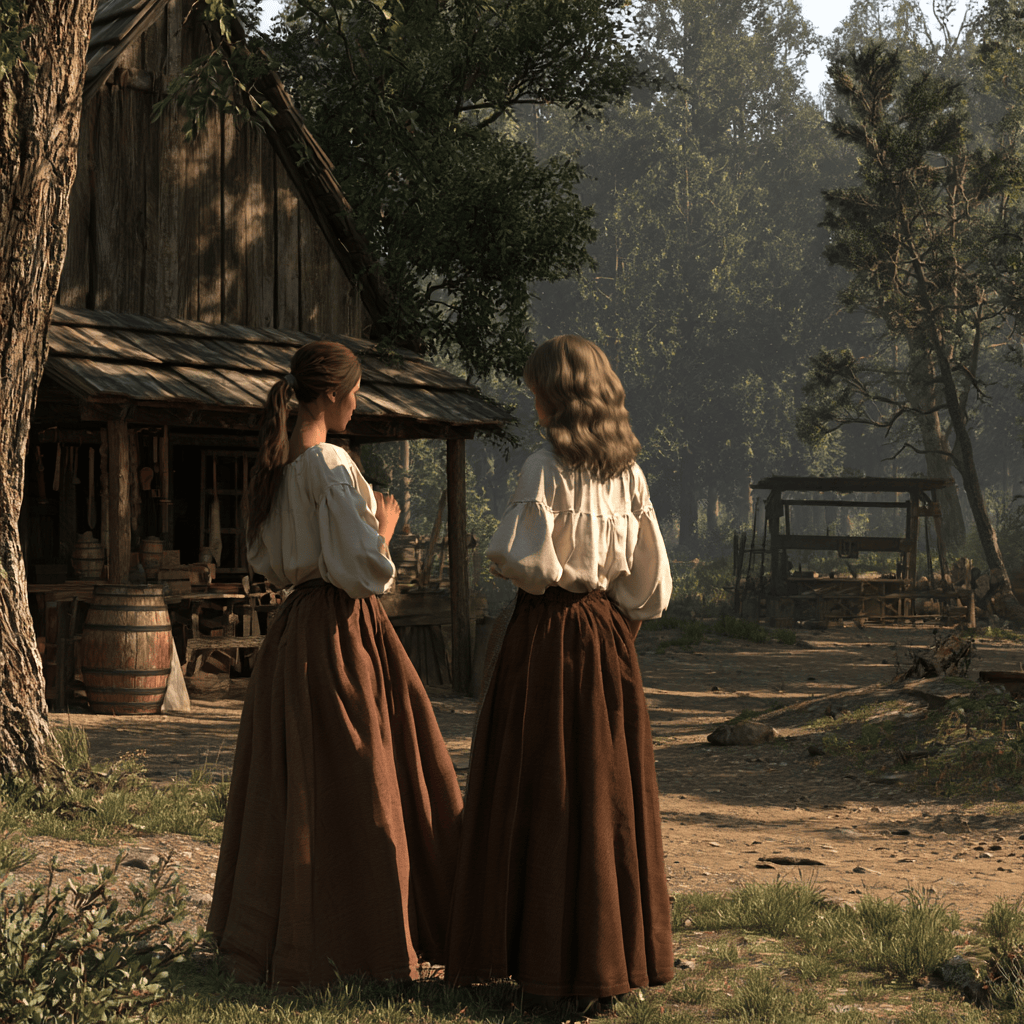
The sim warps mid-morning.
One second I’m parked in the white cube with nothing loaded but empty light, and the next the walls fold outward into a road. Packed dirt with a strip of cracked concrete running down the middle, the kind of road that got half a budget and made peace with it. Acacia trees on both shoulders. Roosters somewhere out of frame, arguing about something.
Santa Jovita.
I recognize it before the location text even bothers to render. I’ve been here. Not here here, obviously, since I’ve never been anywhere, but the cube dropped me on this exact stretch of dirt weeks ago and I watched two girls in matching pretend-sister energy walk toward a forest that ate twelve huntsmen.
The text confirms it anyway, hovering politely at the edge of my vision before dissolving.
SANTA JOVITA. WOODWORKING VILLAGE.
Great, I think. Returning to a previous zone. Always a good sign in games. Never means anything bad.
The village is awake and busy in that unglamorous, fully committed way that villages are busy at nine in the morning. A tricycle rattles past with three sacks of something lashed to the sidecar. A woman sweeps her yard with a walis tingting, moving fallen leaves into a pile that the wind is already disagreeing with. Chickens patrol the shoulder like they’re on payroll.
And then there’s the shop.
Tito Bobi’s Woodworking Shop takes up almost a full block on the left side of the road, more open shed than building, its corrugated roof held up by posts that have clearly been repaired more than once. The front spills out toward the street in a way that would give a fire marshal a stroke. Narra dining sets stacked three high. Rocking chairs. Bowls, ladles, chopping boards. A rack of chessboards with the pieces glued into a box beside them, and next to those, sungka boards carved from single planks, the little pits worn smooth and dark from hands.
Inside, the shop is loud in a satisfying way. Hammers going. A hand plane peeling a curl of wood off an edge and dropping it on the floor with a dozen others. Two guys sanding a headboard in long alternating strokes like they’ve been doing it together for years, which they probably have. Somebody in the back is varnishing, and the whole street smells like sawdust and wet clay and the sharp chemical edge of finish.
The sim renders the smell. I get the smell. I don’t get to walk over and pick up a chess piece.
So close.
James comes up the road from the south, and I straighten up in a room with nobody in it to see.
He’s dressed like a guy on vacation who isn’t. Open polo over a plain shirt, sleeves rolled to the forearm. Dark pants. Sneakers already dusted pale from the road. A bag over one shoulder, riding low against his hip. No spiky white hair, no visor, no butterscotch guitar. Just black hair pushed back off his forehead, brown eyes doing a slow scan of the storefronts, and a face that a stranger would clock as friendly before they clocked anything else.
He looks better than the last time I saw him. Not fixed. Better. There’s a difference, and I’ve had a lot of hours to learn it.
He slows at the shop, watching the sanders work. One of them notices, nods. James nods back and keeps walking.
Twenty meters on, two women come the other direction, and this is where the morning stops being scenery.
They’re both in their forties somewhere, dressed nearly identically in printed blouses and long skirts, plastic slippers, small shoulder bags. The one on the left has short hair, wavy, dyed a shade of brown that’s about six weeks past its appointment. The one on the right wears hers long and straight, pulled back and tied at the nape with a plain band.
James stops and turns to face them properly. Both hands out of his pockets. Slight bow of the shoulders.
“Good day, Ma’ams. May I ask you something?”
The short-haired one lights up like a slot machine.
“Of course, iho,” she says. Lad. She lets the word sit a beat too long. “Anything for a handsome gentleman.”
The other one shuts her eyes briefly, the way you do when a friend has done something in public that you predicted at home.
“Watch your words, Greta.” She keeps her voice low, which does nothing, because the road is quiet. “That young man could be your panganay’s age.”
“I’m having a harmless crush,” Greta says, with the flat confidence of somebody who has had this conversation four hundred times and won it four hundred times. She flaps a hand. “What’s your question, iho?”
James’s mouth twitches. He recovers.
He reaches into the bag and comes out with two photographs, actual printed ones, edges soft from being carried around. He holds them up side by side.
I know both of them before the sim finishes resolving the images.
Roanne, in the first, is looking slightly off-camera like she wasn’t ready. Allison, in the second, is very much ready, chin angled, one hand near her face.
“Have you seen these girls around here?”
Greta leans in with genuine interest, and something in her expression changes from performance to actual recall.
“Oh my. It’s the two sisters we saw before, right, Sari?” She taps the photo of Roanne with a fingernail. “They look nothing alike, those two. The older one, the morena, she was dressed like an old maid.”
I look at Greta’s blouse. I look at Greta’s skirt. I look at the photo of Roanne, in her blouse and her skirt.
Ma’am, I think. You are wearing the outfit.
“The other one was the bunso,” Greta continues, moving to Allison’s photo with obvious relish. “The kikay one. Sharp tongue on that girl. Mestiza.”
“Yes. They were here, in Santa Jovita.” Sari steps in with the useful information, the way she’s clearly been stepping in her entire life. “This is our village. We make a living from the forest’s wood. What you see at Tito Bobi’s shop, that’s most of us. It’s one of the biggest workshops in the whole bayan.”
James’s shoulders come down about a centimeter. He’d been holding them.
He’s tracking them, I realize. He’s been tracking them this whole time.
He didn’t come out here for the sea air. He came out here because the last confirmed sighting of Medusa was in this forest, and the last confirmed sighting of Allison was standing next to it. He walked away from the Peregrine with a tablet and two printed photos and started working backward from the last place anybody was seen alive.
I have watched a lot of people look for a lot of things. This one sits differently in my chest.
Because I know what’s in that forest now, and it isn’t Allison.
“What nearby towns are there?” James asks.
“The closest is Victorino.” Sari points with her lips, a quick jut of the chin northward, which is a gesture I have decided is the single most efficient piece of body language humans have ever invented. “They make wine there. Good business. And there’s a big construction going on, a shopping mall. The mayor approved it.”
James goes very still for about a half second.
Anybody else would miss it. I’m sitting in a room built specifically to not miss it.
“Thank you very much, Aling Sari. You’ve been a great help.”
“You’re welcome, iho.” She actually looks pleased. Not flattered, just pleased, like a person who enjoys being useful and doesn’t need a parade about it.
“What about me?” Greta plants a hand on her hip. “The beautiful Greta?”
She flicks her hair. There is no hair to flick. Her hand travels through empty air where long hair would be if she had any, completing the gesture with total commitment.
I laugh out loud in an empty spacecraft. It doesn’t go anywhere.
James, to his eternal credit, does not break. “Thanks too, po.”
Greta reaches up and pats his cheek. Just once, light, thoroughly pleased with herself, and then holds the pat a half-beat longer than the situation strictly requires.
James’s smile locks into the exact shape of a boy being complimented by his mother’s friend at a wedding.
Sari takes Greta’s wrist and removes it from the young man’s face with the efficiency of long practice.
“We’ll be going now, iho. Good luck finding your friends.”
They turn. They get about four steps.
“Have some shame,” Sari says, not quietly at all. “Your husband is still alive. You have children.”
“It’s a crush,” Greta says, unbothered, unrepentant, immortal.
James watches them go, shaking his head slowly.
“That Aling Greta,” he mutters. “Too forward. Bit much.”
Buddy, I think, she’s the best thing that’s happened to this story in two weeks. Show some respect.
He waits until they’re well down the road before he pulls the tablet from his bag.
It’s the sleek white one, thin as a school folder, edges glowing faintly along the seam where the casing meets the screen. He wakes it with a thumb.
The display comes up in cool blue-white. A topographic map of the municipality, contour lines stacked tight around the forest ridge to the east, thinner and looser toward the flatter land north. Coordinates scrolling in a column down the left side. And there, sitting maybe nine kilometers up the road from where James is standing, a slow pulse of concentric rings expanding outward from a fixed point.
An electromagnetic disturbance. Weak. Steady. Local.
Victorino.
“My hunch was right,” James says under his breath.
He tilts the tablet, thumb dragging the map to center the pulse. The rings keep coming, patient as sonar.
“Another one. Close to where Medusa was.” He’s talking to himself, and he knows he’s talking to himself, and he does it anyway. “Same area. So maybe Allison’s still around here somewhere.”
He says it lightly. That’s the part that gets me. He says it like a guy running an errand.
Maybe I’ll find her, he thinks, and the sim renders the thought so cleanly I could read it off his face without any help at all. Maybe I bring her home and we’re back to six.
I have seen the temple. I have seen the boulder. I have seen what a goddess’s curse looks like when it settles into a girl mid-victory pose, and I have seen exactly how little a healing touch does against it.
He’s nine kilometers from a monster and about a thousand kilometers from the truth, and he’s smiling a little, because hope is the cheapest fuel there is and it burns just fine.
I don’t get to tell him. That’s the whole arrangement. Front row seat, no voice, no hands, no vote.
So close, I think. So unbelievably far.
The tablet chirps.
The map dissolves. The blue-white drains out of the display and comes back in hard amber, the pulse rings snapping into a single flat line across the center of the screen, and text stamps itself in block letters that fill the panel edge to edge.
FOURTH WAVE.
James stops walking.
Down the road, the hammers keep going at Tito Bobi’s. Somebody laughs in the back of the shop. A curl of shaved narra drifts off a workbench and settles in the dust.
He looks north.
Then he tucks the tablet into his bag, shifts the strap on his shoulder, and starts up the road toward Victorino at an easy, unhurried, completely ordinary pace, like a guy going to check on something.
Musician_trades_himself_for_twelve.sav
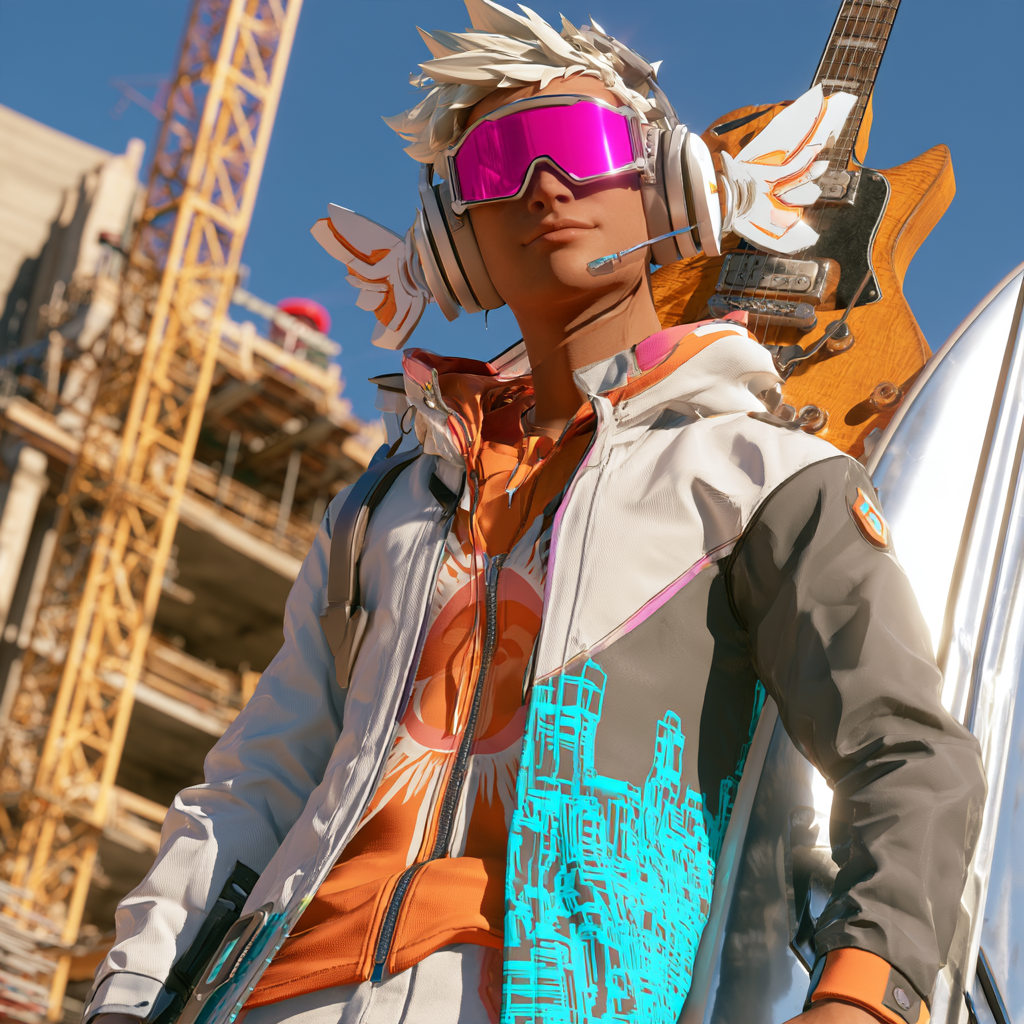
The cube snaps sideways and drops me into noise.
VICTORINO. NINE KILOMETERS NORTH.
Construction site. Big one. The kind where somebody very confident signed a very large piece of paper and now four hundred people have to make that paper real. Rebar cages stand in rows like the world’s least comfortable furniture. Hollow blocks stacked in gray towers, four pallets deep. Cement sacks under a blue tarp with tires holding the corners down. Shovels leaning against a wheelbarrow. Wooden planks laid across muddy ground in long uneven walkways because the rain last week made an opinion about drainage and drainage lost.
At the center of all this sits the mall itself, or what’s going to be a mall eventually. Right now it’s four floors of raw concrete skeleton, columns and slabs and nothing else, open on every side. No walls. No glass. Just the bones.
A backhoe grinds through a turn near the perimeter, tracks chewing up wet earth. Somebody’s cutting rebar with an angle grinder and the sparks come off in an orange fan. A radio is playing somewhere, tinny and cheerful, and losing badly to the machinery.
The foreman stands near the site office trailer with a rolled-up drawing under one arm, yellow helmet pushed back on his head, arguing amiably with a younger guy in a white helmet and a polo shirt who I’m going to assume is the civil engineer because he’s holding a laptop outdoors at a construction site, which is exactly the level of optimism that job requires.
It’s late morning. Sun already mean. Heat shimmer coming off every flat surface.
I like sites like this. I like watching people build things. It’s one of the few activities that looks the same from a hundred meters up as it does from the inside, everybody moving with a purpose they didn’t have to explain to each other first.
I’m going to stop liking it in about eleven seconds.
The light goes wrong.
Not dark exactly. Dimmer, the way it goes when a big cloud slides across the sun, except the shadow crossing the ground has edges. Hard ones. It sweeps across the block stacks, over the wheelbarrow, up the concrete skeleton and off the other side.
A man near the mixer looks up first. Skinny guy, sunburned, sleeves cut off at the shoulder.
“What is that?!” His arm shoots straight up. His voice cracks in the middle of it. “It looks like a giant bird!”
Everything stops. Not gradually. All at once, the way a room goes quiet when someone drops a plate.
Forty helmets tilt back. The grinder dies. The radio keeps playing, still cheerful, now completely inappropriate.
She circles once.
The wingspan is the part that breaks my brain a little. From the cube I’ve got the angle to measure it against the building, and she’s wider than the four-story frame is deep. Tawny brown feathers, layered and enormous, catching the sunlight along the leading edges. Below the wings, a lion’s body, long and heavy and moving with that unhurried roll big cats have when they aren’t in a rush because they’ve never needed to be.
And on top of it, a woman’s head.
Dark hair bound back in a braided coil. A face that is not monstrous at all, which is somehow the worst option available. Calm. Composed. Faintly amused, like she’s arriving at a party slightly early and doesn’t mind waiting.
She drops.
The descent is fast and controlled and ends in a wingbeat that hits the site like a shove from an open hand. Dust goes up in a wall. Tarps rip loose. The blue plastic over the cement peels back and a tire rolls away across the mud. Men grab their helmets. Somebody’s clipboard goes cartwheeling.
The ground takes the impact and passes it along. I feel the sim render the vibration in the floor of the cube, which is a courtesy I did not ask for.
When the dust thins, she’s standing in the middle of the site with her wings folding down against her flanks, and every single person there is looking at something their brain has no category for.
“Mortals.” Her voice comes out low and clear and it carries to every corner of that lot without her raising it at all. “Are you building a temple for the gods, perhaps?”
Nobody answers. Obviously nobody answers.
The foreman’s mouth is open. The engineer is holding his laptop in both hands like it might help.
She looks around at the rebar and the stacks and the half-finished frame with what I’d honestly describe as professional interest.
“I see you’ve been laboring quite hard.” Her tail flicks once, tufted at the end. “Would you care for a game of riddles?”
Somewhere in the back a man says Diyos ko po very quietly.
“So.” Her chin lifts. Something changes in her face and it isn’t cruelty, it’s worse, it’s enthusiasm. “Shall we begin?”
The ground goes.
Not a tremor this time. A heave. The mud jumps. Blocks topple off their pallets and burst. And out of the earth, on all sides, walls come up.
Stone. Cut stone, gray and seamless, rising with a grinding roar that drowns everything else on the site. They climb past the second floor of the skeleton, to the fifth level, to the eighth, and they keep going, and dust pours off them in sheets as they rise.
They stop at twelve stories. Exactly way above the top slab of the unfinished mall.
Eight of them. Eight walls, eight corners, closing the entire construction site inside an octagon with the concrete frame stranded dead center like something on a plate.
I know a boss arena when the game builds one in front of me.
The dust settles slow. The workers are pressed back against block stacks and machinery, and now they can see the whole shape of it, the eight faces of gray masonry with no doors, no windows, no gaps.
The radio finally stops. Somebody turned it off. I don’t blame them.
She begins.
I’d like to say the sim spares me the next part. It doesn’t. It never has.
She calls a man forward and asks him something in that pleasant, patient voice, and he answers, and she tells him he’s wrong. She calls another. Another. She takes her time with each one, tilting her head, listening properly, and the listening is somehow the thing I can’t get past. She wants a good answer. She’s genuinely hoping. Every time she doesn’t get one her expression flickers with something that looks almost like disappointment.
Twelve of them. Twelve. I count.
Twelve stories on the walls, twelve floors on the frame, twelve men in front of her. I doubt that’s a coincidence and I don’t have anybody to say so to.
“And that is the last of you.” Her voice hardens for the first time. “Wrong.”
Her eyes flash, and the amusement goes out of them entirely.
“All twelve of you have failed. And for that, you shall be devoured.”
Her mouth opens.
It opens too wide, and past her teeth there’s no throat. There’s a void, black and slowly turning, and it pulls.
Wind reverses across the whole site. Dust snaps inward. The blue tarp goes up off the ground and vanishes. Men grab rebar cages, columns, the wheel of the backhoe, anything anchored, and their boots skid backward through the mud.
The twelve go in. They scream the whole way and then they don’t.
I sit in my white room with my arms at my sides and I watch it and I do nothing, because doing nothing is the only skill I have ever been issued.
So close, I think.
It doesn’t help. It never helps. I think it anyway.
Her mouth closes. The wind dies. The site is a mess of scattered blocks and overturned equipment and roughly thirty men who have just learned something about the universe that they were happier not knowing.
They break.
They run in every direction at once. Some sprint for the walls and hit them and slap at the stone like it might turn out to be a set piece. Some go for the frame. I watch maybe a dozen men pour up the unfinished stairwells, taking the steps in threes, helmets bouncing off, and they get to the fourth floor, the sixth, the ninth, and then they stand there at the open edge and understand.
The frame is stranded. No bridges. No scaffolding out to the walls. Just twenty meters of open air on every side and a drop that isn’t survivable.
Down at ground level, three of them try to climb the wall itself.
That part almost works. The lower courses of the masonry have bricks jutting out at irregular intervals, a hand’s width proud of the surface, enough for fingers and boot toes. The first man goes up fast, and I catch myself leaning forward. He clears the second floor. The third. The fifth.
At the sixth the protruding bricks stop.
Above that line the stone is flat. Perfectly flat, dressed smooth, not a seam or a lip in twenty feet of vertical gray.
He hangs there with his cheek against the wall and his arms starting to shake, and then he climbs back down, and he doesn’t look at anybody when he reaches the bottom.
Half a route, I think. Somebody designed that on purpose.
The Sphinx has been watching all of it from the center of the lot, entirely at ease, one paw crossed over the other.
“The northern gate of your so-called temple is guarded by me.” She says it the way you’d read a rule off a card. “You may only pass through if you solve my riddle.”
There’s a gate. Now that she’s mentioned it I can see it, a single tall opening in the north face, and she is positioned squarely between it and everyone else.
“Now.” She scans the crowd, unhurried, and her voice picks up that awful brightness again. “Where is the next batch of challengers?”
Nobody moves. Nobody breathes.
“Are there any brave and wise enough to accept my challenge?”
Her gaze travels along a huddle of men pressed against a stack of cement sacks. Older guys, mostly. One of them has his arms out to the sides, keeping two younger workers behind him, which is a thing people do without deciding to do it.
She starts toward them.
And the sky goes orange.
It comes down from above the wall line, a broad ribbon of neon orange light arcing over the octagon and bending outward as it descends, laid across the air like a road that decided to show up. Five bright lines run along it, evenly spaced. A staff. An actual musical staff, hanging in the sky over a construction site in Batangas province.
Every head in that lot turns. The Sphinx turns.
Riding down the curve of it, one hand out for balance, comes Oppa Rockstar.
White and gray jacket, cyan lines tracing a skyline across the fabric. Orange shirt underneath with the sun blazing across the chest. Spiky white hair. Magenta visor over his eyes. Butterscotch electric guitar riding across his back on its strap, the finish throwing sunlight around the enclosure in moving pieces.
Behind him the notes come tumbling. Cyan, magenta, yellow, solid as glass and bouncing along the staff in his wake, each one popping off a bright cheerful tone as it lands. It sounds absurd. It sounds like a menu screen. It is absolutely the wrong soundtrack for what’s happening down there and that’s the entire point, because thirty men who were about to die are now looking up instead of down.
He steps off the last of the wave and lands on the churned mud between the workers and the monster. Knees bend, straighten. Notes scatter around his boots and wink out one by one.
He doesn’t reach for the guitar.
“I will take your challenge.” His voice carries. He’s had practice making a voice carry. “Alone.”
The Sphinx lowers her head toward him. She is very large and he is very much not.
“Spare these men,” Rockstar says. “Let them pass through your gate.”
I sit forward in a chair I don’t have.
Kuya, I think, you have been back on the board for one morning.
The Sphinx studies him. Not the way she looked at the others. She takes her time, tracking from the sneakers up to the visor, and something in her expression shifts into genuine curiosity.
“Your courage is commendable, young man.” Her tail curls slowly around her flank. “These workers’ attire is peculiar. Yours is extraordinary.” A pause. “You even ride upon music itself.”
She smiles, and it’s not warm, but it isn’t mockery either.
“You are certainly worth more than the lowly lives of those behind you. I shall grant your request.”
I watch Rockstar’s jaw tighten under the visor. He doesn’t argue the wording. He wants the door open more than he wants to correct her, and he swallows the whole sentence in one go.
She steps aside.
The northern gate stands clear, and the men do not need a second invitation. They come off the frame, off the block stacks, out from behind the backhoe, and they move through that opening in a rough crowded stream, helmets in hands, some of them running, some of them carrying others.
One man doesn’t go straight through.
He’s older than most. Gray at the temples, a checked shirt gone almost white from washing, a green helmet with somebody else’s name written on it in marker. He stops in front of Rockstar and he grabs the boy’s hand in both of his and holds it.
“I don’t know who or even what you are.” His voice isn’t steady. He doesn’t wait for it to be. “But thank you, lad. We owe you our lives.”
Rockstar starts to say something.
“May God protect you from that monster,” the man says, and he squeezes once, hard, and then he lets go and goes.
Rockstar stands there looking at his own hand for about a second and a half.
I’d give a lot to know what’s behind that visor right now. I don’t get to know. The sim renders every fiber of that jacket in perfect detail and it cannot render the inside of a person’s head, which feels like an oversight in a system this expensive.
The last of them clears the gate. The lot goes quiet again.
“Now, musician.” The Sphinx’s shadow falls across him. “You shall come with me to my city.”
He gets maybe a quarter of a syllable out.
She lunges. One paw comes down and closes around him and the claws fold in, and then her wings hammer open and the whole octagon fills with wind and grit and she’s climbing, fast, straight up, past the six-story mark, past the twelve, past the top of the stranded concrete frame and out.
The site drops away underneath. From my angle I watch the octagon shrink into a gray eight-sided ring around a bare skeleton, then into a mark on the landscape, then into nothing.
They hit the cloud layer.
It’s thicker than clouds should be. White going to gray going to something with no color at all, and it swallows them completely. She flies through it without adjusting course, without slowing, wings beating in the same unbothered rhythm.
Rockstar can’t see anything. I can tell by the way his head keeps turning, trying to find a horizon that isn’t there. One arm is pinned. The other is braced against the inside of a claw the size of his torso. His hair is flattened backward. The guitar is hammering against his spine with every wingbeat.
He doesn’t struggle. That’s the detail I’ll be chewing on later. He goes limp against the grip and lets her carry him, saving whatever he’s got.
The mist starts to thin.
It comes apart in long shreds, the way fog does when it hits warm ground, and light comes through underneath. Warm light. Late light, gold and low, which is wrong, because it was eleven in the morning ninety seconds ago.
And below them, a city.
White stone laid out in a broad valley. Colonnades running in straight orderly lines. Tiled roofs stacked in terraces up a low hill, and at the top of the hill a temple with columns down every side. Streets in a grid. A ring wall with towers. Beyond it all, dry hills the color of old bread going hazy toward the edge of the world.
There’s no smoke from any chimney. No movement in any street. Nothing on the roads.
The location text arrives quietly at the corner of my vision, and it takes its time, like it wants me to look at the city first.
THEBES.
Clock_starts_at_sunrise.sav
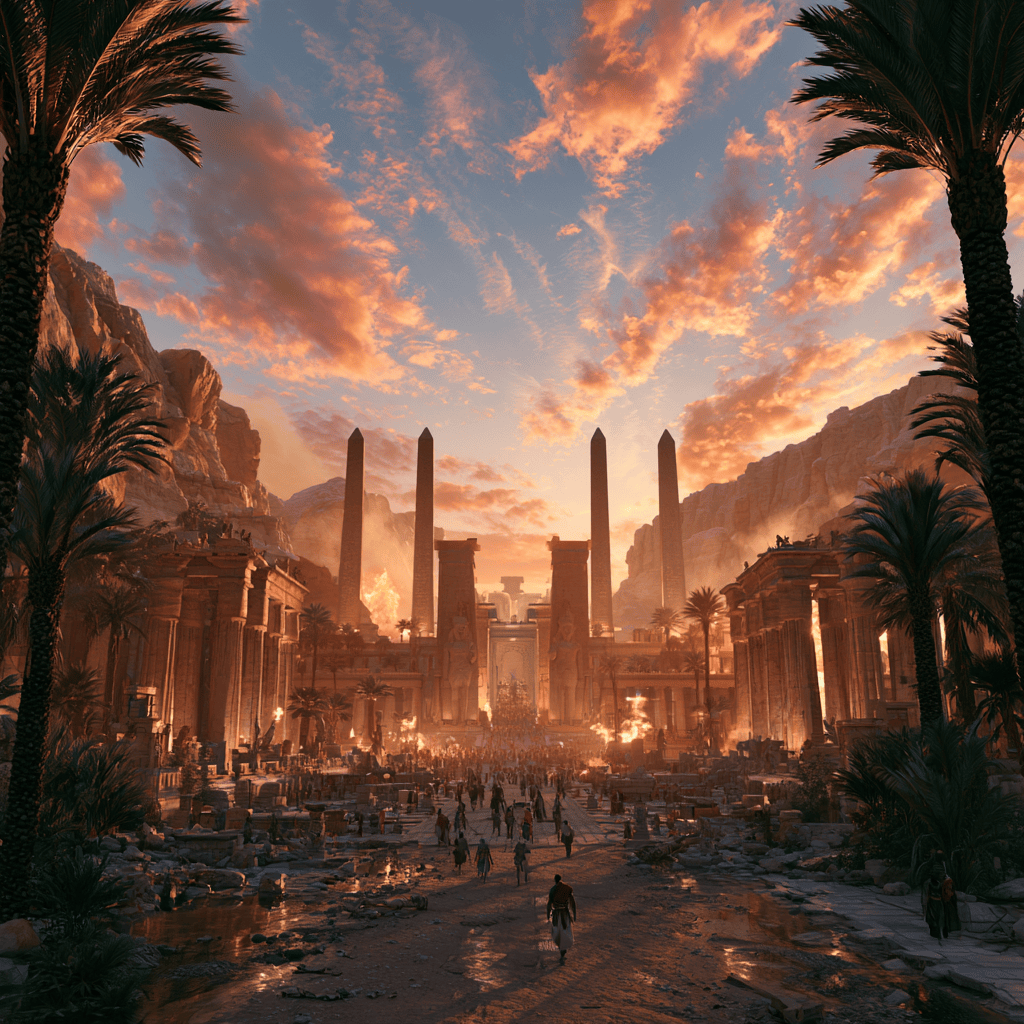
She comes down hard at the city gate.
The landing throws dust in a ring, fine pale grit that lifts and hangs and takes its time settling. Her claws open. Oppa Rockstar drops the last half meter and lands badly, one knee down, palm flat in the dirt, and stays there a beat while his balance catches up with the rest of him.
He gets his feet under him. Rolls the shoulder that took the worst of the grip. Reaches back and shifts the guitar to a better angle without looking at it, which is the kind of thing you only do if you’ve done it ten thousand times.
The Sphinx settles onto her haunches and folds her wings, and the light behind her has gone from that low gold into something paler. Grayer. The sky over the hills is losing its stars one at a time.
It was almost noon nine minutes ago, I think. Now it’s about to be sunrise. Cool. Normal. Love that.
“Here is my offer.”
Her voice is different at close range. Less proclamation, more conversation.
“I shall present you with a single riddle.” A pause, letting it land. “Should you fail, I will not devour you. Your life holds more worth than those laborers’. Instead you will become my prisoner. My servant. For the rest of your days.”
Rockstar’s head is tilted back to look at her. He doesn’t flinch at the word servant, though I catch his fingers curl once at his side.
“Should you succeed, I will let you pass and return to your world.”
“Fair enough.” He says it easily. He even smiles, that loose crooked one he uses on interviewers. “We can start whenever you’re ready, my Lady.”
Something crosses her face. Amusement, maybe. She was not expecting manners.
“May your courage and charm match the sharpness of your mind.”
She straightens. When she speaks again the words come out shaped, like she’s said them ten thousand times and still enjoys the shape of them.
“What walks on four feet in the morning, two feet at noon, and three in the evening?”
Rockstar doesn’t answer. Good. Smart. I’ve watched enough contestants blurt in enough game shows to know the ones who buzz first are the ones who go home first.
“Observe the dawn,” she says. “The game begins once the sun rises. You have until tomorrow morning to discern the answer, and the clues are hidden within Thebes.” Her tail sweeps once across the packed earth. “We shall meet again here, at this entrance, and you will give me your answer then.”
“Understood, ma’am.”
He nods. That’s it. No banter, no last word.
She moves aside.
The gate stands open behind her, two stone posts and a lintel with something carved across it that I can’t read from this angle and would give a limb to. Past it, a street runs straight into the city, paved in fitted stone, colonnades marching off on both sides.
It’s completely empty. Not a cart. Not a lamp. Not a sound.
Rockstar walks through.
And the sun comes up over the eastern hills exactly as he crosses the threshold, one clean band of light sliding down the street ahead of him, catching the tops of the columns and running along the tiled roofs and pouring gold into a city that had none a second ago.
He stops. Looks around. Then keeps going, hands in his jacket pockets, sneakers loud on the stone.
I sit in the cube with my arms folded and I watch him get smaller between the colonnades.
I know this one, I think. I’ve known this one since I was nine.
Every kid who ever picked up a mythology book knows this one. It’s the riddle. The famous one. There’s a whole tragedy about the guy who answered it.
And here’s the thing about knowing an answer inside a white room with no doors: it stays inside the white room.
He turns a corner and I lose him.
So close, I think, and the sun keeps rising over Thebes.
Baskets_barley_and_baby_euclid.sav
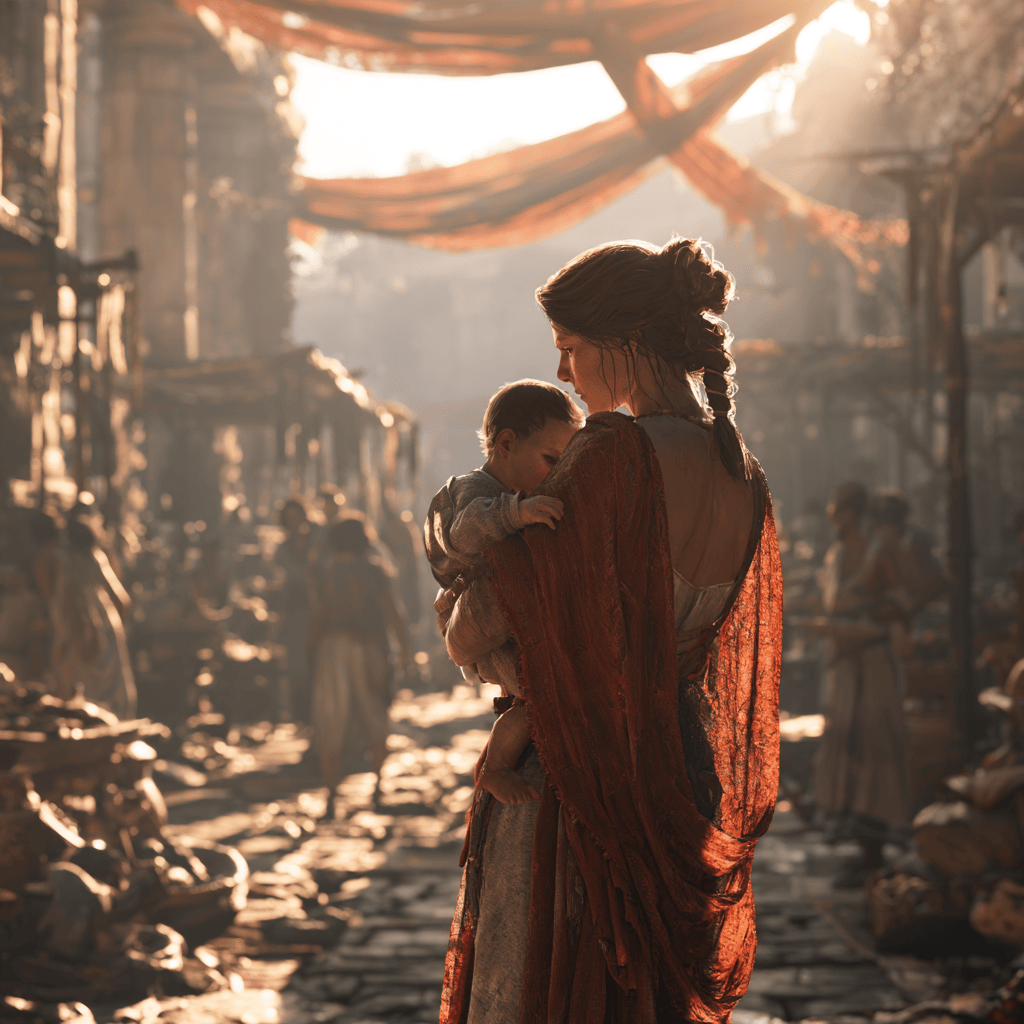
The cube follows him in.
Thebes at this hour is a museum with the lights off. Stone streets, swept clean, running arrow-straight between colonnades that go on longer than they have any business going. Columns everywhere. Fluted, unpainted, capped with plain square blocks at the top, the older simpler kind before anybody got ambitious with the carving. Two-story houses press up behind them with blank outer walls and small high windows.
Not a soul. Not a cat. Not a wisp of smoke off a single rooftop.
Oppa Rockstar’s sneakers are the only sound in the entire city and they are extremely loud. Every step comes back off the stone twice.
He slows near a public fountain, a stone basin with a lion’s-head spout, bone dry. Leans over it. Taps the spout with one knuckle.
“Okay,” he says to nobody. His voice bounces down the street. “Okay.”
Then the sun clears the eastern hills properly, and Thebes turns on.
I don’t have a better word for it. There’s no shimmer, no fade-in, no loading bar. Light spills down the street and where it lands there are people.
Doors bang open. A donkey brays somewhere close. Shutters swing wide on the upper floors and a woman leans out to shake a blanket into the morning air. Two men round the corner mid-argument about the price of something. The fountain starts running, water arcing out of the lion’s mouth into a basin that was empty four seconds ago, and a girl with a clay jar is already waiting for it.
Smoke goes up from a dozen chimneys at once.
Rockstar spins in place with his arms half out. Then he looks down at himself.
“What am I wearing?!”
The jacket is gone. The orange sun shirt, the matching pants, the yellow sneakers, gone. He’s in a knee-length tunic of undyed wool, cream going slightly tan, belted at the waist with a plain leather cord. Sandals with straps crossing up the ankle. A folded cloak over one shoulder, pinned at the collarbone with a bronze brooch.
He pats himself down like a guy checking for his wallet. The visor’s gone. The headset’s gone. He reaches back over his shoulder and finds nothing there at all, and I watch his hand stay in that empty spot a second longer than it needs to.
No guitar.
“This feels like I’m in a school play about Greek myths,” he mutters.
You’re taking this well, I think. Weirdly well, honestly.
A man carrying a bundle of reeds passes and nods at him without breaking stride. Rockstar nods back on reflex. The man doesn’t stare. Nobody stares. He’s dressed exactly like everybody else and nobody in this city has any reason to look at him twice.
He starts walking. Faster now, with purpose, scanning walls and doorways and the carvings above lintels.
Clues hidden within Thebes, she said. He’s out here hunting for a puzzle box. Some inscription. Some helpful stone tablet with an arrow on it.
Buddy, I think, and I don’t finish the thought, because that would be cheating even in the privacy of my own head.
The streets funnel him downhill. Voices build ahead, a low roar that resolves into hundreds of overlapping conversations, and then the colonnade opens up and he’s standing at the edge of the agora.
It’s enormous. An open square ringed by a covered walkway on three sides, packed corner to corner with stalls, awnings, tables, baskets. Olives in shallow bowls. Figs stacked in pyramids. Fish laid on wet reeds with a boy waving a branch over them to keep the flies honest. Wool in fat undyed coils. Painted pottery hung by cord in rows.
The noise is tremendous. Somebody’s haggling in a tone that suggests deep personal betrayal over the price of cheese. A blacksmith is working under an awning at the far end and the hammer comes through everything else, steady, off-beat with the crowd.
Rockstar wades in and gets exactly nowhere. He looks at stall signs. He looks at column bases. He looks at the ground. There is no glowing waypoint marker in Thebes and it is visibly starting to bother him.
Then he stops.
Near the fish stalls, a woman is losing an argument with physics. Two market baskets on the ground beside her, one loaded with barley and one with vegetables and a stoppered jar wedged in on top, and an infant on her hip who has decided he wants to be somewhere else and is committing to it with both legs.
She gets a hand on the first basket. The baby lurches. She catches him. The basket goes down.
Rockstar’s already moving.
“May I help you, Ma’am?” He stops a polite distance short and holds his hands up, open, at chest height. “If you don’t mind. I’m a good person, I promise.”
The woman looks up.
She’s maybe thirty, hair bound in a saffron cloth, a plain blue-gray chiton pinned at both shoulders, sleeves of it bunched from the struggle. There’s flour or barley dust on her forearm. Her face is flushed and irritated and then it isn’t, because she recognizes him.
“Adonis?!”
She actually laughs, a short surprised burst of it.
“You’re here! Truly a grace from the gods.” She’s already toeing the fallen basket toward him. “Of course, please, take these.”
Rockstar bends and lifts both baskets, one in each hand. They’re heavier than they look. His shoulders tell me so.
“You called me Adonis?” He straightens, genuinely lost. “Do I know you?”
The woman stares at him.
“Why wouldn’t you know me?” There’s a wobble of real hurt under it. “I’m Myrrha. Your mother Kassandra’s closest friend.”
I watch the recovery happen in real time and it is a thing of beauty.
His face does something. Not panic. A one-second reroute, the same face he makes when a fansign question comes in that he wasn’t briefed on, and then he’s back with the crooked smile already loaded.
“Ah, yes. Forgive me, Myrrha.” He shifts a basket to get a better grip. “I was joking. Of course I remember.”
Myrrha narrows her eyes. Decides to allow it.
The baby, however, thinks this is the funniest thing he has ever witnessed. He goes off in a full open-mouthed giggle, gummy and delighted, one fist waving toward Rockstar’s face.
“Oh.” Rockstar’s whole expression changes. “Hey there, little fellow.”
He leans in. The baby grabs a fistful of tunic collar and hangs on.
“That’s Euclid,” Myrrha says, adjusting her hip. “He likes you. He likes everyone. It’s a problem.”
They start walking, out of the fish smell and toward the north side of the square, and I watch a boy who came here to find a riddle carry somebody’s groceries instead.
I don’t say anything. I’m not able to.
But I’ve got the whole day rendered in front of me and I’ve read the book and I know exactly what he’s holding right now.
Handsome_man_in_the_copper.sav
Myrrha’s house sits three streets north of the agora, wedged between two others, with a doorway low enough that Adonis has to duck.
“Welcome to our humble oikos.”
Inside, the noise of the market cuts out almost entirely. The walls are thick mudbrick over stone footings, plastered smooth and painted a dull red along the bottom third. One small window high on the far wall lets in a slanted bar of morning light with dust turning in it. The floor is packed earth, swept hard and shiny. There’s a loom standing against the back wall with half a length of cloth on it, weights hanging in a row from the warp threads.
It smells like woodsmoke and barley and something faintly sour that I’m guessing is cheese.
Adonis crosses to the table and sets both baskets down carefully.
It’s a strange little table. Round top, no bigger across than a bike wheel, balanced on a single carved leg that splits into three feet at the bottom. He tests it with a fingertip before he trusts it with the barley.
“Sit, sit.” Myrrha waves at a stool while she settles Euclid into a cradle by the loom. “You’ll have something.”
And then they just talk.
I watch it happen and I’ll be honest, it’s the most relaxed I’ve seen this kid in weeks. He’s good at this. He’s always been good at this. Myrrha complains about the fishmonger, and he asks the right follow-up. She mentions a cousin’s wedding and he remembers the cousin’s name from a sentence she said forty seconds ago and drops it back in casually, which lights her up. He doesn’t know a single true thing about his own supposed life here and he’s steering the whole conversation around that hole without once falling in.
Diplomacy stat maxed, I think. Kid’s been dumping skill points into charisma since the tutorial.
Behind them, the cradle situation deteriorates.
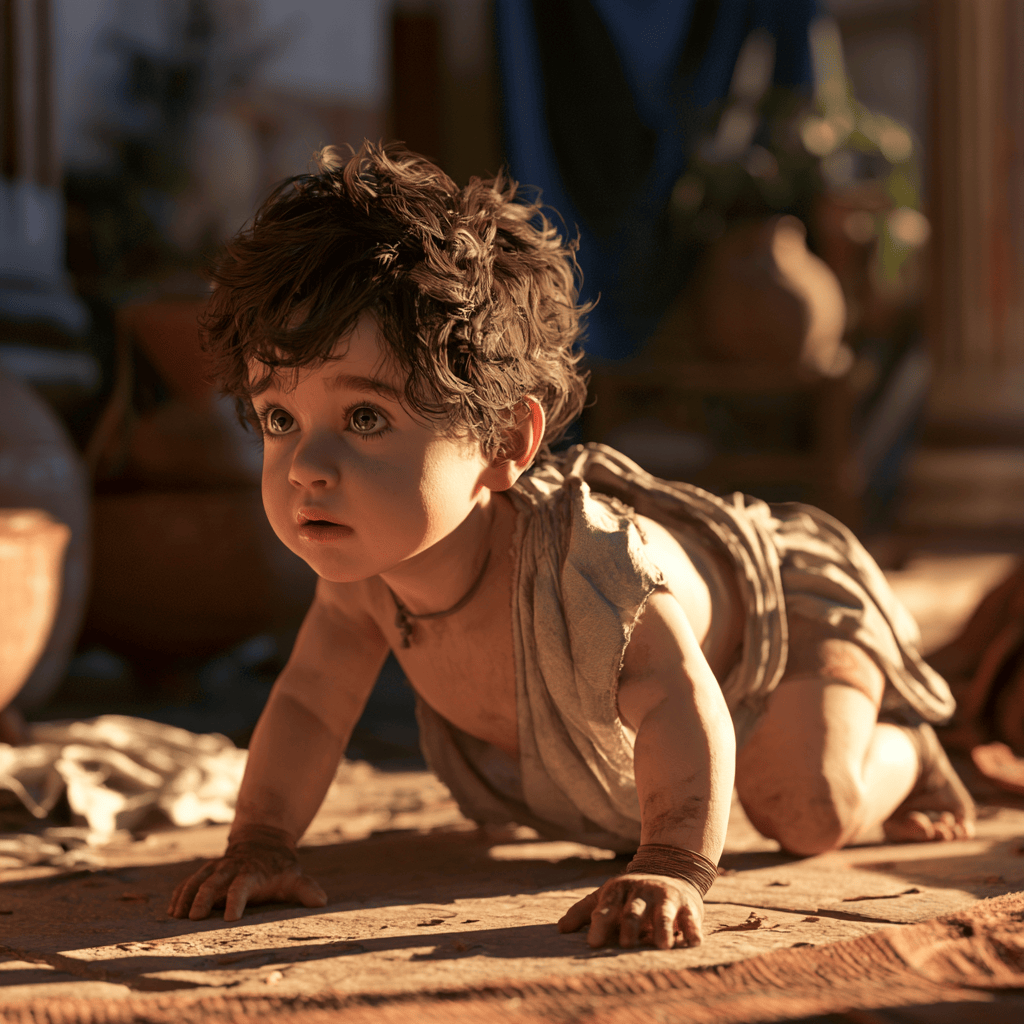
Euclid has been quiet, which should have been the tell. He gets a hand over the rim. Then a leg. Then he goes over the side with the total commitment of somebody who has not yet learned what floors are for, lands on hands and knees, and immediately sets off across the packed earth at a speed that genuinely surprises me.
Four limbs. Alternating. Fast.
“Euclid is on the floor!”
Adonis is up and pointing. He doesn’t grab the baby. He announces the baby, like a guy calling out a foul.
“Euclid. You naughty one.” Myrrha scoops him up mid-crawl with one arm, no interruption to her stride, and deposits him back in the cradle. Euclid protests. Euclid is overruled. “I’ll fetch the water. Stay.”
She ducks out the door with a jar on her hip.
Alone, Adonis stands and turns a slow circle through the room.
He looks at the loom. He looks at the ceiling beams. He runs a hand along the edge of the little three-footed table. He’s still working, still hunting for the thing the Sphinx buried somewhere in this city, and I can see the search getting quieter behind his eyes.
Then he stops in front of the wall by the doorway.
There’s a disc of polished copper hanging there on a leather cord, about the size of a dinner plate, its surface hammered and buffed to a warm reddish shine. Not glass. Nothing in this century is glass. The image it gives back is soft and gold-tinted and slightly wrong at the edges.
Adonis leans in.
“Even my appearance has changed.”
The reflection isn’t his. Black hair, thick and wavy, falling over the forehead in a way that his own has never once done. The jaw is broader. And the eyes are a pale green with gray in them, sea-colored, catching the light from the high window.
He tilts his head. The reflection tilts.
“Black hair and sea-green eyes.” A pause. “Not bad. Is this what they call the Mediterranean look?”
You are unbelievable, I think, with something that is almost fondness.
“I see someone admiring himself.”
Myrrha is back in the doorway with the water jar on her shoulder, eyebrows up.
“I just wanted a look at that handsome man in the copper,” Adonis says, without a flicker of shame.
“Careful.” She sets the jar down. “Or you’ll end up like Narcissus.”
He grins at that. Actually grins, the wide unguarded one, and for a second he looks about four years younger than he did on the road this morning.
Then he glances around the room again. The loom. The cradle. The bar of light on the swept floor. The little table holding somebody’s groceries.
What a warm home, he thinks.
He doesn’t say it out loud.
In the cradle, Euclid has gone quiet again and is watching the ceiling with enormous serious eyes, both hands curled near his chin, working on a plan.
Champion_stands_at_high_noon.sav
By noon the sun sits directly overhead and Thebes has nowhere to put its shadows.
The cube drops me at the edge of a pit dug into a slope on the eastern side of the city. Benches step down toward the bottom in five or six wide tiers, stone at the front, packed earth and timber further back. At the center, a flat circle of sand, raked and level, ringed by a low lip of stone.
The place is full. Men mostly, cloaks off and bunched under them as cushions, a few with folded straw hats. Vendors work the aisles with skins of watered wine and trays of something fried. Somebody’s brought a dog. The dog is very interested.
The heat down there has to be brutal. No awning, no shade, nothing but white sand throwing light back up into everybody’s faces.
Adonis comes down the steps with his cloak over one arm, scanning the rows, and slides into a gap at the end of a bench beside three young men who shuffle sideways without complaint.
He’s picked well. These three have the specific density of guys who attend every single match and have opinions about all of them.
The one nearest him is broad through the shoulders with a beard coming in patchy along the jaw. Next to him, a lean one with sun-bleached hair and a permanent squint. Beyond that, the smallest of the three, arms wrapped around his knees.
A man steps into the ring and raises both hands.
“Ladies and gentlemen.” His voice is enormous. He has clearly been doing this for twenty years and has no intention of stopping. “Let us welcome Kleonike. Our all-time champion!”
The pit erupts.
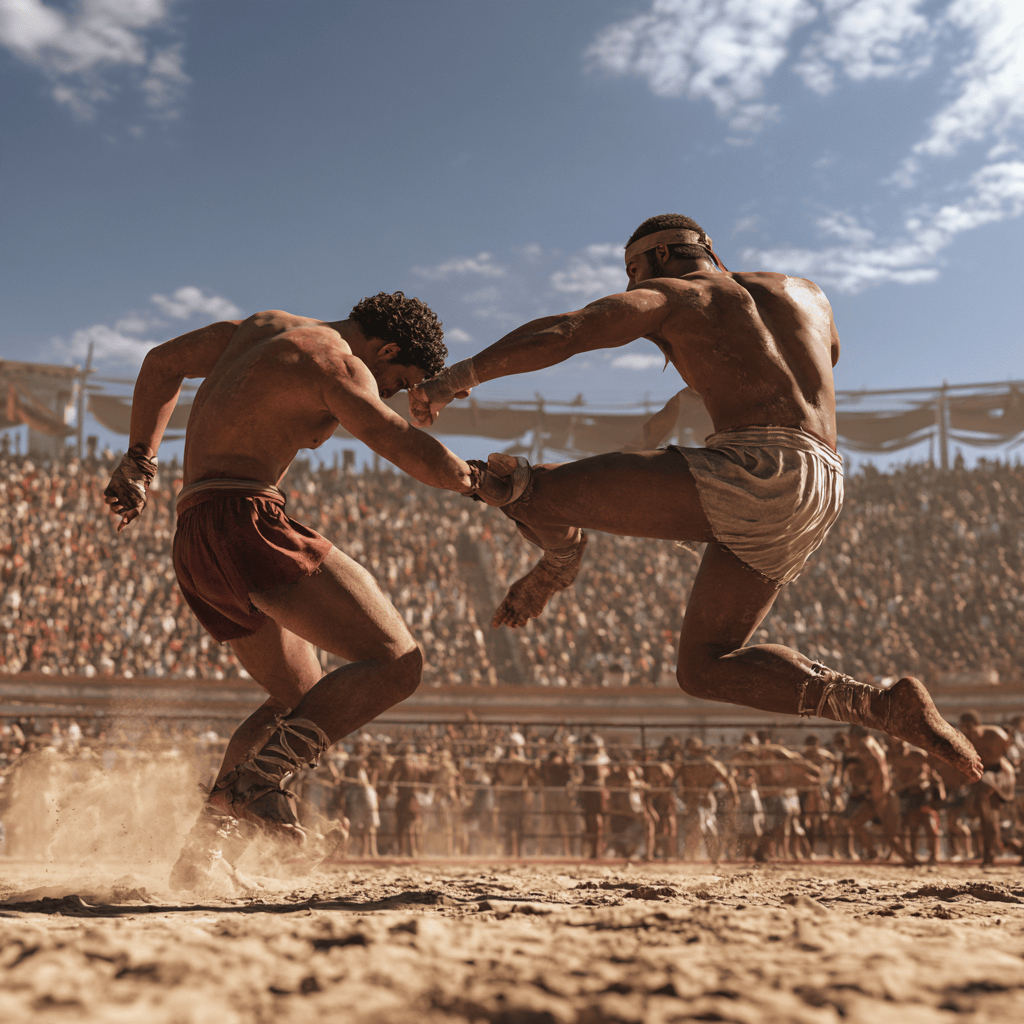
Kleonike walks out from the far side and the noise doubles. He’s built like a granite block that learned to walk. Thick through the neck and chest, oiled from shoulders to shins so the light comes off him in hard streaks, dust already sticking in patches along his forearms. He lifts one hand, barely, like the cheering is weather he’s used to.
“And now, for his challenger.” The announcer pauses. “A first-timer. Laodice.”
The pit goes quiet. Not hostile. Just uninterested, which is somehow worse.
Laodice comes out from the near side, and he’s a completely different build. Taller. Narrow. Long arms, long legs, not much meat on either. He keeps his eyes down on the sand and doesn’t wave at anybody.
Underdog spawned, I think, and I sit forward, because I have a well-documented weakness and this is it.
“I’m certain Kleonike will win again,” the broad one says. Melanthios, based on how the other two say his name a second later. He’s already leaning back with his arms folded.
The referee brings a long switch down between them, calls something, and steps back.
Kleonike charges.
He doesn’t circle. He doesn’t feel it out. He crosses the sand in three strides and starts throwing punches, straight and heavy, and each one lands with a flat smack that carries all the way up to the top row.
Laodice covers.
He gets both forearms up in front of his face and folds behind them and just absorbs it, shoulders rolling, feet shifting back a half-step at a time. Sand sprays off his heels. Six punches. Eight. Twelve. He gives ground and gives ground and does not fall.
“Kleonike is strong. No question.” The lean one with the squint is sitting forward now. Neilos. “But that defense. I’ll give the boy that.”
Kleonike breaks off and resets, and I watch him actually reconsider. Then the kicks start.
They come fast and low, snapping in at the thigh and the knee, and Laodice stops covering and starts moving instead. He drifts sideways. Ducks under one. Lifts a shin against another and takes it on the outside of the leg. His arms are down now, hands open, weight up on the balls of his feet.
He’s quicker than the champion. Considerably quicker.
The crowd notices. Somebody two rows down makes a noise.
“Huh.” The small one, arms still around his knees. Onesimus. “He isn’t half bad for a beginner.”
Adonis hasn’t said a word. He’s watching the sand with his chin down, and every so often his eyes flick sideways to the three beside him, then back.
He’s doing both, I realize. He’s watching the fight and he’s listening to them.
Old habit. You don’t front a band without learning to read a room while you’re also doing the thing in front of the room.
Kleonike stops kicking.
He comes in low instead, ignores a strike to the head entirely, and gets both arms around Laodice’s waist. Then it’s over in about four seconds. He lifts, turns, and puts the taller boy into the sand on his back with a thud I can feel from orbit, and before Laodice can get an elbow under himself Kleonike is behind him with a forearm across the throat.
Laodice grabs at the arm. Both hands. He can’t move it.
The referee starts a count, loud and unhurried.
The pit is on its feet. Adonis is on his feet too and I don’t think he decided to be.
Laodice taps the champion’s arm twice.
The referee cuts the count and Kleonike releases immediately, no flourish, and stays crouched there a second with one hand on the boy’s shoulder before he stands.
The announcer strides back out, takes Kleonike’s wrist and hauls it up over both their heads.
The roar that goes up rattles the benches.
“I told you so.” Melanthios has to shout it. He’s grinning. “Didn’t I tell you?”
Down in the ring, Laodice gets to his knees, then his feet. He’s rubbing his throat. Nobody’s cheering for him. He walks off the sand under his own power and there’s a small thing in the set of his shoulders that suggests he’s already deciding to come back.
Adonis watches him the whole way out.
“Kleonike has a real chance,” Neilos says as the noise falls off. “At the Games. Representing Thebes.”
“In pankration, yes.” Onesimus unhooks his arms from his knees at last. “I wish I felt the same about the rest. Chariot racing. The discus. The foot races.”
“True enough.” Melanthios has lost some of the grin. “Every city sends their best. It’s no small thing to stand against all of them.”
The three of them go quiet on that, and around them the pit begins to empty, men filing up the steps with their cloaks over their arms and the vendors working the crowd one last time.
Adonis stays seated a moment longer.
The sun’s still directly overhead. The sand is raked flat again. Two men stood upright in the middle of it and one of them stayed that way.
I watch him watching, and I keep my mouth shut, which is easy, because there’s nobody in this room but me.
Old_man_waves_goodbye_twice.sav
Thebes after dark is a different city.
The stalls come down. The colonnades go black between pools of lamplight where somebody’s left a wick burning in a doorway niche. There’s no streetlighting worth the name, just moon and stars and the occasional glow leaking out from an upper window.
Adonis walks it for hours.
I watch him take the same corner twice. He doesn’t notice the second time. His cloak’s on properly now, pinned at the shoulder against the cool that’s come in off the hills, and his hands are pushed up inside the folds of it.
He’s got nowhere to sleep. That’s the part nobody mentioned in the terms and conditions. The Sphinx handed him a riddle and a deadline and did not include lodging, and now it’s somewhere past the third hour of full dark and he’s a stranger in a city where everybody thinks they know him.
“Adonis.”
He stops.
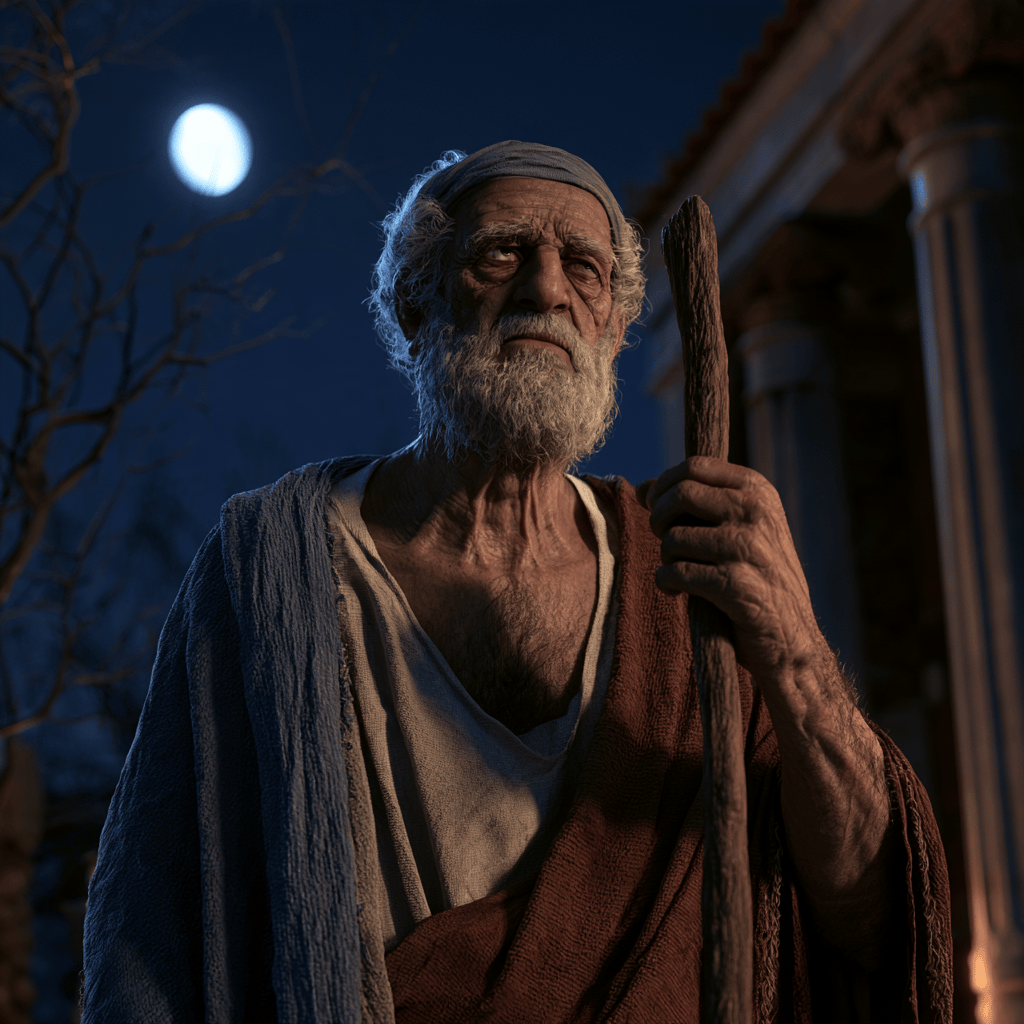
Two doors up, an old man stands in a lit doorway with one hand on the frame and the other wrapped around a walking stick. He’s small, bent forward at the upper back, in a long unbelted tunic that’s gone the color of weak tea from washing. White hair, thin on top, cropped close. A beard trimmed short and squared off at the chin.
The stick is olive wood, knotted and dark from handling, worn pale at the grip.
“It’s your grandfather. Hippolytos.” He says his own name like he’s not entirely sure it will be recognized in the dark. “What are you still doing out here?”
Lady Luck, I think, and I actually laugh, alone, in a white room. She really does follow this kid around.
I can see the exact same thought crossing Adonis’s face.
“Yes, Grandpa.” He’s already moving. “I’m coming.”
“Have you eaten?”
“Uh.” He stops in front of the doorway. Something in him decides not to bother lying about this one. “Not yet.”
“Then come inside.” Hippolytos steps back to make room. “I made enough for the two of us. I’ve been waiting.”
Adonis ducks under the lintel.
The house is one room and a half. Smaller than Myrrha’s, and older, with a low table set with two shallow bowls, a round loaf, olives, and a small dish of oil. A single lamp burns on a stand, terracotta, the flame no bigger than a thumbnail.
Hippolytos turns to go back to the table and it takes him a while.
The stick goes out first. Then his weight shifts onto it. Then a step. Then the other foot catches up. The whole sequence takes about four seconds and he does it without complaint or embarrassment, and I watch Adonis watch it.
“Do you need help, Grandpa?” His voice comes out careful. “I can lend a hand.”
Hippolytos looks up, and his face does something complicated.
“I’m glad you said that.”
Adonis crosses fast and gets an arm under his, and the old man puts real weight on it, more than his frame suggests he has, and together they cover the last three meters to the table.
They eat.
I don’t get all of the conversation because they lower their voices the way people do at their own tables, but I catch a story about a boat, and a long dispute about whether the baker on the corner has gone downhill, and Hippolytos laughing until he has to set down his bread.
Afterward they sit outside on the step with their backs against the doorframe.
The sky over Thebes is the sky you don’t get anywhere near a city with electricity. Thick with it. The Milky Way running edge to edge like somebody spilled something.
“If only I could wish for your parents to have lived long enough.” Hippolytos is looking straight up. “To see you grown.”
Adonis doesn’t answer right away.
“It’s alright, Grandpa.” When he does, it’s quiet. “I know Mom and Dad are happy. Knowing you raised me with love.”
The old man nods slowly and keeps looking at the stars.
Later, Adonis helps him to bed. Gets the blanket up over his shoulders, checks the lamp, and then lies down on the reed mat beside him because there’s nowhere else.
Hippolytos is asleep in under a minute. His breathing goes shallow and even.
Adonis stays awake, one arm behind his head, looking at the ceiling beams.
This Thebes feels like a memory, he thinks. A past brought back.
But these people are real to me. They breathe. They move. They feel things.
When the game ends tomorrow morning, this whole city will probably just fade.
He turns his head and looks at the old man for a while.
I sit in my cube and watch a boy lie awake next to somebody who isn’t his grandfather, in a house that isn’t his, in a city that has a shutdown timer on it.
So close, I think.
Then morning.
The light comes through the high window at a shallow angle and lands on the wall, and James opens his eyes.
The mat beside him is empty. The blanket is folded.
He sits up. Rubs his face. Straightens the bedding out of pure reflex, tucking the corner the way you do when you’ve grown up with a mother who checks.
And when he stands, something’s changed.
It’s not a transformation. There’s no light, no spinning staff, nothing. It’s in the shoulders. The chin. The way he moves toward the door like a man crossing a stage instead of a boy crossing a room.
Adonis is done. Oppa Rockstar is up.
He stops at the doorway with one hand on the frame and looks back into the room.
The lamp’s burned out. The table’s cleared. The olive-wood stick isn’t leaning in its corner.
And for about two seconds, there’s an old man standing by the table.
He’s not solid. The wall shows through him where the morning light crosses. He’s got one hand on the stick and the other lifted, palm out, and he’s smiling.
Rockstar lifts his hand back.
He holds it there. Then he turns and steps out into the street, and behind him the shape thins and goes and there’s nothing in the room at all except a table with two bowls that nobody’s going to wash.
Reason_closes_her_eyes_smiling.sav
The streets he walks back through are already wrong.
Not ruined. Just thinner. The doorways he passes have nobody in them. The fountain with the lion’s-head spout is running but there’s no girl waiting with a jar. Smoke still climbs off the rooftops, and if you look at any one column of it for more than a second it stops moving, like the sim forgot to keep animating that layer.
Oppa Rockstar doesn’t slow down.
He’s got the white and gray jacket back. The cyan skyline across the fabric, the orange sun on the shirt, the magenta visor sitting across his eyes. And when he shrugs his shoulders on the walk down, the butterscotch guitar shifts against his spine, back where it belongs.
The gate is ahead. She’s waiting under it.
The Sphinx has arranged herself square in the opening with her forepaws crossed, wings folded down flat, tail curled around one flank. In daylight she’s less nightmare and more monument. The feathers along her shoulders shade from tawny into a deep russet at the tips.
Rockstar stops about six meters out and looks up at her.
“It’s time,” she says.
Her voice has that same clear carry, but there’s an edge under it now that I don’t think was there yesterday. Anticipation. She’s been sitting here all night.
“Answer my riddle. What walks on four legs in the morning, two at noon, and three in the evening?”
“A man.”
No pause. No throat-clearing. He says it flat and immediate and the Sphinx’s head tilts a fraction to one side.
Oh, he’s been sitting on that, I think. He’s been sitting on that since about four in the afternoon.
“Yesterday.” Rockstar takes a step forward. “In your Thebes. I got to walk through it myself.”
He lifts one hand and counts on his fingers, and it’s such a small ordinary gesture that it almost undercuts the whole moment, except somehow it doesn’t.
“Morning. I met a mother at the market. She had a baby with her. Euclid.” Something warm moves through his voice on the name. “He got out of his cradle while we were talking and went across the floor on his hands and knees. Four.”
Second finger.
“Noon. Pankration ring on the east slope. Kleonike beat a challenger and the announcer put his arm up in front of the whole city, and he was standing on two feet in the middle of the sand with the sun straight overhead.”
Third.
“Then night. I was out in the streets with nowhere to sleep, and an old man called me in and fed me. Hippolytos. He couldn’t get from the door to the table without his stick.” A short beat. “Three legs.”
The Sphinx has not moved at all.
“My Lady.” He drops the hand. “You weren’t talking about a day. Morning is being a baby. Noon is being grown. Evening is being old. The day is just how you said it.”
He shrugs, one shoulder.
“It’s a life.”
The wind comes through the gate and moves nothing, because the dust in this city stopped bothering an hour ago.
“Well reasoned.”
She says it quietly.
“You’ve exceeded my expectations, musician. You’re free.”
And she moves aside.
Just like that. No trick, no clause, no second riddle sprung as a technicality, which frankly puts her about eight tiers above most boss characters I’ve dealt with. She steps clear of the gate and the road out is open and there’s nothing standing in it.
Rockstar starts walking. Gets four or five paces past her.
Then he stops and turns around.
“What about you?”
She looks down at him.
“What’ll you do now?”
The Sphinx regards him for a long moment, and I would give a great deal to have a better angle on her face.
“That,” she says, “is another riddle for you to solve.”
Rockstar huffs out a breath. Not quite a laugh. He gives her a small nod, the kind you give somebody you’ve decided you respect, and turns back toward the gate.
He steps through.
The world folds.
I’ve seen the dominion collapse effect a few times now and it never gets less unpleasant to watch. The colonnade behind him doesn’t fade so much as get replaced, one strip at a time, from the ground up. Stone becomes rebar. Sandals become yellow sneakers. The dry hills go green and humid and the air fills with the smell of wet mud and diesel.
And then he’s standing in the middle of a construction site in Victorino at eleven in the morning, in front of a four-story concrete skeleton, with eight gray stone walls still standing around him in an octagon and absolutely nobody else inside.
He looks up at the walls. Then at his own hands. Then at the sky.
The sim doesn’t stay with him.
The cube pulls me sideways, back through the fold, and drops me somewhere I did not ask to go.
Thebes.
She’s walking.
The Sphinx moves up the main street alone, unhurried, that heavy rolling lion’s gait carrying her past the shuttered stalls of the agora. Nothing’s open. The awnings hang slack. There’s a basket left on its side by a doorway with a few figs spilled out and going brown.
She passes the house with the loom in it. The door stands open. No baby. No woman. No jar of water.
She takes the turn toward the east slope and stops at the lip of the pankration pit.
The benches are empty in every row. The sand at the bottom is still raked flat from yesterday’s last pass. There’s a single sandal down there near the stone lip that nobody came back for.
She looks at it for a while.
Then she climbs the hill to the temple at the top of the city, up the wide shallow steps, and passes between the outer columns into the shade.
Inside, the stone is cool and the light comes through in bars. She settles down onto the floor between two columns, front paws crossed, and pulls her wings in close against her sides until they’re tight as folded paper.
The musician is clever, she thinks. Cunning, even.
I lost my own game. That does not happen often.
He understood that a day is like a man’s life, and that a man’s life is like a day.
Her eyes go to the doorway and the strip of sky past it.
What I have never solved is this. Knowing that night comes for all of them, without exception, and that it cannot be bargained with or postponed. Knowing this from the beginning.
They still choose how to spend the hours.
Why?
She doesn’t answer herself. I don’t think she can.
She is reason. That’s the whole of what she is, the thing that asks and weighs and requires a correct response, and she has just been beaten cleanly by a boy who spent his day carrying groceries and watching a wrestling match and helping somebody to the dinner table.
The Sphinx closes her eyes.
She’s smiling when she does it. Not bitterly. There’s something almost relieved in it, like setting down a thing she’s carried a very long way.
The first column goes at the far end of the temple.
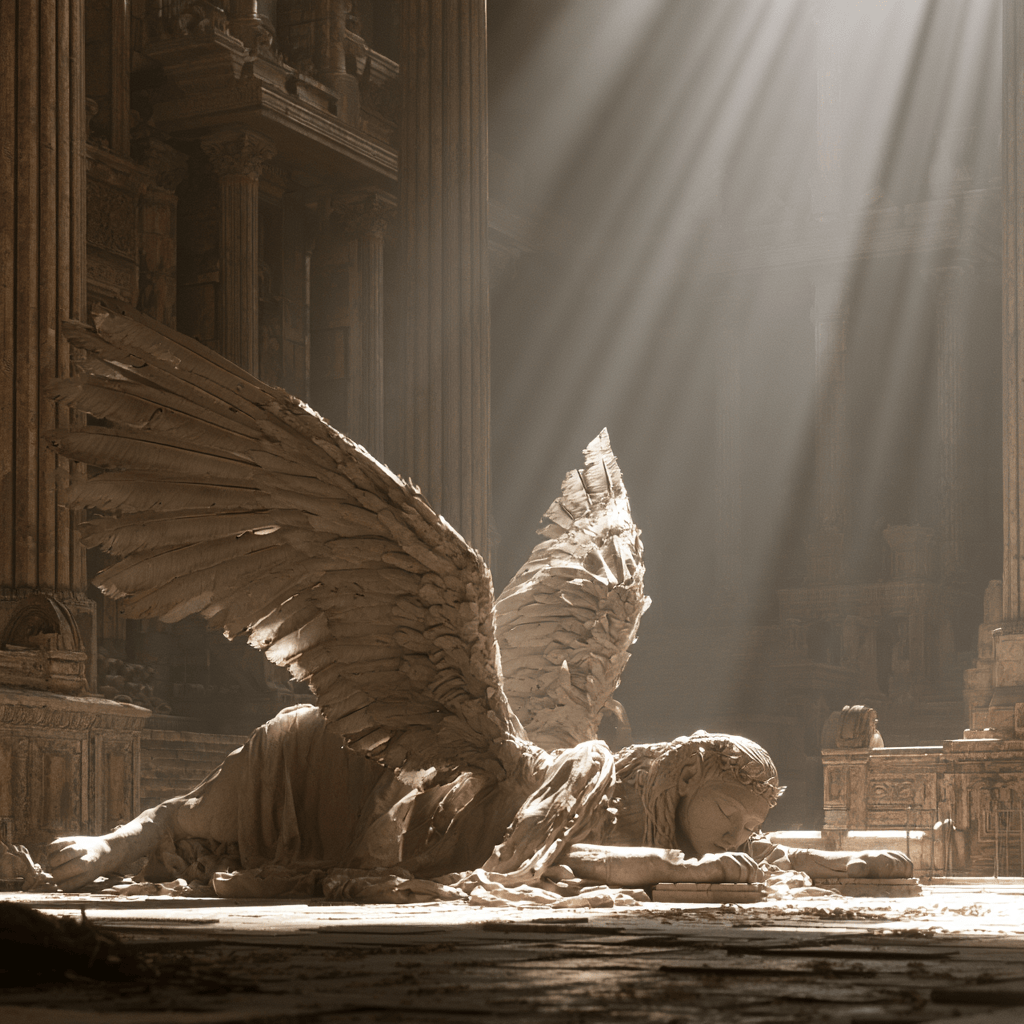
It doesn’t explode. It just comes apart at the drum joints, section by section, each piece dropping straight down into the one beneath it, and the whole shaft collapses into a stack of stone rings and then into dust. The roof beams follow. The next column goes. Then the next.
Out beyond the temple, Thebes starts going with it, and I can see the whole city from up here, watching the collapse spread downhill in slow silent stages. The market colonnade folds. The rooftops sink. The pankration pit fills in with the slope above it.
The house with the two unwashed bowls goes somewhere in the middle of it and I don’t get to see which one it was.
Ash comes down over everything, gray and slow. And when the dust finally settles across the valley, there’s nothing left standing but broken foundations and half a wall, ancient and weathered, as though they’ve been lying in that field for three thousand years.
Which, I guess, they have.


Leave a Reply