Overview:
| Ser Cerulean Arlentis and his cousin, Oppa Rockstar, encounter Hermes, the Greek messenger god. Hermes offers the two heroes a way back to Venice, and the trio leaps into a swirling portal. Meanwhile, in the Underworld, Hades watches the unfolding events from his throne with his queen, Persephone. He reveals that the treasures were a test of the two heroes’ judgment, and that Cerulean wisely chose the map—the correct prize. Guided by Hermes, Cerulean and Rockstar navigate the powerful winds of the god’s liminal realm. However, disaster strikes when a violent gust tears Cerulean away from his cousin. Oppa Rockstar emerges from the portal, returning to Venice alone without him. After the second wave of Greek monster attacks, Captain McKinley, Princess Ruana, Oppa Rockstar, and Spartan regroup to deliver their report. The mission is a success, but the victory comes at a heavy price: both Love Fey and Ser Cerulean are missing. News of the hostage crisis—and of the seven heroes empowered by the genres—spreads across the world, eventually reaching the Kennedy family in Austin, Texas. A United Nations diplomat declares the crisis a historic turning point for humanity. Elsewhere, Cerulean is revealed to be alive. He plummets through a seemingly endless sky until he is caught by Cielo, a majestic white-winged pony. Reunited with his new companion, Cerulean prepares for his next quest: a journey to the lost city of Atlantis, the destination marked on the map. |
Herald_hermes_skips_charon.sav
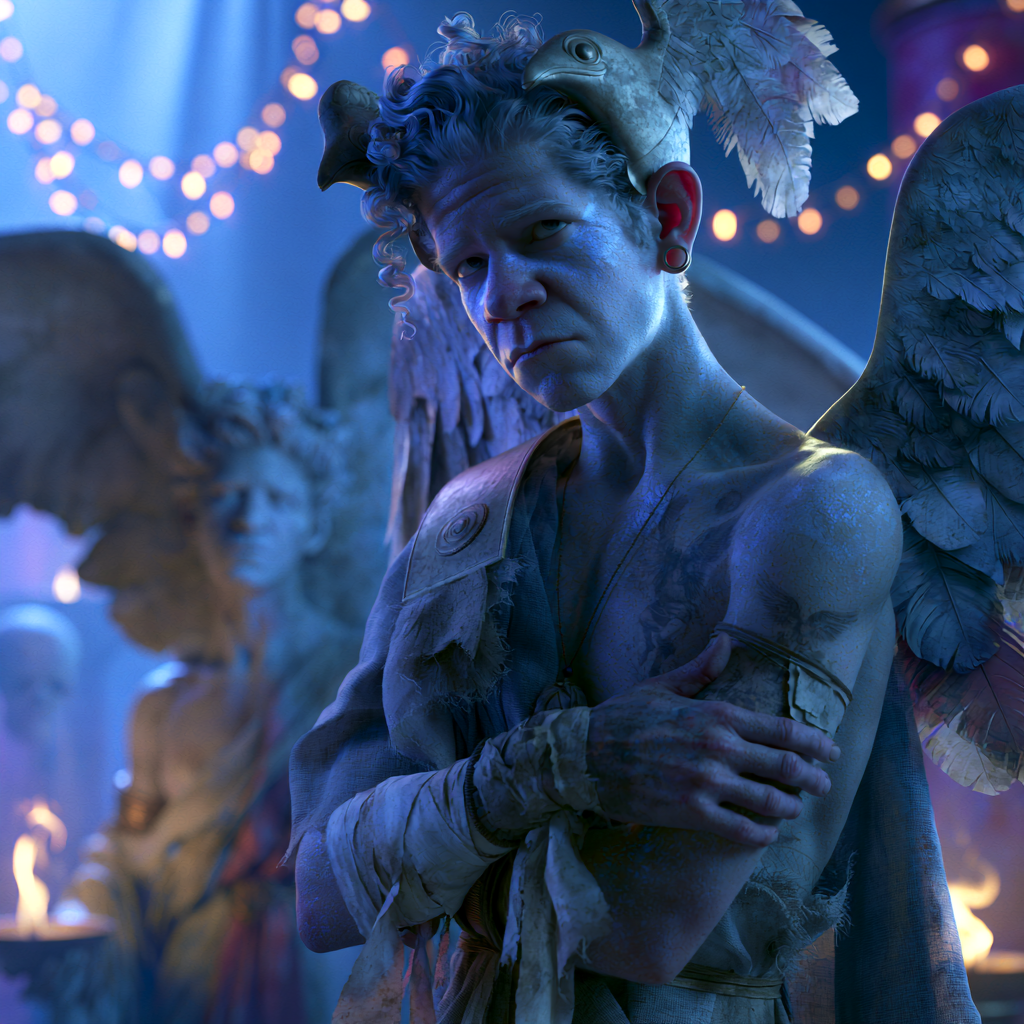
The white cube hums awake around me, and shadows come first: a river the color of static, black water that doesn’t reflect anything, not even the torchlight lining its banks. Cold seeps into the simulation before the temperature gauge even loads. I’ve streamed enough horror games to know a loading screen for dread when I see one.
James and Topher stand at the edge of that river, obols still clenched in their fists—the ones Topher won fair and square off a curio dealer who thought two kids couldn’t count coins. Good for him. Bad for whatever they’re about to spend them on, because the guy they’re waiting for is running late.
James breaks first, because James always breaks first when silence goes on too long. He straightens his jacket, runs a hand through his hair like he’s about to greet a fan after a show, and turns to the figure who’s just stepped out of the mist like he owns the place. Honestly, from the sandals, he might.
“Hello, mister. I’m James.” He offers a hand, easy smile in place. “May I know the name of the fine gentleman before me?”
The stranger looks him over—winged sandals, a helmet with actual feathered wings sprouting from the sides, a staff with two bronze snakes twisted around it like they’re having an argument. He doesn’t shake the hand. Gods probably don’t do handshakes.
“Hi, I’m Hermes. The herald of the gods, and a deity myself.” He says it the way I’d mention I picked up milk on the way home. Zero drama. Maximum smugness.
Topher’s jaw actually drops. I watch it happen in real time, and I get it, because I’m having the same reaction from several thousand light-years away. “You’re Hermes. One of the twelve Olympians!”
He’s got the whole look going, too—not the cartoon toga version, more like if a Fortune 500 CEO moonlighted as a track star. Sharp jaw, sharper eyes, the kind of casual confidence that says he’s watched empires rise and fall and found most of them mildly amusing.
“Are you two waiting for Charon?” he asks, glancing past them at the empty water. Not really a question. More like he already knows and wants to see how they’ll answer.
James doesn’t miss a beat. “Shouldn’t you be asking first why two living people are wandering the Underworld?”
Hermes shrugs, and somehow the wings on his helmet shrug with him. “I live by the adage. Live and let live.” A beat. “Well. Live and let dead, in this case. Semantics.”
I’d laugh if laughing were a thing ghosts do. Noted anyway.
“The old man can be a bit of a slowpoke, with all the souls he ferries.” Hermes tilts his head toward the black water, where, sure enough, nothing’s coming. “Why don’t you two come with me instead?”
Topher’s whole face lights up like someone just handed him the last DLC before launch. “Flying with a god? That would be amazing!”
James is a little more careful—glancing at his cousin, then at the obols still sitting useless in his palm, doing the math on whether skipping the ferry voids some cosmic contract nobody explained to them. I don’t blame him. I’ve read enough fine print in my life to know the free option is usually the one with a catch.
But neither of them says no.
Hermes rolls his shoulders, and the wings on his helmet snap open, followed by the ones at his heels. He raises the caduceus, and the two bronze snakes seem to hiss in sync, like they’ve done this a thousand times and are bored of it. Wind gathers out of nowhere, curling around a point in the air until it tears open into a spiral, silver at the edges, black at the center. A shortcut. Gods get shortcuts. Must be nice.
Cerulean lifts off first, weightless, robes settling around him like he was built for altitude. Rockstar’s musical wave catches him half a second later, orange light crackling under his boots as he surfs up behind the other two. For one absurd, weirdly beautiful second, all three of them hang there against the dark—a god, a paladin, and a rockstar riding a sound wave into the great beyond.
Then the wind pulls them in, and the portal folds shut behind them like it was never there.
Me? I just keep watching the empty space where they used to be. Story of my life, honestly.
Hades_bribes_cerulean.sav
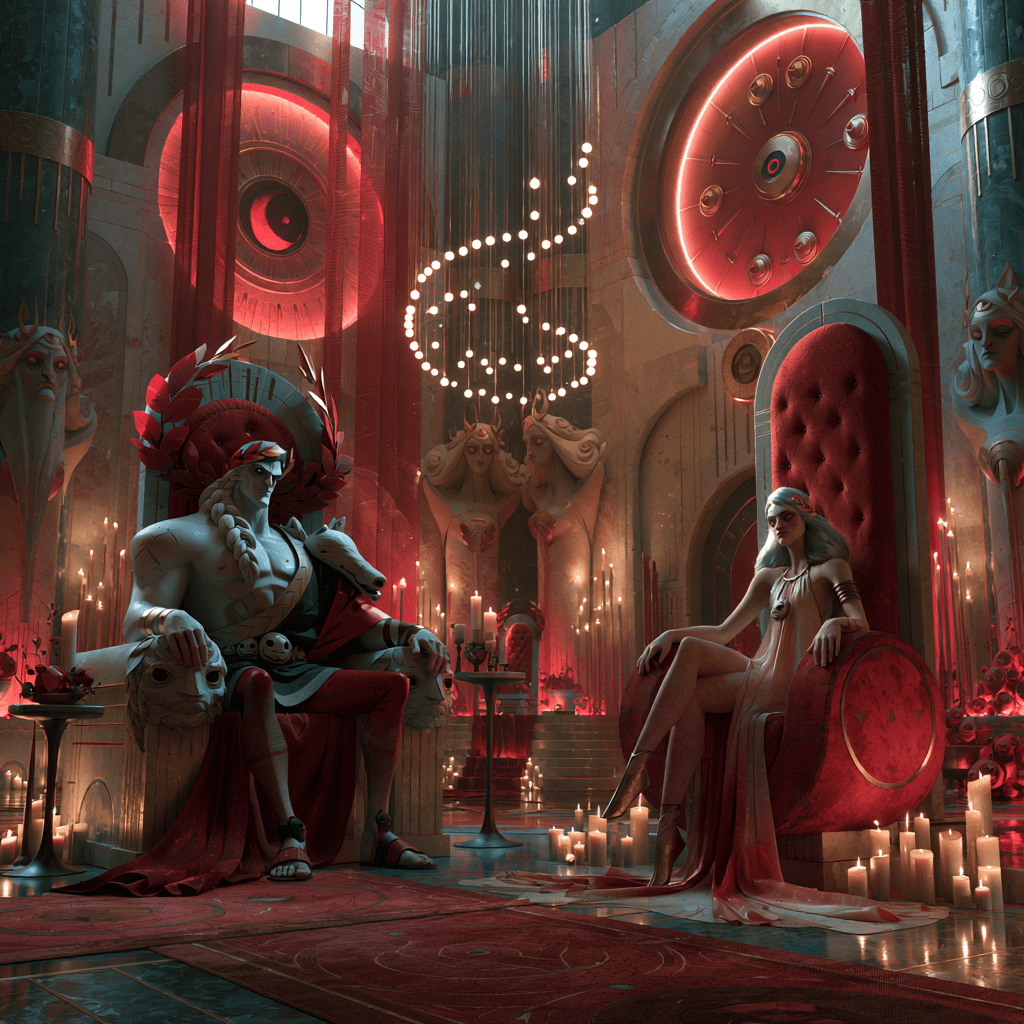
The sim drags me somewhere colder before I even register the shift—away from Hermes and his portal party trick, down into the part of the map most games slap a “DO NOT ENTER (yet)” sign on. Obsidian columns rise into a ceiling I can’t see the top of. Braziers burn green instead of orange, which shouldn’t be possible with actual fire, but nothing here plays by chemistry rules. This is the throne room. Home base for the guy who runs the whole death industry.
I don’t get a body here. I never do. Just eyes, ears, and apparently a working sense of smell, because the air tastes like wet stone and something floral underneath it that doesn’t belong.
That’s when she walks in.
Persephone crosses the floor like the room already knows to get out of her way. Dark hair spills past her shoulders, straight and heavy, a sharp contrast against skin pale enough to double as marble. Her gown moves without touching the ground, deep plum fabric pooling and shifting like it’s got its own weather system. She’s not rushing. Queens don’t rush. She’s got the whole “I’ve seen ten thousand years and I’m still not bored enough to hurry” energy down to a science.
Hades doesn’t stand. Why would he? The throne he’s sprawled across looks like it grew out of the floor itself, black stone twisted into spikes that somehow make the whole thing look more like a chair he genuinely enjoys sitting in than a torture device. He’s got that dark, effortless handsome thing going for him, the kind that action movie villains spend a whole costume budget trying to fake.
“You gave passage to the paladin and the idol,” Persephone says. No accusation in it. Just an observation, dropped like she’s confirming a delivery got signed for.
Hades smiles, slow, like he’s been waiting for someone to ask. “Yes, I did. The paladin spared my guard dog, so I did him a favor.” He tilts his head, considering his own words like he’s tasting them. “It’s hard to find a better watchdog to guard the boundary between the living and the dead.”
I clock that phrasing. Cerberus isn’t just a monster he keeps around for fun. The dog’s got a job description. Somewhere in my head, a little part of me files this under things that make sense once you actually think about it, which happens a lot down here.
Hades grins wider, leaning forward, elbows on his knees like he’s about to tell a joke at a dinner party. “Well, it was only a half-favor. I laid treasures before them. Of course, they’re valuable, and you can’t blame the rockstar for coveting the finer things in life.” He says “rockstar” like he already knows James by nickname, which, fair, the kid’s got main character energy even in a room full of gods. “But the holy knight made the right choice. Only one of those treasures holds the power to save his world from the monsters lurking within.”
That lands heavier than his tone lets on. I catch it because catching things is my whole deal—no hands, no voice, but I never miss a detail. Somewhere out there, Topher just passed a test he probably didn’t know he was taking, and the prize wasn’t gold. It was information. Actual, story-relevant, plot-moving information, wrapped in a bribe so nobody would notice it mattered.
Persephone doesn’t look at Hades when she answers. She looks past him, at the throne, like she’s studying an old photograph. “Still as clever as ever. Just like when you took me from my mother, setting the seasons in motion.” A pause, unhurried. “I used to despise you. Now I can’t imagine life without you.”
I want to say something here. I always want to say something. This is the part of the job that never stops being unfair—front-row seat to the good stuff, zero chance to react out loud. If I could talk, I’d probably ask how kidnapping turns into forever, but that’s a whole conversation nobody invited me to, and frankly, mythology’s never been big on healthy relationship advice. I take the story as it’s handed to me and keep my opinions where they belong, which is nowhere anyone can hear them.
Hades reaches for her hand without getting up, and she lets him take it. “You wouldn’t have fallen so deeply in love with me, my darling,” he says, warm now, all the smugness sliding into something softer, “if I were as dull as a rock.”
Persephone’s mouth twitches, not quite a smile, but close enough that I clock it as one.
The braziers flare green for a second, brighter, like the room itself is reacting to the mood. Then the sim starts to pull, the obsidian columns dissolving at the edges the way loading screens do when the next area’s ready.
Wherever it’s dragging me next, I doubt it’s going to be this quiet.
Bell_tower_statue.sav
No warning this time. That’s the part that gets me—no flickering lights, no ominous music sting, nothing my brain’s trained itself to expect before things go sideways. One second the three of them are cutting through this weird gray nowhere-space between the Underworld and wherever Hermes is taking them, wind roaring past like a tunnel with no walls, and the next, the whole world just clenches its fist.
The gust hits sideways, hard enough that I feel it even without a body to feel it with. Physics has never applied to me, and yet somehow the sim makes my nonexistent stomach drop anyway. Topher’s cape snaps out like a flag in a hurricane. James’s guitar strap slips half off his shoulder before he catches it on instinct.
Hermes reacts first, because gods apparently have better reflexes than panic. He locks one arm around James, wings snapping rigid against the current, muscles in his jaw tight with concentration. James’s free hand shoots out and grabs Topher’s wrist, fingers digging in like he’s trying to weld their bones together through sheer will.
“Don’t let go!” James shouts. His voice cracks somewhere in the middle of it, which is the first time I’ve heard him sound anything less than smooth since this whole trip started.
Topher’s grip slips. Not all at once. I watch his fingers peel back one at a time, like the wind’s got its own patient set of hands prying him loose, and his face does this thing I’ve seen in a hundred movies but never actually believed until right now—the wide eyes, the open mouth, the look of somebody realizing the ground under them just stopped existing.
“The winds are too strong! I can’t hold on! I’m sorry!”
Then he’s gone. Just gone, sucked backward into the gray like a save file getting deleted mid-write. No smoke, no flash, no cool parting one-liner. One second there’s a paladin holding on for dear life, and the next there’s nothing but empty air where his hand used to be.
James doesn’t scream. He goes completely silent, which honestly is worse. His whole body stays frozen mid-reach, fingers still curled around a wrist that isn’t there anymore.
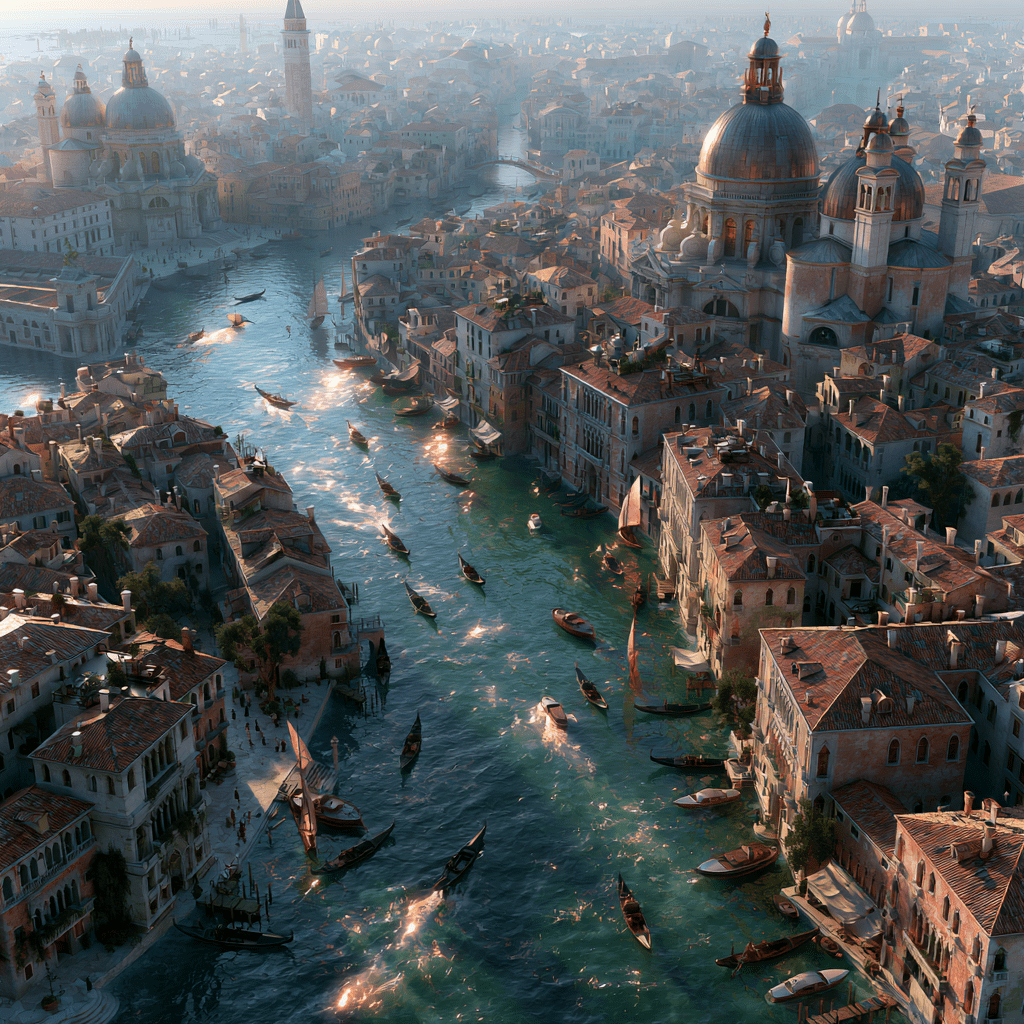
The portal snaps shut behind them, and the gray nowhere collapses into daylight so fast it’s practically a jump cut. Suddenly they’re standing on solid ground again, Venetian rooftops all around, terracotta tile baking under a sun that clearly didn’t get the memo about the emergency that just happened three feet away. I’d almost call the whiplash funny if it weren’t currently wrecking a seventeen-year-old kid.
James turns in a slow circle, like his cousin might just materialize behind him if he checks enough angles. “My cousin,” he says, and his voice comes out smaller than I’ve ever heard it. “We were together. I held his hands. And now he’s gone.”
Hermes sets a hand on his shoulder. Up close, the god doesn’t look smug anymore. Whatever amusement he had going earlier back at the Styx has drained clean out of his face, replaced by something almost tired, like he’s watched this exact scene play out more times across more centuries than he’d like to count.
“I’m sorry for your loss,” he says, quiet now. “May the winds one day reunite you with the paladin.”
And that’s it. No explanation, no backup plan, no god-tier reassurance that everything’s under control. He steps back, wings folding against his helmet, and lifts off toward a narrow bell tower a few rooftops over. I watch him land on a stone perch clearly built for exactly one purpose, and then, in a shimmer that catches the light for half a second, he stops being Hermes altogether. Bronze creeps up his legs first, then his chest, then his face, until there’s nothing left standing there but a statue. Wings frozen mid-flap. Staff locked in his fist forever.
Guy really just clocked out. No shift change, no goodbye tour. One conversation and back to decoration duty like none of that mattered.
James stares up at him for a long beat, and I can practically hear the gears grinding behind his eyes, trying to process a god turning into furniture right after handing him the worst news of his life. “What does this mean?” he mutters, mostly to himself, because there’s nobody else around to answer.
He’s not wrong to ask. I don’t have an answer either, and I’ve got a front-row seat to basically everything.
The wind finally settles, and Venice reasserts itself around him—red-tiled roofs stacked over pale stone walls, canals threading between the little islands like veins, the lagoon spreading out past the rooftops toward the hazy line where it meets the Adriatic. Postcard-perfect. Completely wrong for the moment.
I want to reach through the simulation and tell him it’s going to be fine. That’s the job description I never signed up for and can’t opt out of—watch, remember, never help. So I stay exactly where I always am. Close enough to see every detail. Too far to do a single thing about any of it.
So_close_far.sav
The sim doesn’t drop me into chaos this time. It drops me into the kind of quiet that’s somehow worse.
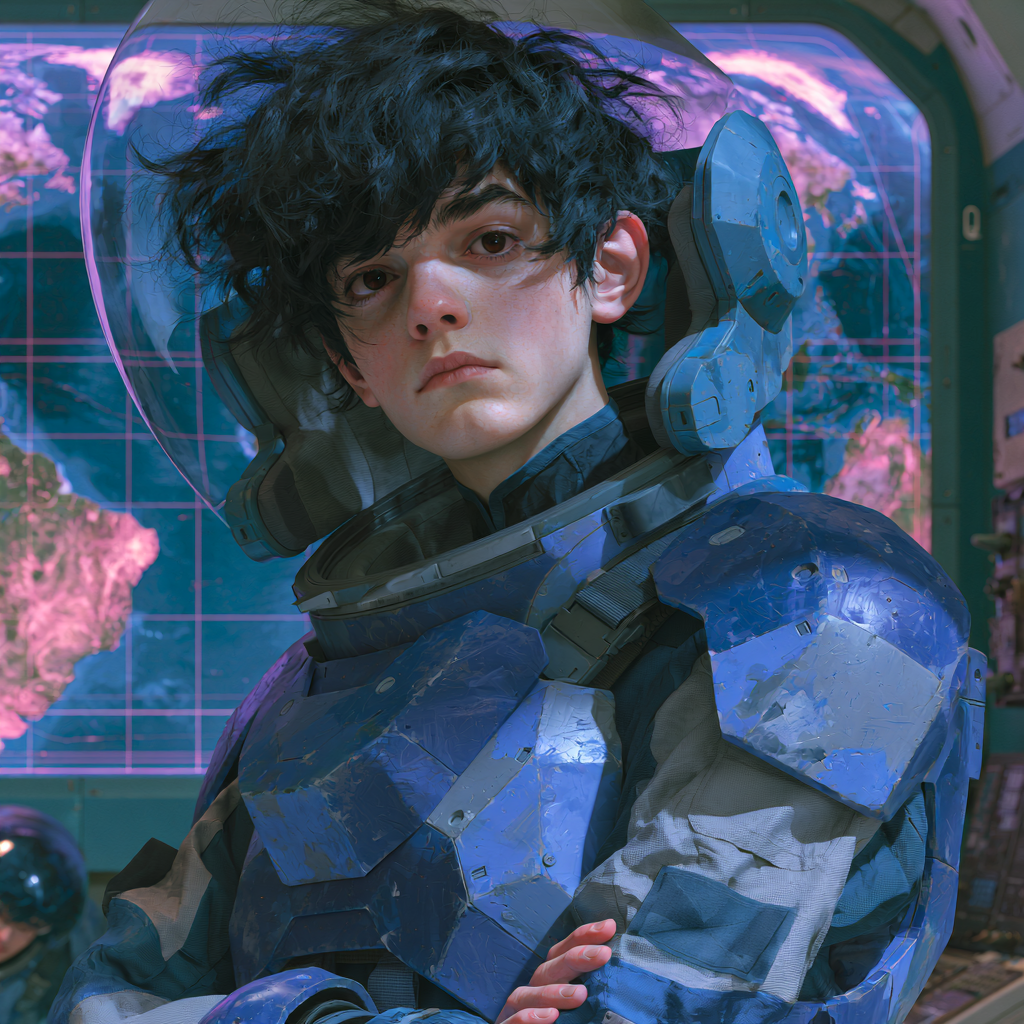
The command center of the Peregrine Lightyear hums at its usual frequency, banks of holographic displays casting cool blue light across polished floors, but nobody’s looking at any of it. Four kids stand in a loose half circle around the central console, and every single one of them has that specific posture I recognize from a dozen war movies and at least one raid wipe I still haven’t fully recovered from. Shoulders down. Eyes somewhere on the floor. The kind of silence that isn’t peaceful, just heavy.
Captain McKinley stands at the head of the group, cobalt-and-gray armor still on, faceplate retracted so I can see Benjamin’s actual face underneath. He’s got that look teachers give when they’re handing back a test nobody passed. Composed on the surface. Cracked somewhere you’d need a diagnostic scan to find.
“I regret to inform everyone that while our team, split into three pairs, managed to defeat the second wave,” he says, and his voice doesn’t waver, which somehow makes it worse than if it had, “Love Fey and Cerulean Arlentis are missing.”
Nobody gasps. Nobody moves. It’s like the room already knew and just needed someone to say it out loud to make it official, the way a save file doesn’t really count until you hit confirm.
“Love Fey, though victorious over the snake-haired Medusa, was turned to stone in the process,” Benjamin continues. “It’s uncertain whether she’s still alive. She remains in the monster’s domain, the Temple of Athena, at the Parthenon. Only Princess Ruana returned from the forest.”
I catch Roanne’s reaction before anyone else does, because catching things is the one skill I actually get to use. Her seafoam gown still carries a few dried leaves along the hem, and her scepter hangs loose in one hand, forgotten. Her head drops, just slightly, true red hair sliding forward to curtain half her face. She doesn’t say anything out loud, but I don’t need her to. I can practically hear the thought forming behind her eyes anyway. Oh, Love Fey. How are you now?
That’s the part of this job nobody warns you about. I get front row seats to the stuff people never say. It’s a great view. Terrible souvenir.
“Cerulean Arlentis chose to spare Cerberus,” Benjamin says, and something shifts in his tone, a fraction warmer, like even now he can’t help being a little proud of his cousin. “He did this to protect the Guardian who maintains the boundary between life and death. Oppa Rockstar and Cerulean flew with Hermes between worlds. During the inter-dimensional journey, Cerulean was swept away by a whirlwind.”
James stands off to one side, still in his Rockstar getup, that magenta visor over his eyes, exposing a face that looks about ten years older than it did back on that Venetian rooftop. His jaw works like he’s chewing on words he’s not ready to say. His eyes go glassy, catching the console lights just enough that I can tell he’s fighting something back. I’m truly sorry, Cerulean. He doesn’t say it. I hear it anyway, because some feelings are loud even when they’re silent.
I want to reach through the sim and tell him it wasn’t his fault, that wind doesn’t check whose hand it’s ripping apart, that the whole thing happened faster than reflexes allow. I can’t. I never can. So I just watch him stand there holding a grief he probably thinks he should’ve prevented, and I file the moment away in the part of my brain that keeps every single thing I can’t fix.
“Spartan and I defeated the Minotaur together,” Benjamin says, moving forward the way a good commander does, refusing to let the room sit in one feeling too long. “The once quiet library turned into a twisting maze, which we managed to escape. We traversed the dim, cyan-lit labyrinth, shrouded in mist, until we reached the Minotaur’s chamber. Afterward, we found our way back using Spartan’s Lasso of Valor.”
Michael doesn’t react. Not a flicker. He’s suited, maroon head gear, red-and-gold spandex scuffed along one shoulder where the Minotaur clearly got a hit in. His face stays locked in that flat, unreadable expression soldiers apparently practice in front of a mirror somewhere. I’ve clocked this about him before. Spartan runs on the theory that feelings are a liability mid-mission, something to be filed and processed later, preferably never. It’s a very “tough guy in a war movie” move, and normally I’d roll my eyes at it, except I’ve also watched what happens underneath that mask when nobody thinks he’s looking, and it’s not nothing. It’s just buried somewhere he’s decided not to dig.
Benjamin’s gauntlet flickers, cyan data scrolling faintly across its surface before he dismisses it with a small motion. “This is only the second wave. The second day of the prophecy,” he says, and I can hear him settling into commander mode fully now, the kind of steady that isn’t the absence of fear but the management of it. “We are still in the early stages of this war. Five more waves of Greek monsters remain. Five days. And the fates of Love Fey and Cerulean Arlentis are unknown.”
Sophie isn’t in the room. I clock that too, and it stings a little, the empty space where Bee Girl used to stand before McKinley pulled her off active duty. Nobody mentions her. I guess some absences speak for themselves.
“We need to balance two priorities,” Benjamin says, voice firming up like he’s reading straight off some internal checklist only he can see. “First, to continue our battles against the Greek monsters. Second, to locate and rescue Love Fey and Cerulean. We must bring them back. Back to the team. Back to headquarters here on the Peregrine.”
Nobody argues. Nobody cheers either. It’s the kind of speech that’s less about inspiring people and more about giving them somewhere to put their hands while they figure out how to keep standing.
Off to the side, near a bank of monitors that used to display fake training footage before certain robots got caught lying about it, CleanBot stands with his round chassis dimmed low, optical sensors flickering in a slow, sad rhythm that honestly reads more human than half the actual humans in this room. He doesn’t say anything. He doesn’t need wires for a face to have an expression, apparently, because I can read grief off a trash-can-shaped robot easier than I can off some people I’ve met.
ROBO4000 stands taller beside him, posture rigid, the kind of stillness that looks less like calm and more like a system running six background processes at once. He’s the practical one, the one who’ll point out logistics before anyone else thinks to, but even I can tell there’s a subroutine somewhere under all that titanium quietly running the numbers on loss and coming up short on comfort. No manual prepares anybody, carbon or silicon, for the version of math where two names go missing from a roster and nobody can promise they’ll come back.
I watch the two of them, standing there at the edges of the room, mere spectators like me, except they at least get to be in the same physical space as the people they’re worried about. That’s a luxury I don’t have. I get the whole universe as my sandbox and none of the actual contact. So close, yet so far. It’s basically the tagline of my entire existence at this point, and I’ve made peace with it mostly, on the days when peace is available.
Benjamin straightens, one final scan of the room, checking faces the way a good leader checks vitals. “We move forward,” he says. Not loud. Not a rallying cry. Just true, which somehow lands harder.
The lights of the command center flicker once, gentle, and the sim starts to pull at the edges of my vision, the console readouts smearing into color the way a scene does right before it dissolves into the next one. I don’t know where it’s taking me next. I never do until I’m already there.
But I know this much. Two names are missing from the roster, and somewhere out there, a paladin’s falling through a storm he didn’t choose, and a magical girl’s frozen inside a temple that used to belong to a goddess who probably regrets ever building it. Five waves left. Two Acolytes down.
The game’s not over. It’s just gotten a lot harder to keep score.
Seven_heroes_revealed.sav
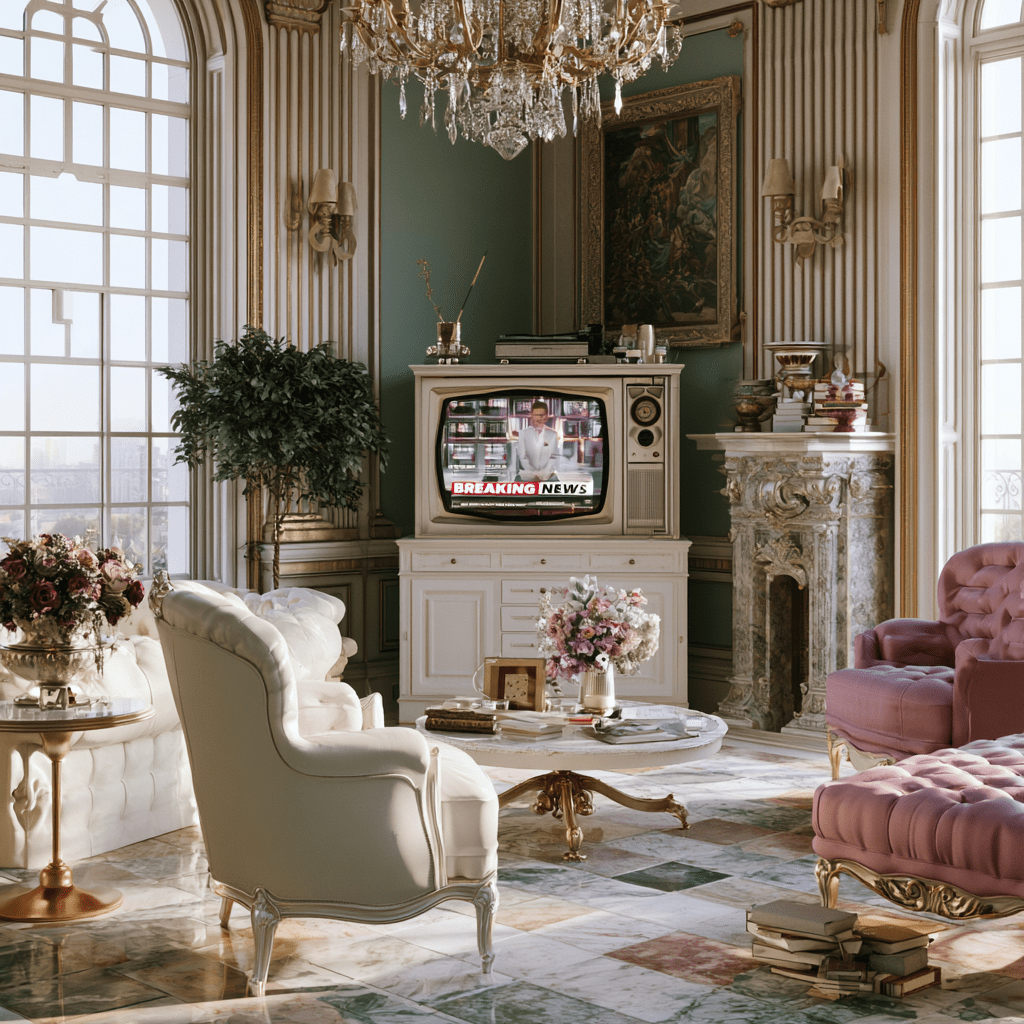
The sim doesn’t ease into this one. It practically face-plants me into a living room, which honestly tracks, because leaving the Underworld should probably feel like turning off a horror game and mistakenly hitting the channel that’s just cable news. Different kind of dread. Same general vibe.
Austin, Texas. Kennedy Mansion. I know the address before the interior even fully renders, because the sim’s gotten predictable about pulling me here whenever the story needs a breather that isn’t actually a breather at all.
The room itself is the kind of tasteful that costs real money — dark wood paneling, a fireplace nobody’s lit because it’s spring, a television mounted above the mantel that’s bigger than some studio apartments I’ve seen streamers live in. Bill Kennedy sits on the sofa in a plain button-down, sleeves rolled to the elbow, posture leaned slightly forward like he’s watching a game he’s got money on. Except nobody bets on this.
The anchor on screen has that specific broadcast voice, urgent but polished, like breaking news read through a filter labeled Serious But Not Alarming. “Just two weeks ago, in early April, something extraordinary took place in the Philippines, a small archipelago in Southeast Asia. Multiple gangs came together in a wide-scale, organized crime spree, looting shops and breaking into banks across the country. This scale of crime hasn’t been seen in recent years.”
Bill doesn’t blink. Doesn’t reach for the remote. I clock the stillness in his jaw, the kind that says he already knows where this story’s headed and isn’t sure he’s ready for the destination.
“But the truly remarkable twist in these events,” the anchor continues, “was the arrival of a team of heroes. A space ranger, a sea princess, a K-pop idol, a superhero, a paladin, a magical girl, and a cartoon-like character. That’s right, folks. A lineup you’d expect to see in a blockbuster film, not in real life. A mash-up of genres, franchises, and even pop music. Something you’d only imagine in your wildest dreams.”
I’d laugh at the phrasing if I weren’t currently doing the math on how many streaming platforms would kill for those ratings. The image that appears behind him is grainy, clearly shot on someone’s phone, but unmistakable: seven kids in full gear, standing shoulder to shoulder outside a mall that still has smoke curling from one broken storefront window. My whole chest does something complicated, watching people I actually know get flattened into a headline. It’s one thing to watch history happen. It’s another to realize you’re related to it, even if nobody down there knows I exist.
Carlisle stands near the arm of the couch, tray in hand, forgotten mid-errand. His usual buttoned-up posture cracks slightly, mouth parting like his professional composure just filed for a temporary leave of absence. “That’s really crazy,” he says, and even his accent can’t smooth out how genuinely stunned he sounds. “No one ever thought something like this could happen in real life.”
Buddy, I want to tell him, you have no idea. I’ve watched a bee-sized seven-year-old fly through a maintenance shaft and a guy turn into bronze mid-sentence. Your bar for crazy is about to get recalibrated.
The anchor’s voice pulls back in. “We now go live to interviews with bystanders at the scene.”
The feed cuts to outdoor footage, harsh daylight, a police line stretched across a parking lot, and a reporter angling a microphone toward a woman who looks like she hasn’t slept properly in about two weeks. I recognize her immediately, even through the phone screen quality. Ellie. Standing beside her is Ansel, one arm braced protectively around her shoulders, jaw tight, eyes scanning the mall entrance behind them like he’s still hoping to spot movement.
“Ma’am, could you state your name?” the reporter asks.
“I’m Eleanora ‘Ellie’ Agoncillo.” Her voice comes out steadier than I expect, the kind of composure people fake specifically because falling apart on camera doesn’t help anyone. “This is my husband, Anselmo ‘Ansel’ Agoncillo.”
“What happened? Why are you here?”
“Our parents. My mother, Emilia ‘Emily’ Pangilinan, and my father, Alejandro ‘Al’ Pangilinan, are still inside the mall.” She swallows. “There’s a massive crime spree going on inside, with gangs looting stores and breaking into banks.”
“How do you feel about all of this? What’s going through your mind?”
That’s when her voice cracks, just slightly, right at the seams. “The officers have cordoned off the area, keeping us away from the mall. I don’t know what’s happening to my parents in there. They’re old and fragile. They shouldn’t have to endure this. They’re good, decent people.” A pause, breath shaking. “My baby Felicity asked me over the phone when we’re coming back from the mall, and I didn’t know what to say. I’m just relieved she’s safe with her other grandparents, far away from all of this.”
She’s on the edge of tears, that specific kind of holding-it-together that takes more effort than actually crying would. Ansel’s hand tightens on her shoulder, grounding her, saying nothing because sometimes nothing’s the right thing to say.
I feel it even from here, wherever here technically is. There’s a difference between watching a stranger’s fear on the news and watching someone you’ve quietly been rooting for since Playthrough zero go through it live. My money’s always been on this family. Watching them hurt doesn’t change that, but it stings in a way I wasn’t exactly prepared for.
Beside Bill, Selena has gone rigid. I hadn’t clocked her arrival, but there she is, standing just behind the sofa, one hand pressed flat against her mouth, eyes locked on the screen like she’s trying to will herself into it. “That’s my sister,” she says, voice thin, cracking around the edges. “And my parents were in that mall.”
The feed cuts again, this time to a UN diplomat standing at some kind of press podium, gray suit, gray backdrop, the whole setup radiating exactly the level of gravity you’d expect from someone about to say something that’ll get quoted in textbooks eventually. “This is historic,” he says. “It’s the first time the world has learned that superpowers truly exist. I can’t fault President Incarnacion of the Philippines for keeping this under wraps from the global community. What the future holds from this is uncertain, but one thing is clear. This is seismic, sending shockwaves across the globe and through the very fabric of society.”
I appreciate the guy’s commitment to sounding like the opening crawl of a movie trailer, but underneath the delivery, he’s not wrong. Somewhere out there, seven kids just outed an entire hidden layer of reality to eight billion people, and none of them probably clocked that as the mission when they woke up that morning.
Selena’s hands are shaking now, the kind of small tremor that says the shock’s finally cutting past the surface. “Why didn’t they tell me?”
Bill rises from the couch, unhurried, and crosses to her, settling a hand gently against her shoulder. He doesn’t rush the moment, doesn’t try to fill the silence with something too quick or too easy. “They had their reasons,” he says, voice low, steady in the way dads in every genre of story seem to have on reserve for exactly this kind of scene. “Once you talk to them, you’ll understand. Give it time.”
Selena doesn’t answer. She just keeps staring at the screen, at the frozen image still cycling behind the anchor’s desk, seven kids in costumes that look ripped from seven completely different franchises, standing together outside a mall that’s currently the most talked-about building on the planet.
I sit with that image longer than the sim probably intends for me to. Because here’s the thing nobody in that living room knows yet, the thing I get to carry around like some cursed piece of narrative furniture I never asked for: two of those seven aren’t even accounted for right now. Somewhere, Love Fey’s still frozen in a temple she can’t walk out of. Somewhere, Cerulean’s falling through wind and static in a place that isn’t quite anywhere at all. The world’s out here reacting to seven heroes standing tall, and I already know the count’s actually five and a prayer.
That’s the job, though. I get all the information and none of the ability to hand any of it over. I could scream Selena’s parents are fine, or Topher’s alive somewhere, probably, hopefully, and it wouldn’t matter, because sound doesn’t carry from wherever I technically exist to wherever this room technically exists. Ghosts in horror movies at least get to slam a door or flicker a light. I don’t even get that much. Just the front-row seat and the total absence of a stage door.
The television flickers back to the studio anchor, already moving into another segment, some analyst brought in to discuss the geopolitical implications of superhero diplomacy, which sounds like a headline from a universe with genuinely questionable priorities. Carlisle sets the tray down at last, quietly, like putting it away is the only useful thing left he can do with his hands. Bill keeps his palm steady on Selena’s shoulder. Nobody in the room says much else, because there isn’t much else to say that wouldn’t sound hollow next to what’s actually happening.
The edges of the simulation start to blur, colors bleeding at the corners the way they always do right before the next warp pulls me somewhere new. I don’t get a say in where. I never do.
But I know this. Somewhere on the other side of the planet, a family’s standing outside a mall waiting for grandparents who might not walk out the front doors on their own power. And somewhere entirely off the map, in places even satellites can’t triangulate, two kids from that same tangled, sprawling family tree are missing, and the whole world just found out heroes exist without knowing two of them already need rescuing themselves.
So close. So unbelievably far.
Cielo_named_sky.sav
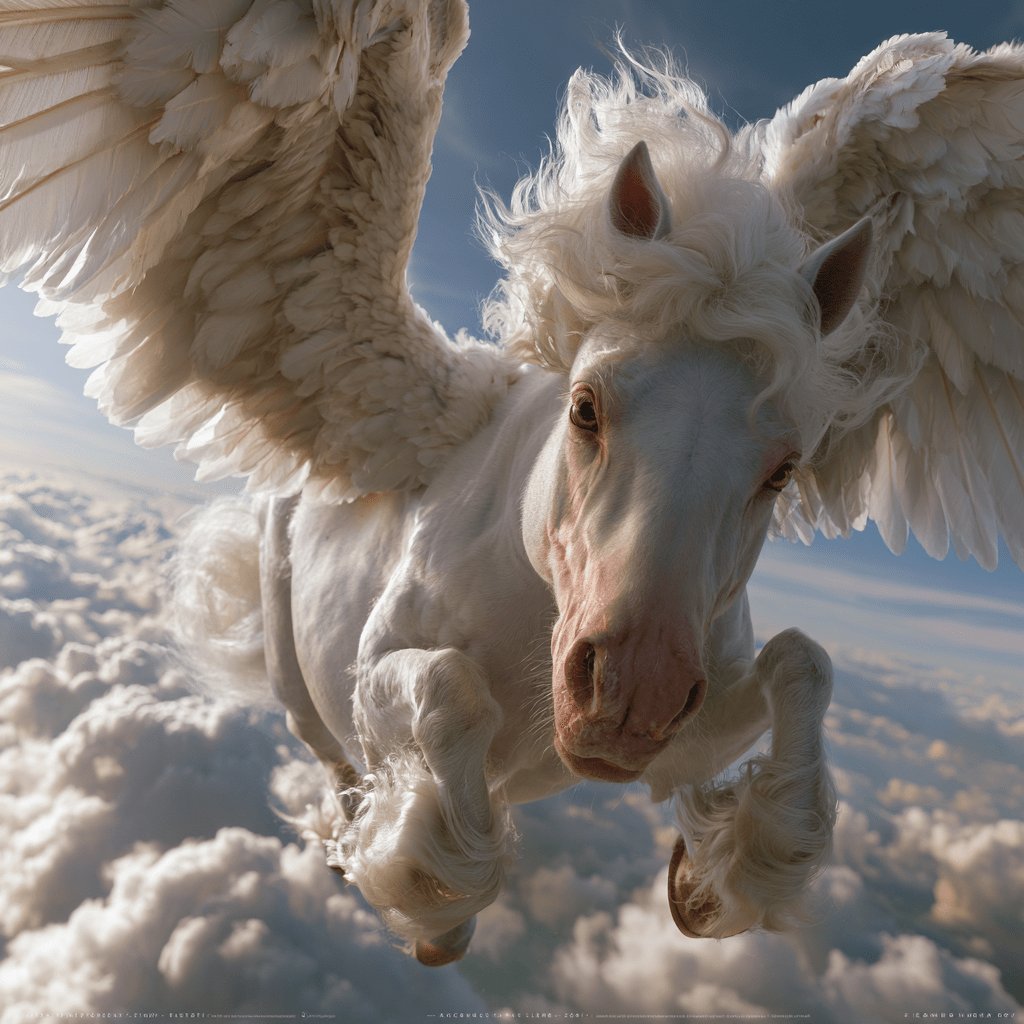
The wind doesn’t stop when the sim shifts. That’s the first weird thing I clock, because usually there’s a hard cut, gray to color, static to sound. This time it just keeps howling straight through the transition, like the sim itself decided continuity mattered more than my comfort. One second I’m watching a living room full of adults process the worst kind of breaking news, and the next I’m somewhere with no ground, no walls, nothing but blue stretching out in every direction like somebody deleted the horizon line entirely.
And there, tumbling through all that empty sky, is Topher.
He’s not screaming. That’s the part that throws me. Any normal kid falling through what looks like actual atmosphere with actual clouds swirling past should be losing his mind right about now, but Cerulean Arlentis is lying flat on his back in midair, arms and legs spread wide like he’s doing a starfish float in a pool made of sky instead of water. His white cape snaps and ripples behind him, catching wind that should be tearing him apart and instead seems to be, I don’t know, cushioning him. His silver-and-gold armor catches stray light from somewhere, clouds maybe, or wherever light comes from in a place with no visible sun.
He’s giggling.
Actual, honest laughter, bubbling up out of him like he just hit a slide at a water park instead of getting yanked through an interdimensional wind tunnel by a whirlwind that separated him from his own cousin. I’d call that concerning if I didn’t already know this kid’s whole personality runs on a baseline setting of quietly, stubbornly optimistic. Most heroes would be doing damage control math right now. Topher’s out here vibing.
That’s when the clouds part.
A shape cuts through the white, wings first, feathers so bright they practically glow against the pale sky. Not some towering mythological beast either. Pony-sized, compact, built more like something out of a kid’s storybook than a war god’s cavalry. The creature banks hard, wings angling to catch the same currents Topher’s tumbling through, and closes the distance fast.
Topher’s whole face lights up the second he spots it. “Where have you been, Buddy? I missed you.”
He says it casual, easy, like greeting a dog that wandered off during a walk instead of a literal winged creature materializing out of nowhere to catch him mid-freefall through an unmapped stretch of the multiverse. I’ve clocked this about him before. Wonder doesn’t really register as wonder to Topher. It just registers as Tuesday.
The pony tilts its head, nudging close enough that Topher can reach out and run a hand along its neck. It’s got this soft, almost luminous coat, white shading toward something gold near the mane, and it neighs, this happy, chiming sound that doesn’t quite match anything a real horse would make. More musical. Less barnyard, more end-credits harp solo.
Together they drift downward, slower now, the pony matching its descent to something manageable, wings beating in long, controlled strokes until solid ground finally rises up to meet them. It’s rock, mostly, pale stone stretching out toward a cliff edge somewhere off in the middle distance, sparse and windswept, the kind of place that looks like it belongs on the cover of a fantasy paperback nobody’s bothered to color correct yet.
The pony offers its wing like a handrail, and Topher slides down along it, boots hitting stone with a soft thud. He straightens, brushing invisible dust off his armor out of habit more than necessity, and that’s when his eyes land on the canister still strapped to his side.
“What do we have here?” he mutters, already distracted, already forgetting he was just mid-freefall two minutes ago. “Oh, it’s the map from Hades’ treasures.”
Yeah. That tracks. I’ve watched this kid lose track of immediate danger for a shiny new detail more times than I can count, and somehow it always works out for him, which either means the universe has a soft spot for him or the writer running this simulation has a sense of humor I deeply respect.
He pulls the map free, old parchment, edges curling and yellowed, the kind of prop that looks like it survived several centuries and at least one flood. He unfurls it carefully, and Cielo — sorry, I’m getting ahead of myself, he doesn’t have that name yet — leans in close, peering over Topher’s shoulder with genuine curiosity, like this is the most interesting thing to happen all week. For a immortal-ish sky creature, the bar’s apparently pretty low.
“Let’s see what this map is all about,” Topher says, tracing a finger along faded ink lines.
The words swim into focus across the top, old script but somehow perfectly legible, like the map wants to be read: The Hidden Map of Atlantis. Lost in the Sea.
Topher’s eyes go wide, actual wonder this time, not the casual acceptance from a minute ago. “This is the map of Atlantis! An underwater city beneath the sea!”
I feel something shift in my chest, watching him. Not surprise, exactly. More like recognizing a plot thread getting yanked taut right in front of me. Somewhere down the line, this map’s going to matter a lot more than a cool discovery on a mysterious cliff. Filing that away.
He rolls it back up, careful, almost reverent, and slides it back into the canister. Then he turns to the pony, and something in his expression softens into something quieter, more sincere.
“Thank you for helping me again,” he says. “You were there during the fire at the tenement too.”
The pony’s ears flick forward, and it lets out another one of those chiming neighs, pleased, like it’s been waiting the whole time for someone to actually notice the pattern.
“Will you join me on this journey?” Topher asks.
The pony nods. Actually nods, a slow, deliberate dip of its head that somehow reads as more binding than any spoken oath could manage.
Topher grins, and then his brow furrows, some new thought clicking into place. “I just realized. You don’t have a name.”
He goes quiet for a second, thinking, and I watch the gears turn behind his eyes the way they do whenever he’s chewing on something that matters to him. Then his whole face brightens, lit up from somewhere internal, some flicker of inspiration finally landing.
“I know,” he says. “I’m going to call you Cielo. Like the sky.”
The pony — Cielo, now, officially, permanently, no take-backs — nudges against his shoulder, and Topher laughs, delighted, scratching behind one feathered ear like he’s known this creature his whole life instead of about four minutes.
“I left Hunter back home,” Topher adds, quieter now, a little wistful. “Because it’s not safe out here. But now you’re my partner, Cielo.”
I clock the small ache buried in that line, the kind Topher probably doesn’t even notice saying out loud. He’s got a real dog back in Austin, loyal, waiting, safe on solid ground precisely because Topher decided the danger out here wasn’t fair to bring him into. And now he’s out here anyway, alone except for a sky creature he just met and immediately trusted completely, because that’s apparently just how Topher’s wired. Give him half a reason to believe in something, and he’ll build an entire friendship around it before lunch.
Cielo neighs again, content, and the two of them turn together toward the horizon, where the cliff drops away into pale distance, clouds stacking up in soft, uncertain shapes that might be storm clouds or might just be clouds being clouds. Wind picks up around them, gentle now, nothing like the violent gust that tore him away from James back in that gray in-between space.
I sit with the image a beat longer than I probably need to. A paladin and his winged pony, standing at the edge of an unmapped world, an ancient map to a sunken city tucked against his hip, no idea where he actually is or how far he’s drifted from everyone who’s currently mourning him back on the Peregrine.
He doesn’t look lost, though. That’s the thing that gets me every time with this kid. Doesn’t matter how far the story flings him. He always looks like he’s exactly where he’s supposed to be.
Must be nice.
The sim starts to blur at the edges again, colors bleeding, the cliff and the sky and the pony all smearing together the way scenes do right before the next warp grabs hold. I don’t get a say in where it’s taking me. Never do.
But wherever Topher’s actually landed, geographically, mythologically, whatever coordinate system applies out here, I’ve got a growing suspicion it’s going to matter a whole lot more than a nice view and a new best friend.


Leave a Reply