Overview:
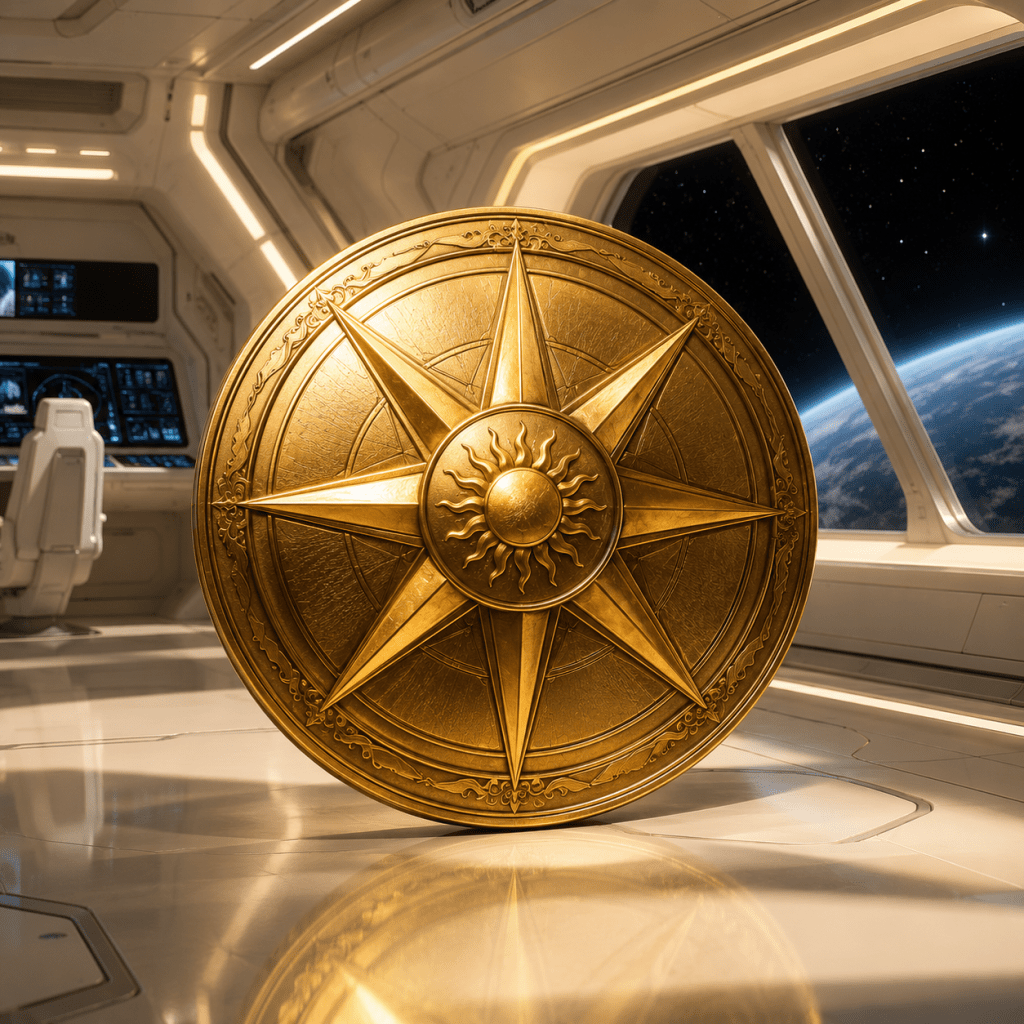
| Oppa Rockstar and Spartan discuss Medusa’s legendary beauty and the slaying of the Nemean Lion. Inspired by their previous victories, Spartan forges a radiant golden shield using the power of the sun, creating the perfect vessel to contain Medusa’s severed head. Captain McKinley decides that the heroes will face the remaining Greek monsters together, defeating the Chimaera and the Harpies one at a time as a united team. McKinley, Princess Ruana, and Oppa Rockstar depart from the spaceship headquarters, unaware that Spartan has secretly slipped away to pursue his own mission. The trio arrives at a desolate village that gradually transforms into a mountainside city of stacked Greek houses. Realizing they have entered the land of Lycia, they are confronted by the fearsome Chimaera. Princess Ruana withstands the Lion’s blazing breath by surrounding herself with enchanted seawater, forcing the fiery beast to unleash its flames until it ultimately destroys itself. Oppa Rockstar then faces the Chimaera’s Snake tail, a swift and deadly venomous predator. Using his musical powers and quick thinking, he outmaneuvers the serpent and defeats it with a barrage of enchanted music notes. The Goat head, now the Chimaera’s final surviving aspect, turns its attention to Captain McKinley. It transforms into a heavily fortified earthen form, greatly increasing its durability. In response, McKinley activates the second form of his space armor and calls upon his personal spacecraft, the Mockingbird. Combining his upgraded armor with the spacecraft’s firepower, he ultimately destroys the Goat and brings the battle against the Chimaera to an end. |
Sun_shield_serpents.sav
I’ve got a confession, and it’s not a fun one: my favorite hobby aboard my lonely little ship is spying on other people’s Tuesdays.
That’s not what this is, obviously. This is a medusa’s severed head sealed in a floating water bubble on a superhero spaceship, which is objectively cooler than anybody’s Tuesday. But strip away the mythology and the glowing gauntlets, and what I’m doing right now is the same thing I always do: sitting cross-legged in my white cube, watching somebody else’s life happen in crisp, terrifying detail, while my own life happens exactly nowhere.
The cube warps around me like it’s stretching awake. Walls that were matte white a second ago dissolve into glass panels, sunlight, humming quiet. I don’t press buttons. I don’t need to. I think about the Peregrine Lightyear’s containment wing and the simulation just decides to become it, folding space like it’s got somewhere better to be. Show-off.
The room settles into full clarity: two walls of paneled glass letting in a hard, clean noon light, the kind that makes everything look like a phone commercial. Between them, hovering at chest height, is Medusa’s head, snake-hair coiled and still, sealed inside Ruana’s mystical water sphere. The sphere glows faint and lunar even under all that sunlight, like it’s got its own private moon inside it.
And her face. That’s the part that gets me every time I load this scene. She’s monstrous by every definition the old myths hand you — a woman who turns people to rock with a glance — but asleep like this, with the snakes gone quiet and her expression smoothed into something almost peaceful, she looks less like a monster and more like someone waiting for a kiss that never comes. Tragic, honestly. I catalog that thought and move on before it gets weird.
Spartan is standing in front of her.
Michael, if you want the civilian name, though nobody in this family uses civilian names when the cape’s still on. He’s in the sleeveless maroon-red suit, all coiled muscle and scar-tissue confidence, golden bracers catching the noon light like they’re posing for it. His stance isn’t casual. It’s the stance of somebody who walked up to a painting in a museum and forgot the “keep six feet back” rule.
He’s just looking at her. Really looking, chin tilted, the way you’d study something you’re not sure you’re allowed to admire.
Footsteps behind him. Unhurried, syncopated almost, like the guy walking in can’t help but move to a beat only he hears. That’d be James. Oppa. Rockstar. Pick your era of nickname.
“Brother, you have an odd taste for sightseeing,” Rockstar says, stopping a few paces off, arms loose, head cocked with the kind of curiosity that’s ninety percent amusement.
“Medusa is beautiful, even in death.” Spartan doesn’t turn around. His voice has this low, reverent hum to it, the tone guys use for classic cars and undefeated boxing records. “Look at her. No decay. No corruption. Whatever she was, whatever she did, this face never lied about it.”
I want to point out that description is doing a lot of heavy lifting for a woman whose whole deal is instant fatal petrification, but nobody in this room can hear me, so I keep my commentary to myself, which is basically my full-time job.
“There’s something thrilling about beauty and danger combined,” Spartan adds, and there’s a small, private smile tugging at the corner of his mouth, like he’s just quoted his favorite line from a movie only he’s seen.
Rockstar laughs, short and sharp, and drags a hand back through his hair. “I’m going to pretend I didn’t hear that.” He shakes his head slow, half a grin still on him. “Couldn’t imagine it, man. Not in my wildest dreams. Falling for a girl who could end you with one ‘sweet’ venomous kiss? Hard pass. I like my internal organs un-fossilized.”
He turns to go, sneakers scuffing against the tile, already halfway through the motion of leaving.
Spartan’s voice catches him before his second step lands.
“Brother.” Just that word, and it does its job. Rockstar stops. “You know me. I’m an action hero at heart. If I go down, I want to go down in a blaze of glory, not a whimper.” He finally turns from Medusa’s head, and there’s something steady and unshowy in his face now, the performance dialed back to something real. “Before I face the Nemean Lion — the one etched into the medallion on my golden laurel belt — I want you to be the one who slays him for me, if I can’t. Your victory’s mine. Mine’s yours. We’re brothers-in-arms. And brothers by blood, before any of that.”
Rockstar doesn’t say anything right away. I get the sense he wasn’t expecting sincerity to show up uninvited like this, no warning, no soundtrack cue.
Spartan’s already turning back toward Medusa, like he said the important part and the rest is just decoration. “A small, resolute smile,” is how I’d caption it if I were writing this up for somebody. Which, weirdly enough, I sort of am.
“Wow.” Rockstar huffs out something between a laugh and genuine surprise. “Didn’t think you had a literary side in you, big man.” He grins, shakes his head one more time, and this time actually walks off, footsteps fading into that unhurried rhythm again, like he’s got a hook line playing somewhere behind his ribs that only he’s privy to.
And then it’s just Spartan and the head in the water bubble, and me, watching from a cube he doesn’t know exists, on a ship he’s never heard of, close enough to read every twitch of his expression and too far to ever say a single word about any of it. So close, yet so far. Story of my — actually, no. I promised myself I’d retire that one for a while. It’s getting to be a crutch.
Spartan raises both arms.
The golden bracers catch fire from the inside, not literal fire, more like the memory of it, a scarlet glow blooming up from somewhere under the metal, embers curling off his forearms like sparks shaken loose from a bonfire. He flexes, slow and deliberate, and the glow deepens, and the water sphere around Medusa’s head starts to complain about it. Fine cracks spider across its outer shell, the moonlit shimmer flickering like a dying signal, steam hissing out through each new fracture in thin silver threads.
He’s cooking her containment field. On purpose. With his bare hands, basically.
I lean forward without meaning to, even though leaning forward changes exactly nothing about what I can see. Old habit. You’d think three years of being a ghost would cure a guy of instinctive body language, but no, apparently I still flinch, still lean, still hold my breath during the good parts, even though none of it does a single thing.
The cracks spread wide, and then all at once the whole sphere gives up. Glass and water blow apart together, boiling droplets scattering across the tile in a hiss of steam, and Medusa’s head is left hanging there in open air, suspended by nothing I can identify, a short arm’s length from Spartan’s face.
Neither of them moves. It’s a standoff between a guy and an unconscious severed head, which is exactly as strange a sentence to think as it is to watch.
The room itself seems to notice the moment too. Sunlight pours through both glass walls at once, hard and gold, no clouds up there today, sky scrubbed clean and blue like somebody photoshopped it for a travel brochure. Spartan spreads his arms wide, palms up, and takes it all in like a plant that’s been waiting all week for this exact kind of light.
I know what’s coming. I’ve read enough of these old myths, sat through enough documentaries with dramatic narrators, to recognize the setup. A hero built out of solar mythology, standing in direct sunlight, doing something with his hands that’s about to look very cool and very expensive in terms of raw energy output.
Sure enough, twin spheres of gold ignite in his palms, dense and heavy-looking, plasma condensed down from every photon currently hitting this room. They pulse like they’ve got a heartbeat of their own. Spartan raises them slow, ceremonial almost, toward Medusa’s floating head, and the light starts to trace an outline behind her, a perfect circle, growing brighter with every pass until it’s not an outline anymore. It’s a shield.
Solid. Gold. Radiant enough that I’d need actual retinas to worry about actual damage, which, lucky me, I don’t technically have out here.
With a small flick of his right hand, more suggestion than command, Spartan guides the shield around behind Medusa’s head, positioning it flush against her like a frame closing around a portrait. Then, fast, faster than the ceremony beforehand would suggest he’s capable of, he seals her inside it. Eight diamond-shaped rays of gold snap outward from the shield’s rim and lock into place, boxing her in before those closed eyes get so much as a flicker of a chance to open.
The last of Ruana’s water finishes its evaporation act, thinning into steam and vanishing into the bright air like it was never there in the first place.
Spartan pulls the shield back to himself, cradling it in both hands now, weight settling into his forearms. He looks down at it. Really looks, the way you look at the first thing you’ve ever built that actually held together.
Blacksmith admiring his first sword. Or maybe his best one. I can’t tell which, and honestly, neither can he, not yet.
I sit in my cube, arms wrapped around my knees, watching a boy hold a monster’s head like a trophy he isn’t sure he wants, and I think about brothers-in-arms, and blazes of glory, and how some promises get made so quietly that nobody in the room even clocks them as promises until later.
Me, though? I clock everything. That’s the job. Front row seat, zero ticket cost, and absolutely no way to clap when the scene’s this good.
Third_wave_united.sav
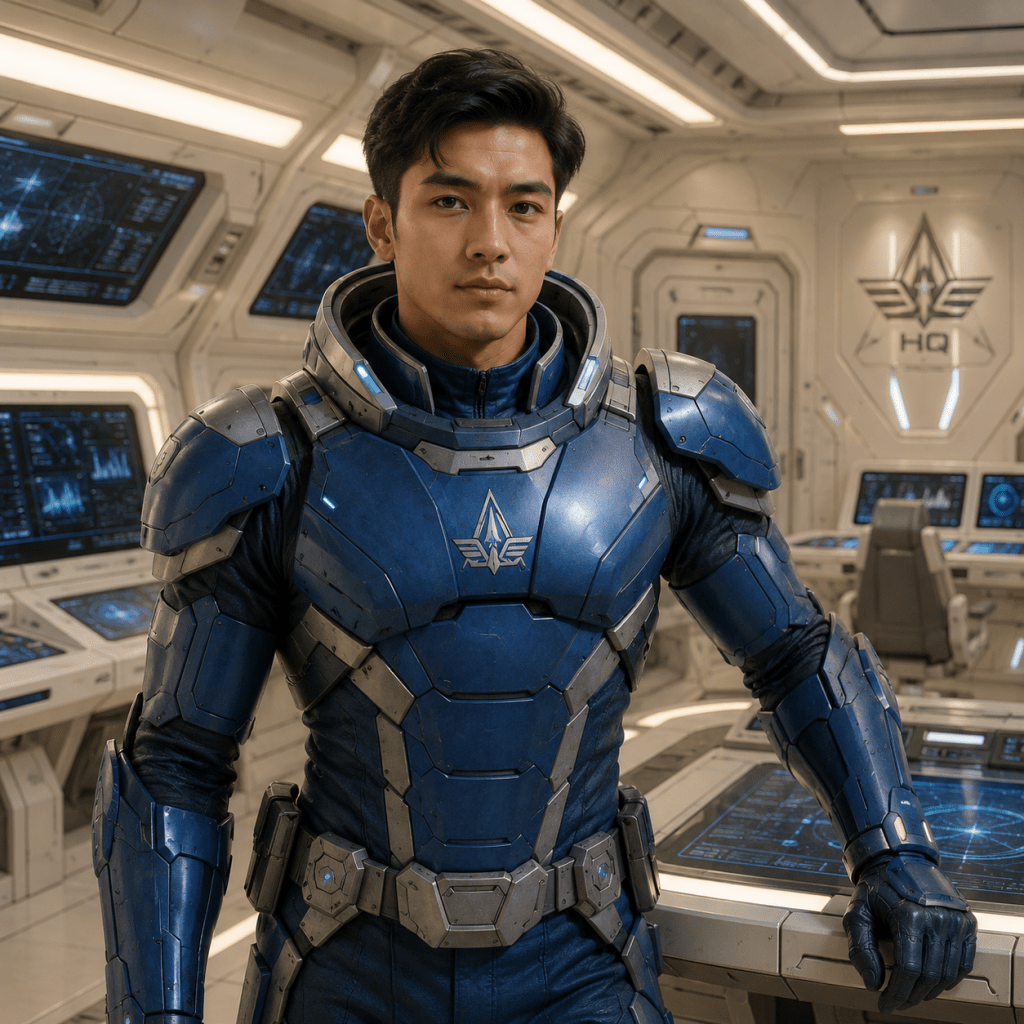
The cube reshapes itself around me, walls folding into brushed steel, and I’m standing — well, floating, existing, whatever the correct verb is for a ghost with no feet touching a floor — inside the Peregrine Lightyear’s command center. Consoles hum along the walls, soft blue readouts pulsing like the ship’s got a heartbeat. Big screen up front, currently blank, waiting for its cue like a nervous actor in the wings.
Captain McKinley stands center stage, cobalt blue armor catching the console light, visor up so I can see his face doing that thing it always does before a briefing: jaw set, eyes doing math nobody else in the room can follow. Princess Ruana’s beside him, arms loosely crossed, seafoam green gown swaying like she’s standing in a current only she can feel. Rockstar leans against a console with his guitar-strap posture, all casual until you notice how still his hands are. Spartan stands with his arms folded tight across his chest, impatient energy radiating off him like heat off asphalt.
The screen flares to life. Bold red letters slam into place:
THE THIRD WAVE.
Dramatic. I respect it. If I had a control room, I’d absolutely spring for the ominous font too.
“Our radar’s picked up two electromagnetic disturbances,” McKinley says, voice level, captain-mode fully engaged. “The Oracle’s prophecy called it. Third day. Chimaera. Harpies.”
Nobody interrupts. That’s new. Last briefing had at least three side comments before he finished a sentence.
He pauses, and something tightens behind his eyes, something that looks a lot like guilt wearing a uniform. “I learned something from the last wave,” he continues, quieter now. “We split up. And because of that, we lost track of Love Fey and Cerulean.” The name lands heavy in the room. Ruana’s gaze drops half an inch. Rockstar’s jaw shifts. Even Spartan, who I’m pretty sure runs on pure momentum most days, goes still.
“Not again,” McKinley says, and his voice hardens back into command. “This time we face them together. One threat at a time. Our strength is unity. Together, we can take down anything the Oracle throws at us.”
I watch Spartan’s mouth twitch, like he wants to argue, throw out some solo-hero one-liner about how he doesn’t need backup. He doesn’t say it. Whatever’s sitting behind Cerulean’s empty spot on this bridge and Love Fey’s missing chair, it’s loud enough to keep even him quiet.
McKinley straightens, gives a short, firm nod, the kind that ends meetings better than any gavel could. “This meeting’s adjourned. We move out now.”
The team disperses, boots against metal, quick and purposeful, no wasted motion. Nobody’s laughing this time. No jokes about pity wins or unfair rule sets. Just four kids gearing up to go do the thing that isn’t supposed to be theirs to do, except it absolutely is, because nobody else on the planet can.
I sit in my cube, watching the room empty out, screen still glowing THE THIRD WAVE behind them like a title card nobody asked to star in.
Two of their own, still out there somewhere. A team learning the hard way that unity isn’t a bonus stat. It’s the whole build.
I’d tell them good luck if I could. I can’t. So I just watch, close enough to hear every word, too far to ever say one back.
Spartan_sprints_alone_away.sav
My cube stretches and folds itself into place, walls dissolving from blank white into open sky, and suddenly I’m hovering somewhere above the Peregrine Lightyear’s hull, watching its front entrance grind open like a mouth deciding whether to smile or roar. The incline lowers, catching afternoon light along its edges, and three figures step out in a loose formation that already looks like the opening shot of a movie trailer nobody asked to greenlight.
Princess Ruana goes first, or maybe she just looks like she goes first because everything about her reads regal even when she’s just walking down a ramp. Seafoam green and lavender gown, the fabric moving like it’s still half-underwater even out here in dry air. She taps her moon-bell scepter against the deck, one clean strike, and a bubble blooms around her, tinted the same colors as her dress, like somebody bottled the ocean and handed it to a princess. She lifts off inside it, calm as anything, floating the way people float in dreams where gravity’s just a polite suggestion.
Oppa Rockstar’s next, and he’s Rockstar in every possible sense of committing to a look: white-gray jacket, orange shirt underneath, pants that probably cost more than my entire nonexistent wardrobe. He hops onto his surfboard like he’s been doing it his whole life, which, fair, he basically has, and an orange wave of musical staff unfurls beneath him. Notes pop along the lines in cyan, magenta, yellow, little bursts of sound made visible, trailing behind him like he’s a walking, riding remix of a K-pop music video crossed with a Tony Hawk game. I’d bop my head if I had rhythm. I don’t. Tragic, honestly.
Captain McKinley comes last, full armor gleaming, cobalt blue plating over gray titanium catching the light in hard, clean flashes. He raises one gauntlet, and silvery nano-molecules swarm the air around him, folding and refolding until they’ve built something that looks unmistakably like a scaled-down Peregrine. The Mockingbird, I guess, if we’re naming it, small enough for one pilot, sleek enough to make me a little jealous of the design specs. He doesn’t hesitate. He climbs in, or maybe it climbs around him, and launches straight up, cutting through the clouds without so much as a countdown.
Three heroes, three exits, zero delay. Textbook team deployment. I’ve watched enough of these launches to know the choreography by heart at this point, and there’s something almost comforting in the routine of it, like watching your favorite anime hit its recap episode before the real arc kicks off.
Except.
The cube flickers, just barely, that subtle warp that tells me the story’s about to yank my attention somewhere I wasn’t looking. And there, at the back exit of the ship, completely unnoticed by the trio still rising into the sky, is Spartan.
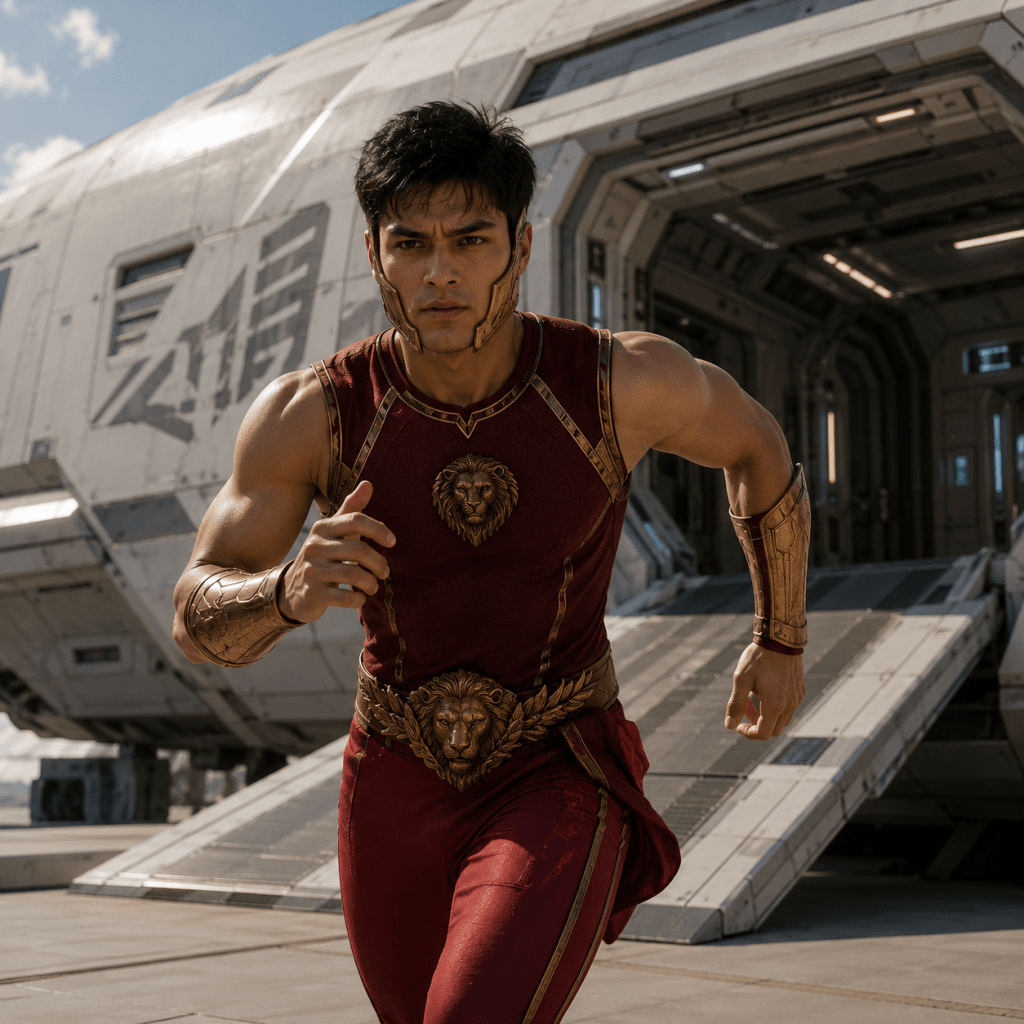
Maroon-red spandex, golden bracers, the whole intimidating package, except right now his face isn’t doing intimidating. It’s doing determined, jaw locked, eyes narrowed on some invisible finish line only he can see. He’s not walking. He’s sprinting, full sprint, the kind of pace that says he’s already rehearsed this exact getaway a dozen times in his head.
Nobody sees him go. Not Ruana, floating skyward with her back mostly to the ship. Not Rockstar, too busy vibing on his own soundwave to check his six. Not McKinley, already a speck against the clouds, space armor catching sunlight like a coin flipped too high to call.
I catch it, obviously. That’s the whole tragic comedy of my existence: front-row seat to every secret, zero ability to shout a warning. I want to yell something like hey, buddy, teamwork makes the dream work, and also your captain just gave a whole speech about unity twenty minutes ago, but my voice doesn’t carry past this cube. Never has. Never will. So close, yet so far, and if that phrase is starting to feel like my personal theme song, that’s because it basically is.
Spartan’s thoughts hit me clear as narration, the way they sometimes do when the sim decides to get generous with its access. I’ll take care of the other monster myself. Blazing eyes, full resolve, not a shred of doubt in it.
Bold move. Possibly a dumb one. Definitely a very him one.
I settle back, or as much as a bodiless ghost-kid can settle, and watch him vanish around the far side of the hull, chasing some fight he’s decided belongs to him and him alone. Three heroes in the sky, unified, exactly like the plan called for. One hero on the ground, already breaking it.
Guess unity’s got an asterisk this week.
Ghost_town_becomes_mountain.sav
Cube’s warping again, dust and silence pulling into focus.
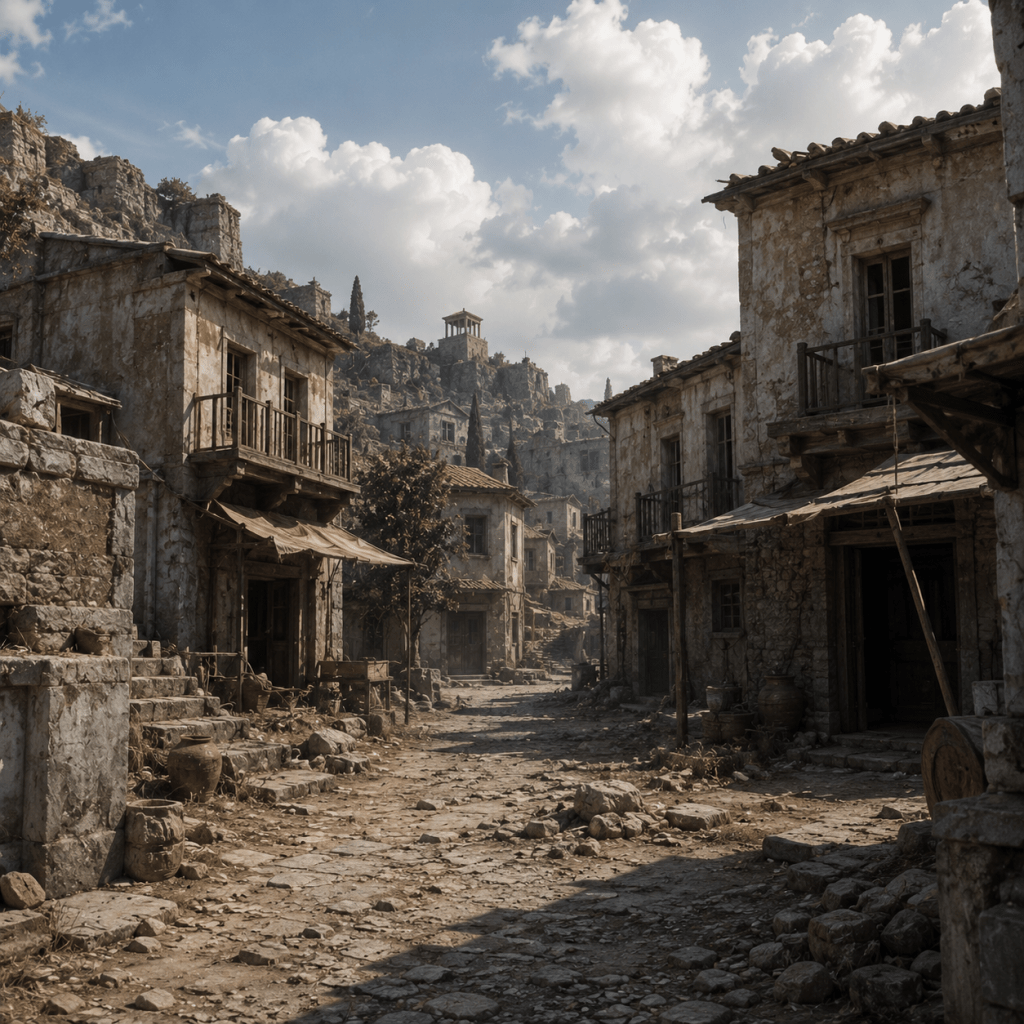
The white cube around me doesn’t so much load a scene as it dissolves into one, walls peeling back into open sky, dry earth, two long hills cradling a valley between them like cupped hands. I’m sitting cross-legged in my sim room a few hundred feet up, watching from a vantage point that only exists because my ship decided it should. That’s the whole gig. I get front-row everything and I never actually have to leave my chair.
Down below, three figures pick their way through what used to be a village.
Princess Ruana leads, seafoam gown trailing, her scepter held loose at her side like she’s not expecting trouble, just bracing for something worse: quiet. Oppa Rockstar trails a step behind, hands stuffed in his jacket pockets, orange shirt the only splash of color against all this gray and dust. McKinley brings up the rear, visor down, cobalt armor scanning the wreckage with the kind of clinical attention that says his brain’s already three steps ahead of his space boots.
The place is dead. Not recently dead, not a battlefield. Dead like it’s been holding its breath a very long time. Roofs sagging. Doors hanging open on busted hinges. No dogs barking, no laundry on lines, no smell of cooking fires. Just wind, and the kind of silence that has weight to it.
“There’s no one here.” Rockstar says it low, none of his usual bounce in the delivery. “The silence is deafening.” He looks around at the empty windows like they might blink back at him. They don’t.
“What happened here?” McKinley’s voice carries that clipped, thinking-out-loud tone he gets when a puzzle’s missing too many pieces. “Why’s the whole village empty? No bodies, no signs of struggle. Just… gone.”
Ruana stops walking. Her eyes go distant, unfocused, the way they do when she’s tuning into something the rest of us can’t pick up. “I can feel it,” she says, quiet enough that I have to lean in, which, again, does nothing, since leaning in a sim room doesn’t improve the audio. Old habit dies hard. “Sadness. Pain. Anger. Hopelessness.” She presses a hand to her chest like the feelings are physically landing there. “Those poor people.”
Nobody argues with her. Nobody ever does, honestly, because Ruana’s read on a room is usually more reliable than most instruments McKinley’s got built into that gauntlet of his.
They keep moving. A gust kicks up out of nowhere, dry and sharp, and scraps of old paper go tumbling past their boots, catching the light before spiraling up into a sky that’s gone the color of an old bruise. I clock the paper scraps immediately, because I’ve watched enough mystery shows to know set dressing like that never shows up by accident. Somebody wrote something on those pages once. Feels like the kind of detail that’s going to matter later, and not in a fun way.
McKinley raises his left arm. The gauntlet flickers awake, casting a thin cyan hologram above his wrist, lines of data scrolling too fast for me to read from up here, though I’d bet good money none of it’s good news.
“The disturbance is getting stronger,” he says, voice tightening just slightly.
And that’s when the ground decides to stop cooperating.
The village doesn’t collapse so much as it unfolds, buildings sliding and stretching and reassembling themselves like the whole valley just got dragged through a loading screen. Dust and light swirl together, and where a scattering of broken houses stood a second ago, a mountain rises instead, terraced and towering, homes stacked on homes stacked on homes climbing toward a summit lost in haze. Ancient stonework, older than anything I recognize from any era I’ve studied, spirals up the slopes in patterns that feel less built and more grown.
Still nobody home. Not a single light in any window, not a single figure on any terrace.
I sit there in my little white room, watching a whole town rearrange itself into a mountain like the universe just hit undo and redo in the same breath, and I think: this isn’t a place. This is a stage. Something built this, and whatever it is, it’s not finished setting up yet.
Down in the valley that isn’t a valley anymore, three heroes stare up at a mountain that wasn’t there a heartbeat ago, and I stare right along with them, close enough to feel the wind that isn’t really wind, far enough that none of it will ever actually touch me.
Lion_head_self_destructs.sav
The cube tilts, warps, drags me into thin mountain air above Lycia.
I feel the shift before I see it, that little stomach-drop sensation like the elevator scene in every found-footage movie ever made, except my elevator is a spaceship-bound simulation chamber and my only cargo is me, alone, cross-legged on nothing, watching reality get repainted around me stroke by stroke. The white cube dissolves into rock and haze and a sky the color of an old bruise, and there they are: McKinley, Ruana, Rockstar, standing on a ledge partway up the mountain that used to be a ghost town twenty minutes ago in relative story-time.
McKinley’s still got that gauntlet raised, cyan light washing his visor from underneath. Text scrolls across the little holographic display, and even from up here I can read it clean: LYCIA, ASIA MINOR.
“This is the dominion of the Greek monster, Lycia,” he says, voice clipped, all business. “We beat it here, then catch up with Spartan before something happens to him.” A pause, and something flickers behind that visor, worry dressed up as procedure. “He shouldn’t have broken away from the group.”
No kidding. I watched him do it. I could’ve told you twenty minutes ago this was coming, but nobody in that command center invited my two cents, mostly because nobody in that command center knows I exist. Story of my life. Emphasis on story, since apparently that’s all I get to be part of.
“Brace yourselves.” McKinley’s tone sharpens, snapping into pure captain mode. “Ruana, Rockstar, we’re up against the Chimaera. Three beasts, one body. Chaos given legs.”
Rockstar cracks his knuckles, easy grin flickering on despite the tension climbing the air like static before a storm. Ruana just nods, calm as still water, scepter already tightening in her grip.
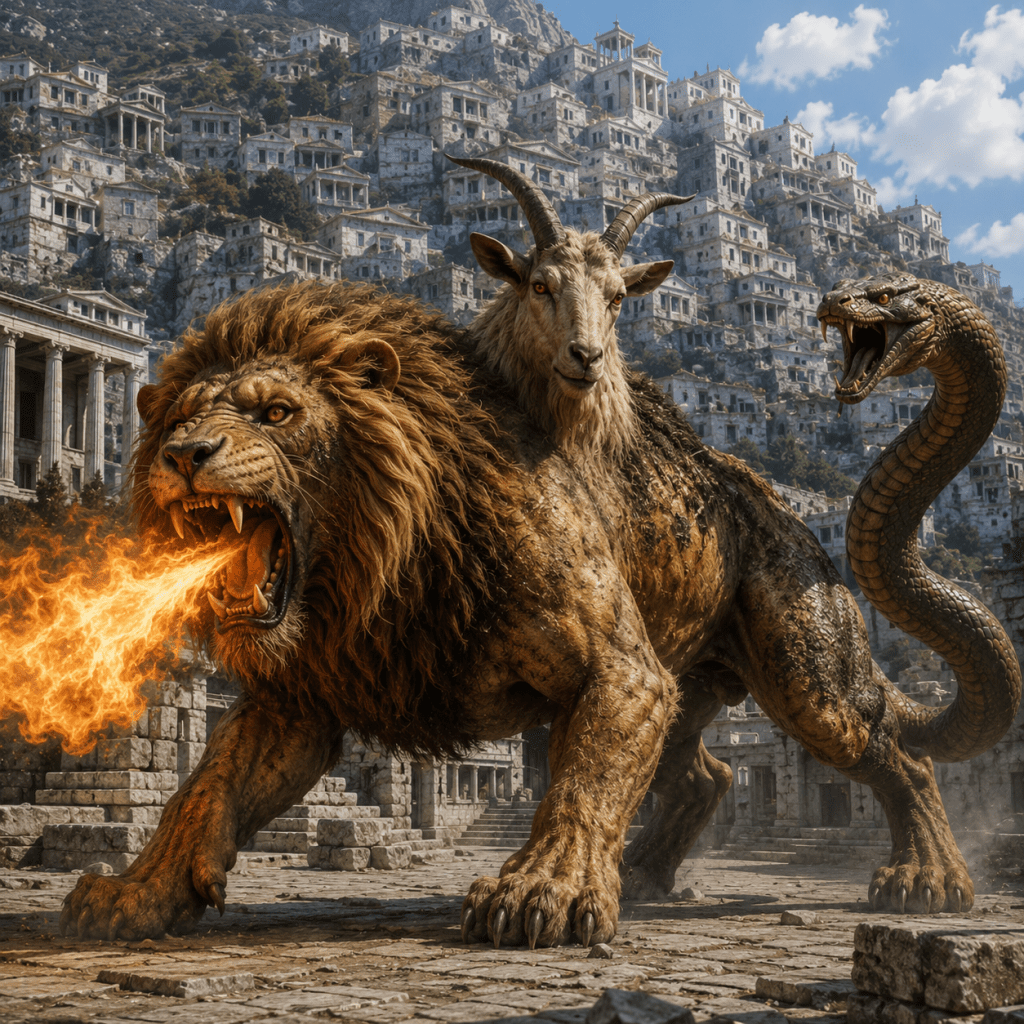
And then, no warning, no dramatic buildup, no ominous roar echoing first like the movies love to do, the Chimaera just arrives. One second the ledge is empty rock, the next there’s a creature standing there that looks like three different action figures got left too close to a space heater and fused together out of spite.
Lion up front. Goat rising out of its spine like a second head that never got the memo it wasn’t wanted. A serpent for a tail, whipping lazy and slow, tasting the air with a forked tongue. I’ve read the myths. I’ve seen the vase paintings, the old Bulfinch descriptions, even that one stop-motion movie from decades back that everybody’s grandpa apparently loved. None of it prepares you for actually seeing the thing breathe.
The lion’s mane catches the light first, vermillion fire bleeding into gold, each strand looking hand-forged rather than grown. Its eyes are molten amber, furious, locked in on something specific the way a predator locks onto the one gazelle it’s already decided is dinner. Fangs bared. Claws glinting, long as kitchen knives, sharp as bad news. It rears back and roars, and the sound doesn’t just echo, it rolls, cascading down the mountain slope and out across the plain toward a dark treeline on the horizon, birds scattering off in every direction like they just remembered urgent appointments elsewhere.
Fire breath incoming. Bright orange, angry, King-of-Beasts energy radiating off every inch of it.
And standing right in its path, not flinching, not stepping back an inch, is Princess Ruana.
I want to take a second here because the visual is, genuinely, one of the best matchups I’ve watched all season. Her hair’s gone true red these days, the transformation quirk that never stops being a little eerie to witness, cascading clean down to her ankles like a waterfall somebody forgot to turn off. She’s got the moon-bell scepter held loose at her side, more like a conductor’s baton than a weapon, and that eighteenth-century gown of hers, seafoam green and lavender, water lilies stitched into every fold, catches the mountain light in a way that makes her look like she wandered out of a museum painting and decided she preferred the plot happening out here instead.
Fire versus water. Predator versus tide. Textbook elemental showdown, the kind you’d storyboard for a trailer if this were the kind of story that got trailers.
The lion lets loose first. A full torrent of flame, roaring straight at her, close enough that I feel the ambient heat spike even through a simulation that technically owes me nothing in terms of sensory accuracy, and yet here we are, my sim room a solid four degrees warmer than it was thirty seconds ago. Ruana doesn’t even blink. One calm sweep of her scepter, wrist barely moving, and a wall of water rises to answer, shimmering periwinkle shot through with veins of glowing aquamarine, the kind of color you’d only get out of a very expensive aquarium or a very talented CGI artist.
Fire hits water. Steam erupts, hissing white, and for a second the whole ledge disappears behind a curtain of vapor.
When it clears, neither of them has budged.
They go again. And again. Flame, water, flame, water, an elemental call-and-response that starts to feel almost rhythmic, almost musical, like the two of them are dueling in some genre-crossover rhythm game nobody bothered translating into English. The lion’s getting louder each round, more furious, embers spraying off its mane like sparks off an angle grinder. Ruana just gets calmer. Steadier. Her expression doesn’t so much as twitch, jaw set, eyes narrowed in pure focus, the same look she probably had cleaning fish that begged for their lives back on that survival island. Mercy isn’t the emotion running this show. Discipline is.
“She’s not even trying to win,” I mutter to nobody, because that’s my only audience option. “She’s just outlasting it.”
Which, genre-savvy tip for anybody following along at home: that’s always how you beat the guy who runs purely on rage. You don’t out-punch him. You just don’t die first.
The lion doesn’t seem to have gotten that memo. Its roars climb in pitch, half-frustrated now, more animal tantrum than battle cry. Its head starts glowing from the inside, brighter, hotter, embers spitting off in wider arcs, and I recognize the shape of what’s coming because I’ve watched this exact narrative beat play out in a dozen different genre stories: the villain who escalates past the point of control, past the point of strategy, straight into self-destruction.
Ruana keeps her stance. Waits. Doesn’t even raise the scepter higher than she needs to.
The lion winds up for one final blast, head practically incandescent now, fire not just erupting from its mouth but seeming to boil straight out of its skull, and for one half-second I think, okay, this is the part where things get bad for our girl. Except the fire doesn’t reach her. It doesn’t even finish leaving the lion’s throat.
The head detonates.
Not metaphor. Not dramatic license. The thing just combusts, a full-body eruption of flame and ember and smoke, the lion’s own fury apparently exceeding whatever structural integrity a mythological beast head is rated for. The blast rocks outward, and I watch, weirdly transfixed, as the proud, roaring, King of Beasts half of this creature gets reduced to blackened chunks raining down onto the rock like the world’s worst fireworks finale.
Silence, for half a beat. Steam curling off the ledge. Ruana standing exactly where she started, dress untouched, hair barely disturbed, scepter still held loose at her side like she just finished a light warmup instead of a full elemental duel.
Rockstar lets out a low whistle from somewhere behind her. “Well,” he says, and I can practically hear the grin without even needing to see his face, “that’s one head down.”
I catalog this development immediately, filing it under Ironic Deaths, Self-Inflicted, right next to that one cartoon villain who monologued himself into a trap of his own making. There’s something almost poetic about it, if you squint. A creature defined by pure rage, undone not by an enemy’s blow but by its own unchecked fury. Ruana didn’t slay the lion. The lion slayed itself, and she just had the patience to let it happen.
I think about McKinley’s earlier line, the one about Spartan breaking away from the group, chasing his own fight solo, driven by pride and a hunger to prove something. I think about the lion’s head, smoldering in pieces on the rock. Different creature, same lesson, and I don’t love how neatly that parallel is lining up, honestly. Feels less like coincidence and more like the story’s quietly setting up dominoes it plans to knock down later.
But that’s a worry for a scene that hasn’t happened yet. Right now, on this ledge, in this simulated slice of ancient Asia Minor, one-third of a three-headed nightmare lies in ash, and the goat and serpent halves of the Chimaera are still very much standing, very much furious, and very much aware their teammate just lost spectacularly.
McKinley’s already moving, space boots scraping against rock as he repositions, gauntlet flaring back to life, data scrolling. “One down,” he calls out, voice tight but steady. “Watch the goat head, it’ll compensate for the loss. And don’t turn your back on the tail, that serpent bites just as hard as anything up front.”
Ruana exhales, slow, the first sign of effort I’ve caught out of her this whole fight, and resets her stance without a word.
I settle back in my cube, or as much as settling means for a guy with no actual body to settle, and keep watching, because that’s the whole deal, isn’t it. Front row seat to a mythological throwdown happening in real time on a mountain that didn’t exist twenty minutes ago, close enough to hear every crackle of flame and hiss of steam, and yet so entirely outside of it that I couldn’t lend a hand if the entire fate of Asia Minor depended on it.
So close, yet so far. I know, I know, I said I’d retire that line. But some feelings just keep circling back around no matter how many times you try to swap them out for something fresher, and this is exactly one of those feelings, sitting here, watching a battle I’ll never actually get to fight.
The smoke from the lion’s ruined head drifts up past the ledge, catching the light one last time before scattering into nothing, and somewhere below, in a landscape I can’t see from here, Spartan is still running toward whatever fight he thinks belongs to him alone.
I hope he’s paying closer attention to pride than that lion was.
Snake_pinned_magenta_paint.sav
The cube reorients, dragging me back to that scorched ledge on the mountain that used to be Lycia.
Half the Chimaera’s already ash. I watched that part, front row seat, zero snack breaks. Now the sim tilts, pulling my attention around the ridge to where the rest of the beast is still very much alive and extremely unhappy about its missing lion head, and that’s when the tail decides it’s had enough of standing around waiting for its turn.
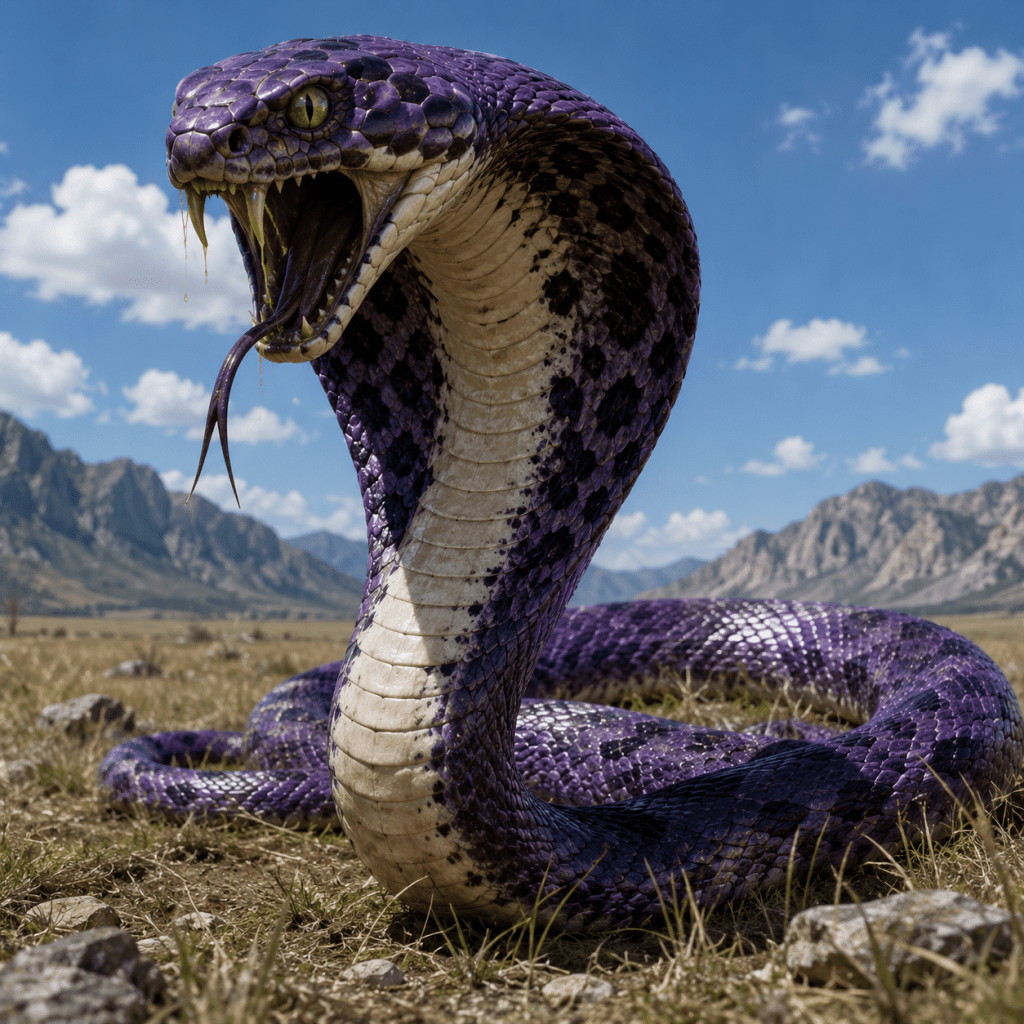
The serpent unspools off the Chimaera’s spine like it’s been coiled there the whole fight just biding its time, and once it’s fully extended I get why nobody wanted to lead with this part. It’s massive. Scales gleam black shot through with violet, shifting color depending on the angle, like an oil slick somebody decided to weaponize. Cream-colored belly scraping along rock. Lime-green eyes, slit pupils, locked dead ahead with the kind of stillness that’s somehow scarier than the lion’s whole fire-breathing tantrum. Fangs curve long and wicked, a bead of violet venom already gathering at each tip, dripping slow onto the stone with a hiss that eats through rock like it’s got somewhere urgent to be. Forked tongue flicks out, tasting the air, and the whole thing moves with this liquid, unhurried grace that makes my skin crawl even though, technically, I don’t have skin out here to crawl with.
Quiet. Fast. Deadly. Snake energy, fully maxed out on every stat that matters.
And standing across from it, floating a few feet off the ground on a surfboard that’s got zero business looking that stylish in a battlefield, is Oppa Rockstar.
I’ll give the guy this: nobody commits to an aesthetic harder. Spiky platinum hair catching what little light filters through the haze, magenta visor glasses throwing off a faint glow, over-ear headphones with little stylized wings bolted to the sides like he raided a boutique that only sells accessories for pop idols moonlighting as superheroes. White-gray jacket, cyan skyline print splashed across one shoulder, orange shirt underneath with a sun outline peeking through the open collar. Fingerless apple-green gloves. Yellow sneakers so bright they’d probably show up on satellite. And strapped across his back, that polished wooden guitar, the one weapon in this whole roster that looks the least like a weapon and somehow does the most damage.
The serpent stares him down, unblinking, and I swear it’s trying the hypnosis routine, the kind of stare-lock you’d expect from every snake villain in every cartoon I grew up on. Rockstar doesn’t flinch. Doesn’t even adjust his stance.
“Well, hello there, Mr. Snake.” He says it easy, grinning, like he’s greeting a fan at a meet-and-greet instead of a several-ton venomous nightmare. “You know, I’m way too cool and handsome to end up as your snack.”
I laugh, alone, in a cube nobody can hear me from. Bold strategy. Let’s see if the universe rewards confidence or just eats it.
The snake answers by lunging.
No warm-up, no telegraphed wind-up, just full-speed strike, jaws splitting wide, fangs bared and glistening. Rockstar’s already moving before I finish processing the threat, surfboard tilting hard, and a track of neon orange musical staff unfurls beneath him out of nowhere, a long wavy line of pure sound made solid. He rides it clean, banking away from the strike with a fluid ease that looks less like combat and more like he’s just out here catching waves on a Saturday. His trail leaves a scatter of music notes behind him, cyan, magenta, yellow, each one popping and hopping in the air like bubbles, an upbeat little melody trailing the whole chase like the world’s weirdest theme song.
The snake gives chase. Fluid, relentless, closing distance with a grace that doesn’t match its size, and for a second I genuinely can’t tell if Rockstar’s outrunning it or just barely staying ahead. Cat and mouse, except the mouse is riding a surfboard made of literal music and the cat is an ancient mythological venom machine, so, you know. Par for the course around here.
The chase bends toward a stand of gnarled trees at the ridge’s edge, and the snake, either out of frustration or pure predatory instinct, strikes wide, missing Rockstar entirely and sinking its fangs straight into the trunk of the nearest tree.
I watch it happen almost in slow motion. Violet venom floods the bark, visible even from this angle, tracing dark veins up through the wood. The leaves don’t wilt, they just drop, all at once, like someone flipped a switch. The trunk twists, corkscrewing in on itself, branches curling into claw shapes, and within maybe three seconds flat what used to be a tree is now something that belongs in a haunted forest concept art book.
Rockstar’s grin falters. Just for a beat.
“That venom is definitely deadly,” I hear him think, and the thought comes with a flicker of memory attached to it, the twisted trees from that Underworld detour a few walkthroughs back, gnarled and dead in exactly this same way. His face doesn’t show much, just a tightening around the eyes, but I clock it. Even the guy who treats mortal danger like a stage performance has his moments where the show almost cracks.
He recovers fast, though. Has to. Snake’s already resetting for round two.
“It’s my turn now, Mr. Snake.” The grin’s back, sharper this time, less performance and more promise. “Time for me to throw a few punches.”
He swings the guitar around, fingers striking a chord that doesn’t so much ring out as detonate, and giant music notes burst from the strings, cyan, yellow, magenta, each one solid enough to do real damage, flying at the serpent in a swarm that looks like somebody’s rhythm game boss fight got real angry and left the screen.
The snake dodges. Genuinely impressive dodging, honestly, weaving and coiling out of the path of most of the notes with a fluidity that would make a professional gymnast jealous. But there’s a limit to how many oversized glowing eighth notes one creature can avoid while also fielding an upbeat pop melody that’s somehow become the actual battlefield soundtrack, notes chiming and popping in time with a beat I can practically feel through the cube’s floor.
One note gets through.
A magenta sixteenth note, sharp-pronged, streaks forward and catches the serpent right at the base of its neck, driving down and pinning it flat against the rock. The shape’s almost funny if you squint, mirroring the snake’s own fangs right back at it, except instead of venom this one sprays bright magenta paint in a wide splash across the scales and the stone beneath, pooling out in a color that’s aggressively, almost comically cheerful for a battlefield.
The serpent thrashes once, twice, then goes still, pinned and defeated, venom no match for whatever weird alchemical mashup of music and color powers Rockstar’s whole kit.
He floats there above it, arms loose, one thumb tapping idly against his chin like he’s considering which filter to slap on the victory photo. “Looks like Lady Luck’s still on my side,” he says, grin easy, triumphant, not a single hair out of place despite just dodging death by venomous ambush twice in under a minute.
I sit back in my cube, watching the magenta paint spread slow across the rock, and honestly, I don’t know what to do with how genuinely cool that just was. If I had a controller in my hands right now, I’d be mashing the replay button, no question.
Here’s the thing about Rockstar that I don’t think gets talked about enough, not even by the people who actually know him. Everybody clocks the surface stuff first, the hair, the outfit, the whole idol-star swagger, and figures that’s the whole character. Style over substance, all flash, zero bite. But watch him under actual pressure, watch him crack a joke half a second after staring down a fatal venom strike, watch him keep that easy grin even while his own thoughts are quietly rattling with memories of dead twisted trees, and you start to realize the confidence isn’t a mask covering fear. It’s a tool he’s built specifically to fight fear with, note by note, joke by joke, until the fear just doesn’t have anywhere left to land.
Genre-savvy sidenote, because I can’t help myself: this is basically the exact character archetype that always gets underestimated right up until the final act, and then everyone’s shocked, shocked, when the flashy one turns out to have the sharpest instincts on the team. I’ve seen this trope play out in enough stories to call it early. Rockstar’s not comic relief. He’s just really good at making danger look like a party.
Somewhere off past this ridge, one head down and one head very much pinned in magenta paint, the last third of this Chimaera is still out there, waiting its turn, and I’ve got a feeling the goat’s not going to go down half as easy as its teammates did.
I settle in, cube humming faint around me, and keep watching, because that’s the whole job description. Front row, every time, no ticket required and no way to ever climb down into the seats that actually matter.
Goat_armor_chimaera_falls.sav
The cube tilts again, pulling me from magenta paint and dead trees toward what’s left of the fight.
One head down in ash. One pinned in paint, unmoving. And now, on the ledge below, the last third of this three-in-one nightmare rearranges itself right in front of Captain McKinley, and I do not love the shape it’s choosing.
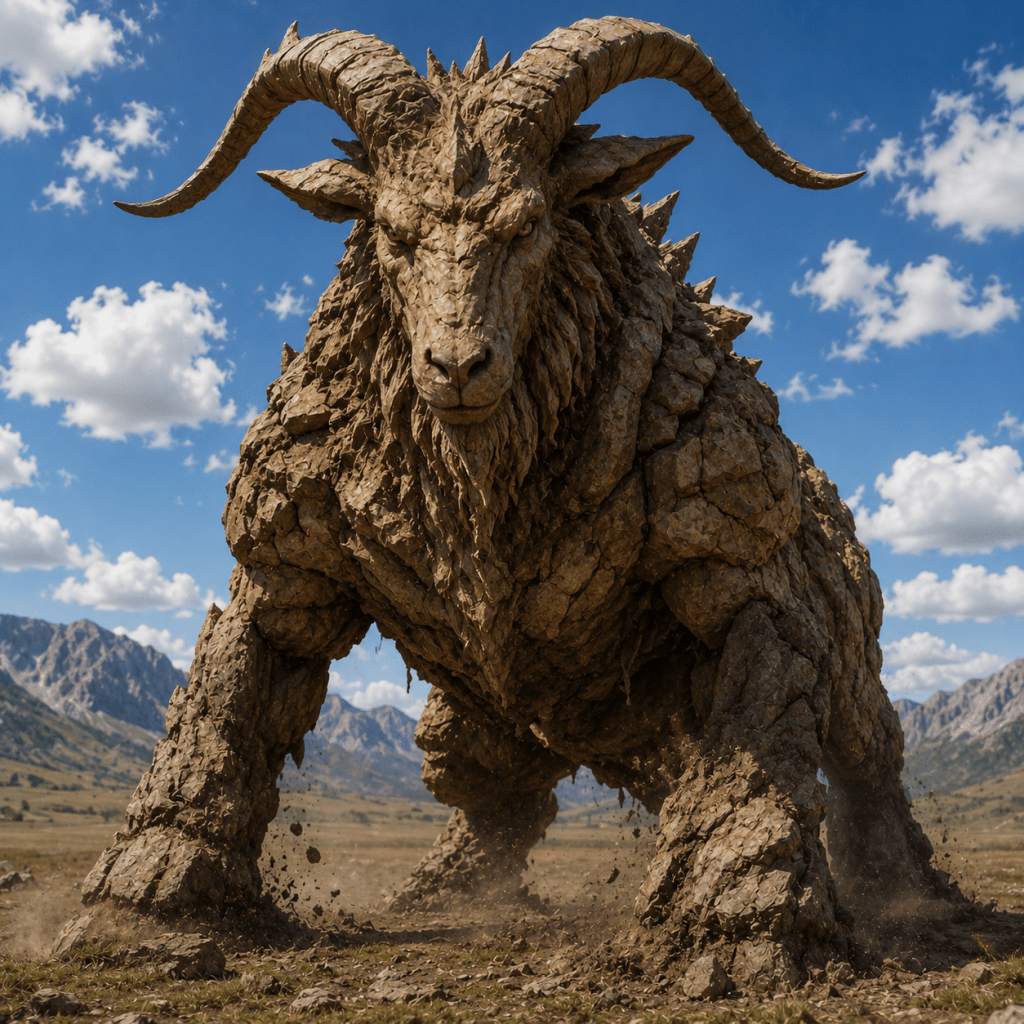
The goat half was always there, technically, riding shotgun on the Chimaera’s spine the whole fight, quiet, patient, letting its lion and snake siblings do the talking. Curved horns, sharp and ridged, jut up from a skull with narrow horizontal pupils that somehow read colder than the serpent’s did. Fur runs brown across most of its body, fading into a dirty white belly streaked through with black, and only the back half of the whole creature, hind legs included, actually belongs to this half. The rest used to be lion. Now the goat head just sits there, sprouted straight out of the ruined stump where fire and pride ended things a few minutes back, staring down at McKinley like it’s been waiting this entire fight for its turn on the mic.
McKinley’s fully suited, helmet sealed, gauntlets active, that cobalt-and-titanium space armor catching the mountain light in hard clean flashes. Everything about the design reads efficient. Belt cinching the whole rig together, boots melding seamless into the leg plating, no wasted seams anywhere. Half the suit’s gray titanium, thin and light but tough as anything, and the rest runs deep cobalt blue, and honestly if I ever got my hands on tech like that I’d never take it off, sim room or not.
The goat stares him down. Doesn’t blink. Doesn’t flinch.
Then it starts changing.
I lean forward, or do the ghost-equivalent of leaning forward, which is really just intensifying how hard I’m paying attention, because this isn’t in any version of the myth I’ve ever read. The goat’s head slides forward along the creature’s spine, claiming the space where the lion’s head used to sit, while the snake tail just sheds off entirely, old skin peeling away and left behind, lifeless, still. In its place, plates of brown, earthen armor start growing across the whole body, thick and layered, locking into place segment by segment like the world’s angriest turtle shell deciding to upgrade itself mid-fight.
Within seconds, what’s left of the Chimaera isn’t three creatures stitched together anymore. It’s one goat-headed monster wearing rock like a second skeleton.
That definitely wasn’t in Greek mythology, I catch McKinley thinking, and honestly, mood. I’ve read Bulfinch. I’ve sat through documentaries with narrators who take this stuff way too seriously. Nobody mentioned armor-goat mode. Feels like somebody’s homebrewing new lore rules mid-campaign, and normally I love that kind of improvisation, but not when it’s aimed at people I actually care about.
McKinley doesn’t waste time processing the surprise. Blue flame ignites from his boots, and in one smooth motion he summons Mockingbird straight out of swirling nano-molecules, the small personal ship folding into existence around him, tempered glass sealing shut overhead. He’s airborne in seconds, engine humming low and controlled, the sea glinting somewhere past the mountain’s edge like a strip of hammered silver.
The armored goat tracks him through the sky, wary, patient, front hooves planted wide.
McKinley fires first. A volley of missiles streaks down toward the beast, contrails cutting sharp lines through the haze.
The goat dodges. Not lumbers, not staggers, dodges, with a speed that shouldn’t belong to something wearing rock plating that thick. One missile actually gets caught mid-flight, snatched out of the air by a foreleg and hurled back with enough force that McKinley has to bank Mockingbird hard to avoid getting clipped by his own ordnance.
I whistle, low, impressed despite myself. “Okay, buddy, didn’t expect you to have hands.”
Inside the cockpit, McKinley studies the readouts scrolling across his HUD, tracking the beast’s movement patterns with that same clipped focus he brings to everything, cataloging speed, reaction windows, the slight hitch in its stride whenever it plants its back legs before a dodge. He’s building a playbook in real time, the way any good strategist would, filing away weaknesses before he commits to the next move.
Then he retracts the glass canopy and stands up on top of his own ship.
Which, fine, sure, why wouldn’t you do that, casual Tuesday, standing on a moving spacecraft several hundred feet above a mythological battlefield.
“Code Bellerophon,” he says, voice flat, controlled, the kind of calm that only comes from a guy who’s already fully committed to a plan before he announces it.
He jumps.
A propeller jetpack unfolds from his back, blue flame roaring to life, two gliders extending outward like wings snapping open mid-fall. His left gauntlet flares, projecting a cyan blade of solid light that stretches fast from dagger-length to full longsword, humming faint even from this distance. His right gauntlet answers with a shield, translucent, heraldic, edges glowing like stained glass lit from behind. Sword in one hand, shield in the other, McKinley drops out of the sky toward the armored goat like he’s auditioning for the world’s most aerodynamic knight.
I’ve got a whole mental highlight reel of moments like this from other stories, other worlds, other heroes doing the falling-hero-with-a-sword thing, and I’ll admit, most of the time it’s style over substance. Not this time. This time it actually lands with weight.
Blade meets claw in midair, sparks scattering, the shield catching a follow-up swipe and holding firm even as the impact visibly rocks McKinley’s whole frame. The goat’s resilient, way more than its armor plating alone should account for, absorbing hit after hit and shrugging most of it off with what looks disturbingly close to stubborn pride. McKinley circles, sword flashing, boots barely skimming rock as he weaves through counters, gaining altitude bit by bit, patient, calculating, the same way he probably plans out every chess move he’s ever made against Michael and lost anyway out of pure sibling chaos.
He climbs higher. The goat watches, tracking him, hooves scraping stone as it repositions.
Then McKinley dives.
Full commitment, no hesitation, blade angled straight down, gathering speed with every second of freefall, gliders tucked tight against his back. I actually hold my breath, which is objectively pointless since I don’t breathe in here, but old habits apparently transcend whatever weird half-existence I’ve got going on.
The blade connects.
Cyan light cuts clean through the earthen plating, one single unbroken line from shoulder to flank, and the goat-headed Chimaera splits in that same instant, armor cracking apart in jagged sheets, the whole creature folding sideways under its own collapsing structure. No roar, no final defiant snarl. Just a long, low groan of stone giving way, and then it’s done.
The beast falls, and one massive earthen scale breaks free mid-collapse, tumbling loose and arcing out over the ridge before splashing down into the sea below.
I catch movement at the shoreline before McKinley even fully registers it. Ruana. Still down there, still recovering from her own fight, but she’s already moving, scepter raised, summoning a fast rush of seafoam that catches the falling scale before it can sink past reach, cradling it gentle and pulling it back toward shore like she’s fishing something precious out of the tide.
Teamwork. Nobody called it. Nobody needed to.
McKinley touches down a moment later, boots crunching against scorched rock, sword and shield both dissolving back into light and folding into his gauntlets. He stands there a second, chest rising and falling steady under the armor, looking down at the wreckage of what used to be three separate monsters wearing one very bad idea of a body.
Three heads. Two down clean, one pinned in paint that’s probably never coming out of that rock. All in under fifteen minutes, give or take, which, if I’m scoring this the way I’d score any decent boss fight, counts as a flawless clear.
I sit back in my cube, watching smoke curl up off the wreckage, watching Ruana wade the last few feet to shore with that scale cradled against her chest like something worth protecting. I think about McKinley’s earlier line, the one about not splitting up again, about strength lying in unity, and here’s the proof of it laid out across this whole battlefield: two heroes, three monsters, and neither of them fought this one alone.
Somewhere past this ridge, past the mountain, past whatever else this dominion’s still got hiding in the haze, Spartan’s out there running toward a fight he decided belongs to him and him only.
I really hope somebody clues him in on this lesson before it’s his turn to learn it the hard way.


Leave a Reply